Blueberries and Anthocyanins: The Berry Polyphenols Behind Better Memory
A handful of blueberries does more for your brain than almost any other fruit you can buy at the store. The reason sits in their pigment. Blueberries for brain health keep showing up in cognition research because of anthocyanins, the deep blue-purple polyphenols that give the fruit its color and a growing reputation as memory food.
This is not folklore. It is one of the better-studied diet-and-cognition relationships in nutritional science, with randomized controlled trials in kids, healthy older adults, and people at risk for dementia.
Here is what the evidence actually says, what anthocyanins do inside your head, and how much you need to eat to get the effect.
Key Takeaways
- Anthocyanins are the polyphenols responsible for most of the blueberry's cognitive effects, and they reach brain regions tied to learning and memory.
- In the Framingham Heart Study, the highest flavonoid intake was linked to a sharply lower dementia risk over decades.
- Controlled trials show measurable cognitive gains in older adults, at-risk middle-aged adults, and even schoolchildren.
- Wild (lowbush) blueberries pack more anthocyanins per gram than the larger cultivated kind.
- Food is the long-game foundation. Acute focus tools work on a different timescale.
What Anthocyanins Actually Are
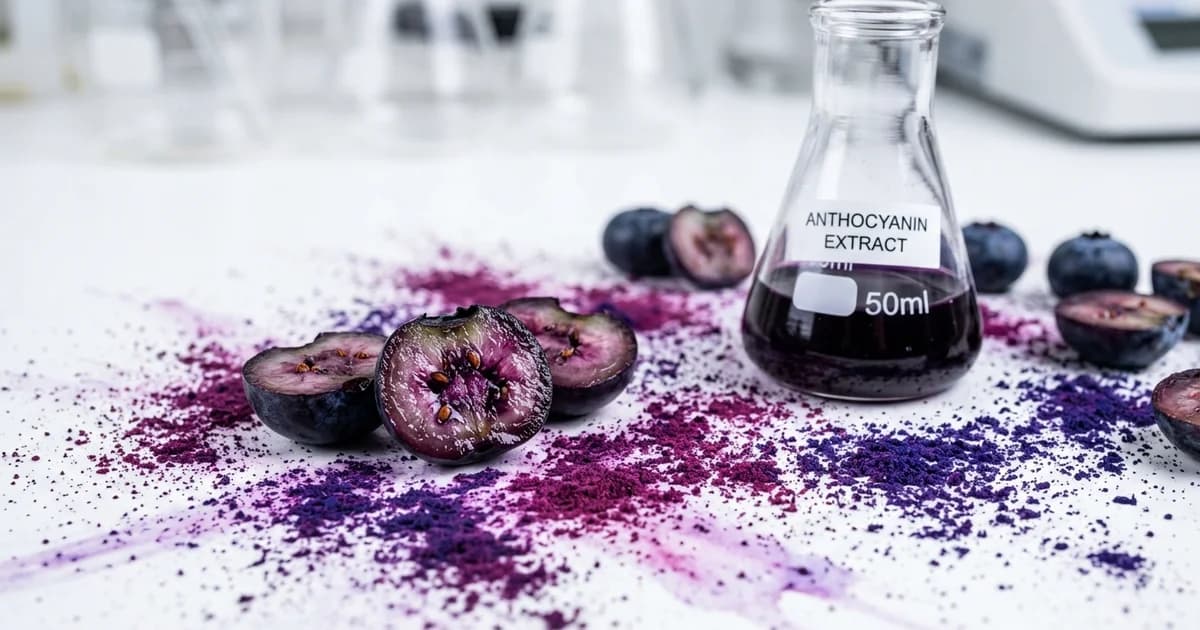
Anthocyanins are a subclass of flavonoids, which are themselves a branch of the larger polyphenol family. They are water-soluble plant pigments, and they account for the red, purple, and blue colors in berries, grapes, and red cabbage.
Blueberries are unusually rich in them. A single cup delivers a meaningful dose of blueberry polyphenols, and the pigment concentrates in and just under the skin.
The key point for your brain: these compounds do not just sit in your gut. After you eat them, anthocyanins and their metabolites circulate and can reach the hippocampus and other regions involved in memory, which is why researchers connect anthocyanins cognition so directly.
How Blueberry Polyphenols Support the Brain
Blueberry polyphenols appear to help the brain through several overlapping routes, and most of them come back to blood flow and cell signaling.
First, vascular function. Anthocyanins support the lining of your blood vessels, which improves blood flow, including flow to the brain. Better cerebral perfusion means more oxygen and glucose reaching working neurons.
Second, signaling. Animal work links flavonoids to higher levels of brain-derived neurotrophic factor (BDNF), a protein that supports the growth and survival of neurons. A study in PLOS One found that dietary flavonoids improved spatial memory in animals alongside increased hippocampal BDNF.
Third, oxidative and inflammatory load. The aging brain accumulates oxidative stress, and anthocyanins act as antioxidants that help counter it. These mechanisms together explain why the flavonoids memory link is biologically plausible, not just statistical.
The Evidence: What the Human Trials Found
The human data on blueberry memory is stronger than for most single foods, and it spans the full age range.
Healthy older adults
In the BluFlow trial, researchers studied healthy men and women aged 65 to 80. According to the published study, participants drank a beverage made with freeze-dried whole wild blueberry powder daily for 12 weeks, and the team measured cognition, vascular function, and cerebral blood flow.
A separate double-blind randomized controlled trial reported that wild blueberry polyphenols improved both vascular function and cognitive performance in healthy older individuals. The pattern across this literature is consistent: daily intake, modest but real gains.
At-risk middle-aged adults
Robert Krikorian and colleagues at the University of Cincinnati ran a 12-week study in middle-aged adults at risk for later dementia. Per the University of Cincinnati report, half the participants consumed the equivalent of half a cup of whole blueberries daily as a powder, while the other half got a placebo.
The blueberry group showed improvement on tasks that depend on executive control, which the researchers described as reduced interference from distracting information during learning and memory. In plain terms, they got better at filtering distraction while remembering things.
Children
The effect is not limited to aging brains. Multiple trials have tested acute wild blueberry brain effects in schoolchildren aged 7 to 10, looking at memory and executive function after a single blueberry drink. The research summarized by the Center for Nutritional Psychology points to better cognitive performance within hours of intake.
The long view: dementia risk
The biggest-picture data comes from decades of tracking. The Framingham Heart Study followed thousands of adults and recorded their diets over many years. As reported by The Journal of Prevention of Alzheimer's Disease, higher flavonoid intake was associated with a 76% lower risk of dementia.
That is an association, not proof of cause. But combined with the controlled trials, it builds a strong case for flavonoid-rich fruit as long-term brain nutrition.
Wild vs. Cultivated: Does the Type Matter?
Yes. Wild (lowbush) blueberries are smaller, darker, and more concentrated in anthocyanins than the larger cultivated (highbush) berries you usually find fresh.
More skin per gram means more pigment per gram. Most of the headline cognition trials, including BluFlow and the children's studies, used wild blueberry material specifically for that reason.
Both kinds are good for you. If you are buying for the polyphenol density, frozen wild blueberries are an efficient and affordable option, since freezing preserves anthocyanins well.
How Blueberries Compare to Other Brain-Supporting Inputs
Diet-based polyphenols and acute focus tools solve different problems. One builds the foundation over months. The other sharpens the next few hours. Here is how the common options stack up.
| Input | What it does | Timescale | Best for |
|---|---|---|---|
| Wild blueberries | Anthocyanins support blood flow, BDNF, antioxidant defense | Weeks to years | Long-term memory and brain aging |
| Cultivated blueberries | Same compounds, lower density | Weeks to years | Everyday foundational nutrition |
| Dark leafy greens | Lutein, folate, vitamin K for brain aging | Years | Foundational diet |
| Coffee / tea | Caffeine for alertness; tea adds L-theanine | Minutes to hours | Acute alertness |
| Roon sublingual pouch | 80mg caffeine, 60mg L-theanine, 25mg Dynamine, 5mg TeaCrine | 5 to 10 min onset, 6 to 8 hr | Acute, sustained focus on demand |
Notice the split. Blueberries are not something you take before a deadline. They are something you eat consistently so your brain ages better. For the day-to-day acute layer, you reach for something fast-acting like caffeine paired with L-theanine, the combination behind smoother focus without the jitter.
How Much Do You Need to Eat?
Most positive trials used the equivalent of roughly half a cup to one cup of blueberries per day, often delivered as freeze-dried powder for dosing precision.
You do not need a supplement to hit that. A standard serving of fresh or frozen blueberries lands in the right range, and consistency matters more than any single large portion.
A practical target: a daily half-cup to full cup, leaning toward wild or frozen wild when you can get them. Treat it like brushing your teeth, not like a one-time fix.
Conclusion
Blueberries earn their reputation. The anthocyanins that color them also support blood flow to the brain, feed neuronal signaling through pathways like BDNF, and blunt the oxidative wear that comes with age.
The human evidence runs deep, from acute gains in schoolchildren to lower dementia risk across decades of dietary tracking. No single fruit prevents cognitive decline on its own, and the trials show modest effects rather than miracles.
But few foods give you this much return for so little effort. Half a cup a day, ideally the wild kind, is one of the simplest brain-nutrition habits you can build.
Frequently Asked Questions
How many blueberries should I eat for brain health?
Most cognition trials used the equivalent of about half a cup to one cup of blueberries per day. A standard serving of fresh or frozen berries falls in that range. Consistency over weeks and months matters far more than the size of any single portion, since these are slow-building nutritional effects rather than acute ones.
Are frozen blueberries as good as fresh?
Yes. Freezing preserves anthocyanins well, and frozen wild blueberries are often more concentrated in polyphenols than fresh cultivated ones. They are usually cheaper too. For everyday brain-supporting intake, frozen wild blueberries are one of the most efficient options available.
What makes wild blueberries better than regular ones?
Wild (lowbush) blueberries are smaller and darker, which means more skin and more pigment per gram. Since anthocyanins concentrate in the skin, wild berries deliver a higher polyphenol dose. Most of the leading cognition studies used wild blueberry material specifically for this density.
How fast do blueberries affect the brain?
Some studies in children found measurable cognitive effects within a few hours of a single blueberry drink. The more meaningful benefits for memory and brain aging, though, build over weeks and months of regular intake. Blueberries are a foundational input, not a fast-acting focus tool.
Can blueberries lower dementia risk?
No food prevents dementia on its own. The Framingham Heart Study linked high flavonoid intake to substantially lower dementia risk, but that is an association from observational data. Blueberries support long-term brain health as part of a broader diet; they are not a treatment or cure for any condition.
Do blueberry supplements work as well as the fruit?
Many trials used freeze-dried blueberry powder, which performed well, mostly because it allows precise dosing. For everyday purposes, whole fruit gives you fiber and other compounds alongside the anthocyanins. Powders are a convenient way to hit a consistent dose if fresh berries are hard to come by.
Food First, Then the Focus You Can Feel
Blueberries are a long-game investment in your brain. You eat them for months and years, and the payoff shows up in how your memory holds up over decades. Nothing about that timeline helps you when you sit down to write, code, or study in the next ten minutes.
That gap is where Roon fits. It is a sublingual pouch built for the acute layer, with 80mg caffeine, 60mg L-theanine, 25mg methylliberine (Dynamine), and 5mg theacrine (TeaCrine), designed for a 5 to 10 minute onset and 6 to 8 hours of sustained focus without the jitters or the crash.
To be clear, Roon contains no berries and replaces nothing on your plate. Keep eating your blueberries for the foundation. When you need focus on demand, that is a different tool for a different job. Try Roon when you want the fast layer on top of a brain you are already feeding well.
Written by Roon Team