The Best Supplements for Brain Health in 2026
Roon Team
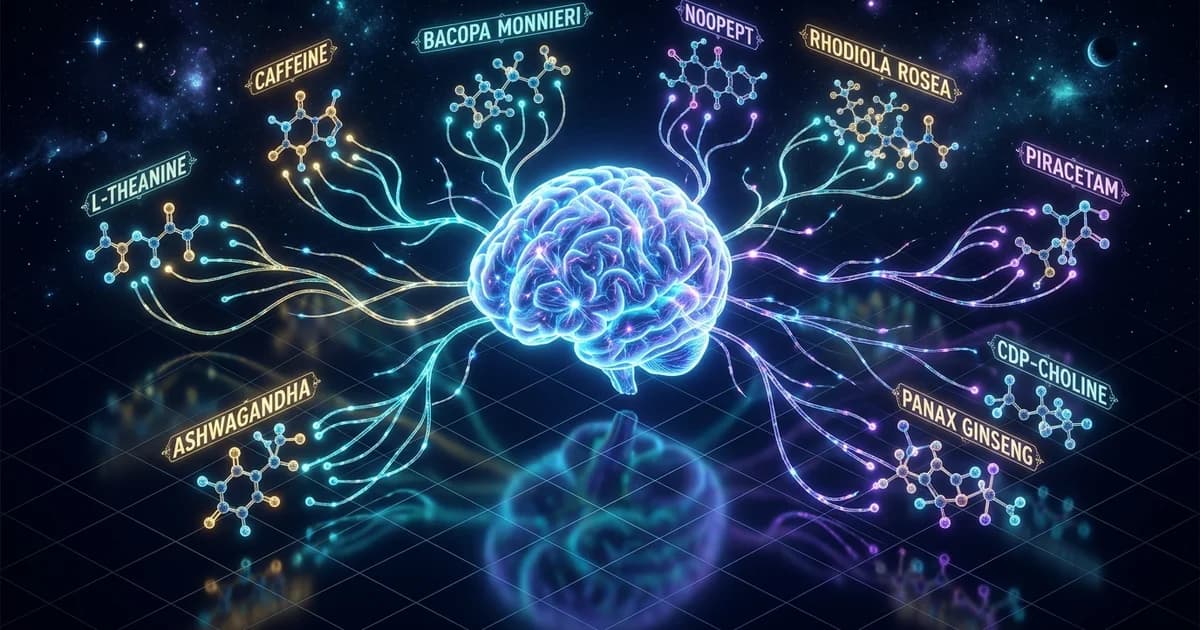
The Best Supplements for Brain Health in 2026: What May Actually Help
Short answer: The supplements for brain health with the strongest clinical backing are omega-3s (DHA and EPA), creatine, the caffeine and L-theanine pairing, theacrine with methylliberine, phosphatidylserine, and B vitamins (B6, B9, B12). Dose matters as much as the ingredient, so look for clinically studied amounts rather than pixie-dusted blends. Pair foundational nutrients for long-term support with focus compounds for daily performance. Most of the rest of the shelf is marketing noise.
Your brain uses a huge amount of energy relative to its size. Finding the best supplements for brain health starts with understanding what your brain actually needs: it rebuilds synapses while you sleep, filters thousands of decisions before lunch, and quietly deteriorates if you feed it nothing but caffeine and hope. Choosing the best supplements for brain health means separating a few better-supported compounds from a very crowded shelf of marketing noise.
The brain health supplement market is projected to reach over $10 billion by 2030, and most of that growth is driven by people who want sharper focus, better memory, and long-term neuroprotection. The problem? Most products on that shelf rely on pixie-dusted doses and vague label claims.
If you're serious about finding the best supplements for brain health and understanding whether brain supplements work, start here.
Key Takeaways
- Only a few supplements for brain function have strong clinical backing. Most of the market is noise.
- Dose matters as much as the ingredient. Underdosed formulas are the industry's worst-kept secret.
- Stacking compounds strategically (like caffeine with L-theanine) outperforms single-ingredient approaches for brain health.
- Long-term brain health and acute cognitive performance require different strategies. The best brain supplements address both.
1. Omega-3 Fatty Acids (DHA and EPA)
Omega-3s are the closest thing to a consensus pick among the best supplements for brain health. DHA makes up about 40% of the polyunsaturated fatty acids in your brain, and it plays a direct role in membrane fluidity, synaptic signaling, and neuroinflammation control.
A 2025 dose-response meta-analysis published in Nature Scientific Reports analyzed omega-3 supplementation and cognitive outcomes, finding that higher doses of DHA correlated with measurable improvements in memory and processing speed. The key finding: you need enough DHA to move the needle. Most grocery-store fish oil capsules don't cut it.
What to look for: A supplement delivering at least 1,000mg of combined EPA and DHA daily, with DHA as the dominant fatty acid. Triglyceride-form fish oil absorbs better than ethyl ester. This alone makes omega-3s one of the best supplements for brain health on any shortlist.
| Factor | What to Look For | Red Flag |
|---|---|---|
| DHA content | 500mg+ per serving | Under 250mg DHA |
| Form | Triglyceride | Ethyl ester (cheap) |
| Source | Wild-caught fish or algae | No source listed |
| Third-party testing | IFOS or NSF certified | No certification |
2. Creatine
You probably associate creatine with gym bros loading 5g scoops into shaker bottles. But creatine is one of the most underrated supplements for brain function, and the research is catching up fast.
Your brain uses creatine to regenerate ATP, the energy currency that powers every thought, decision, and memory you form. A 2024 study published in Nature Scientific Reports found that even a single dose of creatine improved cognitive performance and induced measurable changes in cerebral metabolism. That's not a six-month loading protocol. That's one dose.
A systematic review and meta-analysis on Frontiers in Nutrition confirmed that creatine supplementation supports cognitive function across multiple domains, with the strongest effects observed during conditions of mental fatigue and sleep deprivation. That profile earns creatine a spot among the best supplements for brain health, especially for high-performers under stress.
Dose: 3 to 5g of creatine monohydrate daily. No cycling required. No loading phase necessary (though it speeds saturation).
3. L-Theanine (Especially Paired with Caffeine)
L-theanine is an amino acid found naturally in green tea, and on its own, it promotes a calm, alert mental state by boosting alpha brain wave activity. But the real story is what happens when you combine it with caffeine, making this pairing one of the best supplements for brain health in the focus category.
A systematic review on PMC evaluated the combined effects of caffeine and L-theanine on cognitive performance. The conclusion: the combination improved attention, task-switching accuracy, and alertness more reliably than either compound alone. Caffeine provides the drive. L-theanine smooths out the jitters and anxiety that come with it.
This pairing works because the two compounds target complementary pathways. Caffeine blocks adenosine receptors (keeping you awake), while L-theanine increases GABA and serotonin activity (keeping you calm). The result is focused energy without the spike-and-crash pattern that straight caffeine produces. Anyone searching for supplements for brain function should at least understand this stack before buying something more complicated.
Dose: 100 to 200mg of L-theanine with 40 to 100mg of caffeine. A 2:1 ratio of L-theanine to caffeine is the most studied protocol.
4. Theacrine and Methylliberine: The Next-Generation Caffeine Alternatives
Theacrine (sold as TeaCrine) and methylliberine (sold as Dynamine) are purine alkaloids structurally similar to caffeine. They activate the same adenosine and dopamine pathways but with two distinct advantages: longer duration and no tolerance buildup.
A study published in Cureus found that a combination of caffeine, theacrine, and methylliberine dose-dependently improved cognitive performance and mood. Participants showed improvements in reaction time, attention, and working memory accuracy.
What makes these compounds interesting for long-term use: unlike caffeine, theacrine does not appear to cause habituation at standard doses. That means you don't need to keep increasing the amount to get the same cognitive effect. For anyone who has watched their morning coffee slowly lose its punch over months, this matters. These next-generation compounds are earning their place among the best supplements for brain health precisely because they solve caffeine's biggest weakness.
Dose: 125 to 200mg theacrine, 50 to 100mg methylliberine, typically combined with a low dose of caffeine (40 to 50mg) to improve absorption and onset speed.
5. Phosphatidylserine
Phosphatidylserine for memory and focus starts with understanding that PS is a phospholipid making up about 15% of your brain's total phospholipid pool. It plays a direct role in cell membrane integrity, neurotransmitter release, and synaptic function, which is why It often appears on lists of the best supplements for brain health, especially in aging-related discussions.
The evidence here is strongest for age-related cognitive decline. According to GoodRx, phosphatidylserine has shown benefits for memory and cognitive function, particularly in older adults experiencing normal age-related decline. The FDA even allows a qualified health claim linking PS to reduced risk of cognitive dysfunction.
Dose: 100 to 300mg daily. Soy-derived and sunflower-derived forms are both effective.
6. B Vitamins (B6, B9, B12)
B vitamins do not get the flashy headlines, but they matter most when deficiency or elevated homocysteine is already part of the picture: they keep homocysteine levels in check. Elevated homocysteine is a well-established risk factor for brain atrophy and cognitive decline, which makes B vitamins essential supplements for brain function.
A review on PMC examining nutritional supplements and cognitive function in aging found that B vitamin supplementation slowed the rate of brain atrophy in older adults with elevated homocysteine. The effect was most pronounced in individuals who were already deficient, which, according to population studies, includes a surprising number of adults over 50.
If you eat a varied diet rich in leafy greens, legumes, and animal proteins, you may already get enough. But if you're plant-based, over 50, or under chronic stress, a B-complex supplement is cheap insurance.
Dose: Look for methylated forms (methylcobalamin for B12, methylfolate for B9) for better absorption.
What About the Rest of the Best Brain Supplements?
A few other compounds deserve a mention, even if the evidence is less definitive than the best brain supplements listed above:
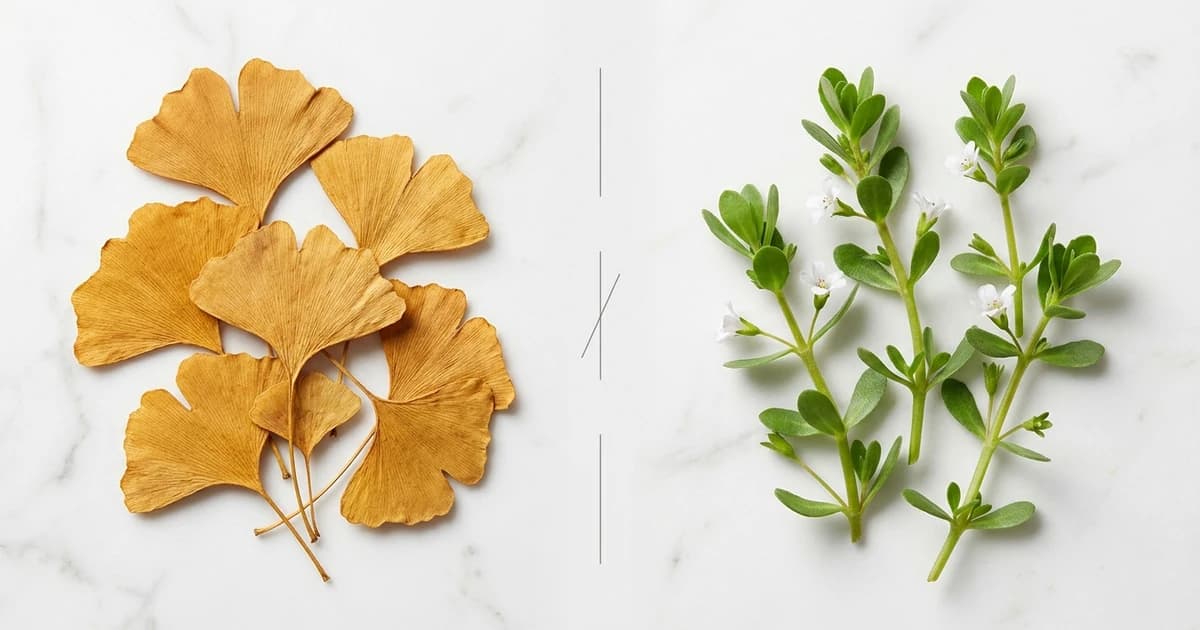
- Lion's Mane Mushroom: preclinical work is more exciting than the current human evidence, which still looks small and mixed for mild cognitive improvement.
- Bacopa Monnieri: one of the more plausible herbal options for memory support, but slower and less consistently useful than the stronger picks above. It also takes 8 to 12 weeks of consistent use to see results.
- Alpha-GPC: a choline donor that makes mechanistic sense, but the evidence in healthy adults is still not strong enough to put it with the top tier.
These aren't bad options. They just don't have the same depth of evidence as the six best supplements for brain health listed above.
How to Pick the Best Supplements for Brain Health (and Stack Them)
Throwing random pills at your brain is not a strategy, and the same applies when evaluating the best brain nootropics across different mechanisms.
Here's a practical framework:
- Foundation layer: Omega-3s (DHA/EPA) and B vitamins for long-term structural support.
- Performance layer: Caffeine + L-theanine for daily focus and attention.
- Endurance layer: theacrine and methylliberine as optional add-ons for people experimenting with longer, smoother stimulant stacks.
- Protection layer: Phosphatidylserine and creatine for membrane health and cellular energy.
The order matters. Start with the foundation. Add performance compounds once your baseline nutrition is solid. That layered approach is how the best brain supplements deliver real, measurable results over time.
Frequently Asked Questions
What is the single best supplement for brain health?
No single product wins outright, but omega-3 fatty acids come closest to a consensus pick because DHA makes up a large share of brain fat and supports membrane and synaptic function. Creatine and the caffeine and L-theanine pairing also have strong evidence. The best choice depends on your goal: long-term structural support versus daily focus and attention.
How long do brain health supplements take to work?
It varies by compound. Caffeine paired with L-theanine acts within 30 to 60 minutes, and a single dose of creatine has shown acute cognitive effects in research. Structural nutrients work on a slower timeline: omega-3s and B vitamins are measured over weeks to months, and bacopa monnieri often needs 8 to 12 weeks of consistent use before any change shows up.
Are brain supplements safe to take together?
Many of these compounds are studied in combination, and stacking complementary mechanisms often works better than single ingredients. Caffeine with L-theanine is a well-researched example. That said, dose still matters, and stimulant compounds like caffeine and theacrine add up across products. Check total caffeine across your day, and talk with your doctor before combining supplements, especially if you take medication.
Why does dose matter so much for brain supplements?
Many products list a clinically studied ingredient but include far less than the amount used in research, a practice often called pixie-dusting. Omega-3s, creatine, and phosphatidylserine each have dose ranges tied to their evidence, so an underdosed capsule may do little. Reading the supplement facts panel for milligram amounts per serving tells you more than the marketing on the front of the label.
Do I need supplements if I eat a healthy diet?
A varied diet rich in fatty fish, leafy greens, legumes, and animal proteins covers a lot of ground, and some people get enough omega-3s and B vitamins from food alone. Gaps are more likely if you are plant-based, over 50, or under chronic stress, when B12 and DHA intake can run low. Food first, supplements to fill specific gaps.
How is Roon different from a typical brain supplement?
Roon takes the transparent-combination approach rather than a long mystery blend. Each sublingual pouch combines four studied compounds: 80mg caffeine, 60mg L-theanine, 25mg methylliberine, and 5mg theacrine, with no nicotine. The format is built for daily focus and energy, the same performance layer described above, so you can see exactly what you are taking. Learn more at the Roon product page.
Invest in Your Brain with the Best Supplements for Brain Health
Your brain is the only organ you can't replace and the one most people neglect the longest. The six best supplements for brain health above represent the strongest evidence-backed options available right now for both acute performance and long-term protection.
The stronger takeaway is that the best supplements for brain health usually come from simple, transparent combinations rather than flashy multi-ingredient mystery blends, which is the design principle behind Roon's nootropic pouches. Roon combines four of these compounds into one sublingual pouch: 80mg caffeine, L-theanine, theacrine, and methylliberine. No nicotine. No jitters. No crash. Clinical testing of this combination showed 100% accuracy on working memory tasks, with effects lasting 6 to 8 hours and no tolerance buildup over time.
You spend money on your body, your skin, your sleep setup. Your brain deserves the same investment. Try Roon here.
By Roon Team