Best Low Caffeine Energy Drinks: 8 Picks at 100 mg or Less
Roon Team
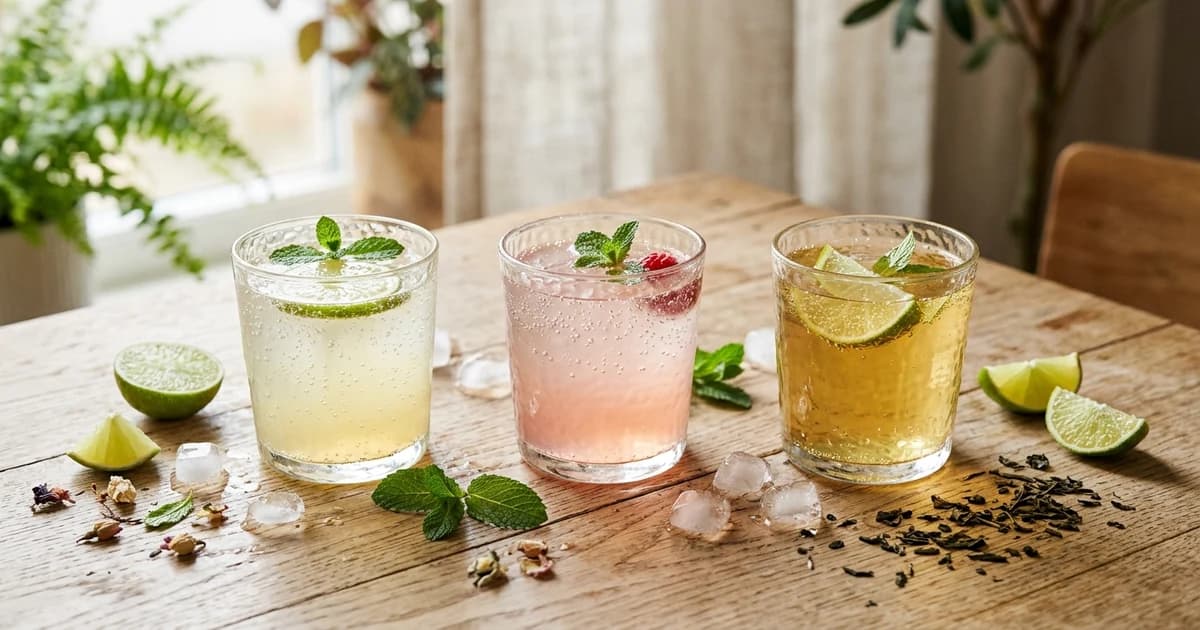
Best Low Caffeine Energy Drinks: 8 Picks at 100 mg or Less
A low caffeine energy drink has 100 mg of caffeine or less per serving, roughly one home-brewed cup of coffee. We checked labels on October 4, 2026, and the lowest picks that cleared: Nuun Sport + Caffeine (40 mg), Red Bull 8.4 oz (80 mg), V8 +Energy (80 mg), Nuun Energy (80 mg), and Alani Nu Mini, Liquid Death Sparkling Energy, and Liquid I.V. Sugar-Free Energy Multiplier (about 100 mg each). Here are all eight, with sugar, sweetener, and the milligrams that actually matter.
Key Takeaways
- The line: 100 mg or less per serving, about one cup of brewed coffee and a quarter of the FDA's 400 mg daily figure for most healthy adults.
- The range starts at 40 mg (Nuun Sport + Caffeine) and tops out at 100 mg (Alani Nu Mini, Liquid Death, Liquid I.V.).
- Sugar is the second filter. Only two products on this list carry double-digit grams: Red Bull original (27 g) and V8 +Energy (10 g total, 0 g added).
- Per serving, not per ounce, is the number that matters. You drink the whole can.
What Counts as a Low Caffeine Energy Drink?
Most mainstream energy drinks now sit at 160 to 200 mg per can. Monster original packs 160 mg per 16 oz. Celsius and Alani Nu regular both hit 200 mg. Ghost matches them at 200 mg per 16 oz. If 200 mg is normal, 100 mg or less is the reasonable line for "low."
That line maps to brewed coffee. The FDA's caffeine table puts regular brewed coffee at 113 to 247 mg per 12 fl oz and energy drinks at 41 to 246 mg per 12 fl oz. A drink at or below 100 mg is at the bottom of that energy-drink range and below the bottom of the brewed-coffee range.
One note on units: some labels list milligrams per ounce. Ignore that. You are going to drink the whole can or mix the whole packet. Milligrams per serving is the number your body gets.
Low Caffeine Energy Drinks Compared
All numbers are from brand websites and product labels, verified October 4, 2026.
| Product | Caffeine / Serving | Serving | Sugar | Sweetener / Note | Best For |
|---|---|---|---|---|---|
| Nuun Sport + Caffeine | 40 mg | 1 tablet in 16 fl oz water | 1 g added | Tablet form | A training-day sip when you want only a nudge |
| Red Bull 8.4 fl oz | 80 mg | 8.4 fl oz can | 27 g | Standard sugar | A classic can at a known dose, if you accept the sugar |
| V8 +Energy (Black Cherry) | 80 mg | 8 fl oz can | 10 g total, 0 g added | Sucralose; caffeine from black and green tea | A juice-based can with no added sugar |
| Nuun Energy | 80 mg | 1 tablet in water | 0 g | Tablet form | A dissolvable tablet you can carry anywhere |
| Alani Nu Mini | 100 mg | 8 fl oz can | 0 g | Zero sugar | Alani fans who want half the regular can's caffeine |
| Liquid Death Sparkling Energy | 100 mg | 12 fl oz can | 0 g | Zero sugar | A full-size can at about one coffee |
| Liquid I.V. Sugar-Free Energy Multiplier | ~100 mg | 1 stick in 16 fl oz water | 0 g | Zero sugar, stick packet | Hydration plus caffeine in one stick |
| Roon (pouch, not a drink) | 80 mg | 1 oral pouch | 0 g | Zero sugar (contains sucralose); includes L-theanine, Dynamine, TeaCrine | People who want a moderate 80 mg dose without a drink, sugar, or nicotine; it is moderate, not low |
Just over the line:
- Guayakí Sparkling Yerba Mate (Pink Grapefruit): 115 mg, 70 calories, 15 g sugar.
- Zevia Energy: 120 mg per 12 oz, stevia-sweetened, zero sugar, zero calories.
For scale (the 160 to 200 mg tier): Monster original 160 mg / 16 oz (54 g sugar), Celsius 200 mg, Alani Nu 200 mg, Ghost 200 mg / 16 oz.
Halving your caffeine is easy in 2026. Most brands now sell a smaller can or a tablet format. Sugar is the second filter, and only Red Bull original and Guayakí on this list carry double-digit grams.
Why Does Caffeine Hit Harder Than It Used To?
The dose did not change. Your clearance rate might have.
Caffeine half-life, the time it takes your body to clear half the dose, varies widely from person to person. A 1983 bioavailability study by Blanchard and Sawers (n=10) measured half-lives ranging from 2.7 to 9.9 hours across healthy men given the same dose. That is a nearly four-fold spread.
A dose that cleared comfortably by bedtime at 25 may linger well past midnight at 50. Genetics, liver enzyme activity, medications, and hormonal changes all shift the number. If you suspect caffeine hits you harder than average, half-life is usually the reason, and a lower-dose drink is a reasonable first move.
Low Caffeine Energy Drinks for Sleep: When to Stop
Cutting to 100 mg helps. But timing helps more.
A 2013 randomized controlled trial by Drake et al. (n=12) found that 400 mg of caffeine taken six hours before bed still reduced monitored sleep by more than an hour. That was a larger dose than any drink on this list (five times a Nuun tablet, four times a Liquid Death can), but the principle holds: caffeine taken too late still costs you sleep, even at moderate amounts.
The plain rule: finish your can or pouch by early afternoon if sleep is your reason for cutting back. For a more precise cutoff by dose, see our guide on the latest time to have caffeine.
If you are pregnant, breastfeeding, have a heart condition, or take medication that interacts with caffeine, talk to your clinician before picking a dose.
Low Sugar Caffeine Drinks: Reading the Label in 30 Seconds
Three things to check, in order:
- Milligrams per serving, and servings per container. Some cans hold two servings. The big number on the front is sometimes per serving, not per can. Drink the can, get double.
- Total sugars vs. added sugars. V8 +Energy Black Cherry shows 10 g total sugars but 0 g added sugars. The sugar comes from juice concentrate. Whether that distinction matters to you depends on your goals, but the label makes it visible.
- Sweetener. "Zero sugar" almost always means a non-sugar sweetener is doing the work. On this list: sucralose in V8 +Energy, stevia in Zevia. Neither is calorie-free by accident.
If you want the best low caffeine pre-workouts and apply the same under-100 mg logic to training formulas, the label-reading process is identical.
Tea, Half-Caff Coffee, and Other Low Caffeine Options
Not everyone wants a can. The FDA puts an 8-ounce cup of green or black tea at 30 to 50 milligrams, well under the 100 mg line. Decaf coffee lands at 2 to 15 mg per 8 fl oz, depending on the bean and the process.
Half-caff coffee (a 50/50 blend of regular and decaf) typically lands around 55 to 120 mg per 12 oz mug, depending on the regular coffee's starting point. It is not on a label, so the number is less precise than a can, but it is a reasonable middle ground if you prefer the ritual of brewing.
Green tea is the lowest-caffeine option here that still delivers a noticeable lift. Black tea sits between green tea and the bottom of the energy-drink range. Both are worth considering if your only goal is less caffeine, not a specific product format.
Pick the Dose First, Then the Can
The best low caffeine energy drink is whichever one matches your target milligrams, fits your sugar preference, and stops early enough that it does not follow you to bed. The range runs from 40 mg (Nuun Sport + Caffeine) to 100 mg (Alani Nu Mini, Liquid Death, Liquid I.V.), and every product on this list is at or below one cup of brewed coffee.
Check the label for per-serving milligrams, not per-ounce. Check for total sugar and the sweetener behind "zero sugar." And finish it by early afternoon if sleep is what brought you here.
Frequently Asked Questions
What is the lowest caffeine energy drink?
Of the brand-verified products on this list, Nuun Sport + Caffeine at 40 mg per tablet is the lowest. Green and black tea (30 to 50 mg per 8 fl oz, per FDA data) are technically lower, but they are not marketed as energy drinks. If you want something in a can, the 8.4 oz Red Bull and V8 +Energy both sit at 80 mg.
How much caffeine is in a small Red Bull?
The 8.4 fl oz Red Bull contains 80 mg of caffeine and 27 g of sugar, per Red Bull's product page. Larger Red Bull sizes exist (12, 16, and 20 fl oz), but the brand does not list per-can milligrams for those sizes on the same page.
Is 100 mg of caffeine a lot?
It is about one home-brewed cup of coffee and a quarter of the FDA's 400 mg daily figure for most healthy adults. By energy-drink standards, it is on the low end. For a deeper breakdown, see Is 100 mg of Caffeine a Lot?
Are there energy drinks with no caffeine?
Yes, but they are a different category entirely, relying on B vitamins, adaptogens, or other ingredients for a perceived lift. We cover those separately in Energy Drinks Without Caffeine.
Does Alani Nu make a low caffeine drink?
Yes. The Alani Nu Mini is an 8 fl oz can with 100 mg of caffeine, zero sugar. The regular Alani Nu can has 200 mg. For the full lineup's numbers, see our Alani Nu caffeine breakdown.
Is Roon a low caffeine option?
No. Roon contains 80 mg of caffeine per pouch, the same as an 8.4 oz Red Bull. That is lower than most 16 oz energy drink cans, but it is a moderate dose, not a low one.
80 mg Is Moderate. Here Is What It Buys You.
This article set the line at 100 mg or less. Roon sits at 80 mg, so it clears the number, but we labeled it "moderate, not low" for a reason. The second complaint from people cutting caffeine is not the dose itself. It is that a small can fades by 2 p.m., and the second one puts the daily total right back where it started.
Roon is built for the fade problem. Each pouch pairs 80 mg of caffeine with 60 mg L-theanine, 25 mg methylliberine (Dynamine), and 5 mg theacrine (TeaCrine) in a sublingual format. The mechanism behind the longer window: methylliberine slowed caffeine clearance in a randomized crossover PK study (n=12), cutting oral clearance from 41.9 to 17.1 L/hr and extending caffeine's half-life from 7.2 to 15 hours with no increase in peak concentration. The dose gap matters: that study used 100 mg methylliberine with 150 mg caffeine, about four times Roon's methylliberine and nearly twice its caffeine. Roon's felt window of 6 to 8 hours reflects the same mechanism directionally, not the study's exact result.
The trade-off: a longer tail means you should stop at least 8 hours before bed. Roon is zero sugar (sweetened with sucralose), zero nicotine, and designed to minimize the crash and jitters that come with higher-dose options. From $9.16 per tin on a 12-tin subscription ($0.61 per pouch), or $15.00 per tin one-time. If your problem is the second can, not the first, it is worth a look.
Related from Roon
- Is 100 mg of Caffeine a Lot?
- Caffeine Sensitivity: Why Coffee Hits You Harder Than It Used To
- The Latest Time to Have Caffeine Before Bed
- Energy Drinks Without Caffeine
Written by Roon Team