Choline Bitartrate vs Citicoline vs Alpha-GPC
Roon Team
Choline Bitartrate vs Citicoline vs Alpha-GPC: Which Choline Source Actually Reaches Your Brain?
Three supplements claim the same job: feed your brain the raw material it needs to make acetylcholine, the neurotransmitter behind memory, focus, and muscle control. They are not equals. The best choline source depends on how much usable choline survives digestion, crosses into your brain, and gets converted into something your neurons can use.
Most people buy on price. That is exactly why most people pick the wrong one.
Here is the part the label never tells you. A gram of choline bitartrate and a gram of alpha-GPC deliver wildly different amounts of brain-ready choline, and one of them has a clinical track record the other two are still chasing.
Key Takeaways
- Choline bitartrate is cheap and useful for general dietary intake, but it has weak evidence for acute cognitive effects.
- Citicoline (CDP-choline) delivers choline plus a cytidine/uridine component that supports attention and brain cell membranes.
- Alpha-GPC carries the highest percentage of brain-usable choline by weight and crosses the blood-brain barrier well.
- Your best choline source depends on the goal: foundational nutrition, attention support, or acetylcholine and physical output.
Why Choline Matters in the First Place
Your body cannot make enough choline on its own. Choline produced endogenously by the liver is not sufficient for adequate physiological functions, necessitating daily dietary intake, and roughly 90% of Americans do not reach the recommended daily intake of dietary choline.
The official targets are higher than most diets deliver. According to the Linus Pauling Institute at Oregon State University, the recommended intake for adults is 425 mg/day for women and 550 mg/day for men, rising to 450 mg/day during pregnancy and 550 mg/day during lactation.
Real-world intake falls short of that. The same source reports that in a US national survey, mean dietary intakes of choline were 284 mg/day for women and 390 mg/day for men, and only 6% of women and 11% of men had dietary intakes greater than the adequate intake.
So the question is not whether you need choline. You probably do. The question is which form gives your brain the most for the money.
How Choline Becomes Brain Fuel
Choline has two main jobs in the brain. It builds acetylcholine, the neurotransmitter your brain uses for learning, attention, and memory. It also builds phosphatidylcholine, a fat that forms the membranes of your brain cells.
Different choline forms enter that system at different points. Some have to be broken down and rebuilt before they help. Others arrive closer to the finished product.
That single fact explains most of the difference between the three options below.
Choline Bitartrate vs Citicoline vs Alpha-GPC: The Head-to-Head
Here is the short version, then the detail.
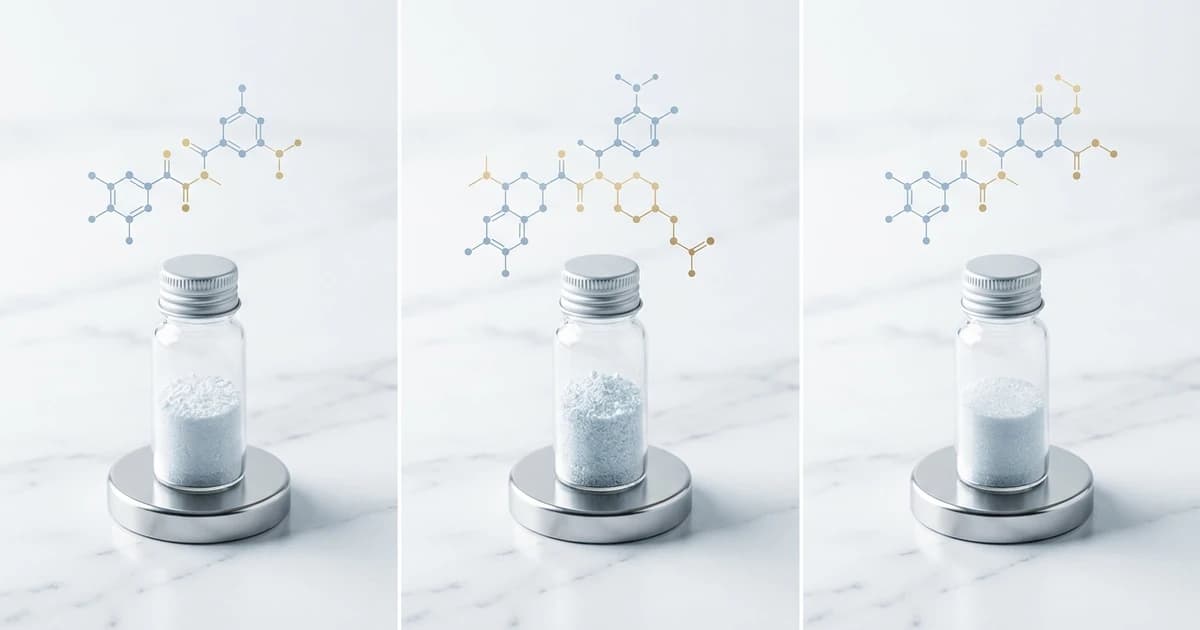
| Choline Form | Approx. Choline by Weight | Crosses Blood-Brain Barrier Well | Best Use Case | Cost |
|---|---|---|---|---|
| Choline Bitartrate | ~41% | Limited | General dietary choline intake | Low |
| Citicoline (CDP-choline) | ~18% choline (plus cytidine/uridine) | Yes | Attention, focus, brain membrane support | Medium |
| Alpha-GPC | ~40% | Yes | Acetylcholine, memory, physical output | High |
The choline-by-weight number matters, but it is not the whole story. A form can be rich in choline on paper and still struggle to reach the brain. That is the core of the choline bitartrate vs citicoline debate.
Choline Bitartrate: Cheap, Common, and Underwhelming for Cognition
The verdict: a solid dietary choline source, a weak nootropic.
Choline bitartrate is choline bound to tartaric acid. It is the form you find in most multivitamins and budget brain-health blends because it is inexpensive and high in choline by weight.
The problem is the brain. A controlled trial published in PLOS One tested it directly. Across three experiments, participants took 2.0 to 2.5 g of either choline bitartrate or placebo about 60 minutes before memory tasks, and choline did not markedly enhance memory performance during any of the tasks.
The authors did not hedge. The null result was strongly supported by Bayesian statistics, and they concluded that choline likely has no acute effects on cholinergic memory functions in healthy human participants.
That does not make it useless. For closing a dietary gap, choline bitartrate works fine. If you want a same-day mental edge, the evidence is thin.
Citicoline (CDP-Choline): The Attention Specialist
The verdict: the strongest pick if attention and focus are the goal.
Citicoline is cytidine diphosphate-choline, the natural intermediate your body uses to build phosphatidylcholine. It delivers less raw choline by weight than the other two, around 18%, but it brings a second active piece: cytidine, which converts to uridine in the body.
That extra component is the point. Citicoline supports both acetylcholine production and the repair of neuronal membranes, which is why it has been studied for attention, processing speed, and age-related cognitive support.
Interestingly, one finding from the choline bitartrate research points to why combinations matter. The PLOS One paper noted that in earlier work, choline on its own did not improve memory, but a combination of 2 g of choline bitartrate with 25 mg of caffeine markedly improved performance on visual and auditory memory tasks compared with placebo.
The lesson: delivery and context change everything. A choline form rarely works in isolation the way the label implies.
Alpha-GPC: The Acetylcholine and Output Pick
The verdict: the most direct route to acetylcholine, and the choice with the strongest physical-performance data.
Alpha-glycerophosphocholine carries about 40% choline by weight and crosses the blood-brain barrier efficiently. Because it is already part of the phospholipid pathway, your brain converts it into acetylcholine with little detour.
This is the form athletes reach for, since it has been studied for power output and reaction time alongside cognition. It is also the most expensive of the three, which is the trade-off you accept for higher brain delivery.
If your priority is raw acetylcholine support, the citicoline vs alpha gpc decision usually tips toward alpha-GPC. If your priority is attention and membrane support, citicoline holds its ground.
So, Which Choline Supplement Should You Take?
Match the form to the goal instead of chasing one "winner." With the choline forms compared side by side, the pattern is clear.
- For general nutrition and filling a dietary gap: choline bitartrate. Cheap, high in choline by weight, and adequate when you simply need more daily choline.
- For attention, focus, and brain membrane support: citicoline. The cytidine/uridine component is the differentiator.
- For acetylcholine, memory, and physical output: alpha-GPC. The highest practical brain delivery, at a higher price.
When people ask about choline bioavailability, this is the honest answer: bitartrate is rich on paper but limited in the brain, while citicoline and alpha-GPC are built to reach it. That is why the "which choline supplement" question has three correct answers depending on what you actually want.
Conclusion
Choline is one of the few brain nutrients where most people genuinely run a deficit, and the form you choose decides how much of it ever reaches a neuron. Choline bitartrate covers the dietary basics but underperforms as a same-day cognitive tool. Citicoline earns its place when attention is the target. Alpha-GPC delivers the most brain-ready choline and the best physical-performance record, at the highest cost.
Pick the pathway that matches your goal, check the choline-by-weight on the label, and remember that any choline form works best as part of a complete approach rather than a standalone fix. The "best" source is the one aligned with the outcome you care about, not the one with the loudest packaging.
Frequently Asked Questions
What is the best choline source for cognitive performance?
There is no single best choline source for everyone. For attention and focus, citicoline has the strongest case thanks to its cytidine/uridine component. For acetylcholine support and physical output, alpha-GPC delivers the most brain-ready choline by weight. Choline bitartrate is best for filling a general dietary gap rather than producing an acute mental edge, since controlled research found no marked short-term memory benefit in healthy adults.
Is alpha-GPC better than citicoline?
It depends on your goal. Alpha-GPC carries more choline by weight and converts efficiently into acetylcholine, making it the stronger pick for memory and physical performance. Citicoline delivers less raw choline but adds a cytidine/uridine component that supports attention and brain cell membranes. Neither is universally superior. The citicoline vs alpha gpc choice comes down to whether you prioritize acetylcholine output or attention and membrane support.
Why is choline bitartrate so cheap?
Choline bitartrate is simple to manufacture and high in choline by weight, around 41%, so it appears generous on a supplement label. The catch is brain delivery. A controlled PLOS One trial found no marked acute memory benefit in healthy young adults at 2.0 to 2.5 g doses. It remains a reasonable, low-cost way to raise daily dietary choline intake.
How much choline do I actually need per day?
The recommended adequate intake for adults is 425 mg/day for women and 550 mg/day for men, with higher targets during pregnancy and lactation. Most people fall short. US survey data show mean intakes of roughly 284 mg/day for women and 390 mg/day for men, and only a small minority exceed the recommended amount. Food sources like eggs, liver, and soybeans help close the gap.
Does choline supplementation improve memory?
Not always, and not on its own in the short term. A PLOS One study found that choline bitartrate produced no measurable memory benefit in healthy young adults after a single dose. The same body of research noted that pairing choline with caffeine improved memory task performance, which suggests context and combination matter more than any single ingredient in isolation.
Can I take choline with caffeine?
Yes, and the combination is well studied. Research referenced in the PLOS One paper found that 2 g of choline bitartrate combined with 25 mg of caffeine improved visual and auditory memory performance versus placebo, even though choline alone did not. This points to a broader principle: cognitive ingredients often perform better in thoughtfully designed stacks than as standalone single ingredients.
Which choline form crosses the blood-brain barrier best?
Citicoline and alpha-GPC are both designed to reach the brain efficiently, which is why they outperform choline bitartrate for cognitive uses. Alpha-GPC is especially direct because it sits within the phospholipid pathway your brain already uses to make acetylcholine. Choline bitartrate is high in choline by weight but shows limited acute brain effects, which is the central finding of the choline bitartrate vs citicoline comparison.
Choline Builds the Supply. Roon Drives the Signal.
Whatever choline form you land on, it solves one specific problem: giving your brain enough raw material to build acetylcholine and healthy cell membranes. That is a supply-side fix, and it works on its own timeline over days and weeks.
Roon plays a different position. It is not a choline supplement and not a replacement for the dietary choline most people are missing. Roon is a zero-nicotine sublingual pouch built around a focused 4-ingredient arousal stack: 80 mg caffeine, 60 mg L-theanine, 25 mg methylliberine (Dynamine), and 5 mg theacrine (TeaCrine). It targets the on-demand side of focus, the part you feel in minutes, not weeks.
The format is the edge. Because Roon is absorbed sublingually, onset lands in 5 to 10 minutes and the window runs 6 to 8 hours with no jitters, no crash, and no tolerance buildup. Pair it with a choline source that fits your goal, and you cover both halves of focus: the supply and the signal. If you want fast, clean attention without the coffee spike, try Roon as the arousal layer on top of your choline routine.
Written by Roon Team