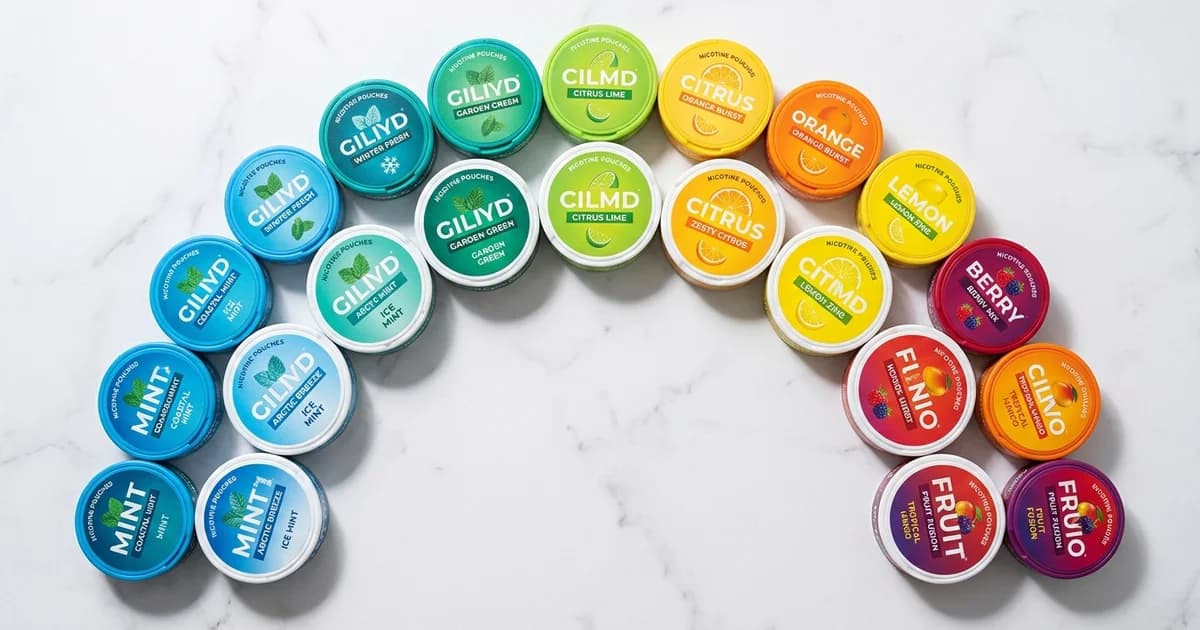
Are ZYNs Biodegradable? What the Pouch Is Made Of

Are ZYNs Biodegradable? What the Pouch Is Made Of
Not in any practical sense. ZYN does not publish the exact composition of its pouch fabric, but a 2024 Danish Environmental Protection Agency lab study found that nicotine pouches are made of semi-synthetic cellulose, chemically closest to cigarette filters, and expected to break down slowly in the environment. A used pouch can still hold most of its original nicotine. Put it in the trash, not the ground or the toilet.
What Is a ZYN Pouch Made Of?
ZYN publishes the powder ingredients inside the pouch (nicotine salt, hydroxypropyl cellulose, microcrystalline cellulose, maltitol, gum arabic, sodium carbonate and bicarbonate, sweeteners, and flavorings, per the ZYN FAQ), but not the fabric that holds the powder. For a deeper look at the fill, see our ZYN ingredients breakdown.
The FDA's authorization documents for ZYN describe the packaging as "certified child-resistant polypropylene cans and safety lids," but the pouch material itself is redacted in the public summary. Philip Morris International's website says the pouches are "cellulose, or plant fiber" without further detail, per STAT/The Examination.
The Danish EPA report fills the gap. Researchers at DTU Sustain used infrared spectroscopy (FTIR) on pouch material and describe the fabric as semi-synthetic cellulose, such as viscose fleece, with a polymer binder that melts when heated to seal the edges (for example a biodegradable polyester such as PLA). The report also cites ZYN's UK help centre (2023), which describes the pouch as plant fibers held together by a binder that is not fully biodegradable.
How Long Does a Nicotine Pouch Take to Break Down?
Nobody has measured it in real soil or water. The Danish EPA report's FTIR spectra showed the pouch fabric most closely resembles cigarette filters (cellulose acetate), followed by wet wipes and disposable cloths. The chemical modification that makes cellulose into a usable non-woven fiber also slows its environmental breakdown. The report says pouches could be regarded as a semi-synthetic polymer, and so a plastic, though the line is not clear-cut, and that their fate in the environment needs more study. As of July 2026, no published study had looked at microplastics from nicotine pouches.
| What the Danish EPA study measured | Detail |
|---|---|
| Lab | DTU Sustain, for Miljøstyrelsen (Danish EPA) |
| Published | April 2024 (Miljøprojekt 2267) |
| Method | FTIR spectroscopy of pouch fabric |
| Closest spectral match | Cigarette filters (cellulose acetate) |
| Residual nicotine in used pouches | 63% average (used VELO "Freeze 4" pouches from five cans; use time unknown) |
| Estimated pouches littered/year (Denmark) | 5.3 million, an estimate (about 3.3 tonnes total, about 0.5 tonnes pouch material) |
| Field degradation data | None; report recommends further study |
Source: Miljøstyrelsen, Miljøprojekt 2267, April 2024.
Why a Used Pouch Is Still a Problem
A fresh ZYN pouch is tiny, but a used one is not empty: the Danish study found that used VELO pouches collected from five cans still held 63% of their declared nicotine on average (volunteers donated them and use time was not recorded, so real retention varies). That leftover nicotine is the real disposal concern, not just the fabric.
Pets. The Pet Poison Helpline calls nicotine "a rapidly acting toxin with a narrow safety margin for pet animals" and explicitly lists nicotine pouches as a source. The Danish report documents cases of dogs poisoned by eating discarded pouches.
Children. Between April 2022 and March 2025, nicotine pouch exposure cases reported to U.S. Poison Centers rose steadily, and about 72% involved children under five. Poison.org advises: "Put used pouches in sealed containers that children cannot open." For more on accidental ingestion, see what happens if you swallow a ZYN.
How Much Pouch Litter Is There?
Sweden offers the best data. A 2024 waste survey by Keep Sweden Tidy (Håll Sverige Rent) found snus and nicotine pouches made up 21% of all urban litter in measured cities, second only to cigarette butts at 49%. Of that snus litter, 65% was white (tobacco-free) nicotine pouches. Only 37% of Swedish respondents knew the pouches contain plastic.
In Denmark, the EPA study estimated 5.3 million pouches end up in nature each year, roughly 3.3 tonnes of waste, about 0.5 tonnes of which is pouch material. That is a model, not a count: it assumes daily users litter 5% of their pouches, and the usage inputs come partly from a survey of 40 users.
No comparable U.S. litter count exists.
How to Dispose of a Used ZYN
- Hold it until you reach a bin. ZYN says the Ultra can has a disposal compartment in the top; with any other can, wrap the used pouch and keep it until you find a trash can.
- Throw it in the household trash. ZYN's FAQ says to dispose of used pouches "in your household or public waste container, and in accordance with local regulations."
- Never flush it. The pouch is a non-woven fabric, similar to a wet wipe. It will not dissolve and can clog pipes.
- Never compost it. The pouch is not certified compostable, ZYN describes its binder as not fully biodegradable, and a used pouch still carries nicotine.
- Never drop it on the ground. The fabric breaks down slowly, the leftover nicotine stays in it, and dogs and small children can find it.
- Empty the can before recycling. ZYN's can is polypropylene (per the FDA), and the Danish report notes used pouches must be taken out before a can can go to plastic recycling. VELO's FAQ says packaging "may be recyclable in some areas" and to check local rules. Do not assume every ZYN can is recyclable everywhere.
If a Child or Pet Gets a Pouch
Call immediately:
- Poison Help (humans): 1-800-222-1222 or poison.org
- Pet Poison Helpline: (855) 764-7661 (a consultation fee applies)
For an adult who accidentally swallows a single pouch, poison.org notes that toxicity is unlikely. Children are a different matter, because a pouch carries far more nicotine relative to a small body. Poison.org's advice is to store pouches up, away, and out of reach.
Related from Roon
- ZYN Ingredients: What Is in Each Pouch
- What Happens If You Swallow a ZYN
- How Many Pouches in a ZYN Can
Frequently Asked Questions
Can you flush a ZYN down the toilet?
No. The pouch is a non-woven fabric, closer to a wet wipe than to toilet paper, so it is not made to fall apart in water. Treat it like a wipe and put it in the trash.
Can you compost nicotine pouches?
No. Nicotine pouches are not certified compostable, ZYN describes the binder as not fully biodegradable, and a used pouch can still hold most of its nicotine. A compost pile is also somewhere pets dig.
Are ZYN cans recyclable?
Sometimes. The FDA lists the can as polypropylene (recycling code #5), but whether your program takes it depends on local rules, as VELO's FAQ also says of its own packaging. Empty every used pouch out of the can and lid first; the Danish report notes cans full of used pouches often end up in residual waste.
Is nicotine itself bad for soil and water?
The Danish report cites the REACH dossier, which classes nicotine itself as readily biodegradable (OECD test 301B). The slow part is the pouch fabric, not the nicotine. That does not make a dropped pouch harmless: until it breaks down, the nicotine in it can still poison a dog or a child who finds it.
If You Are Rethinking the Can Anyway
If the question of what a pouch leaves behind has you reconsidering the nicotine habit, one option is to keep the lip ritual and swap the active ingredient. Roon sits in the same spot under the lip, but the tin lists zero nicotine; each pouch holds 80 mg caffeine, 60 mg L-theanine, 25 mg methylliberine (Dynamine) and 5 mg theacrine (TeaCrine). Methylliberine slows caffeine clearance: in a randomized, double-blind crossover study (n = 12), co-dosing extended caffeine's half-life from 7.2 to 15 hours with no higher peak (study). That trial dosed 100 mg methylliberine with 150 mg caffeine, about 4x and 1.9x a Roon pouch, so the mechanism applies directionally, not at the study's exact magnitude. A 15-hour half-life is not 15 hours of energy; at 80 mg, most people feel a pouch for 6 to 8 hours, with no jitters and no crash. Keep it to four pouches a day, and give yourself at least eight hours between your last pouch and bedtime.
Roon is not greener than ZYN; every used pouch, Roon's included, belongs in the trash. What changes is the nicotine. Roon runs from $9.16 per tin on a 12-tin subscription.
Sources
- Miljøstyrelsen (Danish EPA), Nikotinposer: indhold og miljøkonsekvenser, Miljøprojekt 2267, April 2024
- Keep Sweden Tidy (Håll Sverige Rent), 2024 waste survey, reported via Nordic Welfare Centre, Feb 2025
- STAT / The Examination, report on ZYN pouch materials and microplastic risk, Jul 14, 2026
- FDA, Properly Store Nicotine Pouches to Prevent Accidental Exposure to Children and Pets, Sep 2025
- Poison.org, Nicotine pouches: smoke free but not risk free
- Pet Poison Helpline, Nicotine
- ZYN US FAQ
- VELO US FAQ
- Methylliberine and caffeine pharmacokinetic crossover study, Journal of Exercise and Nutrition
- FDA, PMTA decision summary for 20 ZYN products, Jan 2025
Written by Roon Team