Alpha GPC in Food: The Best Natural Sources
Roon Team
Alpha GPC in Food: The Best Natural Sources (and Why They're Probably Not Enough)
Your brain burns through choline faster than you replace it. That's not speculation. The National Institutes of Health set the Adequate Intake for choline at 550 mg/day for men and 425 mg/day for women, and most people fall short. Alpha GPC in food, one of the most bioavailable forms of choline available, shows up in everything from eggs to organ meats. But the amounts are small. Really small.
This guide breaks down exactly which foods contain alpha GPC, how much you're actually getting per serving, and what the science says about whether diet alone can cover your cognitive bases.
Key Takeaways
- Alpha GPC (L-alpha-glycerophosphorylcholine) is a natural choline compound found in several common foods, with beef liver topping the list at roughly 78 mg per 100g.
- Most fruits and vegetables contain alpha GPC in trace amounts, often under 5 mg per 100g.
- Alpha GPC is one of the best choline sources for brain function because it crosses the blood-brain barrier efficiently.
- Even with a choline-rich diet, hitting optimal alpha GPC levels through food alone is difficult without supplementation.
What Is Alpha GPC, and Why Does It Matter?
Alpha GPC (alpha-glycerophosphorylcholine) is a phospholipid that your body produces naturally in small quantities. Alpha GPC is also a direct precursor to acetylcholine, the neurotransmitter responsible for memory, learning, and muscle contraction.
What makes alpha GPC different from other choline forms? Two things. First, alpha GPC is roughly 41% choline by weight, which is higher than most other supplemental forms. Second, alpha GPC crosses the blood-brain barrier with relative ease, meaning more of what you consume actually reaches your neurons.
A 2024 randomized, double-blind, placebo-controlled study published in Nutrients found that a single 630 mg dose of alpha GPC improved cognitive processing speed and Stroop test performance in healthy, resistance-trained men. That's a meaningful effect from a single dose, which tells you something about how responsive the brain is to this compound.
Alpha GPC in Food: Where to Find It Naturally
Here's where things get interesting, and a little frustrating. Alpha GPC in food exists in real dietary sources. But the concentrations are low compared to what clinical studies use. According to data compiled by Examine, here's what the numbers look like:
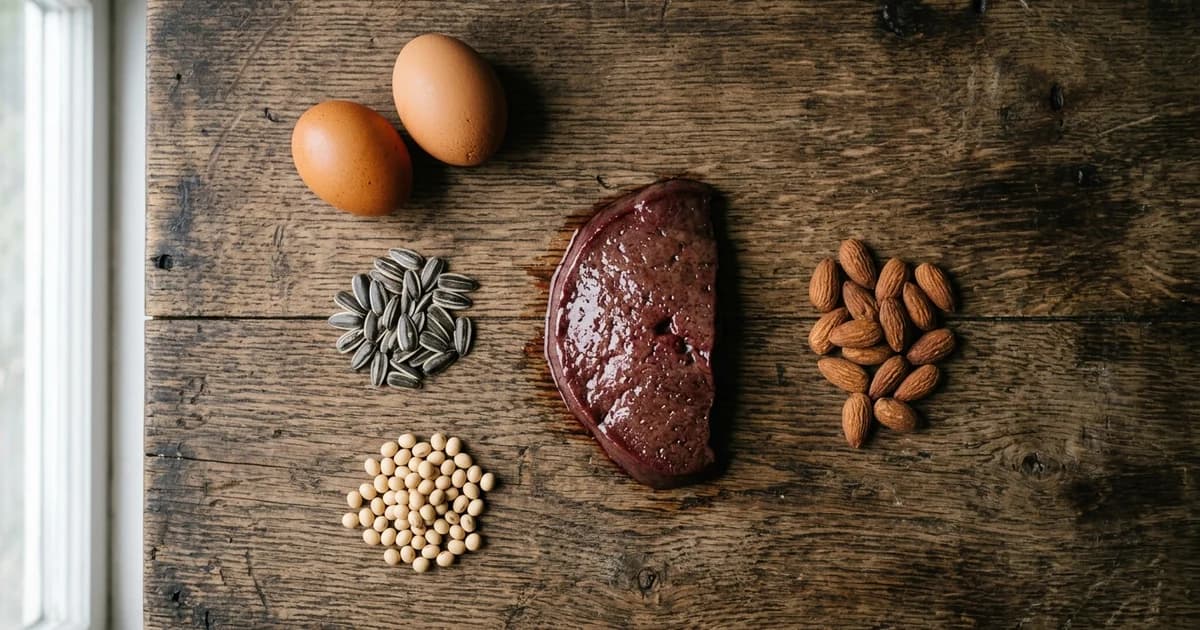
Animal Sources (Highest Alpha GPC in Food Content)
| Food | Alpha GPC (mg per 100g) |
|---|---|
| Beef liver | 77.93 |
| Beef (various cuts) | 10–70 (varies by cut) |
| Chicken breast | ~10–15 |
| Eggs (whole) | ~0.6 |
| Dairy/Milk | Trace amounts |
Beef liver dominates this list. At nearly 78 mg per 100g, beef liver contains more alpha GPC in food than any other commonly eaten source. That said, 100 grams of beef liver still delivers less than one-eighth of the 630 mg dose used in the cognitive performance study mentioned above.
Fruits
| Food | Alpha GPC (mg per 100g) |
|---|---|
| Bananas | 5.60 |
| Grapefruit | 1.16 |
| Oranges | 1.10 |
| Strawberries | 0.86 |
| Avocado | 0.73 |
| Cantaloupe | 0.71 |
| Blueberries | 0.61 |
Bananas are the standout here, but "standout" is relative. You'd need to eat roughly 11 kilograms of bananas to match a single clinical dose of alpha GPC. That's about 70 bananas. In one sitting. Not practical.
Vegetables & Other Plant Sources of Alpha GPC in Food
| Food | Alpha GPC (mg per 100g) |
|---|---|
| Cabbage | 3.47 |
| Broccoli | 1.32 |
| Sauerkraut | 0.94 |
| Onions | 0.57 |
| Cucumber | 0.48 |
| Spinach | 0.21 |
Vegetables contribute even less alpha GPC in food. Cabbage leads the pack at 3.47 mg per 100g, which is still negligible in the context of cognitive performance dosing.
Dairy and Other Sources
Milk and dairy products contain trace amounts of alpha GPC in food, though precise measurements vary by product. Fermented dairy like yogurt and kefir may contain slightly higher levels due to the enzymatic breakdown of phospholipids during fermentation, but the numbers remain in the low single digits per 100g.
Soy products, wheat germ, and certain legumes also contribute small amounts of choline in various forms. But again, the alpha GPC fraction of that total choline is minimal.
Alpha GPC vs. Total Choline: An Important Distinction
Here's a common point of confusion. Many "choline-rich food" lists cite total choline content, not alpha GPC in food specifically. These are related but different measurements.
A hard-boiled egg contains about 147 mg of total choline. Beef liver packs around 356 mg of total choline per 3-ounce serving. But total choline includes multiple forms: phosphatidylcholine, sphingomyelin, phosphocholine, and alpha GPC. Only a fraction of that total exists as alpha GPC.
Why does this matter? Because alpha GPC and other choline forms don't behave identically in the body. According to Nootropics Depot, alpha GPC demonstrates roughly 90% bioavailability in animal studies and crosses the blood-brain barrier more efficiently than standard choline forms like choline bitartrate.
So when you see a food described as "high in choline," that doesn't automatically mean it's rich in alpha GPC in food terms. The distinction matters if your goal is cognitive performance rather than just meeting baseline nutritional needs.
The Choline Gap: Why Alpha GPC in Food Falls Short
The NIH's Adequate Intake for choline sits at 550 mg/day for adult men and 425 mg/day for adult women. These numbers represent the minimum to prevent deficiency symptoms like liver damage, not the optimal amount for peak cognitive function.
And most people don't even hit the minimum. Research published in the journal Nutrients found that the richest sources of total choline are animal-origin foods, which many people don't eat daily. Vegetarians, vegans, and anyone limiting red meat or eggs faces an even steeper climb.
The math gets worse when you isolate alpha GPC in food specifically. If beef liver, the single best dietary source, provides about 78 mg of alpha GPC per 100 grams, you'd need to eat over 800 grams of liver daily to approach the doses used in clinical research. That's nearly two pounds. Every day.
For context, the Alzheimer's Drug Discovery Foundation notes that alpha GPC may increase brain levels of acetylcholine, a neurotransmitter critical for memory and learning, and that neurons producing acetylcholine are among the first lost in cognitive decline. Keeping those levels topped off matters. But alpha GPC in food alone makes it a steep challenge.
Best Dietary Strategy for Alpha GPC Foods
You can still build a diet that maximizes your natural alpha GPC in food intake. Here's what a high-choline day might look like:
- Breakfast: 3 whole eggs (scrambled or poached) with sautéed spinach
- Lunch: Grilled chicken breast with a side of broccoli and cabbage slaw
- Dinner: 4 oz beef liver with roasted vegetables
- Snack: A banana and a handful of almonds
This gets you a solid choline foundation. You'll cover a good portion of your daily Adequate Intake for total choline, and you'll pick up meaningful (if modest) amounts of alpha GPC in food from the liver and eggs.
But let's be honest about the ceiling here. Even this optimized meal plan delivers a fraction of the alpha GPC doses that clinical studies associate with measurable cognitive benefits. The 2024 study in Nutrients used 630 mg of supplemental alpha GPC, a number that's simply out of reach through food.
Why Alpha GPC Crosses the Blood-Brain Barrier Better
Not all choline reaches your brain equally. The blood-brain barrier is selective. It lets some molecules through and blocks others.
Alpha GPC rapidly delivers choline to the brain across the blood-brain barrier and serves as a direct biosynthetic precursor to acetylcholine. Choline bitartrate, by comparison, is about 40% choline by weight but does not easily cross the blood-brain barrier, making it less effective for cognitive applications.
This is why researchers studying cognitive performance tend to use alpha GPC or citicoline rather than cheaper choline forms. The delivery mechanism matters as much as the raw choline content.
Who Needs to Pay Extra Attention to Alpha GPC in Food Intake?
Certain groups face a steeper choline deficit than others.
Pregnant and breastfeeding women have higher choline demands. The NIH recommends 450 mg/day during pregnancy and 550 mg/day during lactation, yet dietary surveys consistently show most women in these groups fall short.
Vegetarians and vegans miss out on the richest alpha GPC in food sources entirely. Without eggs, liver, and other animal products, plant-based eaters rely on sources that contain fractions of a milligram per serving.
Older adults may benefit from higher alpha GPC intake as well. Acetylcholine production naturally declines with age, and the Alzheimer's Drug Discovery Foundation notes that acetylcholine-producing neurons are among the first affected during age-related cognitive decline.
Athletes and high-performers represent another group with elevated needs. Intense physical and mental exertion depletes choline stores faster, and the 2024 study in Nutrients specifically tested alpha GPC's effects on resistance-trained men for this reason.
A Smarter Way to Get Your Alpha GPC Beyond Food
Eating choline-rich foods is a good baseline strategy. Eggs, liver, chicken, and cruciferous vegetables all contribute to your daily choline pool, and they carry other nutritional benefits too, from B vitamins to iron to folate.
But if you're specifically after the cognitive performance benefits that alpha GPC delivers, food alone leaves a gap. The concentrations of alpha GPC in food, even the richest dietary sources, sit orders of magnitude below the doses used in clinical research.
That's where a targeted supplement makes sense. Roon is a sublingual cognitive performance pouch featuring caffeine, L-theanine, theacrine, and methylliberine. Roon is designed to deliver these compounds directly through the oral mucosa, bypassing the slower digestive route. No pills to swallow, no powder to mix, and no two pounds of liver to choke down at breakfast.
If you're already eating well and want to close the gap between alpha GPC in food and the levels that actually move the needle on focus and mental clarity, Roon is worth a look.