What Is Cognitive Performance? The Science Behind How Your Brain Actually Works
What Is Cognitive Performance? The Science Behind How Your Brain Actually Works
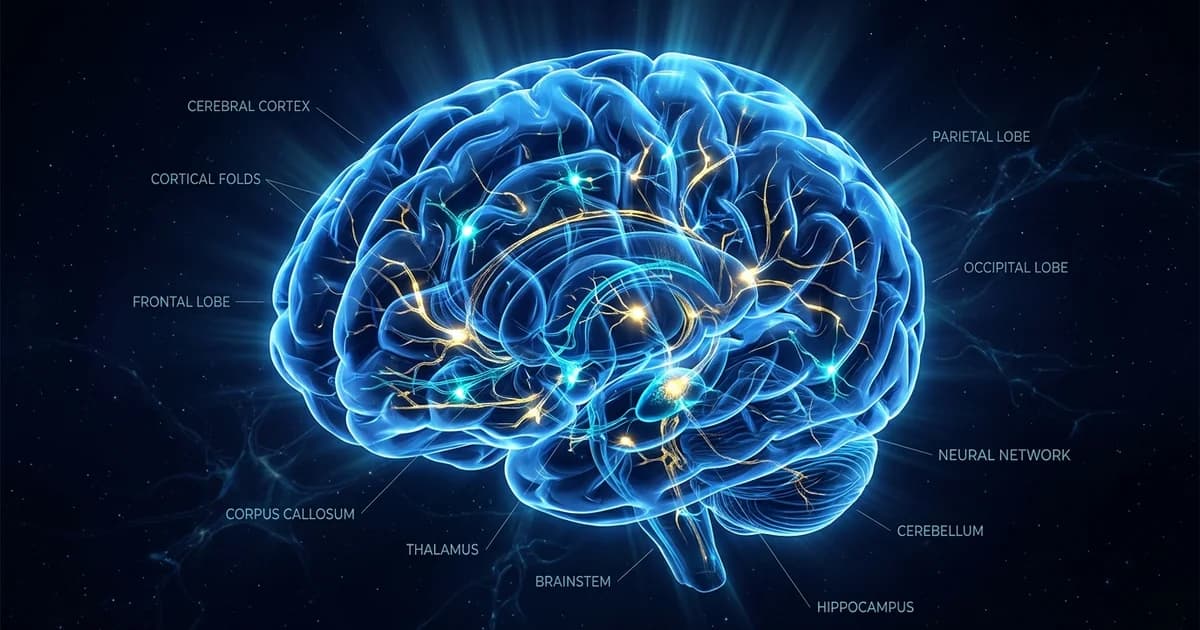
Your brain burns roughly 20% of your daily calories. It weighs about three pounds. And its output, what scientists call cognitive performance, determines almost everything you do: how fast you read this sentence, whether you remember your 2 p.m. meeting, and how well you handle the curveball your boss throws at 4:30.
So what is cognitive performance, exactly? It's the measurable efficiency of your mental processes: thinking, learning, remembering, solving problems, and sustaining attention. Not some abstract concept reserved for neuroscience journals. What is cognitive performance in practical terms? It's the operating speed and accuracy of the organ running your entire life.
Understanding it is the first step to improving it.
Key Takeaways:
- Cognitive performance is the measurable output of your brain's core mental processes, including memory, attention, and processing speed.
- It is shaped by sleep, nutrition, physical activity, and what you put into your body.
- Performance cognitive decline can begin as early as your 30s, but lifestyle choices can slow or offset it.
- Specific compounds like caffeine, L-theanine, and theacrine have clinical evidence supporting their effects on focus and working memory.
The Five Domains of What Is Cognitive Performance
Neuroscientists don't treat the brain as a single unit. They break cognitive performance into distinct domains, each responsible for different types of mental work. A review published in PMC outlines the major categories used in clinical assessment:
1. Attention
Your ability to focus on relevant information while filtering out noise. This includes sustained attention (staying locked in during a long task) and selective attention (ignoring your phone while finishing a report). Attention is the gatekeeper for every other cognitive function, and understanding what is cognitive performance starts here.
2. Working Memory
The mental workspace where you hold and manipulate information in real time. Following directions, doing mental math, keeping track of a conversation while forming your response. Research from PMC describes working memory as the process that "underpins cognitive development, learning, and education." When your working memory is sharp, cognitive performance improves: you think faster and make fewer errors.
3. Processing Speed
How quickly your brain takes in information and produces a response. Processing speed affects everything from reading comprehension to reaction time. Think of it as your brain's clock speed, and a core component of what is cognitive performance at its most measurable.
4. Executive Function
The higher-order system that handles planning, decision-making, impulse control, and cognitive flexibility. According to Wikipedia's summary of the research, executive functions include attentional control, cognitive inhibition, working memory, and the ability to switch between tasks. This is the CEO of your brain and a major driver of performance cognitive output.
5. Learning and Long-Term Memory
Your capacity to encode new information and retrieve it later. This domain covers everything from memorizing a phone number to mastering a new skill over weeks.
These five domains don't operate in isolation. They interact constantly. A dip in one, say attention, cascades into the others. Poor focus means weaker encoding, which means worse memory, which means slower problem-solving. That's why asking what is cognitive performance requires looking at all five domains together.
What Shapes Your Cognitive Performance?
Your brain isn't static. Its cognitive performance fluctuates hour to hour based on inputs you can control.
Sleep
This is the single biggest lever. Sleep deprivation degrades attention, working memory, and executive function faster than almost any other variable. One night of poor sleep can measurably reduce your reaction time and decision-making accuracy. Chronic sleep debt compounds the damage, making it one of the most reliable predictors of declining cognitive performance.
Physical Exercise
Exercise increases blood flow to the brain, promotes neuroplasticity, and supports the release of brain-derived neurotrophic factor (BDNF), a protein that helps neurons grow and survive. Even moderate aerobic activity, three to four sessions per week, has been linked to better memory and processing speed. If you're serious about what is cognitive performance and how to improve it, consistent exercise is non-negotiable.
Nutrition
Your brain needs fuel. Omega-3 fatty acids, B vitamins, and antioxidants all play roles in maintaining neural health. But the timing and composition of what you consume matters too. Blood sugar crashes from refined carbohydrates can tank your cognitive performance within an hour.
Stress
Short bursts of stress can actually sharpen attention (the fight-or-flight response exists for a reason). Chronic stress does the opposite. Elevated cortisol over time shrinks the hippocampus, the brain region most responsible for memory formation, and erodes cognitive performance across every domain.
Stimulants and Nootropics
Caffeine is the most widely used cognitive enhancer on the planet. It works by blocking adenosine receptors, reducing the feeling of fatigue and increasing alertness. But caffeine alone has limits: jitters, tolerance buildup, and the inevitable crash.
That's where ingredient stacking gets interesting.
The Science of Stacking: Caffeine, L-Theanine, Theacrine, and Methylliberine
Single-ingredient approaches to boosting cognitive performance hit a ceiling quickly. The research now points toward combinations of compounds that complement each other's mechanisms.
Caffeine + L-Theanine
A study published on PubMed tested a combination of 97 mg of L-theanine and 40 mg of caffeine against a placebo and found improvements in cognitive performance and subjective alertness. L-theanine, an amino acid found naturally in tea, promotes alpha brain wave activity associated with calm focus. Paired with caffeine, it smooths out the stimulant's rough edges: less jitter, more sustained attention. For anyone exploring what is cognitive performance and how to support it, this pairing is a strong starting point.
Theacrine + Methylliberine
These two compounds are structurally related to caffeine but behave differently in the body. A randomized crossover study on PubMed tested a combination of caffeine, theacrine (TeaCrine), and methylliberine (Dynamine) in 50 young male participants and found that the combination increased cognitive performance and reaction time without negatively affecting mood. A separate dose-response study in Scientific Reports found that theacrine improved performance cognitive outcomes without disrupting subsequent sleep, a problem that plagues high-dose caffeine use.
The pattern across these studies is consistent: stacking complementary compounds produces better cognitive performance outcomes than any single ingredient alone.
Performance Cognitive Decline: When Does It Start?
Here's the uncomfortable truth. Cross-sectional data published in Science Advances suggests that cognitive skills may start declining by age 30. Attention, processing speed, and executive function are typically the first to go. A 2025 study indexed on PubMed found that in cognitively normal older adults, these domains begin measurable decline in the early 70s, but subtler losses accumulate well before that.
The data from the PMC review on cognitive impairment burden adds context: over 10% of Americans aged 65 and older experience cognitive impairment from Alzheimer's disease and related dementias, with an additional 15% to 22% experiencing mild cognitive impairment.
You don't have to accept decline as inevitable. The same research that documents age-related losses also shows that lifestyle factors, including physical activity, sleep quality, cognitive engagement, and targeted supplementation, can protect and even improve performance cognitive function over time.
How to Measure Your Own Cognitive Performance
You don't need a lab to get a baseline. If you want to answer what is cognitive performance for your own brain, several validated cognitive testing tools exist:
| Test | What It Measures | Access |
|---|---|---|
| Stroop Test | Attention, processing speed | Free online versions |
| N-Back Task | Working memory | Free apps available |
| Trail Making Test | Executive function, cognitive flexibility | Clinical and online |
| Reaction Time Tests | Processing speed | Free online versions |
Tracking your scores over time gives you objective data on whether your sleep, exercise, nutrition, and supplementation habits are actually improving your cognitive performance.
Invest in Your Cognitive Performance
What is cognitive performance if not a moving target shaped by the choices you make every day? How you sleep, how you move, what you eat, and what you give your brain to work with all determine how well your mind operates.
If you're looking for a daily tool that supports focus and working memory without the downsides of traditional stimulants, Roon was built for exactly that. It's a zero-nicotine sublingual pouch combining caffeine (80 mg), L-theanine, theacrine, and methylliberine, the same ingredients backed by the clinical research above. The result is 6 to 8 hours of sustained cognitive performance with no jitters, no crash, and no tolerance buildup.
Your brain runs your entire life. Now that you understand what is cognitive performance, it's worth giving your brain the right inputs.