The Smoking Alternatives to Tobacco Worth Trying in 2026
Roon Team
The Smoking Alternatives to Tobacco Worth Trying in 2026
The U.S. adult cigarette smoking rate dropped below 10% for the first time in 2024. That single data point tells you everything about where smoking alternatives to tobacco are headed. People aren't just quitting cigarettes. They're replacing them, and the smoking alternatives to tobacco available right now are better, more targeted, and more varied than anything on the market five years ago.
But "better than cigarettes" is a low bar. The real question is which tobacco alternatives smoking products actually deliver what they promise, which ones just swap one dependency for another, and which ones are worth your time and money in 2026.
Key Takeaways:
- The nicotine pouch market is projected to grow from roughly $4 billion in 2024 to nearly $50 billion by 2033, reflecting a massive consumer shift away from combustible tobacco.
- Not all smoking alternatives to tobacco are nicotine-free. Most still deliver nicotine through a different mechanism.
- Nicotine replacement therapies increase quit rates by 50-60% compared to placebo, but they're designed for cessation, not long-term use.
- Zero-nicotine options, including functional pouches and herbal products, are the fastest-growing subcategory for people who want the ritual without the addiction.
Why People Are Leaving Cigarettes (But Not the Habit)
The CDC survey data from 2022 showed that nearly 1 in 5 U.S. adults still used some form of tobacco product, even as cigarette-specific numbers fell. The Campaign for Tobacco-Free Kids reported the adult smoking rate hit 9.9% in 2024, the first time it dropped below 10% since tracking began.
That gap between total tobacco use and cigarette use tells the story. People aren't abandoning nicotine. They're finding new ways to consume it, and smoking alternatives to tobacco are filling that gap.
The oral fixation, the hand-to-mouth ritual, the five-minute mental break outside the office: these behavioral hooks are harder to drop than the chemical ones. That's why the market for tobacco alternatives smoking products has exploded. Consumers want a replacement for the experience, not just the substance.
The Major Smoking Alternatives to Tobacco in 2026
Here's what's actually available, how each option works, and what the science says about the most popular smoking alternatives to tobacco on the market.
Nicotine Pouches
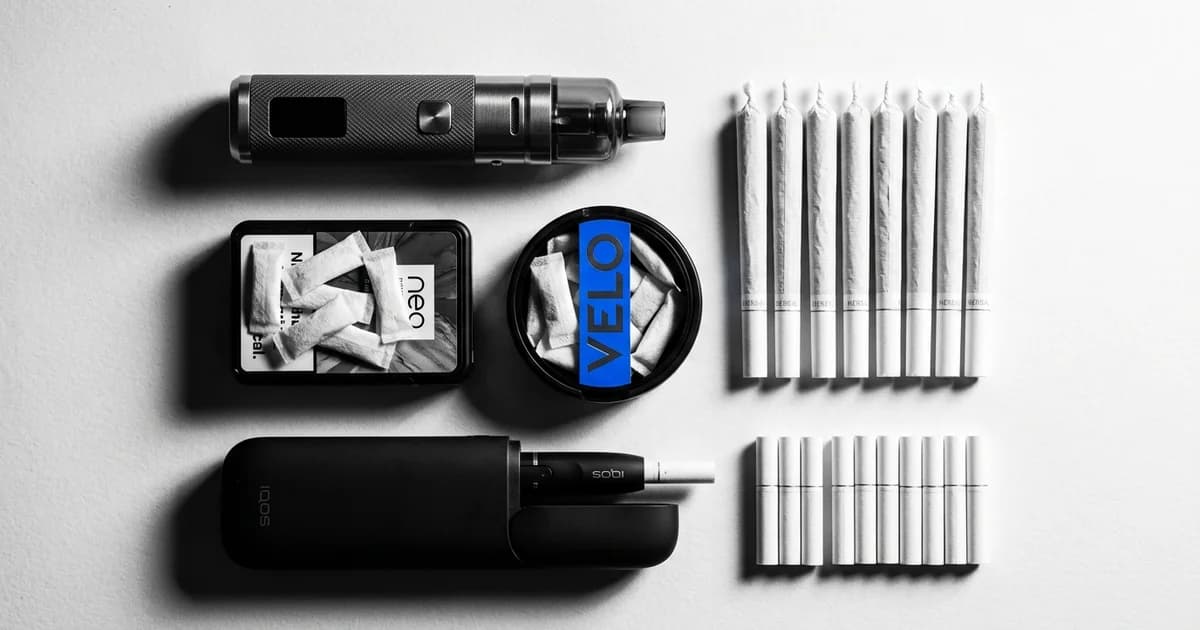
Nicotine pouches are the fastest-growing segment among smoking alternatives to tobacco. The U.S. nicotine pouch market was valued at around $3.95 billion in 2024 and is projected to reach nearly $49.5 billion by 2033, growing at a compound annual rate of over 32%. Brands like ZYN, VELO, and On! dominate the space.
How they work: a small pouch sits between your lip and gum, delivering nicotine through the oral mucosa. No smoke, no vapor, no tobacco leaf. They come in various strengths, typically 2mg to 8mg+ per pouch, and a range of flavors.
The catch: these still contain nicotine. You're removing the combustion and the tar, but you're keeping the addictive compound. For someone switching off cigarettes, that's a net positive. For someone who never smoked, it's a net negative.
Vaping and E-Cigarettes
Vaping remains the most visible option among smoking alternatives to tobacco. Rechargeable devices now dominate the market after bans on disposable vapes in places like the UK. The liquid typically contains nicotine, propylene glycol, vegetable glycerin, and flavorings.
The harm reduction argument for vaping is straightforward: no combustion means no tar, no carbon monoxide, and far fewer toxic byproducts. Public Health England's estimate that vaping is 95% less harmful than smoking gets cited constantly, though that number is debated.
The catch: long-term data is still limited. The devices have only been widely used for about 15 years. And nicotine delivery via vaping can be extremely efficient, making it easy to consume more nicotine than you would from cigarettes without realizing it.
Nicotine Replacement Therapy (NRT)
Patches, gums, lozenges, inhalers, and nasal sprays. These are the FDA-approved, clinically studied smoking alternatives to tobacco designed specifically for cessation.
A Cochrane systematic review found that NRT increases the chances of quitting smoking by 50-60% compared to placebo. It works with or without counseling, and it doesn't require a prescription in most forms. Research on ScienceDirect confirms that combining a patch with a short-acting NRT form (like gum or a lozenge) produces even higher success rates.
The catch: NRT is a cessation tool, not a lifestyle product. It's designed to taper you off nicotine entirely, and the side effects (skin irritation from patches, jaw soreness from gum) make long-term use unappealing.
Herbal Smoking Blends
This is the niche within the niche of smoking alternatives to tobacco. Brands like MUZA offer herbal smoking blends made primarily from marshmallow leaf or hemp, infused with plant-derived terpenes. Zero nicotine, zero tobacco. You roll them or smoke them like a traditional cigarette.
The appeal is purely behavioral. If you miss the act of smoking, lighting something up, inhaling, exhaling, this scratches that itch without the nicotine dependency.
The catch: you're still inhaling combusted plant material. Smoke is smoke. The absence of nicotine doesn't eliminate the respiratory risks of inhaling particulate matter.
Functional and Zero-Nicotine Pouches
This is the newest category of smoking alternatives to tobacco, and arguably the most interesting one for people who want to break free from nicotine entirely while still getting a functional benefit.
Zero-nicotine pouches deliver active compounds sublingually (through the tissue under your lip), just like nicotine pouches, but swap nicotine for ingredients like caffeine, L-theanine, or other nootropic compounds.
The format solves two problems at once. It gives you the oral ritual and the sensory experience of a pouch. And it delivers a measurable cognitive or energy benefit without any nicotine whatsoever.
Comparing Smoking Alternatives to Tobacco: What You're Actually Getting
| Alternative | Contains Nicotine? | Combustion? | Designed for Cessation? | Long-Term Use Viable? |
|---|---|---|---|---|
| Nicotine Pouches (ZYN, VELO) | Yes | No | No | Debatable |
| Vaping / E-Cigarettes | Usually | No | Sometimes | Unknown |
| NRT (Patches, Gum) | Yes | No | Yes | No |
| Herbal Smoking Blends | No | Yes | No | Risky |
| Zero-Nicotine Functional Pouches | No | No | No | Yes |
The table makes the trade-offs clear. Most smoking alternatives to tobacco remove combustion, which is the single biggest health win. But only the zero-nicotine options remove the addictive compound entirely.
The Science Behind Functional Ingredients in Pouches
If you're going to replace nicotine with something else, the replacement needs to actually do something. "Nicotine-free" is meaningless as a selling point if the pouch is just flavored cellulose. The best smoking alternatives to tobacco should offer a real functional benefit.
The most studied functional stack in this space combines caffeine with L-theanine. A study published on PubMed found that a combination of 97mg L-theanine and 40mg caffeine improved accuracy during task switching and self-reported alertness, while reducing tiredness, all compared to placebo. The key finding: L-theanine smooths out caffeine's rough edges, giving you focus without the jittery spike-and-crash pattern.
Then there are the newer compounds. Theacrine and methylliberine, both purine alkaloids found naturally in certain tea plants, extend the duration of cognitive benefits when combined with caffeine. A randomized crossover study published in Cureus found that a combination of caffeine, theacrine, and methylliberine improved cognitive performance and reaction time in adult males without negatively affecting mood.
A double-blind, placebo-controlled trial on tactical personnel found that a caffeine-methylliberine-theacrine combination produced similar vigilance benefits to a much higher dose of caffeine alone, with better hemodynamic responses. In plain language: you get the same mental sharpness with less stimulant load on your cardiovascular system.
This matters because the whole point of choosing smoking alternatives to tobacco is to stop putting your body through unnecessary stress. Swapping cigarettes for a high-dose stimulant defeats the purpose.
What to Look for in Smoking Alternatives to Tobacco
Not all products in this space are created equal. Here's what separates the credible smoking alternatives to tobacco from the marketing noise:
- Transparent dosing. You should know exactly how many milligrams of each active ingredient you're getting per serving. If a brand hides behind "proprietary blends" without listing doses, move on.
- Clinical backing. The individual ingredients should have peer-reviewed research supporting their effects at the doses used. Not rodent studies. Human trials.
- No nicotine dependency swap. If your "alternative" still hooks you on nicotine, you haven't actually solved the problem. You've just changed the delivery method.
- Sublingual delivery. Oral absorption through the mucosa is faster and more bioavailable than swallowing a capsule and waiting for your digestive system to process it. This is why pouches outperform pills for acute cognitive effects.
Moving Past Nicotine Entirely
The tobacco alternatives smoking market is going through a split. On one side, you have products that simply deliver nicotine without smoke. On the other, you have smoking alternatives to tobacco that replace both the substance and the ritual with something functionally better.
If you've already quit cigarettes, or if you never smoked but want a clean cognitive edge, the second category is where the real progress is happening. These smoking alternatives to tobacco represent the future of the space.
Roon sits squarely in that second category. It's a zero-nicotine sublingual pouch built on a stack of caffeine (80mg), L-theanine, theacrine, and methylliberine, the same compounds shown in clinical research to support sustained focus for 6-8 hours without jitters, crashes, or tolerance buildup. No tobacco. No nicotine. No addiction risk. Just focus.
If you're ready to explore smoking alternatives to tobacco that leave nicotine behind without giving up performance, give it a look.