Semax and Selank: The Russian Peptide Nootropics, Examined Honestly
Roon Team
Semax and Selank: The Russian Peptide Nootropics, Examined Honestly
Walk into any nootropics forum and you'll eventually hit a thread arguing that semax and selank are the most underrated cognitive tools on earth. Two short peptides, developed in Soviet and Russian labs, sold by the milligram in little glass vials, promising sharper focus and calmer nerves without the baggage of stimulants.
The marketing is seductive. The reality is messier.
Here's the honest version. Both peptides have real mechanistic research behind them, most of it from a small group of Russian institutions, and very little of it replicated in the Western randomized-trial machinery that regulators actually trust. Before you spray anything up your nose, you should understand what these compounds are, what the evidence genuinely supports, and where the gaps are.
Key Takeaways
- Semax is a synthetic fragment of the ACTH hormone studied mainly for stroke recovery and attention, with mechanistic links to semax bdnf signaling.
- Selank is a synthetic analog of the immune peptide tuftsin, studied as an anxiolytic with proposed effects on selank gaba and serotonin pathways.
- Most human data comes from Russia and is hard to verify, small, or methodologically thin by Western standards.
- Neither peptide is FDA-approved. In the US they're sold as "research chemicals," which means no dose disclosure guarantees and real quality-control risk.
- The peptide nootropics category is promising on paper but underbuilt on independent evidence.
What Semax and Selank Actually Are
Semax and selank are short synthetic peptides created in Russia, not herbal extracts or classic stimulants. They belong to a family of regulatory peptides, meaning the body uses similar molecules as signaling messengers rather than fuel.
Semax is a heptapeptide derived from a fragment of adrenocorticotropic hormone (ACTH 4-10), modified to resist breakdown so it lasts longer in the body. Russian researchers developed it in the 1980s, and it's been used there clinically for stroke and cognitive complaints.
Selank is different in origin. It's a synthetic analog of tuftsin, a naturally occurring immune-system peptide, engineered for stability. According to one peptide reference resource, Selank modulates several systems at moderate intensity rather than saturating a single receptor system.
Both are usually sold as nasal sprays or sublingual solutions because peptides this size don't survive digestion well.
Semax Peptide: The BDNF and Attention Story
The strongest scientific hook for the semax peptide is its proposed effect on brain-derived neurotrophic factor, or BDNF, a protein tied to learning and neural plasticity. This is where the "smart drug" reputation comes from.
Animal work supports the mechanism. Rat-hippocampus research has reported that semax raises BDNF levels, which is the kind of finding that gets reposted endlessly in nootropic circles.
The problem is the jump from rat hippocampus to your workday. Most of the human semax literature focuses on clinical populations, such as ischemic stroke and cognitive disorders, not healthy people looking for a productivity edge. Independent reviewers are blunt about the limits here. The Alzheimer's Drug Discovery Foundation's Cognitive Vitality program, which evaluates compounds for researchers, treats semax as a neuropeptide whose clinical evidence sits largely outside rigorous Western trials.
So the BDNF link is plausible and interesting. It is not the same as a proven cognitive benefit in healthy adults, and you should be suspicious of anyone who pretends otherwise.
Selank Anxiety: GABA, Serotonin, and the Anxiolytic Claim
Selank's main claim to fame is anxiety reduction without the sedation and dependence associated with benzodiazepines. That's the pitch, and the proposed biology is interesting.
Selank appears to touch multiple neurotransmitter systems at once. A 2016 study in Frontiers in Pharmacology profiled a panel of 84 neurotransmission genes in rat frontal cortex and reported that Selank shifted the expression of dozens of them, 45 within the first hour, spanning GABA, serotonin, and dopamine receptor subunits. That breadth is part of why fans describe its effect as "calm focus" rather than blunt sedation.
On the selank gaba front, the calming side is often attributed to enhanced GABA signaling, while stabilization of enkephalins and serotonin metabolism gets credit for the mood-leveling effect. A peptide catalog summarizing the mechanism describes how Selank enhances GABA signaling for calming, stabilizes enkephalins as natural stress buffers, and modulates serotonin metabolism.
Russian clinical reports have explored selank for generalized anxiety disorder and neurasthenia. The catch is the same as with semax. The trials are mostly small, Russian-language, and not replicated by independent groups, which makes the selank anxiety evidence hard to lean on with confidence.
And to be clear, none of this means selank "treats" anxiety in any regulatory sense. It hasn't been approved for that, or anything else, outside Russia.
The Evidence Problem Nobody Wants to Talk About
Strip away the enthusiasm and you're left with a recurring pattern across the peptide nootropics space: thin, geographically concentrated, hard-to-verify human data.
Three issues stack up.
- Replication. Most positive human findings trace back to a small cluster of Russian institutions. Western journals haven't reproduced them at scale. In science, an unreplicated result is a lead, not a conclusion.
- Trial quality. Many studies are small, short, and weak on blinding or placebo control. That's exactly the design that tends to overstate benefits.
- Translation. A compound that helps stroke patients recover function tells you little about whether it sharpens a healthy 30-year-old's afternoon.
This isn't a smear on Russian science. It's a statement about what the global evidence base currently supports, which is "promising mechanisms, immature clinical proof."
The Quality Control Risk You're Actually Buying
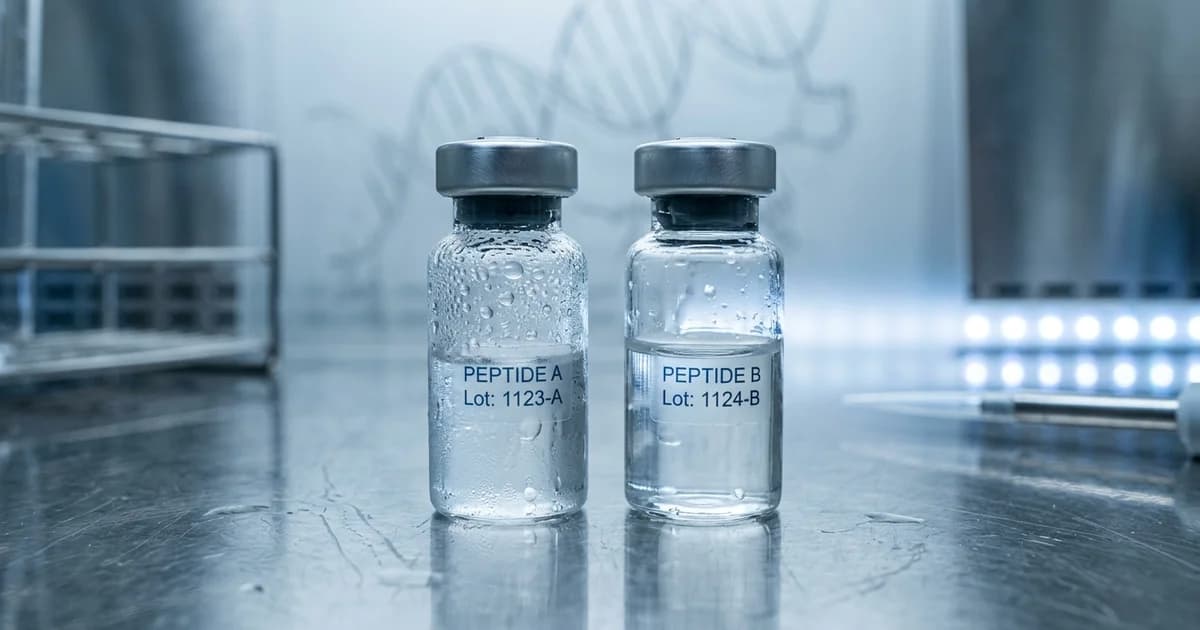
In the United States, semax and selank are sold as research chemicals, not approved drugs or even regulated supplements, and that creates a genuine purity problem. When there's no required dose disclosure and no enforced manufacturing standard, you're trusting a vendor's word.
That trust is often misplaced. Independent lab testing in the peptide market keeps surfacing the same issues. One investigation that sent samples to a lab reported that lead contamination appeared, and any heavy metal presence raises questions about synthesis conditions.
Purity isn't a cosmetic concern either. Research on peptide quality control has shown that crude peptide impurities caused false-positive biological results, while the purified peptide had no activity. If contaminants can fool a lab assay, they can certainly affect what happens when you put the stuff in your body.
So even setting aside the thin clinical evidence, the gray-market supply chain is a real, separate risk.
How Peptide Nootropics Compare to Disclosed-Dose Options
Here's an honest side-by-side of the trade-offs. The point isn't that one row wins everything. It's that "promising mechanism" and "verifiable, legal, well-evidenced" are different things.
| Factor | Semax | Selank | Caffeine + L-theanine stacks |
|---|---|---|---|
| Primary appeal | Attention, BDNF support | Calm, anxiety reduction | Sustained focus, fewer jitters |
| Human evidence base | Mostly Russian, clinical populations | Mostly Russian, small trials | Replicated Western RCTs |
| Regulatory status (US) | Not approved, sold as research chemical | Not approved, sold as research chemical | Dietary-supplement-status ingredients |
| Dose transparency | Vendor-dependent, no guarantee | Vendor-dependent, no guarantee | Disclosed per serving |
| Quality-control risk | High (gray market) | High (gray market) | Low (regulated supply) |
| Delivery | Nasal / sublingual | Nasal / sublingual | Oral, sublingual pouch, drinks |
The caffeine and L-theanine pairing earns its spot here because the human research is actually solid and repeatable. If you want the deeper breakdown, see our guides on why caffeine and L-theanine work better together and the difference between sustained focus and stimulant crashes.
The Honest Bottom Line on These Peptides
Semax and selank are not snake oil, and they're not proven miracle nootropics. They sit in an awkward middle: real biology, interesting mechanisms, and a clinical record that's too thin and too unverified to justify the confidence their fans bring to it.
If you're a researcher with lab access, that ambiguity is interesting. If you're a person who just wants reliable focus on a Tuesday, buying an unregulated nasal peptide of uncertain purity is a strange bet to make. The mechanism might be real. The vial in your hand is a question mark.
The smartest move is to separate "this molecule is scientifically intriguing" from "I should put this specific gray-market product in my body." Those are not the same decision.
Frequently Asked Questions
Are semax and selank legal in the United States?
Neither is FDA-approved as a drug, and neither is sold as a regulated dietary supplement. In the US market they're typically labeled "for research use only," which is a workaround, not an endorsement. That status means no required purity standards, no guaranteed dosing, and no consumer-safety oversight. Buying them puts you in a legal and quality-control gray zone, and competitive athletes should also check anti-doping rules before going anywhere near them.
Does semax actually raise BDNF in humans?
Animal studies, especially in rats, support a link between semax and increased BDNF, a protein involved in neural plasticity. Human data is far thinner and concentrated in clinical groups like stroke patients rather than healthy adults seeking sharper focus. So the semax bdnf mechanism is biologically plausible and worth studying, but it has not been established as a reliable cognitive benefit for healthy people. Treat the BDNF claim as a hypothesis, not a settled fact.
Is selank a safe alternative to benzodiazepines for anxiety?
There's no good evidence to support that framing. Selank has been studied in Russia as an anxiolytic, with proposed effects on selank gaba and serotonin systems, but the trials are small and largely unreplicated outside Russia. It is not approved anywhere as an anxiety treatment outside that context, and "research peptide" status means quality is unverified. Anyone dealing with anxiety should talk to a qualified clinician rather than self-treat with a gray-market peptide.
Why are semax and selank usually nasal sprays?
Peptides this size tend to break down in the digestive tract, so swallowing a pill would destroy most of the dose before it could act. Intranasal and sublingual delivery routes bypass the stomach and aim to get the peptide into circulation more directly. That's the practical reason behind the format, not evidence of superior effectiveness. It also explains why these compounds are hard to standardize for consistent dosing.
What's the biggest risk with buying peptide nootropics?
Purity and dosing. Because these are sold as research chemicals, there's no enforced manufacturing standard, and independent testing has repeatedly found contamination and inconsistent content in market samples. You often have no reliable way to know what's actually in the vial or how much. That uncertainty is a separate problem from whether the peptide itself works, and it applies even to compounds with interesting underlying science.
Are there better-studied options for everyday focus?
Yes. For sustained daily focus, the combination of caffeine and L-theanine has replicated Western randomized trials behind it and comes in disclosed, regulated doses. It won't carry the novelty appeal of a Russian peptide, but the evidence is stronger and the supply chain is safer. For most people who simply want dependable concentration without jitters, well-studied, transparently dosed ingredients are the more rational starting point.
Where Verifiable Beats Exotic
If this article makes one case, it's this: an intriguing mechanism is not the same as evidence you can trust, and a vial of unverified purity is a poor foundation for daily cognitive performance. Semax and selank may earn stronger evidence someday. Right now, they don't have it.
Roon was built on the opposite philosophy. It's a sublingual focus pouch with four disclosed ingredients in every pouch: 80 mg caffeine, 60 mg L-theanine, 25 mg methylliberine (Dynamine), and 5 mg theacrine (TeaCrine). These are compounds with replicated Western trials, sold at dietary-supplement status with the dose printed on the tin, designed for a 5 to 10 minute onset and 6 to 8 hours of focus with no jitters, no crash, and no tolerance buildup.
To be clear, Roon contains no peptides, and it isn't a treatment for anxiety or any medical condition. If you want a cognitive tool you can actually verify, with a transparent label instead of a gray-market guess, try Roon and decide from there.
Written by Roon Team