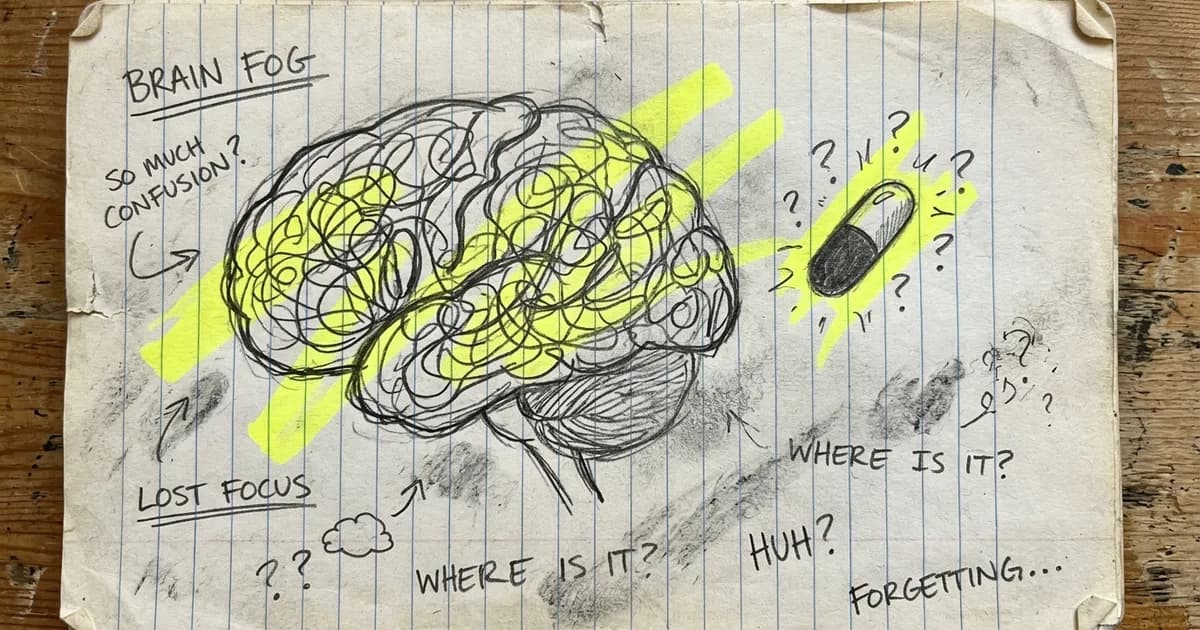
Mom Brain, Baby Brain, Pregnancy Brain: Why It Happens and How to Find Clear-Headed Moments
You put your phone in the fridge. You forgot your sister's name mid-sentence. If your brain feels like wet cotton since the baby, you are not losing it, and you are very much not alone.
What you are calling mom brain is a real, measurable shift in how your brain is wired and fueled, driven by hormones, structural remodeling, and broken sleep. It is adaptation, not decline. The fog is loudest in the first months and tends to ease as sleep consolidates, and you can claw back clear-headed windows by protecting sleep first and managing caffeine within the limits your clinician sets.
This article is informational and not medical advice. For anything concerning your pregnancy, recovery, mood, or your baby, talk to your OB-GYN, midwife, or pediatrician.
Key Takeaways
- Mom brain, baby brain, and pregnancy brain describe one continuum, the same underlying neurobiology at different points from conception through early parenthood.
- Brain imaging shows pregnancy reshapes gray matter, and a 2024 Nature Neuroscience study tracked these changes week by week through gestation.
- Three drivers explain the fog: hormone shifts, gray-matter remodeling, and severe sleep fragmentation. Sleep loss is the one you can move the most.
- Caffeine has hard ceilings here: ACOG advises under 200 mg/day in pregnancy, and the CDC considers under 300 mg/day generally compatible with breastfeeding.
- Persistent fog with low mood, anxiety, or exhaustion can signal postpartum depression, postpartum anxiety, or a thyroid problem. Those need a doctor, not a coping hack.
Mom Brain, Baby Brain, Pregnancy Brain: What's Actually Going On
Mom brain is the everyday name for a genuine drop in working memory, attention, and word retrieval that tracks pregnancy and early parenthood. The forgetfulness is real, the cause is biological, and the framing matters: your brain is reorganizing for a new job, not breaking down.
Three forces overlap. Pregnancy floods your system with estrogen and progesterone, then withdraws them sharply after birth. Your brain physically remodels its gray matter over roughly two years. And newborn sleep shreds the deep, consolidated rest your memory depends on. Stack those together and you get the phone-in-the-fridge moment.
The reframe is the point. For decades women were told the fog was either imaginary or a permanent downgrade. Neither is true. The changes are functional, they peak early, and most of the sharpest fog lifts as your hormones stabilize and sleep slowly returns.
Is It Real? What the Brain-Imaging Research Shows
Mom brain is real, and we can see it on an MRI. Pregnancy produces some of the most pronounced structural brain changes documented outside of adolescence, and the research has moved well past asking whether the effect exists.
In 2024, researchers published the first study to scan a brain straight through pregnancy rather than just before and after. The lead author, Laura Pritschet, described it as the first time scientists had witnessed the pregnant brain in the midst of this metamorphosis, following one first-time mother with scans every few weeks from before conception to two years postpartum, work published in Nature Neuroscience. The team saw pronounced decreases in gray matter volume and cortical thickness across the brain, alongside increases in white matter microstructural integrity.
Shrinking gray matter sounds alarming. It is not damage. Earlier longitudinal work by Hoekzema and colleagues found that pregnancy is associated with a reduction of gray matter volume, and those postpartum reductions in specific cortical regions remained evident two years after childbirth. Researchers interpret this as fine-tuning: the brain trimming and rewiring circuits involved in reading social and emotional cues, which is exactly the skill set a newborn demands. One analysis in Science noted these are the first data showing widespread anatomical changes in the pregnant human brain that last for at least 2 years.
So the cognitive trade is real. You may lose some quick recall and multitasking capacity while the social and caregiving circuitry sharpens. Adaptation, not deterioration.
Why the Three Names Describe One Continuum
Pregnancy brain, baby brain, and mom brain are three labels for one biological process unfolding across time, not three separate conditions. Treating them as one continuum is more accurate and more useful than chasing each as a standalone problem.
Think of it as a single arc. Pregnancy brain is the gestational phase, when rising hormones and active gray-matter remodeling produce forgetfulness and slowed recall. Baby brain usually points at the postpartum stretch, when the hormonal cliff after delivery collides with relentless sleep disruption. Mom brain is the umbrella term people use for the whole experience, often well into the first year and beyond.
The drivers shift in proportion as you move along the arc, but they never fully reset between stages. Hormones dominate early. Sleep loss dominates after the baby arrives. The same remodeling runs underneath the entire two-year window. That is why the strategies below work across all three: you are managing one system, not three.
The Three Drivers: Hormones, Brain Remodeling, Sleep Loss
Three mechanisms create mom brain, and they hit in sequence and in combination. Naming them tells you where you have room to act.
Hormones. Estrogen and progesterone climb to extraordinary levels during pregnancy, then drop within days of delivery. Estrogen modulates memory and mood circuits directly, so both the surge and the crash affect how sharply you think and how steady you feel.
Brain remodeling. As the imaging shows, gray matter reorganizes over roughly two years. While that rewiring is underway, the affected circuits run differently, which can feel like slower processing and weaker recall in the short term.
Sleep loss. This is the driver you can actually move. Newborns fragment sleep into short, broken stretches, and fragmented sleep starves the brain of the deep, slow-wave and REM stages that consolidate memory and restore attention. Chronic fragmentation degrades working memory, reaction time, and emotional regulation in anyone, parent or not. It is often the single largest contributor to the fog, and unlike your hormones and your remodeling timeline, it responds to deliberate strategy.
Finding Clear-Headed Moments on No Sleep
You cannot out-discipline a newborn's sleep schedule, but you can engineer short windows of clarity around the sleep you do get. The goal is not eight uninterrupted hours. It is protecting the rest you can get and stacking a few habits that buy attention back.
Here is a parent-realistic comparison of the levers, ranked by how much they move the needle against how hard they are to do with a baby in the house.
| Tactic | What it targets | Realistic impact | Effort with a newborn | Notes |
|---|---|---|---|---|
| Sleep when the baby sleeps (or tag-team nights) | Sleep fragmentation | High | Hard | The single biggest lever. Trade night shifts with a partner so each of you gets one longer block. |
| A 20-minute daytime nap | Restores alertness, working memory | High | Medium | Short naps avoid grogginess. Even partial recovery sleep helps attention. |
| Morning daylight exposure | Circadian rhythm, alertness | Medium | Easy | Ten minutes of outdoor light helps anchor your body clock. |
| Offload memory to systems | Working-memory overload | Medium | Easy | Shared calendar, phone reminders, one notes app. Stop using your tired brain as the hard drive. |
| Single-tasking | Attention | Medium | Medium | Multitasking is costly on a fragmented brain. Do one thing, finish it. |
| Caffeine, within clinician-set limits | Alertness, fatigue | Medium | Easy | Useful but capped. See the dosing section below, and clear it with your clinician. |
| Hydration and regular protein | Energy stability | Low to medium | Medium | Steadier energy, fewer crashes. |
Two principles tie the table together. First, stop relying on memory and start relying on systems, because a fragmented brain is bad at holding details and great at following a checklist. Second, treat any block of recovery sleep as the highest-value thing you can do, above tidying, above scrolling, above almost anything.
Caffeine While Pregnant or Breastfeeding: The Numbers That Matter
Caffeine is allowed in measured amounts during pregnancy and breastfeeding, but the ceilings are firm and the details matter. These are not suggestions to optimize around. They are the budget, and your clinician sets your personal version of it.
During pregnancy, ACOG advises that moderate caffeine consumption of less than 200 milligrams per day does not appear to cause miscarriage or preterm birth, which is the amount in one 12-ounce cup of coffee.
While breastfeeding the limit is a little higher, because caffeine passes into breast milk. Per the CDC, caffeine consumption in moderation, under 300 mg per day, is considered generally safe for most breastfeeding mothers and their babies. The CDC notes that irritability, poor sleep patterns, fussiness, and jitteriness have been reported in infants only when mothers have very high intakes, around 10 cups of coffee or more per day.
A few rules keep you honest:
- Count everything. Coffee, tea, soda, chocolate, energy drinks, pre-workout, and many supplements all carry caffeine. The 200 or 300 mg ceiling is your total daily intake from all of it.
- Caffeine reaches your baby. It crosses the placenta and enters breast milk, and newborns clear it far more slowly than adults do.
- Defer to your clinician. Your tolerance, your pregnancy, and your baby are specific. Your OB-GYN, midwife, or pediatrician sets the number that applies to you.
Caffeine helps with alertness inside those limits. It does not fix sleep debt, and it is not a treatment for the fog. It is one tool, capped, and the cap is non-negotiable.
When Mom Brain Might Be Something More
Most mom brain is normal adaptation. But fog that comes with persistent low mood, intense anxiety, or crushing fatigue can point to something that needs medical care, and recognizing the difference is the most important thing in this article. If any of the following describes you, call your clinician now, not later.
Postpartum depression and anxiety. Ordinary mom brain is annoying. It does not steal your interest in things you love, flatten your mood for weeks, or fill your head with relentless dread or intrusive thoughts. Postpartum depression and postpartum anxiety are common and treatable, and they are medical conditions, not failures of willpower. If low mood, hopelessness, panic, or trouble bonding with your baby lasts more than two weeks, get help. If you have thoughts of harming yourself or your baby, treat it as an emergency and call your clinician or a crisis line immediately.
Thyroid problems. Pregnancy can trigger postpartum thyroiditis, an inflammation of the thyroid that often surfaces months after birth. Its symptoms mimic and amplify mom brain. Reported signs include fatigue and exhaustion, weight changes, depression or low mood, brain fog and difficulty concentrating, dry skin, and feeling cold. It is diagnosed with a simple blood test and is treatable, so if the fog comes with these physical symptoms, ask your doctor to check your thyroid.
You should also flag any sudden, severe, or worsening cognitive change, anything that feels different from gradual fog, to your clinician. When in doubt, get checked. That is not overreacting. That is the right move.
Conclusion
Mom brain is not a character flaw, a sign you are slipping, or proof your sharp years are behind you. It is the visible surface of a brain doing something extraordinary: reorganizing itself over two years to meet the demands of a new human, while running on the worst sleep of your adult life. The imaging is clear, the hormones are real, and the fog is the cost of an adaptation, not the symptom of a decline.
That reframe changes what you do about it. You stop fighting your brain and start supporting it. You protect sleep above almost everything else, you offload memory to systems instead of leaning on a tired mind, and you keep caffeine inside the limits your clinician sets. And you stay alert to the line between normal fog and the mood, anxiety, or thyroid symptoms that deserve a doctor's attention. Clear-headed moments are not gone. They come back as your sleep consolidates and your brain settles into its new wiring, and you can build a few of them back starting today.
Frequently Asked Questions
Is mom brain permanent?
No. The sharpest fog is tied to early hormone shifts and severe sleep loss, both of which ease over time. Brain imaging shows the structural remodeling unfolds over roughly two years and represents fine-tuning rather than damage. Most parents notice meaningful improvement as sleep consolidates and hormones stabilize. If your fog is worsening rather than easing, or comes with low mood or fatigue, that warrants a conversation with your clinician.
Is pregnancy brain the same as mom brain?
Largely, yes. Pregnancy brain, baby brain, and mom brain describe one continuum of the same underlying neurobiology at different points in time. Pregnancy brain leans on hormone surges and active gray-matter remodeling. Baby brain leans on the postpartum hormone crash plus newborn sleep disruption. Mom brain is the umbrella term covering the whole arc, often through the first year and beyond.
How much caffeine is safe during pregnancy and breastfeeding?
ACOG advises less than 200 mg of caffeine per day during pregnancy, about one 12-ounce cup of coffee. The CDC considers under 300 mg per day generally compatible with breastfeeding. Caffeine crosses the placenta and enters breast milk, and these ceilings cover your total intake from all sources, including tea, soda, chocolate, and supplements. Your clinician sets the number that applies to your specific situation.
Can caffeine fix mom brain fatigue?
No. Caffeine can temporarily improve alertness within safe limits, but it does not repay accumulated sleep debt and it is not a treatment for cognitive fog or mood symptoms. Sleep is the real lever. Use caffeine as one capped tool alongside protecting recovery sleep, getting morning daylight, and offloading memory to systems. If fatigue is severe or persistent, ask your doctor to rule out thyroid problems or postpartum depression.
How do I know if it is mom brain or postpartum depression?
Normal mom brain is forgetfulness and slowed recall. It does not steal your joy, flatten your mood for weeks, or flood you with dread or intrusive thoughts. If low mood, hopelessness, anxiety, or trouble bonding lasts more than two weeks, contact your clinician, because postpartum depression and anxiety are common and treatable. If you have thoughts of harming yourself or your baby, seek emergency help immediately.
Could my brain fog be a thyroid problem?
It can be. Postpartum thyroiditis often appears months after birth and mimics mom brain. Watch for fatigue, brain fog, difficulty concentrating, weight changes, low mood, dry skin, and feeling cold. It is diagnosed with a simple blood test and is treatable. If your fog comes bundled with these physical symptoms, ask your doctor to check your thyroid levels rather than assuming it is ordinary parenthood fatigue.
What is the single most effective thing I can do for mom brain?
Protect sleep. Severe sleep fragmentation is often the largest contributor to the fog and the one driver you can actually influence. Trade night shifts with a partner so each of you gets one longer uninterrupted block, take short 20-minute naps when possible, and treat recovery sleep as higher priority than chores. Hormones and brain remodeling follow their own timeline. Sleep responds to strategy.
After the Baby, Within Your Caffeine Budget: Where a Clean Pouch Fits
Everything above points to one honest conclusion: the fog is mostly a sleep-and-hormones problem, and the real fix is rest, systems, and time. Caffeine is a minor, capped tool inside that picture, never the answer to fatigue or mood. If and only if your clinician has cleared a caffeine budget for you, the form your caffeine takes can matter for how steady the window feels.
That is the narrow place Roon fits. It is a zero-nicotine sublingual pouch with a simple, transparent formula: 80 mg caffeine, 60 mg L-theanine, 25 mg methylliberine (Dynamine), and 5 mg theacrine (TeaCrine). The L-theanine is paired with the caffeine for a smoother, less jittery feel. To be clear about what it is not: Roon is not a nicotine pouch, it is not a remedy for fatigue, postpartum depression, anxiety, or thyroid issues, and it is not recommended for use during pregnancy or breastfeeding.
If you are past that stage and your clinician is comfortable with your caffeine intake, Roon is one clean way to spend part of that budget on a steadier window of focus. Talk to your clinician first. Then decide.
By Roon Team