Melatonin Alternatives for Kids Worth Trying in 2026

Melatonin Alternatives for Kids Worth Trying in 2026
The best melatonin alternatives for kids fall into two categories: behavioral strategies (screen limits, consistent bedtimes, cool bedrooms) and gentle supplements (L-theanine, magnesium, tart cherry juice). Behavioral sleep hygiene changes carry the strongest evidence and should come first. Among supplements, L-theanine at 400 mg daily is the only option tested in a pediatric randomized controlled trial, where it improved some actigraphy measures of sleep (sleep percentage and efficiency) versus placebo in boys aged 8 to 12 with ADHD over six weeks; sleep onset and parent-reported sleep did not change. Magnesium glycinate may help if your child has a dietary shortfall. Tart cherry juice provides trace melatonin from a whole-food source. All of these avoid the core concern with melatonin supplements: a 2023 JAMA study found that 88% of melatonin gummy products were inaccurately labeled, with actual content ranging from 74% to 347% of what was printed on the bottle.
Before starting any supplement, talk to your pediatrician. What follows is an evidence-based breakdown of every option worth considering.
Key Takeaways:
- Melatonin supplement labels are frequently inaccurate, and long-term effects on children's hormonal development remain unstudied.
- L-theanine, magnesium, tart cherry juice, and behavioral strategies are all viable melatonin alternatives for kids backed by research.
- Sleep hygiene changes (screen limits, consistent routines, cool bedrooms) often outperform any supplement.
- Always talk to your pediatrician before starting any new supplement for your child.
Quick Comparison of Melatonin Alternatives for Kids
| Alternative | Evidence Level (Pediatric) | Typical Form | Estimated Cost/Month | Key Consideration | Age Studied | Source |
|---|---|---|---|---|---|---|
| Sleep Hygiene | High (multiple pediatric studies) | Behavioral | $0 | Most effective first step; no side effects | Children | AAFP |
| L-Theanine | Moderate (1 RCT, 98 boys, 6 weeks) | Capsule, powder, tea | $10 to $20 | Promotes calm without sedation | Boys 8-12 with ADHD | Lyon 2011 |
| Magnesium Glycinate | Low to moderate (mechanism-based) | Capsule, powder, gummy | $8 to $15 | May correct an underlying dietary gap | Older adults (no pediatric sleep trial) | Abbasi 2012 |
| Tart Cherry Juice | Low (adult studies only) | Juice | $12 to $20 | Whole-food source; watch sugar content | Adults only | Howatson 2012 |
| Chamomile | Low (mostly adult/traditional data) | Tea | $5 to $10 | Safe in tea form for most children | Mostly adults | NCCIH |
| Passionflower | Low (mostly adult data) | Tea, tincture | $8 to $15 | Long traditional use; limited pediatric data | Adults 18-35 | Ngan 2011 |
Why Parents Are Searching for Melatonin Alternatives for Kids
The numbers tell the story. According to data published in PMC by the CDC, poison control calls for pediatric melatonin ingestions increased 530% between 2012 and 2021, rising from 8,337 to 52,563 reports. In 2021, melatonin accounted for 4.9% of all pediatric ingestions reported to poison control, up from 0.6% in 2012. In 2020, melatonin became the most frequently ingested substance reported to poison control centers for children, according to data published in PubMed. Roughly 11,000 infants and young children visited the emergency room after accidental melatonin ingestion in recent years, per NPR's reporting on CDC data.
This isn't just a dosing problem. It's a regulation problem. Melatonin is classified as a dietary supplement in the United States, which means it doesn't face the same manufacturing scrutiny as pharmaceuticals. The JAMA study mentioned above found that one product labeled as containing melatonin actually contained no melatonin at all, but rather 31.3 milligrams of CBD. Stories like these are exactly why melatonin alternatives for kids have become such a popular search topic among parents.
Then there's the hormonal question. Melatonin is a hormone, not a vitamin. Boston Children's Hospital notes that animal studies show melatonin can affect puberty-related hormones, and no long-term clinical trials have confirmed safety in human children. A systematic review published in eClinicalMedicine (The Lancet) assessed adverse effects using GRADE methodology and found that while three studies reported little or no influence on pubertal development after 2 to 4 years of treatment, one study registered a potential delay following treatment durations longer than 7 years. The review flagged delayed puberty as a concern warranting further investigation.
None of this means melatonin should be banned from your medicine cabinet. But it does mean that reaching for it nightly, without exploring melatonin alternatives for kids first, is a decision worth reconsidering.
L-Theanine: A Top Melatonin Alternative for Kids Who Can't Wind Down
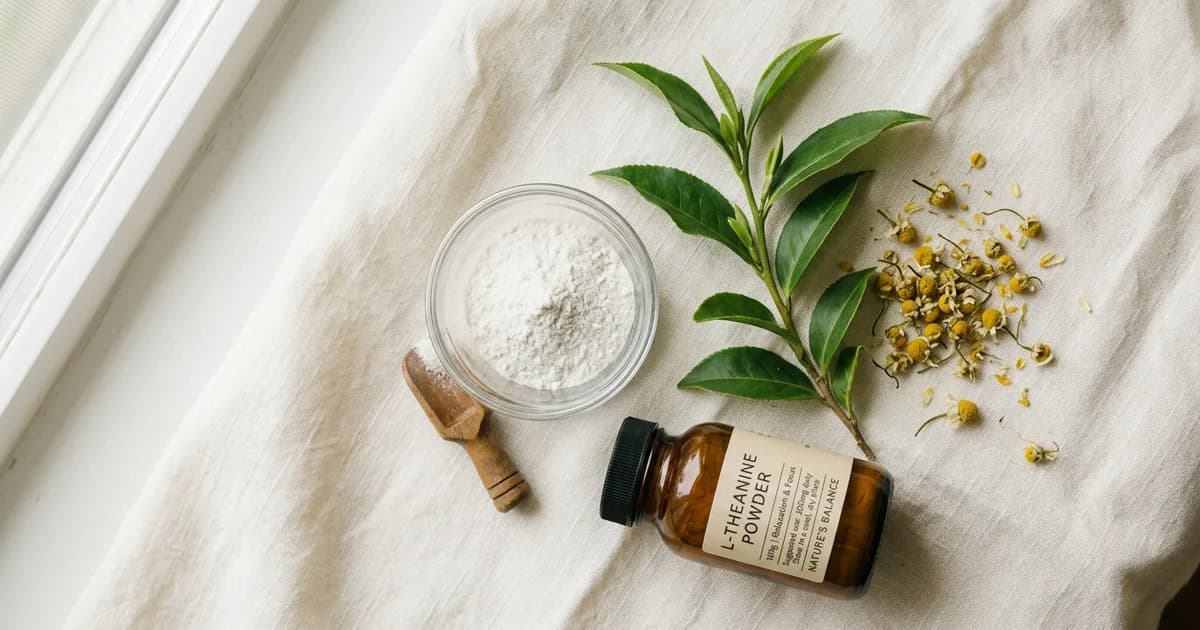
L-theanine is an amino acid found naturally in green and black tea. It promotes relaxation without drowsiness, which makes it one of the most compelling melatonin alternatives for kids who struggle to settle at night.
The strongest pediatric evidence comes from a randomized, double-blind, placebo-controlled trial involving 98 boys aged 8 to 12 diagnosed with ADHD. The study found that 400 mg of L-theanine daily (200 mg twice per day, using Suntheanine) improved multiple measures of actigraphy-based sleep quality and was well tolerated over six weeks. A systematic review in PMC confirmed that no adverse events were reported in this trial, suggesting that L-theanine can safely support sleep in children with ADHD.
How does it work? L-theanine increases alpha brain wave activity, the same pattern your brain produces during calm, focused wakefulness. It doesn't knock your kid out. It helps their nervous system stop racing long enough to let sleep happen naturally. That's what makes L-theanine stand out among melatonin alternatives for kids: it supports the body's own relaxation process rather than introducing an external hormone.
According to WebMD, L-theanine is "possibly safe" for children when taken short-term, with doses of 400 mg daily used safely for up to six weeks in boys aged 8 to 12. The Sleep Foundation notes that 200 mg before bed may promote restful sleep, though they recommend discussing dosage with a doctor.
One practical advantage: you can also get L-theanine through decaffeinated green tea, which makes it easy to incorporate into an evening routine without adding another pill to the mix.
Magnesium: Filling a Gap That Might Be Causing the Problem
Many children don't get enough magnesium from their diets, and low magnesium has been associated with poorer sleep, mostly in adult studies. That makes magnesium one of the most practical melatonin alternatives for kids, because it may address the root cause of restless nights. This mineral plays a role in regulating the nervous system, supporting GABA activity (the neurotransmitter that quiets neural firing), and helping muscles relax.
The NIH Office of Dietary Supplements sets the Recommended Dietary Allowance for magnesium at 130 mg/day for children aged 4 to 8 and 240 mg/day for ages 9 to 13. The tolerable upper intake level for supplemental magnesium (not from food) is 65 mg/day for ages 1 to 3 and 110 mg/day for ages 4 to 8. Many kids fall short of these targets, especially those with diets low in leafy greens, nuts, seeds, and whole grains.
Magnesium glycinate is the form most commonly recommended for sleep because it's well absorbed and less likely to cause digestive issues than other forms like magnesium oxide or citrate. No large pediatric sleep trial of magnesium has been published; the best trial, in older adults, used 500 mg of oral magnesium against placebo for 8 weeks (Abbasi 2012). Treat magnesium as something to discuss with your pediatrician, not a proven fix. For parents exploring what works for pediatric sleep, magnesium is often the simplest place to start.
Magnesium dosing by age and weight varies, so talk to your pediatrician before supplementing. For reference, the NIH upper limit for supplemental magnesium is 65 mg a day for ages 1 to 3, 110 mg for ages 4 to 8 and 350 mg for ages 9 to 13.
Tart Cherry Juice: A Whole-Food Melatonin Alternative for Kids
Tart cherry juice has become one of the most discussed natural sleep options for families, and it deserves a spot on any list of melatonin alternatives for kids. The reason is simple: Montmorency tart cherries naturally contain small amounts of melatonin along with anti-inflammatory compounds called proanthocyanidins, which, in a small adult pilot study and lab work, appeared to increase the availability of tryptophan, a precursor to serotonin and melatonin production.
A study published in PubMed found that tart cherry juice concentrate increased exogenous melatonin levels and improved sleep duration and quality in healthy adults. The pediatric data is thinner. GoodRx notes that the research has only been conducted with adults, so there's no direct evidence it will help your child sleep. But including it as a fluid choice is considered safe.
Poison Control adds a useful caveat: while daily consumption of tart cherry juice was linked to improvements in adult sleep quality, there is no evidence it effectively treats sleep regression in children.
The appeal here is that it's a food, not a supplement. An ounce or two of tart cherry juice mixed into a smoothie or diluted with water before bed gives your child a natural source of sleep-supporting compounds without the labeling accuracy concerns that plague the supplement industry. Among melatonin alternatives for kids, tart cherry juice is the easiest to work into an existing routine. Just watch the sugar content, and opt for unsweetened varieties.
Sleep Hygiene: The Strategy That Works Best
No supplement, and no list of melatonin alternatives for kids, will override a broken bedtime routine. Before adding anything to your child's regimen, audit the environment.
Screens Off, Lights Down
A study in PMC found that 1 hour of bright light exposure before bedtime suppressed melatonin by approximately 88% in preschool-aged children, with effects persisting 50 minutes after the light ended. For comparison, adults exposed to equivalent light show roughly a 46% suppression. Kids are far more sensitive to evening light than you are. The fix is straightforward: screens off at least 30 to 60 minutes before bed, and switch to warm, dim lighting in the evening.
Consistent Bedtime, Every Night
The American Academy of Family Physicians reports that behavioral insomnias affect 10% to 30% of children and result primarily from inconsistent limit-setting and improper sleep-onset associations. Translation: if bedtime is 8:00 PM on school nights and 10:30 PM on weekends, your child's circadian rhythm never stabilizes. Pick a time. Stick to it. Even on Saturdays. This kind of consistency is the most effective of all melatonin alternatives for kids, and it costs nothing.
Cool, Dark, Boring Bedrooms
The bedroom should be for sleeping. Not for iPad time, not for homework, not for playing. Keep the room cool (65 to 68°F is the sweet spot for most kids), use blackout curtains, and remove anything with a glowing screen. This sounds basic because it is. It also works better than most supplements.
Passionflower and Chamomile: Traditional Melatonin Alternatives for Kids
Both passionflower and chamomile have long histories as calming herbs, and you'll find them in many children's sleep tinctures. Passionflower (Passiflora incarnata) tea improved self-rated sleep quality versus placebo in a one-week trial in 41 adults, and chamomile tea is a staple bedtime ritual in many cultures. Parents searching for melatonin alternatives for kids will encounter both of these herbs frequently.
The honest assessment: pediatric clinical trials for both herbs are sparse. Most of the evidence is anecdotal or extrapolated from adult research. They're generally considered safe for children in tea form, but concentrated extracts and tinctures warrant a conversation with your pediatrician first.
If your child enjoys a warm cup of chamomile tea as part of their wind-down routine, that's a reasonable practice. Just don't expect it to compensate for a chaotic sleep schedule or two hours of screen time before bed.
Is Melatonin Safe for Kids?
Short-term melatonin under a pediatrician's guidance is generally well tolerated, but the American Academy of Sleep Medicine advises parents to talk to a pediatric health professional before giving it. Its health advisory asks parents to store melatonin like a medicine, let a clinician set the dose and timing, and choose a product with the USP Verified Mark. The quality problem is real: the 2023 JAMA study found that 22 of 25 gummy products were mislabeled. Long-term effects on puberty are not settled, as the Lancet review above notes.
Safety notes
- Talk to your pediatrician before giving any supplement, including the alternatives on this page.
- Keep melatonin and every supplement out of reach; pediatric melatonin ingestions reported to poison centers rose 530% from 2012 to 2021 (CDC MMWR).
- See a doctor if your child snores loudly, stops breathing in sleep, or is very sleepy during the day, since those can signal a sleep disorder that supplements will not fix.
The Bottom Line on Melatonin Alternatives for Kids
The best melatonin alternative for your kid probably isn't another supplement. It's a boring, consistent bedtime routine with screens off, lights low, and a cool bedroom. If that foundation is solid and your child still struggles, L-theanine and magnesium have the strongest evidence profiles among melatonin alternatives for kids worth discussing with your pediatrician.
Sleep quality doesn't just affect your child's nights. It shapes their days. Focus, mood, memory, and the ability to learn all hinge on how well they rested. The same principle applies to you.
Frequently Asked Questions
What can I give my child instead of melatonin?
The strongest evidence-backed melatonin alternatives for kids are behavioral sleep hygiene (consistent bedtimes, screens off 30 to 60 minutes before bed, cool dark rooms), L-theanine (400 mg/day showed benefits in a pediatric RCT), and magnesium glycinate to correct dietary shortfalls. Tart cherry juice and chamomile tea are gentler whole-food options. Always consult your pediatrician before starting any supplement.
Is L-theanine safe for kids?
L-theanine has been used safely in a 6-week randomized controlled trial involving 98 boys aged 8 to 12 with ADHD at 400 mg per day, with no adverse events reported. WebMD classifies it as "possibly safe" for short-term use in children. Longer-term pediatric safety data is limited, so discuss duration and dosing with your child's doctor.
Why are parents worried about melatonin for kids?
Three main reasons: 88% of melatonin gummies tested in a 2023 JAMA study were inaccurately labeled. Poison control calls for pediatric melatonin ingestions rose 530% from 2012 to 2021. And melatonin is a hormone, not a vitamin, with a Lancet systematic review flagging potential puberty-related concerns after extended use.
Does magnesium help kids sleep?
Magnesium supports GABA activity and muscle relaxation, both of which contribute to sleep readiness. Direct pediatric sleep trials are limited, but the NIH notes many children fall short of the RDA (130 mg/day for ages 4 to 8, 240 mg/day for ages 9 to 13). Correcting a deficiency may improve sleep quality. Magnesium glycinate is the preferred form for bedtime use.
Does tart cherry juice work for children's sleep?
Tart cherry juice contains trace amounts of natural melatonin and proanthocyanidins that support tryptophan availability. However, clinical sleep studies have only been conducted in adults. Poison Control confirms there is no direct evidence it treats sleep problems in children. It's safe as a food, but choose unsweetened varieties to limit sugar intake before bed.
How much melatonin is actually in melatonin gummies?
According to a 2023 JAMA analysis of 25 melatonin gummy products, actual melatonin content ranged from 74% to 347% of the labeled dose. Only 3 of 25 products (12%) fell within 10% of the declared quantity. One product contained zero melatonin and instead had 31.3 mg of CBD.
At what age can kids take sleep supplements?
There is no universal age cutoff. The American Academy of Pediatrics has not issued a formal recommendation for routine melatonin use in healthy children. For alternatives like L-theanine, the only pediatric trial enrolled boys aged 8 to 12. Magnesium supplementation should stay within the NIH tolerable upper intake levels for the child's age group. Always get your pediatrician's guidance before giving any supplement to a child.
Is sleep hygiene really better than supplements?
Yes, for most children. The AAFP identifies inconsistent limit-setting and improper sleep-onset associations as the primary drivers of behavioral insomnia in 10% to 30% of children. Fixing the routine, the environment, and the screen exposure often resolves the problem without any supplement at all. Supplements work best as a complement to good sleep hygiene, not a replacement for it.
If You're Fixing Your Kid's Sleep, Fix Your Own Focus Too
You just spent time researching how to help your child sleep better. That's good parenting. But here's the other half of the equation: your own cognitive performance during the day.
If you're running on poorly timed caffeine, energy drinks, or sheer willpower, you're solving your kid's problem while ignoring your own. Roon is a zero-nicotine sublingual pouch that pairs 80 mg caffeine with 60 mg L-theanine (the same amino acid discussed above for calming the nervous system), plus 25 mg methylliberine (Dynamine) and 5 mg theacrine (TeaCrine) for 6 to 8 hours of sustained focus without jitters or a crash.
Roon is not a children's product and is not a sleep aid. It's designed for adults who want clean, sustained alertness during waking hours. Good sleep for your kids at night, sharp performance for you during the day. Try Roon if that tradeoff sounds right.
Sources
- Lyon MR et al. L-theanine and objective sleep quality in boys with ADHD. Altern Med Rev, 2011. PubMed 22214254
- Cohen PA et al. Quantity of melatonin and CBD in melatonin gummies sold in the US. JAMA, 2023. JAMA
- American Academy of Sleep Medicine, melatonin use in children and adolescents health advisory
- NIH Office of Dietary Supplements, Magnesium fact sheet
- Losso JN et al. Tart cherry juice for insomnia, pilot study. Am J Ther, 2018. PMC5617749
- Ngan A, Conduit R. Passionflower tea and subjective sleep quality. Phytother Res, 2011. PubMed 21294203
Written by Roon Team