L-Theanine Pregnancy: What the Science Actually Says
Roon Team

L-Theanine Pregnancy: What the Science Actually Says (and What It Doesn't)
You're pregnant, you're stressed, and someone on Reddit told you L-theanine might help. Before you pop a supplement, here's the honest truth: the research on l theanine pregnancy safety is thin. Not alarming, not reassuring. Just thin.
L-theanine is an amino acid found naturally in tea leaves. It promotes calm focus by influencing neurotransmitters like GABA, serotonin, and dopamine. Outside of pregnancy, it has a strong safety profile and FDA GRAS (Generally Recognized as Safe) status. But pregnancy changes the equation for almost every supplement on the market, and l theanine pregnancy concerns are no exception.
This guide breaks down everything we know, everything we don't, and what to actually do with that information.
Key Takeaways
- No human clinical trials have studied l theanine pregnancy safety specifically in pregnant women.
- L-theanine has FDA GRAS status for the general population, but that designation doesn't automatically extend to pregnancy.
- Small amounts consumed through green tea (roughly 8-25 mg per cup) are generally considered low-risk by most practitioners.
- Supplemental doses (100-400 mg) are a different conversation entirely.
- Talk to your OB-GYN before taking any L-theanine supplement while pregnant. Full stop.
What Is L-Theanine and How Does It Work?
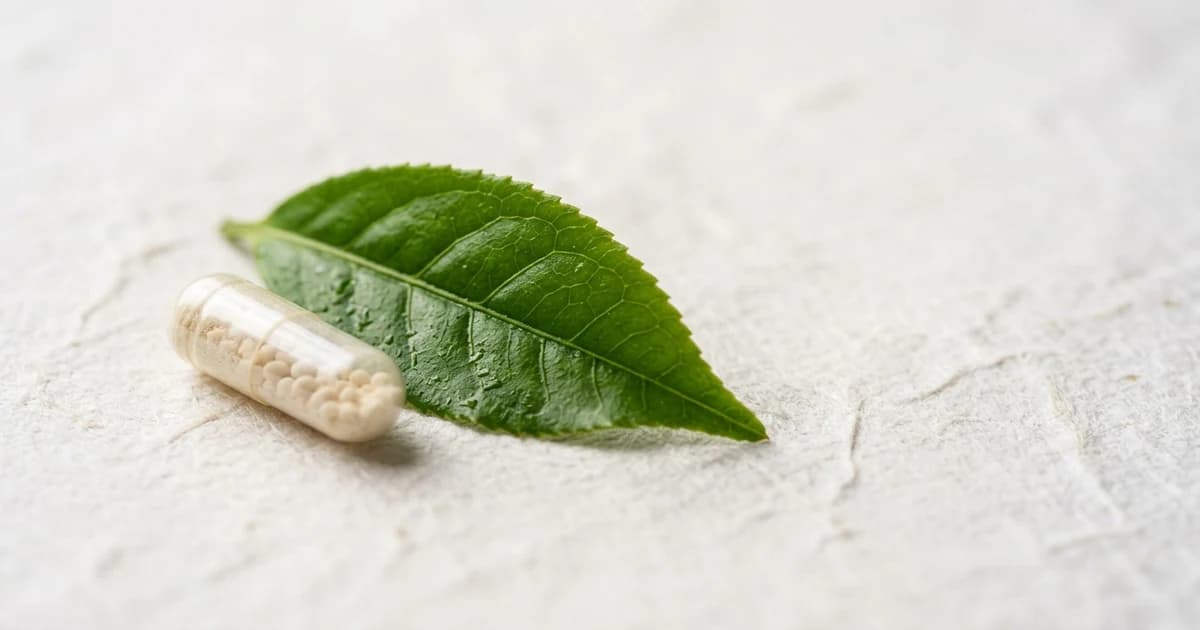
L-theanine (technically N-ethyl-L-glutamine) is a non-protein amino acid that occurs naturally in Camellia sinensis, the plant behind green, black, and white teas. It crosses the blood-brain barrier within about 30 minutes of ingestion.
Once there, it does a few interesting things. According to Psychology Today, L-theanine elevates levels of GABA, serotonin, and dopamine, the neurotransmitters responsible for regulating mood, focus, and relaxation. It also promotes alpha brain wave activity, the same pattern your brain produces during meditation.
The result: a calm, alert mental state without drowsiness. That's why L-theanine has become one of the most popular nootropic ingredients on the market. And it's why pregnant women dealing with anxiety and sleep disruption often research l theanine pregnancy safety.
The typical effective dose in studies ranges from 100 to 400 mg, far more than you'd get from a single cup of tea. This dose-dependent distinction becomes central to the l theanine pregnancy conversation.
L Theanine Pregnancy Safety: What the Research Shows
Here's where things get honest and a little frustrating. There are zero published human clinical trials examining l theanine pregnancy supplementation. None. The data we do have comes from animal studies, general toxicology research, and observational data around tea consumption.
The General Safety Profile
L-theanine's safety record in the general population is solid. A 13-week toxicity study published in Food and Chemical Toxicology administered L-theanine to rats at doses up to 4,000 mg/kg of body weight per day. The result? No consistent adverse effects on behavior, body weight, organ function, or histopathology. The no-observed-adverse-effect-level (NOAEL) was set at the highest dose tested.
To put that in perspective: 4,000 mg/kg in a rat translates to an astronomically high dose relative to anything a human would take. A typical L-theanine supplement contains 100-200 mg total.
Animal Studies During Pregnancy
A 2025 study published in PMC investigated l theanine pregnancy effects in a mouse model of gestational obesity. Researchers found that L-theanine actually ameliorated metabolic dysregulation and adverse fetal outcomes in mice fed a high-fat diet. The results were promising, but the authors themselves noted that larger-scale studies and human trials are needed.
A separate study on mice exposed to green tea extract during fetal and early postnatal development found neurobehavioral changes in offspring. But green tea extract is a cocktail of compounds (catechins, caffeine, L-theanine, and more), so isolating L-theanine's specific role from that mix is impossible.
The Breastfeeding Data
The NIH's LactMed database states that L-theanine amounts found in green tea are "likely acceptable during nursing," but that high-dose supplements "are not necessarily safe for the breastfed infant." L-theanine has a half-life of about one hour, meaning it clears from breast milk relatively quickly. But "likely acceptable" and "proven safe" are two very different statements.
L Theanine Pregnancy: Tea vs. Supplements
This distinction matters. A lot.
When your doctor says green tea is fine in moderation during pregnancy, they're talking about a beverage that contains roughly 8-25 mg of L-theanine per cup, according to research published in Food Chemistry. That's a small amount, delivered alongside other compounds in a food matrix your body recognizes.
A supplement capsule might contain 200-400 mg of isolated L-theanine. That's 10 to 50 times the amount in a cup of tea. The pharmacokinetics are different. The peak blood concentration is different. And the safety data that exists for tea consumption during pregnancy doesn't automatically apply to concentrated supplements.
| Source | L-Theanine per Serving | Other Compounds | Studied in Pregnancy? |
|---|---|---|---|
| Green tea (1 cup) | 8-25 mg | Caffeine, catechins, polyphenols | Yes (observational) |
| Black tea (1 cup) | ~24 mg | Caffeine, theaflavins | Yes (observational) |
| L-Theanine supplement | 100-400 mg | Isolated compound | No human trials |
The American College of Obstetricians and Gynecologists (ACOG) recommends limiting caffeine intake to under 200 mg per day during pregnancy. One to three cups of green tea typically falls within that range. So moderate tea consumption gives you a small dose of L-theanine within an already-studied safety window.
Why Isn't There More L Theanine Pregnancy Research?
Pregnant women are routinely excluded from clinical trials for ethical reasons. You can't randomize expecting mothers into supplement groups and placebo groups when the potential risks to fetal development are unknown. This is true for l theanine pregnancy questions and for the vast majority of dietary supplements.
The result is a frustrating gap. L-theanine has been studied extensively in the general population. It has a clean toxicology profile. It has GRAS status. But none of that tells us, with certainty, what happens when a pregnant woman takes 200 mg of isolated L-theanine daily for nine months.
This isn't unique to l theanine pregnancy concerns. The same gap exists for melatonin, magnesium glycinate, ashwagandha, and dozens of other popular supplements. The default medical advice, "consult your healthcare provider," isn't a cop-out. It's a reflection of the actual state of the evidence.
The Placenta Factor
Here's another layer worth understanding. The placenta is selective about what it lets through, but it's not a perfect filter. Caffeine crosses the placenta freely, which is why ACOG sets limits on it. L-theanine crosses the blood-brain barrier in adults, which means it's a small, water-soluble molecule. Whether L-theanine crosses the placental barrier at meaningful concentrations hasn't been directly studied in humans.
In animal models, L-theanine does reach fetal tissue. That's not inherently dangerous (water and glucose cross the placenta too), but it does mean the fetus would be exposed to whatever effects L-theanine produces. For an amino acid that modulates neurotransmitter activity, that raises legitimate l theanine pregnancy questions about fetal brain development that simply haven't been answered yet.
What Pregnant Women Can Do Instead
If you're pregnant and looking for ways to support calm focus and manage stress, here are evidence-backed options that don't carry the same l theanine pregnancy uncertainty:
- Moderate green tea consumption: One to two cups per day gives you a small, natural dose of L-theanine while staying within ACOG caffeine guidelines. According to Arva Health, ACOG's 200 mg caffeine limit allows for roughly 4-10 cups of green tea, though most practitioners recommend staying on the conservative side.
- Prenatal-approved magnesium: Magnesium supports relaxation and sleep, and certain forms (like magnesium glycinate) are commonly recommended during pregnancy.
- Structured breathing and meditation: These produce the same alpha brain wave patterns that L-theanine promotes, without any supplement at all.
- Regular movement: Even 20 minutes of walking has measurable effects on anxiety and cortisol levels.
The bottom line: if you're pregnant, don't self-prescribe L-theanine supplements. Bring the research to your OB-GYN, discuss your specific situation, and make the call together.
Frequently Asked Questions About L Theanine Pregnancy
Can I drink green tea while pregnant?
Most healthcare providers say yes, in moderation. One to two cups of green tea per day keeps you well within ACOG's 200 mg caffeine limit and exposes you to only a small amount of L-theanine (roughly 8-25 mg per cup). This is a very different risk profile than taking a concentrated supplement.
Is L-theanine FDA-approved for pregnancy?
No. L-theanine has FDA GRAS status as a food ingredient for the general population. The FDA does not specifically approve or evaluate dietary supplements for use during pregnancy. GRAS status means L-theanine is considered safe for typical adult consumption, not that l theanine pregnancy use has been tested in pregnant populations.
What trimester is L-theanine most risky?
There's no data to answer this l theanine pregnancy question precisely. In general, the first trimester is when fetal organ development is most active and most vulnerable to outside influences. Most practitioners apply extra caution with any unproven supplement during weeks 1-12. But the honest answer is that we don't have trimester-specific l theanine pregnancy safety data in humans.
Can L-theanine cause miscarriage?
There is no published evidence linking L-theanine to miscarriage. But "no evidence of harm" is not the same as "evidence of safety." The absence of data means we simply can't make a definitive statement either way.
After Pregnancy: Getting Back to L-Theanine
For most people outside of pregnancy, L-theanine is one of the best-studied, lowest-risk nootropic compounds available. Its ability to promote focused calm without sedation is backed by decades of research and real-world use.
Once you've cleared the pregnancy and breastfeeding window (and gotten the green light from your doctor), L-theanine becomes a straightforward addition to your daily routine again. And you don't need to brew six cups of green tea to get an effective dose.
Roon delivers L-theanine as part of a precision-dosed sublingual pouch, paired with caffeine, theacrine, and methylliberine for sustained focus that lasts 6-8 hours. No pills. No brewing. No guessing about dosage. Just place it under your lip and get to work.
If L-theanine is already on your radar, that's a good sign. It means you're paying attention to what goes into your body. When the timing is right, Roon makes it easy to get your daily L-theanine in the cleanest, most efficient format available.