L-Theanine in Pregnancy: What the Science Actually Says
Roon Team
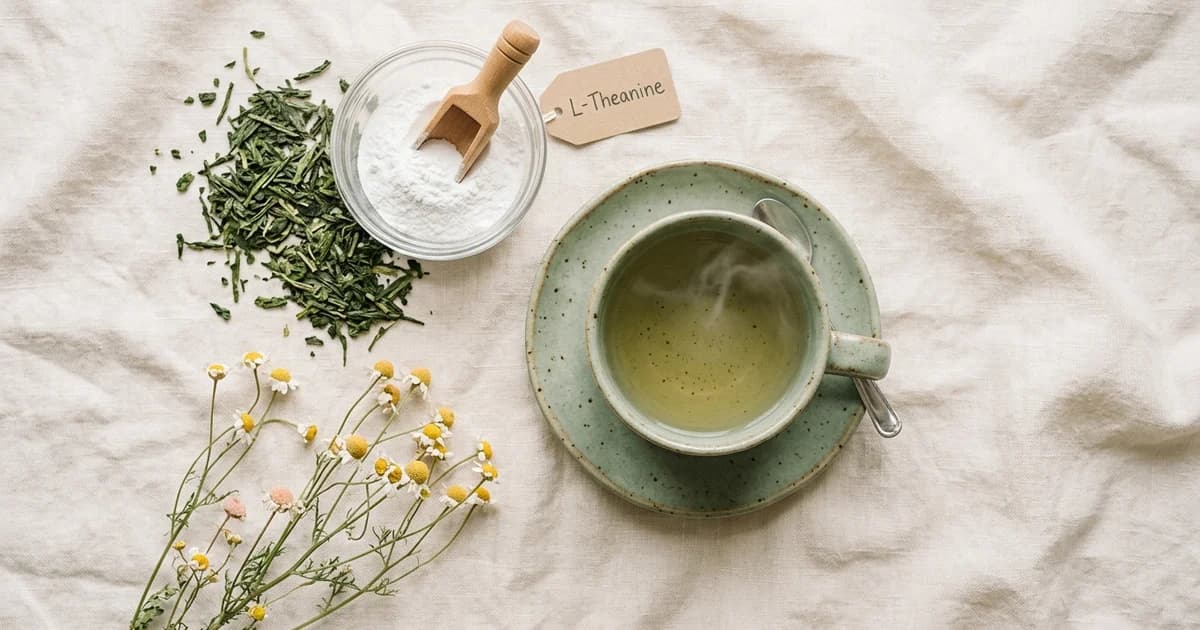
L-Theanine in Pregnancy: What the Science Actually Says
You're pregnant, you're exhausted, and your brain feels like it's running on dial-up. Someone mentioned L-theanine might help. Maybe you saw it on a supplement label or read calming amino acid user reports about how it differs from coffee. Now you want to know: is l theanine in pregnancy actually safe?
The honest answer is more nuanced than most wellness blogs will tell you. There are no large-scale human clinical trials studying l theanine in pregnancy at supplement doses. That's not because the compound is dangerous. It's because researchers rarely conduct supplement trials on pregnant populations for ethical reasons. So we're left piecing together what we know from animal data, tea consumption studies, and L-theanine's well-documented pharmacology.
Here's what the evidence does and doesn't support.
Key Takeaways
- No human clinical trials have specifically tested l theanine in pregnancy at supplement doses.
- L-theanine from tea (roughly 20-60 mg per cup of green tea) is generally considered acceptable by most OB-GYNs, within normal caffeine limits.
- Supplemental doses (100-400 mg) are a different story, and most experts recommend avoiding them during pregnancy until more data exists.
- Always talk to your doctor before adding any supplement to your prenatal routine.
What Is L-Theanine, Exactly?
L-theanine (technically N-ethyl-L-glutamine) is a non-protein amino acid found almost exclusively in tea leaves from the Camellia sinensis plant. L-theanine is the reason green tea feels different from coffee. You get alertness without the wired, jittery edge.
The compound works by crossing the blood-brain barrier, where it influences several neurotransmitter systems. According to research published in PubMed, L-theanine increases brain levels of serotonin, dopamine, and GABA. That triple action is why it promotes a state of calm focus rather than sedation. L-theanine also boosts alpha brain wave activity, the electrical pattern associated with relaxed alertness (think: the mental state during meditation or a flow state).
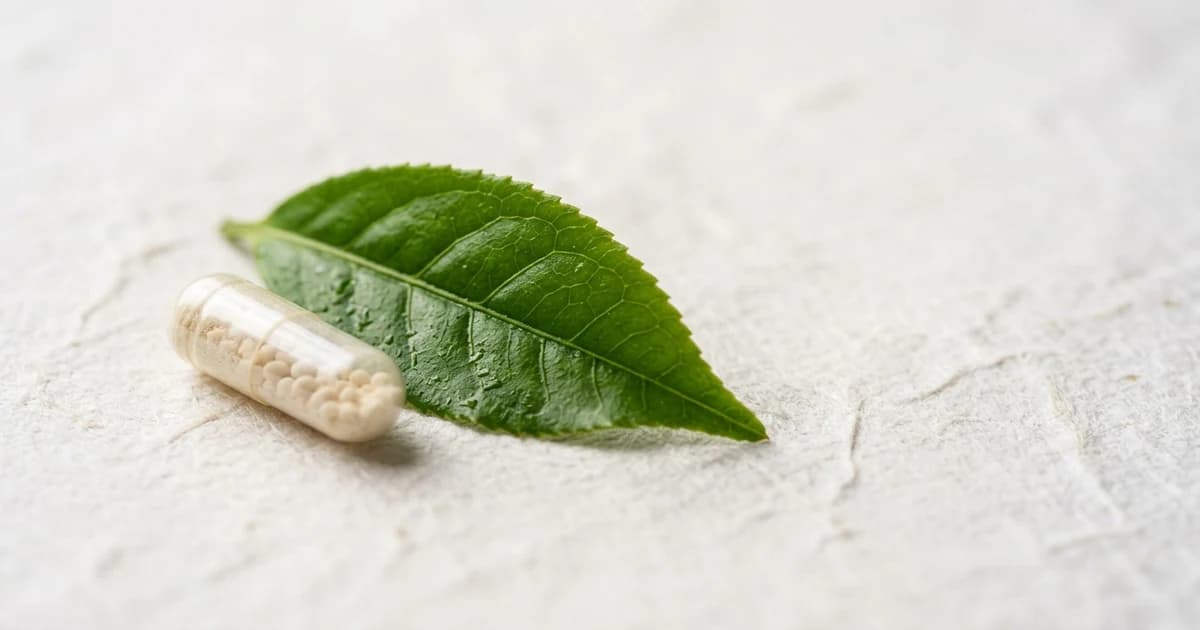
A standard cup of green tea contains roughly 20 to 60 mg of L-theanine, according to Japanese Green Tea Co.. Supplement capsules, by comparison, typically deliver 100 to 400 mg per dose. That's a 2x to 20x difference. And that gap matters when you're evaluating l theanine in pregnancy safety.
L-Theanine in Pregnancy: What the Research Shows
The Human Data Gap
There are zero randomized controlled trials examining l theanine in pregnancy at supplement doses. As Fullscript's clinical review notes, "there is not enough reliable information about the safety of L-theanine taken during pregnancy or breastfeeding." The InfantRisk Center, a resource run by pharmacology researchers, echoes this: there's a lack of scientific evidence for l theanine in pregnancy safety when used in amounts higher than what's normally found in food.
This doesn't mean L-theanine is harmful. It means nobody has done the studies to confirm it's safe at supplement-level doses in this specific population.
What Animal Studies Tell Us About L-Theanine in Pregnancy
Animal research offers some clues, though translating mouse data to human pregnancy always requires caution.
A 2025 study published in PMC examined L-theanine in a mouse model of gestational obesity. The researchers found that L-theanine administration reduced weight gain, improved metabolic markers like fasting glucose and insulin, and mitigated placental tissue abnormalities. L-theanine also reduced inflammatory markers and improved pup weight outcomes. These results are genuinely interesting. They suggest l theanine in pregnancy may have protective metabolic effects, at least in obese mice.
On the other hand, a study in PMC examining green tea extract exposure during fetal and early postnatal development found neurobehavioral changes in mice offspring, including increased locomotor activity. Green tea extract contains multiple compounds beyond L-theanine (caffeine, catechins, tannins), so isolating the cause is difficult. But it's a reminder that "natural" doesn't automatically mean "inert."
The takeaway from animal data: l theanine in pregnancy isn't showing red flags, but the picture is incomplete. A handful of mouse studies can't replace the large human trials that would be needed to issue definitive safety guidance.
The FDA's Position
The FDA has granted L-theanine GRAS (Generally Recognized as Safe) status for use in food and beverages, as documented in FDA GRAS Notice 209. According to Drugs.com, L-theanine is sold as a dietary supplement in the United States under this designation.
But GRAS status applies to the general adult population. It doesn't specifically address l theanine in pregnancy. The FDA does not evaluate most supplements for safety in pregnant or breastfeeding women.
Tea vs. Supplements: A Distinction That Matters for L-Theanine in Pregnancy
This is where most articles on l theanine in pregnancy get sloppy. They treat tea and supplements as interchangeable. They're not.
L-Theanine from Tea
Drinking green tea during pregnancy is widely considered acceptable in moderation. The Bump reports that one to three cups of green tea per day is generally considered safe, as long as total caffeine stays under the 200 mg daily limit recommended by the American College of Obstetricians and Gynecologists (ACOG).
At 20-60 mg of L-theanine per cup, you're getting a modest dose that humans have consumed for centuries. The L-theanine in your afternoon green tea is not what keeps sleep researchers up at night.
L-Theanine from Supplements
Supplement doses are a different category. Clinical trials in non-pregnant adults have used 200 to 400 mg per day with good safety profiles. A 2021 randomized trial published in PMC found that a single 200 mg dose was safe and effective for stress reduction in healthy adults. A 2024 trial, also in PMC, confirmed safety at 400 mg daily for 28 days.
But "safe in healthy adults" and "safe as l theanine in pregnancy" are different claims. The concentration reaching your bloodstream from a 200 mg capsule is substantially higher than what you'd get from a cup of tea. And since L-theanine crosses the blood-brain barrier, it's reasonable to assume it could also cross the placenta, though this hasn't been directly studied in humans.
| Green Tea | L-Theanine Supplement | |
|---|---|---|
| L-Theanine per serving | 20-60 mg | 100-400 mg |
| Studied in pregnancy | Yes (as part of tea) | No |
| General expert consensus | Safe in moderation (1-3 cups/day) | Not recommended without doctor approval |
| Other compounds present | Caffeine, catechins, polyphenols | Isolated L-theanine |
What About Breastfeeding?
The data here is slightly more encouraging, though still limited. According to the NIH's LactMed database, the amounts of L-theanine found in green tea are likely acceptable during nursing. However, the database notes that amounts from high-dose supplements "are not necessarily safe for the breastfed infant." Since L-theanine has a half-life of about one hour, it should be mostly eliminated from breast milk within 3 to 5 hours.
If you're breastfeeding and want to use an L-theanine supplement, timing your dose right after a feeding session could minimize infant exposure. But again, talk to your doctor first.
Practical Recommendations for L-Theanine in Pregnancy
Based on the available evidence, here's a straightforward framework:
During pregnancy:
- Green tea in moderation (1-2 cups daily, keeping total caffeine under 200 mg) is generally considered fine by most healthcare providers.
- L-theanine supplements should be avoided unless your OB-GYN specifically approves them. The absence of safety data is the issue, not the presence of danger data.
- Don't self-prescribe l theanine in pregnancy for anxiety or insomnia. There are better-studied options your doctor can recommend.
During breastfeeding:
- Tea consumption remains acceptable.
- If considering supplements, discuss timing and dosage with your healthcare provider.
- The short half-life of L-theanine (about one hour) works in your favor for scheduling around feedings.
Why Most Supplements Lack Pregnancy Data
The l theanine in pregnancy question is really a proxy for a larger issue: most dietary supplements have never been rigorously tested in pregnant women. Prenatal vitamins are the exception, not the rule. The CereflexLabs resource on nootropics during pregnancy makes this point well: research on cognitive supplements and pregnancy is still in its early stages.
This pattern repeats across dozens of popular supplements. Ashwagandha, rhodiola, lion's mane, even high-dose omega-3s beyond what's in prenatal formulations. The clinical evidence in pregnant populations is thin or nonexistent for most of them. It's not a conspiracy. Running a controlled trial on pregnant women raises serious ethical hurdles, and pharmaceutical companies have little financial incentive to fund them for unpatentable natural compounds.
This isn't a reason to panic about the L-theanine in your green tea. It's a reason to be thoughtful about concentrated supplement forms during a period when your body is building another human. The precautionary principle applies: when the data is absent, defaulting to caution is the rational move.
After Pregnancy: Getting Back to Your Cognitive Baseline
Once you're past pregnancy and breastfeeding, the calculus changes entirely. L-theanine has a strong safety profile in the general adult population, with clinical data supporting doses of 200-400 mg daily. Its ability to promote calm focus without drowsiness makes L-theanine one of the most well-supported nootropic compounds available.
If you're looking for a clean, convenient way to get your L-theanine, Roon delivers it in a zero-nicotine sublingual pouch alongside caffeine, theacrine, and methylliberine. It's designed for sustained focus over 6-8 hours without the jitters or crash. No pills to swallow, no tea to brew, and no tolerance buildup. For the postpartum brain fog that nobody warns you about, it's worth a look.