L-Theanine and Caffeine: What You Need to Know
Roon Team
L-Theanine and Caffeine: What You Need to Know
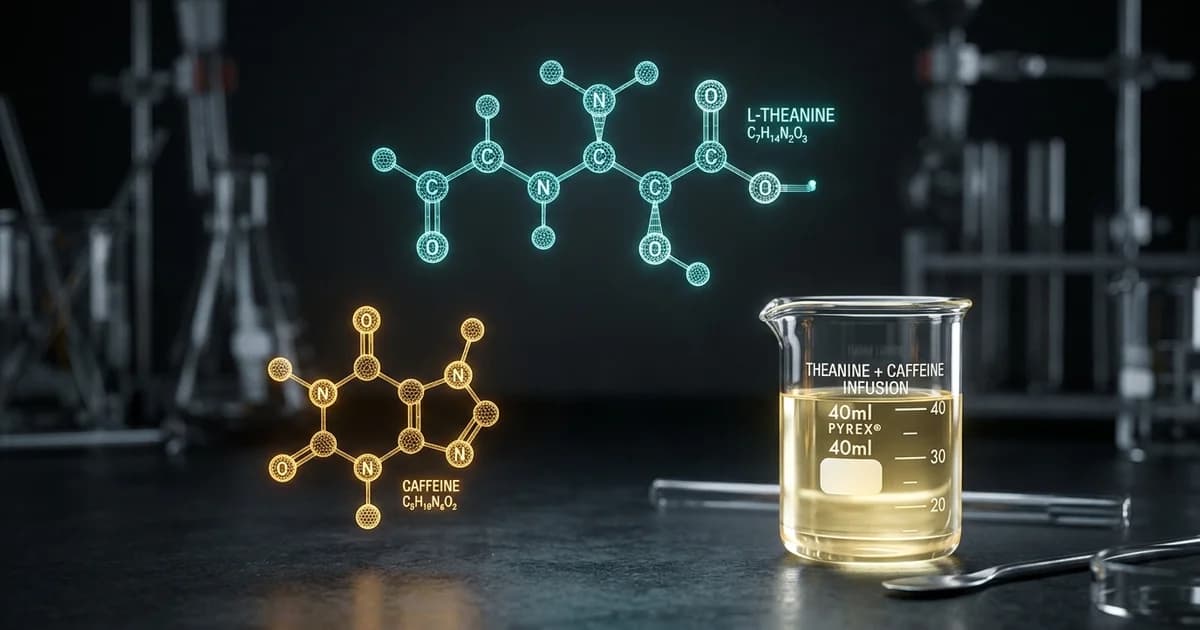
You already know caffeine works. The real question about l theanine and caffeine is why caffeine works so well for about 90 minutes and then leaves you scattered, jittery, or reaching for another cup. The answer has less to do with caffeine itself and more to do with what's missing from the equation. That missing piece, backed by over a decade of clinical research, is L-theanine. The combination of l theanine and caffeine does something neither compound can do alone: it produces clean, sustained focus without the familiar downsides.
This isn't a new discovery. Tea drinkers have been consuming both compounds together for thousands of years. But modern neuroscience has finally explained why the l theanine and caffeine pairing works, what the optimal ratios look like, and how newer compounds like theacrine and methylliberine can extend the effect even further.
Key Takeaways:
- L-theanine smooths out caffeine's rough edges by promoting alpha brain wave activity and indirectly boosting GABA levels.
- The research-backed l theanine and caffeine ratio falls between 1:1 and 2:1 (L-theanine to caffeine).
- The combination improves accuracy, attention switching, and alertness more than caffeine alone.
- Adding theacrine and methylliberine to the l theanine and caffeine stack may extend the duration of focus and reduce tolerance buildup.
How Caffeine Actually Works (and Why It Crashes)
Caffeine is an adenosine receptor antagonist. In plain English: your brain produces a molecule called adenosine throughout the day that makes you feel tired. Caffeine blocks the receptors that adenosine binds to, which is why you feel more alert after a cup of coffee. A review from the National Academies of Sciences confirms that caffeine's primary mechanism of action is this antagonism of adenosine receptors, along with secondary effects on phosphodiesterase inhibition and intracellular calcium release.
The problem? Caffeine doesn't just block adenosine. It also triggers a cascade of adrenaline and cortisol release, which is what causes the jitters, the elevated heart rate, and the anxious edge that high doses produce. And once the caffeine wears off, all that accumulated adenosine floods your receptors at once. That's the crash.
This is where most people make the same mistake: they drink more coffee. More caffeine, more adenosine blocking, more adrenaline. The cycle repeats, tolerance builds, and the effective dose keeps climbing. Understanding why l theanine and caffeine work better together starts with understanding this cycle.
What L-Theanine Does to Your Brain
L-theanine is an amino acid found almost exclusively in tea leaves (Camellia sinensis). It crosses the blood-brain barrier and does two things that matter for cognitive performance.
First, it promotes alpha brain wave activity. Alpha waves (8-14 Hz) are associated with a state of relaxed alertness, the kind of calm focus you feel when you're deeply engaged in a task but not stressed about it. A review published in Nutritional Neuroscience (ScienceDirect) found that L-theanine intake at standard supplement dosages of 50-250 mg increased alpha waves in healthy people and promoted psychophysical relaxation.
Second, L-theanine indirectly increases GABA levels in the brain. GABA is the primary inhibitory neurotransmitter, the one responsible for calming neural activity. As MindGain explains, this indirect stimulation of the GABA pathway is believed to be the reason L-theanine can promote relaxation and reduce anxiety without causing drowsiness.
That last part is the key distinction: L-theanine works to reduce anxiety without drowsiness, so pairing it with caffeine gives you alertness without the anxious edge.
The Science Behind L Theanine and Caffeine Together
The caffeine and l theanine benefits aren't theoretical. Multiple controlled trials have measured them directly.
Improved Accuracy and Attention Switching
A study published in Nutritional Neuroscience tested a combination of 97 mg L-theanine and 40 mg caffeine against placebo. The results: the l theanine and caffeine combination "improved accuracy during task switching and self-reported alertness" (both p < 0.01) and reduced self-reported tiredness (p < 0.05). These weren't marginal improvements. The subjects performed better on demanding cognitive tasks and felt more alert doing them.
Better Performance on Cognitively Demanding Tasks
An earlier study from 2008 found that l theanine and caffeine improved both speed and accuracy on an attention-switching task at 60 minutes, and reduced susceptibility to distracting information in a memory task at both 60 and 90 minutes. The researchers noted that these results replicate previous evidence showing the caffeine and l theanine benefits on cognitively demanding tasks.
Attention Under Sleep Deprivation
A 2025 double-blind crossover study tested 200 mg L-theanine with 160 mg caffeine in 37 sleep-deprived young adults. The l theanine and caffeine combination improved neurobehavioral and neurophysiological measures of selective attention compared to placebo. Even when subjects were running on zero sleep, the pairing helped them maintain focus during a visual discrimination task.
The Systematic Review
A systematic review published in Cureus evaluated the clinical trial literature and concluded that l theanine and caffeine is "likely a safe and effective cognitive enhancer." The review examined both compounds individually and in combination, finding the strongest evidence for the pairing rather than either ingredient alone.
The Optimal L Theanine and Caffeine Ratio
If you're looking at the best caffeine and l-theanine pills or supplements, the dosage ratio matters.
Most research uses an l theanine and caffeine ratio between 1:1 and 2:1 (L-theanine to caffeine). A breakdown from Legion Athletics puts it simply: if you're taking 100 mg of caffeine, aim for 100 to 200 mg of L-theanine.
A PMC-published study from Northumbria University noted that the ratios naturally found in tea tend to be around 2:1 in favor of caffeine, but supplement research has found benefits with the l theanine and caffeine ratio flipped, favoring L-theanine.
Here's a quick reference:
| Caffeine Dose | L-Theanine Range (1:1) | L-Theanine Range (2:1) |
|---|---|---|
| 40 mg | 40 mg | 80 mg |
| 100 mg | 100 mg | 200 mg |
| 200 mg | 200 mg | 400 mg |
The sweet spot depends on your sensitivity. If you're prone to caffeine jitters, lean toward the 2:1 l theanine and caffeine ratio. If you metabolize caffeine quickly and want more alertness, 1:1 works well.
Beyond the Basics: Theacrine and Methylliberine
L theanine and caffeine is a proven stack. But it has a ceiling. Caffeine's half-life is roughly 5 hours, and tolerance builds fast. According to The Optimizing Blog, habituation to caffeine often occurs within days. That means the same dose stops hitting the same way, and you need more to get the same effect.
Two compounds address this directly: theacrine and methylliberine.
Theacrine
Theacrine is a purine alkaloid structurally similar to caffeine, found naturally in kucha tea. A 2024 study published in Scientific Reports examined its dose-response effects on cognitive performance and sleep. What makes theacrine interesting is what it doesn't do. According to Compound Solutions, the patented form (TeaCrine) delivers clean energy, focus, and improved mood without the crash, jitters, or habituation associated with caffeine. Preliminary research found no tolerance development with continued use.
A 2025 PMC study on tactical personnel described theacrine as having "a longer half-life, less habituation, and fewer side effects" compared to caffeine, making it a strong candidate for extending the caffeine and l theanine benefits under stress.
Methylliberine
Methylliberine (branded as Dynamine) is another purine alkaloid that acts faster than theacrine but with a shorter duration. Think of it as the spark plug in the stack, providing rapid onset while theacrine and caffeine handle sustained output.
A 2022 double-blind trial published in the Journal of the International Society of Sports Nutrition tested a combination of caffeine, methylliberine, and theacrine (CMT) in tactical personnel. The results showed similar benefits on reaction time during a vigilance task compared to a group taking 300 mg of caffeine alone, but with less unfavorable hemodynamic changes (meaning less impact on blood pressure). The researchers noted this was the first study to show similar efficacy of the CMT combination compared to double the caffeine dose.
That finding is worth sitting with. Half the caffeine. Same reaction time. Better cardiovascular profile.
How the Four Compounds Work Together
| Compound | Primary Role | Onset | Duration |
|---|---|---|---|
| Caffeine (80 mg) | Adenosine blocking, alertness | Fast (15-30 min) | 3-5 hours |
| L-Theanine | Alpha waves, calm focus, GABA support | Moderate (30-60 min) | 3-5 hours |
| Theacrine | Sustained energy, no tolerance | Moderate (45-60 min) | 6+ hours |
| Methylliberine | Rapid alertness boost | Fast (10-15 min) | 1-3 hours |
When stacked together, these four compounds cover different time windows and mechanisms. Methylliberine kicks in first. Caffeine follows. L-theanine smooths the curve. Theacrine extends the tail. The result is a longer, flatter focus curve instead of the sharp spike and crash you get from caffeine alone. This is the l theanine and caffeine foundation, enhanced for real-world performance.
What to Look for in a L Theanine and Caffeine Product
Not all supplements are built the same. If you're evaluating the best caffeine and l-theanine pills or pouches, here's what to check:
- Dosage transparency: The label should list exact milligrams for each ingredient, not hide them behind a "proprietary blend" total.
- The ratio: Look for products that use a research-backed l theanine and caffeine ratio (1:1 to 2:1).
- Delivery method: Sublingual delivery (under the tongue) bypasses the digestive system, which means faster absorption and more predictable onset compared to best caffeine and l-theanine pills in capsule form.
- What else is in the stack: L-theanine and caffeine alone are good, and nootropic amino acid stacking can go further by adding theacrine and methylliberine to address tolerance and duration limitations that caffeine can't solve on its own.
The Full L Theanine and Caffeine Stack, in Your Pocket
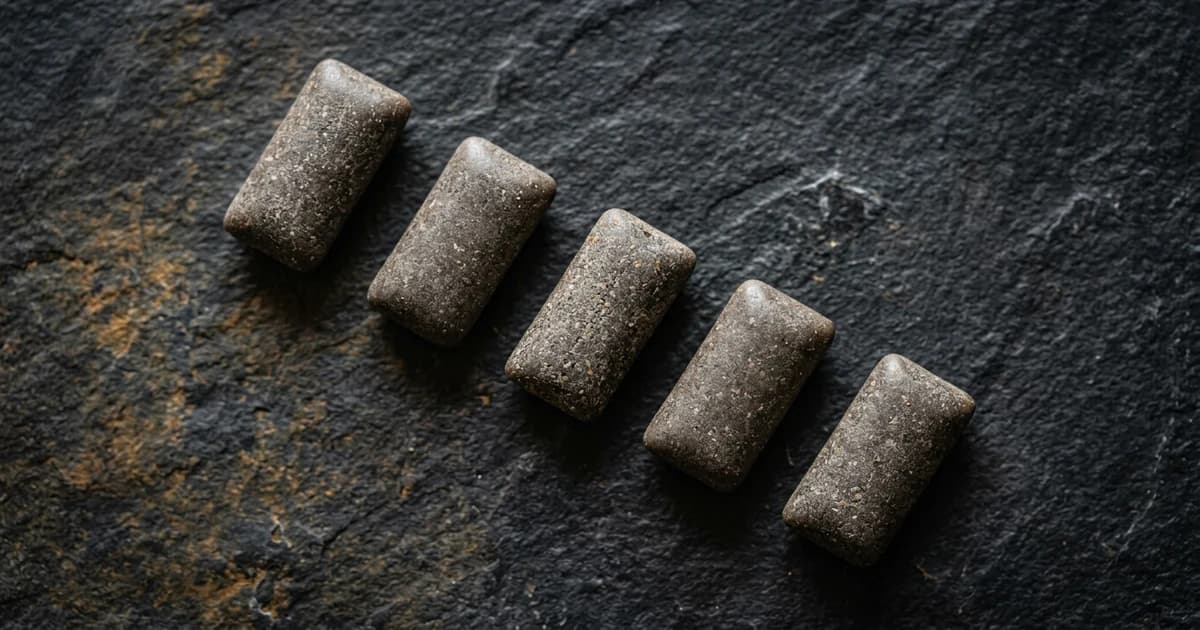
This is exactly the logic behind Roon. It's a zero-nicotine sublingual pouch built on the four-compound stack outlined above: 80 mg caffeine, L-theanine, theacrine, and methylliberine. The dosages are listed on the label. The delivery is sublingual for fast, consistent absorption. And the l theanine and caffeine combination is designed to give you 6-8 hours of sustained focus without jitters, without a crash, and without the tolerance buildup that makes caffeine alone a losing game over time.
If you want to see exactly what's in it, check out the full formula.