How to Improve Mental Clarity: A Practical Guide to Thinking Clearly Without Coffee
Roon Team
How to Improve Mental Clarity: A Practical Guide to Thinking Clearly Without Coffee
You sit down to work and your brain feels like it's buffering. You read the same sentence three times. The thought you had ten seconds ago is gone.
Learning how to improve mental clarity isn't about drinking more coffee or white-knuckling your way through the afternoon. It's about removing the things that fog you up and giving your brain the inputs it actually runs on. Most people are doing the opposite.
This guide covers what mental clarity really is, why yours keeps slipping, and the specific levers that bring it back, including a few that don't involve caffeine at all.
Key Takeaways
- Mental clarity is the state where your attention, working memory, and decision-making run smoothly without effort or static.
- The most common clarity killers are poor sleep, dehydration, blood-sugar swings, and chronic stress, not a lack of caffeine.
- Coffee can sharpen focus, but the dose-dump of a single large cup often trades clarity for jitters and a mid-afternoon crash.
- The L-theanine plus caffeine combination is one of the best-studied tools for calm, steady focus.
What Is Mental Clarity? (The Real Definition)
Mental clarity is the ability to think, focus, and make decisions without friction. Your thoughts feel organized, your attention holds where you point it, and recall is quick. That's the simple mental clarity meaning most people are reaching for when they say they feel "sharp."
So what is mental clarity in practical terms? It's three systems working together: sustained attention (you can stay on one task), working memory (you can hold information in your head), and executive function (you can plan, switch, and decide). When all three hum along, you feel clear. When one drops, you feel foggy.
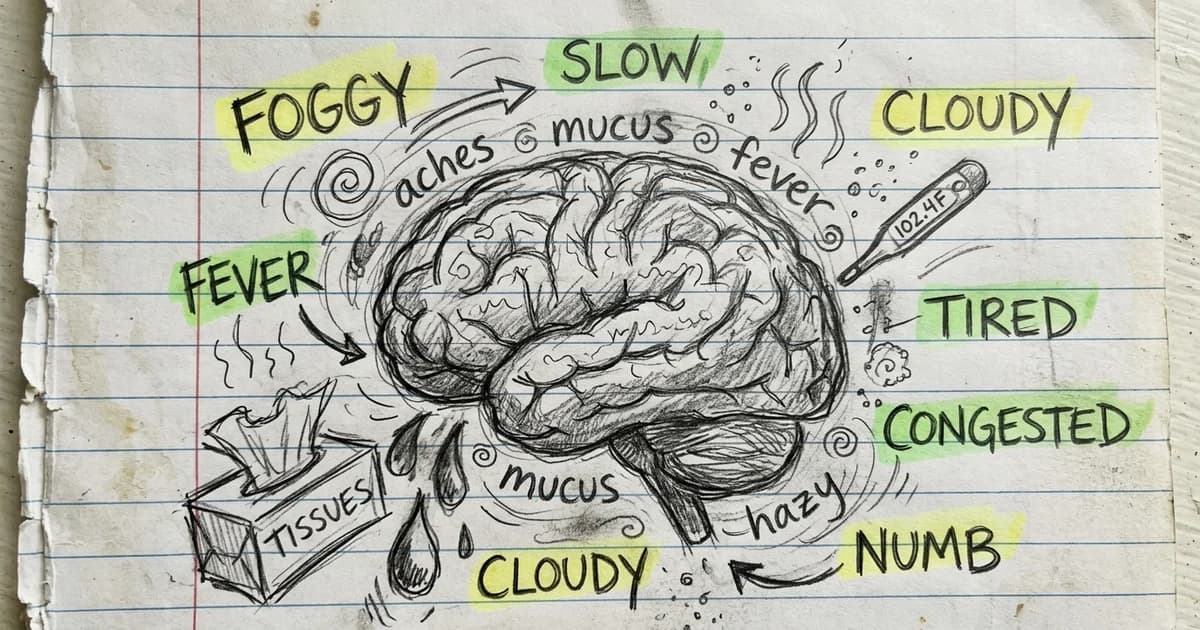
Brain fog is the opposite state. It isn't a medical diagnosis on its own. According to the University of Rochester Medical Center, brain fog is a symptom that can stem from sleep problems, stress, diet, and other underlying issues rather than a single condition.
That distinction matters. If fog is a symptom, then chasing clarity means finding the cause, not masking it with another espresso.
Why Can't I Think Clearly? The Usual Suspects
If you keep asking yourself "why can't I think clearly," the answer is usually hiding in your last 24 hours, not your genetics. A handful of everyday factors account for most cases of fog.
1. You're Underslept
Sleep is the single biggest input to clear thinking. A 2025 analysis in the NCBI library found that adults with chronic sleep deprivation, under six hours a night, showed greater declines across multiple cognitive domains than those who slept adequately.
It gets specific, too. Research published in Frontiers in Neuroscience reported that sleep deprivation selectively impairs attention networks and executive function first. Those are exactly the systems clarity depends on.
2. You're Mildly Dehydrated
You don't need to feel thirsty to be impaired. A meta-analysis on PubMed concluded that dehydration measurably impairs cognitive performance, including attention and executive function.
Researchers at Penn State have also linked inadequate hydration to attention problems in middle-aged and older adults. A glass of water is often the cheapest clarity fix you'll find.
3. Your Blood Sugar Is on a Roller Coaster
A pastry-and-latte breakfast spikes your glucose, then drops it. That crash lands as fatigue and fog right around 11 a.m. Protein and fiber flatten the curve.
4. You're Running on Stress
Chronic stress floods your system with cortisol, which makes it harder to hold information and stay on task. Healthline lists stress among the leading drivers of brain fog, alongside poor sleep and diet.
How to Improve Mental Clarity: 7 Practical Levers
Here is how to improve mental clarity using changes you can start today. Work top-down. The first three fix causes; the rest sharpen an already-clear mind.
- Protect your sleep window. Aim for seven to nine hours and keep a consistent wake time. This is non-negotiable and outperforms every supplement.
- Front-load your water. Drink a full glass when you wake up, then keep a bottle in sight. Even mild dehydration dulls attention.
- Eat for steady glucose. Pair carbs with protein and fat. Skip the sugar-only breakfast that sets up a late-morning crash.
- Move for ten minutes. A short walk or a few flights of stairs raises blood flow to the brain and clears the cobwebs fast.
- Single-task in blocks. Work in 25 to 50 minute focused sprints. Task-switching is a hidden clarity tax.
- Get morning light. Ten minutes of daylight anchors your circadian rhythm, which feeds back into better sleep and steadier daytime energy.
- Dose your stimulants smarter. This is where most people go wrong, and it deserves its own section.
How to Think Clearly Without the Coffee Crash
If you want to know how to think clearly without the afternoon collapse, the problem usually isn't caffeine itself. It's the format. A large coffee delivers 150 to 300 mg in a single fast hit, which spikes alertness and then drops it, often with jitters along the way.
The fix is a smaller, smarter dose paired with something that smooths it out. That something is L-theanine, an amino acid found in tea.
The combination is well studied. In a trial published on PubMed, researchers found that L-theanine plus caffeine improved accuracy during demanding task-switching, raised self-reported alertness, and reduced tiredness compared to placebo. L-theanine takes the edge off caffeine's jitter without dulling the focus.
A few other compounds extend the window. Methylliberine (sold as Dynamine) and theacrine (sold as TeaCrine) are caffeine relatives that support energy and focus with a gentler curve and slower onset. Stacked with caffeine, they help stretch clear-headed energy across hours instead of minutes.
Mental Clarity Tools Compared
If you're choosing how to fuel focus, here's an honest comparison of common approaches.
| Approach | Onset | Duration | Crash Risk | Clarity Profile |
|---|---|---|---|---|
| Large black coffee | 20-30 min | 2-4 hrs | High | Sharp but jittery |
| Energy drink | 15-30 min | 2-3 hrs | High | Spiky, sugar-dependent |
| Plain L-theanine | 30-60 min | 2-3 hrs | None | Calm, low stimulation |
| Caffeine + L-theanine (DIY) | 30-45 min | 3-4 hrs | Low | Calm and focused |
| Roon sublingual pouch | 5-10 min | 6-8 hrs | Low | Calm, sustained, no jitters |
The pattern is clear. Pairing caffeine with L-theanine beats caffeine alone, and a measured 4-ingredient stack delivered sublingually gives you a faster start and a longer, steadier runway than a cup of coffee can.
The Conclusion: Clarity Is a System, Not a Shot of Caffeine
Clear thinking isn't a personality trait you either have or don't. It's the output of a few inputs you control: sleep, water, food, movement, and how intelligently you use stimulants.
Most fog lifts when you fix the cause instead of papering over it. Sleep seven hours, hydrate before you're thirsty, eat for steady glucose, and stop pounding 300 mg of caffeine in one go.
Caffeine still has a place. The trick is the dose and the pairing, not the abstinence. Treat clarity as a system you maintain, and the foggy afternoons get rare.
Frequently Asked Questions
What is mental clarity, exactly?
Mental clarity is the state where your attention, working memory, and decision-making run without friction. Your thoughts feel organized, focus holds where you point it, and recall is fast. It depends on three systems working together: sustained attention, working memory, and executive function. When all three are well-supplied with sleep, hydration, and steady energy, you feel sharp and clear-headed.
Why can't I think clearly even after sleeping?
Sleep is the biggest input, but it isn't the only one. If you slept well and still feel foggy, check hydration, blood sugar, and stress. Even mild dehydration impairs attention, and a sugar-heavy breakfast can trigger a late-morning crash. Chronic stress raises cortisol, which makes it harder to hold information and concentrate. Run through each lever before assuming sleep was the issue.
How can I improve mental clarity fast?
For a quick reset, drink a full glass of water, take a ten-minute walk to raise blood flow, and step into daylight. These address the most common fast-acting fog triggers. For a sharper focus boost, a measured dose of caffeine paired with L-theanine supports calm alertness without the jitters of a large coffee. Fixing sleep remains the durable, long-term answer.
Is coffee bad for mental clarity?
Coffee isn't bad, but the format works against you. A single large cup delivers a fast, heavy dose that spikes alertness, then drops it, sometimes with jitters and an afternoon crash. The issue is dose and timing, not caffeine itself. Smaller, steadier amounts paired with L-theanine give you cleaner, longer focus than one big hit.
Does L-theanine actually help focus?
Yes, especially with caffeine. In a published trial, the L-theanine plus caffeine combination improved accuracy on demanding tasks, raised alertness, and reduced tiredness versus placebo. L-theanine appears to smooth out caffeine's rough edges, giving you calm, focused energy rather than a wired feeling. On its own it is mildly relaxing without sedation.
What foods support mental clarity?
Foods that keep blood sugar steady support clear thinking. Pair complex carbs with protein and healthy fats so glucose rises and falls gently instead of spiking and crashing. Fatty fish, eggs, leafy greens, nuts, and berries are reliable choices. Just as important, drink enough water, since even mild dehydration drags down attention and reaction time.
How long does it take to regain mental clarity?
Some levers work within minutes. Hydration, a short walk, and daylight can lift acute fog the same morning. Fixing the deeper causes takes longer. Rebuilding from chronic sleep debt can take several nights of consistent rest, and steadying your diet and stress shows up over a week or two. Quick fixes help today, but consistency is what keeps clarity stable.
Calm Energy for the Foggy Hours, Without the Coffee Spike
If your fog tends to hit mid-morning or after lunch, the issue is usually how you're fueling focus, not how hard you're trying. That's the exact gap Roon was built for.
Roon is a zero-nicotine sublingual pouch with a 4-ingredient stack: 80 mg caffeine, 60 mg L-theanine, 25 mg methylliberine (Dynamine), and 5 mg theacrine (TeaCrine). The L-theanine balances the caffeine for calm, clear-headed energy, and the sublingual format kicks in within 5 to 10 minutes and supports 6 to 8 hours of focus with no jitters, no crash, and no tolerance buildup.
To be clear about what it is and isn't: Roon supports focus and steady energy, but it doesn't replace sleep, water, or real food. Fix those first. When you want a clean layer of calm energy on top of solid habits, try Roon and skip the coffee spike.
Written by Roon Team