All-Nighter Survival Guide: How to Cram Through the Night and Still Think Clearly
Roon Team
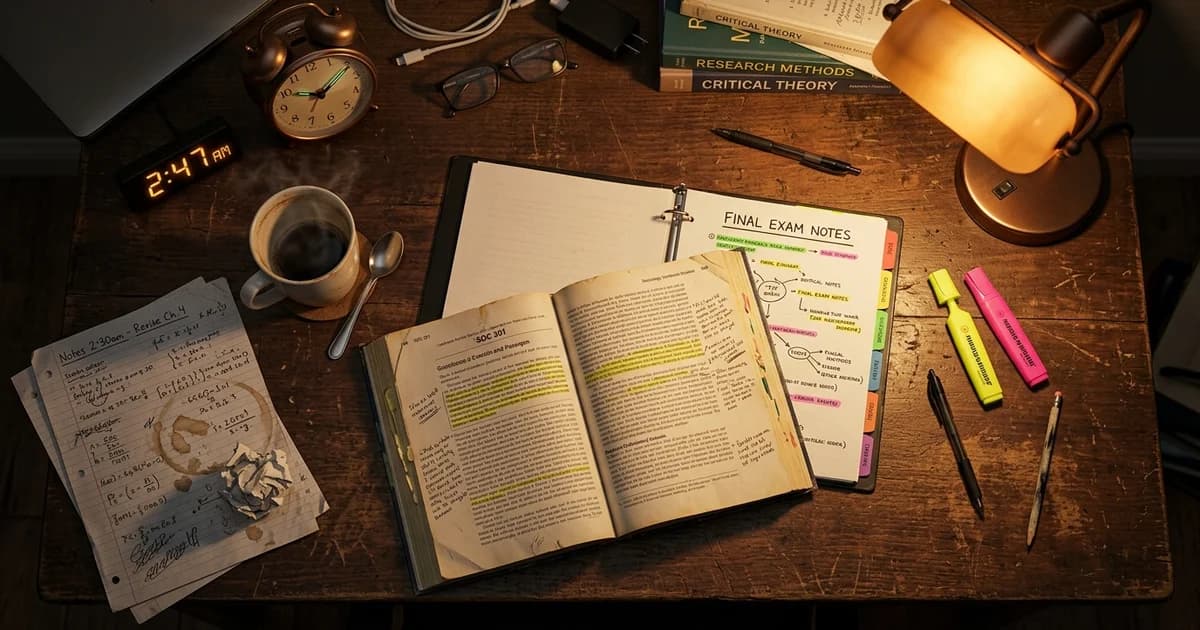
All-Nighter Survival Guide: How to Cram Through the Night and Still Think Clearly
You have eight hours of material and zero hours of sleep ahead of you. The exam is at 9 a.m. The smart move is to sleep, but you already know that, and you're reading this anyway.
So let's be honest about the real question. It isn't whether an all-nighter is a good idea. It's how to pull an all nighter that wrecks you as little as possible, keeps your recall intact through the morning, and doesn't turn you into a foggy ghost by noon. That's a strategy problem, and strategy is something you can actually plan.
This guide treats the all-nighter like what it is: a controlled emergency. Here's how to run it.
Key Takeaways
- An all-nighter is a last resort, not a study method. Going roughly 17 to 19 hours without sleep impairs you about as much as being legally drunk.
- Caffeine works best in moderate, timed doses paired with L-theanine, not in one giant slam at 2 a.m.
- A 20-minute "caffeine nap" can buy you a real second wind.
- New material learned overnight is fragile because sleep is when memories get locked in.
- The morning after matters as much as the night itself. Plan your recovery before you start.
Is It Bad to Pull an All-Nighter? The Honest Answer
Yes, it's bad, and the science is not subtle about it. The reason people ask is it bad to pull an all nighter is usually because they're hoping for permission. You won't get it here, but you will get the real picture so you can make a smart call.
Sleep loss hits the exact functions you need for an exam: attention, working memory, and reaction time. A study of university students found that sleep deprivation negatively affects cognitive and physical performance, which is the dry academic way of saying your brain gets slower and sloppier the longer you stay up.
The comparison that should stop you cold involves alcohol. According to a review of fatigue and impairment summarized by the CDC's NIOSH, being awake long enough produces deficits similar to alcohol intoxication. Other coverage of the original research notes that 17 hours awake is equivalent to a blood alcohol content of 0.05. Push past 19 hours and you're functioning around the legal limit for driving in many places.
Here's the part students underestimate most. Sleep is when your brain files what you studied. Research on memory shows that sleep deprivation during memory consolidation widens threat generalization and disrupts how new information gets stored. In plain terms: cramming all night can leave the material slippery, because you skipped the step that makes it stick.
So if your exam is conceptual and you've barely opened the book, an all-nighter is a bad bet. If you mostly know the material and need to firm up a few sections, it's survivable. Choose accordingly.
Should I Pull an All-Nighter? A 60-Second Decision
Direct answer: pull the all-nighter only if you already know about 70% of the material and you can recover with sleep within 24 hours. If you're starting from scratch, your time is better spent sleeping and reviewing in the morning.
If you're still asking should i pull an all nighter, run through this quick filter:
- How much do you already know? Reviewing beats learning cold at 3 a.m.
- What kind of test is it? Memorization survives sleep loss better than problem-solving and essays.
- Can you sleep after? If you have back-to-back exams with no recovery window, skipping sleep compounds across days.
- Are you driving anywhere? If yes, the alcohol comparison above is your answer. Don't.
If you cleared that filter, the rest of this guide is your operating plan.
How to Pull an All-Nighter Studying Without Frying Your Brain
The goal of a smart all-nighter is steady output, not a heroic burst at midnight followed by a crash at 4 a.m. People who know how to pull an all nighter studying treat caffeine, food, light, and breaks as tools to schedule, not things to panic-grab.
Time Your Caffeine, Don't Bury Yourself in It
Caffeine is your main lever, and most students misuse it by drinking too much too fast. A better approach is moderate doses spaced across the night so your alertness curve stays flat instead of spiking and collapsing.
The real upgrade is pairing caffeine with L-theanine, an amino acid found in tea. A double-blind crossover study published in the British Journal of Nutrition via Cambridge Core found that a high-dose L-theanine and caffeine combination improves neurobehavioural and neurophysiological measures of selective attention in acutely sleep-deprived young adults. Earlier work also reported that the same pairing improves cognitive performance and increases subjective alertness. Theanine smooths out the jittery edge of caffeine so you stay sharp without buzzing.
Use the Caffeine Nap
A "caffeine nap" sounds like a contradiction and works anyway. You drink caffeine, then immediately nap for about 20 minutes. Caffeine takes roughly 20 minutes to kick in, so you wake right as it lands, getting the benefit of brief rest and the stimulant at once.
A pilot study on night-shift workers and National Geographic's coverage of the research both describe the caffeine nap as a practical way to boost alertness during overnight hours. Set a hard 25-minute alarm. The danger is sliding into deep sleep, which leaves you groggier than before.
Manage Light, Movement, and Food
Bright light suppresses melatonin and signals your brain that it's daytime. Keep your room well lit and your screen brightness up.
Move every hour. A two-minute walk or a set of squats resets your attention better than another coffee. Eat light and protein-forward; heavy carbs at 1 a.m. will sandbag you. Hydrate, because dehydration mimics and worsens fatigue.
Work in Focused Blocks
Sleep-deprived attention is unreliable, so stop relying on willpower. Use short, timed blocks of 25 to 40 minutes with active recall, not passive rereading. Quiz yourself, write from memory, then check. Active retrieval is what survives a tired brain.
How to Stay Awake After an All-Nighter
The hours after sunrise are when most all-nighters fall apart. If you're searching how to stay awake after an all nighter, the answer is to ride your circadian rhythm instead of fighting it.
Your body gets a natural alertness bump in the mid-morning. Get outside and into daylight as soon as you can; sunlight is the strongest signal for staying awake. Pair that with a small, timed dose of caffeine rather than a fourth giant coffee, which mostly produces a crash.
Eat a real breakfast with protein. Avoid sugary pastries and energy drinks loaded with sugar, because the rebound dip will hit during your exam. Keep moving between tasks, splash cold water on your face, and resist the warm, quiet places that invite a microsleep.
One hard rule: do not drive if you feel your eyes closing. Microsleeps last seconds and you won't notice them happening.
Caffeine Strategies Compared
Not every source of caffeine behaves the same overnight. Here's how common student options stack up for a long session.
| Option | Onset | Crash risk | Sustained focus | Notes |
|---|---|---|---|---|
| Drip coffee | 20–30 min | Moderate | 2–4 hrs | Easy to overdo; acidic on an empty stomach |
| Energy drinks | 15–30 min | High | 1–3 hrs | Sugar spike then dip; not ideal before an exam |
| Pre-workout | 15–30 min | High | 1–3 hrs | Often overstimulating; not built for desk focus |
| Plain caffeine pills | 30–45 min | High | 2–4 hrs | No theanine to soften the jitters |
| Roon sublingual pouch | 5–10 min | Low | 6–8 hrs | Caffeine plus L-theanine, no sugar, no nicotine |
The pattern to notice: the options that spike fastest also tend to crash hardest. For an all-nighter, you want a flat, long curve, not a roller coaster. That's why caffeine paired with L-theanine, in a controlled dose, is the more reliable play for sustained desk work.
The Recovery Plan (Don't Skip This)
A single all-nighter is recoverable. A pattern of them is not, and chronic short sleep is linked to real health costs, so treat this as a one-off.
Sleep as soon as your obligations allow, ideally a full night rather than a long daytime crash that scrambles your rhythm further. If you can only nap, keep it under 90 minutes to land on a clean sleep cycle, or go for a full 90. Avoid caffeine within about eight hours of when you finally want to sleep.
The next day, lower the stakes. You'll be running a deficit, so don't schedule anything that demands peak judgment right after the exam.
The Bottom Line on Surviving the Night
An all-nighter is a controlled emergency, not a study habit. The students who come through one in decent shape don't power through on adrenaline; they manage their caffeine in moderate timed doses, use a 20-minute caffeine nap, study in active-recall blocks, and plan their morning light and recovery before they start.
The science is clear that sleep does the heavy lifting for memory and attention, and nothing fully replaces it. What you can do is reduce the damage and hold your focus steady through the hours that count. Run the night with a plan, protect the morning, and then actually sleep.
Frequently Asked Questions
How many hours of sleep can I get and still call it an all-nighter?
If you can grab even 90 minutes, take it. A single full sleep cycle gives your brain a chance to do some memory consolidation and resets your alertness more than people expect. A short, well-timed nap is almost always better than zero sleep, and it beats the deep impairment that builds after 17-plus hours awake.
Does coffee really stop working during an all-nighter?
Caffeine doesn't stop working, but your body builds short-term tolerance across a night of heavy dosing, and huge servings cause crashes. Moderate, spaced doses keep your alertness curve flatter. Pairing caffeine with L-theanine helps maintain focus without the jittery spike that leads to a hard comedown later.
Is one all-nighter going to hurt my health?
A single all-nighter is generally recoverable with good sleep afterward. The bigger concern is making it a habit, since ongoing sleep loss carries real costs for mood, memory, and metabolism. Treat an all-nighter as a rare emergency tool, not a routine, and prioritize recovery sleep within 24 hours.
What should I eat to stay sharp overnight?
Favor protein and slow carbohydrates over sugar. Heavy, greasy meals make you drowsy, and sugary snacks or energy drinks cause a spike and crash. Small, frequent, protein-forward snacks keep your energy steadier, and staying hydrated matters because dehydration feels a lot like fatigue and makes it worse.
How do I stay awake after an all-nighter during my exam?
Get into bright daylight, eat a protein breakfast, and take a small timed dose of caffeine rather than slamming another large coffee. Move between tasks and keep cool. Lean on your mid-morning circadian alertness bump. Avoid sugar, which will drop you mid-test, and never drive if you feel yourself nodding off.
Should I pull an all-nighter or wake up early instead?
For most people, sleeping and waking early wins. You'll consolidate some memory overnight and study with a fresher brain in the morning, when reaction time and recall are far better than they are at 4 a.m. Reserve the full all-nighter for when you already know most of the material and simply need more review time.
The Student's Tool for the Long Session, Not a Replacement for Sleep
Everything above points to the same setup for a long study night: a controlled, moderate dose of caffeine, paired with L-theanine to keep you sharp instead of wired, delivered in a way that lasts the session instead of spiking and crashing. That's the gap Roon was built to fill for students.
Each Roon pouch is sublingual, so it absorbs in 5 to 10 minutes, and it carries a focused four-ingredient stack: 80 mg caffeine, 60 mg L-theanine, 25 mg methylliberine (Dynamine), and 5 mg theacrine (TeaCrine). It's designed for 6 to 8 hours of steady focus with no jitters, no crash, and no tolerance buildup, with zero nicotine and zero sugar. That's the flat, long curve a study marathon actually needs.
To be clear, Roon is not a substitute for sleep, and nothing is. Sleep does the memory consolidation an exam depends on. But when you've made the call to study late and need to hold your focus through the night and into the morning, try Roon as the tool that keeps you steady. Then go sleep.
Written by Roon Team