How to Remember What You Study: The Science of Focus and Retention
Most students do not have a studying problem. They have a forgetting problem.
You read the chapter, you highlight the textbook, you feel ready, and three days later it has mostly evaporated. The frustrating part is that learning how to retain information when studying has very little to do with how many hours you log. It has everything to do with what your brain does during and after those hours. The students who remember the most are not the ones who study the longest. They are the ones who study in a way that matches how memory actually works.
This guide breaks down the science of focus and retention, then gives you a system you can use tonight.
Key Takeaways
- Your brain forgets fast by default. Without review, you can lose 50% to 70% of new material within a day.
- Active recall beats rereading by a wide margin. Testing yourself once can outperform studying four times.
- Spacing your sessions out over days builds stronger, longer-lasting memory than cramming.
- Sleep is when memory gets locked in, so an all-nighter usually costs you more than it earns.
- Focus quality matters as much as study technique. A distracted brain encodes weak memories.
Why Your Brain Forgets What You Just Read
Forgetting is the default setting, not a malfunction. The German psychologist Hermann Ebbinghaus mapped this in the 1880s with what we now call the forgetting curve, and modern reviews still hold up his core finding.
According to a breakdown of the forgetting curve from Whatfix, people can lose 50% to 70% of new information within a single day when nothing reinforces it. Another summary from Structural Learning puts it more starkly, noting that around 56% of material can be gone within an hour and roughly 70% by the end of the first day.
That is the bad news. The good news is that the curve flattens every time you pull the information back out of your head. Each act of retrieval tells your brain that this memory is worth keeping. So the entire game of retention is fighting that decay with the right tools at the right time.
How to Retain Information When Studying: The Two Techniques That Actually Work
The single biggest change you can make is to stop rereading and start retrieving. Two methods carry most of the weight: active recall and spaced repetition.
Active Recall Beats Rereading, and It Is Not Close
Active recall means closing the book and forcing yourself to produce the answer from memory. Rereading feels productive because the material looks familiar. Familiarity is not memory.
The research here is decisive. In the classic Roediger and Karpicke work, as explained by learning specialist Mike Taylor, students who took practice tests remembered 50% more than students who studied the same material repeatedly. Testing once produced better long-term retention than studying four times.
One caveat worth knowing. A meta-analysis described by ScienceDirect found the testing effect is strongest when you actually get feedback and your practice accuracy clears about 50%. In plain terms: quiz yourself, then check the answer. Guessing in the dark with no correction does not build the same gains.
Practical ways to use active recall:
- Turn every heading in your notes into a question, then answer it without looking.
- Use flashcards, but answer out loud before flipping the card.
- After reading a page, close it and write down everything you remember. The blank-page method is brutal and effective.
- Teach the concept to an imaginary student. If you stumble, you found your weak spot.
Spaced Repetition: Beat the Forgetting Curve on Schedule
Spaced repetition means reviewing material at expanding intervals instead of all at once. You study today, again in two days, again in a week, again in two weeks. Each review resets the forgetting curve and makes the next gap safe to stretch longer.
Cramming the night before puts everything into short-term memory, which is exactly the memory that drains fastest. Spacing forces your brain to rebuild the memory repeatedly, and rebuilding is what makes it durable. Research collected in a PMC review on the spacing effect supports distributed practice as one of the most reliable findings in learning science.
This is the core answer to how to retain information when studying for an exam: start early, review in short spaced sessions, and let time do half the work for you. A two-week plan with twenty-minute daily reviews will crush a single ten-hour cram.
Sleep Is Not Optional: How Memory Gets Locked In
You do not finish learning when you close the book. You finish learning while you sleep.
During deep sleep, your brain replays and consolidates what you studied, moving fragile new memories into more stable storage. A PMC study on sleep and consolidation found that memory retention after a delay was much higher in people who slept than in those who stayed awake over the same period.
This is why the all-nighter is a bad trade. You gain a few hours of frantic input and lose the one biological process that turns input into lasting knowledge. If you have to choose between one more hour of review and a full night of sleep before a test, sleep usually wins. Sleep is just one variable in that tradeoff; we cover the rest in our guide to sharpening study skills and memory retention.
There is also a timing angle. A PLOS One study on adolescents examined how learning close to bedtime affects long-term consolidation, reinforcing that the period right before sleep is valuable real estate for review.
The Focus Problem Nobody Talks About
Here is what most study guides skip. None of these techniques work if your attention is fractured. A memory encoded while you are half-watching your phone is a weak memory from the start.
Retention starts at encoding, and encoding requires sustained focus. This is where caffeine and L-theanine earn their reputation. A widely cited PubMed study found that the combination of L-theanine and caffeine improved cognitive performance and increased subjective alertness more cleanly than caffeine alone, with the theanine smoothing out the edginess.
Caffeine may also help on the back end of learning, not just the front. A post-study caffeine consolidation paper in PMC, based on work published in Nature Neuroscience, found that 200mg of caffeine taken after learning enhanced memory consolidation a full day later. The dose mattered, and the moderate dose did the most work.
The takeaway is simple. Sharper, calmer focus during study sessions produces stronger memories. The goal is steady attention for hours, not a spike followed by a crash that wipes out your second study block.
Putting It Together: A Retention System for Test Week
Here is how to retain information better when studying, combined into one workflow.
- Encode with focus. Pick a quiet block, kill notifications, and read with the intent to recall, not just to finish.
- Retrieve immediately. After each section, close the material and reproduce it from memory.
- Quiz with feedback. Self-test, then check answers and correct your gaps.
- Space it out. Review again at day two, day five, and day ten. Short sessions, expanding gaps.
- Protect sleep. Do your hardest review in the evening, then sleep on it.
This is also the honest answer to how to retain information for a test: technique plus timing plus rest. There is no shortcut around the work, but there is a smarter way to do the work.
Study Aids Compared: What Actually Helps You Focus
If you want chemical help holding attention during long sessions, the options differ a lot in how clean they feel. Here is an honest comparison.
| Option | Onset | Focus duration | Crash risk | Notes |
|---|---|---|---|---|
| Coffee | 20-45 min | 2-4 hrs | Moderate to high | Easy to over-drink, jitters common, acidic on an empty stomach |
| Energy drinks | 15-30 min | 2-4 hrs | High | Heavy sugar load and a sharp crash that hurts session two |
| Nicotine pouches | 5-15 min | 1-2 hrs | High | Addictive, builds tolerance fast, not a study tool |
| Plain L-theanine | 30-60 min | 2-3 hrs | Low | Calming, but little stimulation on its own |
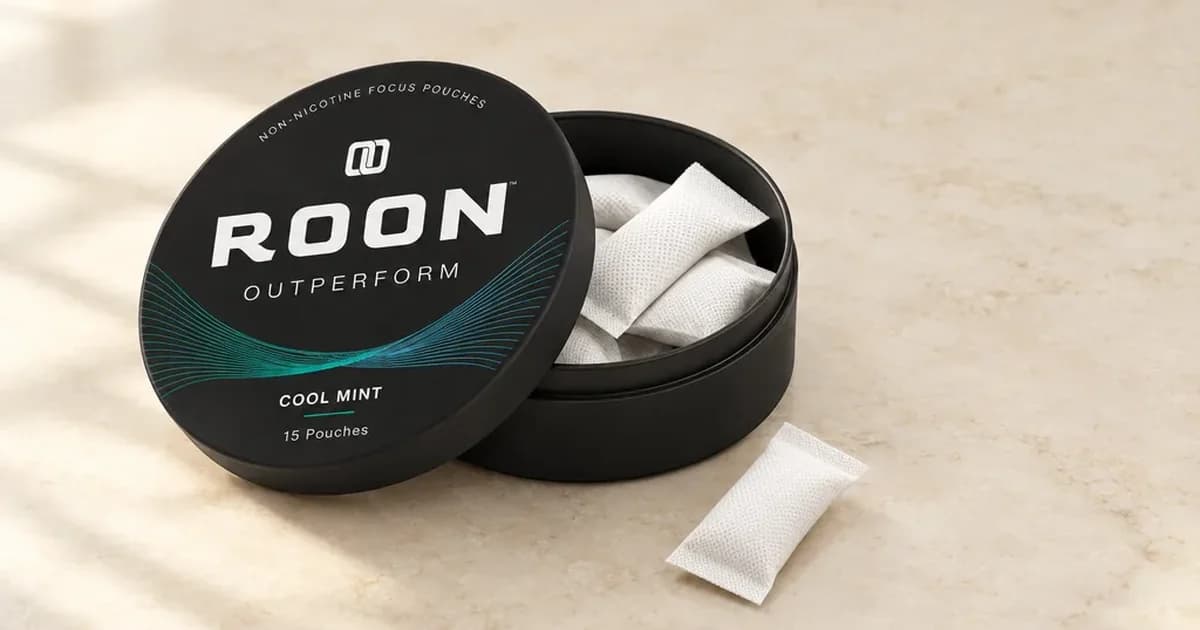
| Roon sublingual pouch | 5-10 min | 6-8 hrs | Low | 80mg caffeine, 60mg L-theanine, 25mg methylliberine, 5mg theacrine; no nicotine, no sugar |
Roon sits in the table because it was built for exactly the long, focused window that studying demands. The methylliberine and theacrine matter here. According to a guide from The Optimizing Blog, methylliberine and theacrine tend to produce less tolerance buildup than caffeine alone, which is useful when you are studying daily for two weeks straight.
The Bottom Line on Studying Smarter
Memory is not about willpower or raw hours. It is about working with your biology instead of against it.
Forget by default, remember by design. Pull information out of your head with active recall, space your reviews across days to flatten the forgetting curve, and let sleep do the quiet work of locking it in. Layer steady, calm focus on top of that system and your study time starts paying real dividends. The students who remember the most are simply the ones who stopped rereading and started retrieving.
Frequently Asked Questions
What is the fastest way to retain information while studying?
The fastest gains come from active recall paired with feedback. Instead of rereading your notes, close them and try to reproduce the material from memory, then check what you missed. Research on the testing effect shows self-testing can produce far better long-term retention than repeated reading. Combine this with short, focused sessions and you will remember more in less total time.
Does cramming the night before a test work?
Cramming can get you through a single test, but it fails for real retention. It loads everything into short-term memory, which drains within a day or two. Worse, late-night cramming usually cuts into sleep, and sleep is when your brain consolidates memory. A few spaced review sessions across the week beat one marathon night almost every time.
How many times should I review material to remember it?
Plan for at least three to four spaced reviews. A workable pattern is to review the same day you learn something, again two days later, again about a week out, and once more near the test. Each review resets the forgetting curve and lets you stretch the gap before the next one. The exact spacing matters less than the consistency.
Does caffeine actually help memory or just alertness?
It appears to do both. Beyond improving alertness, a study based in Nature Neuroscience found that 200mg of caffeine taken after learning improved memory consolidation a day later. Pairing caffeine with L-theanine also produces cleaner, calmer focus than caffeine alone, which helps you encode material well during long study sessions.
How long before an exam should I stop studying?
Stop heavy new learning the night before and protect your sleep. Light review is fine, but treat sleep as part of your study plan, not a luxury. Memory consolidation during sleep markedly improves what you retain, so trading a full night of rest for extra cramming usually backfires on test day.
Why do I forget things right after I read them?
Because your brain forgets quickly by default and because passive reading creates weak memories. Familiarity tricks you into feeling prepared when the information has not actually stuck. The fix is to read with the intent to recall, then immediately test yourself without looking. Retrieval is what signals to your brain that the information is worth keeping.
The Focus Layer Your Study System Is Missing
Everything above works only if you can hold your attention long enough to encode the material in the first place. That is the gap most study advice ignores. You can have a perfect spaced-repetition plan and still waste it on a distracted, jittery, half-present brain.
This is where Roon fits a student's routine. It is a zero-nicotine, zero-sugar sublingual pouch with 80mg caffeine, 60mg L-theanine, 25mg methylliberine, and 5mg theacrine. It works in 5 to 10 minutes and is designed for a 6 to 8 hour window of steady focus with no jitters, no crash, and no tolerance buildup, which matters when you study daily through exam season.
To be clear, Roon is not a substitute for sleep, active recall, or starting early. It will not memorize the material for you. It is the focus layer that lets your study system actually run. If long sessions tend to fall apart halfway through, try Roon for your next stretch of exam prep and see how much more of it sticks.
Written by Roon Team