How to Improve Reaction Time: Exercises That Actually Work
Roon Team
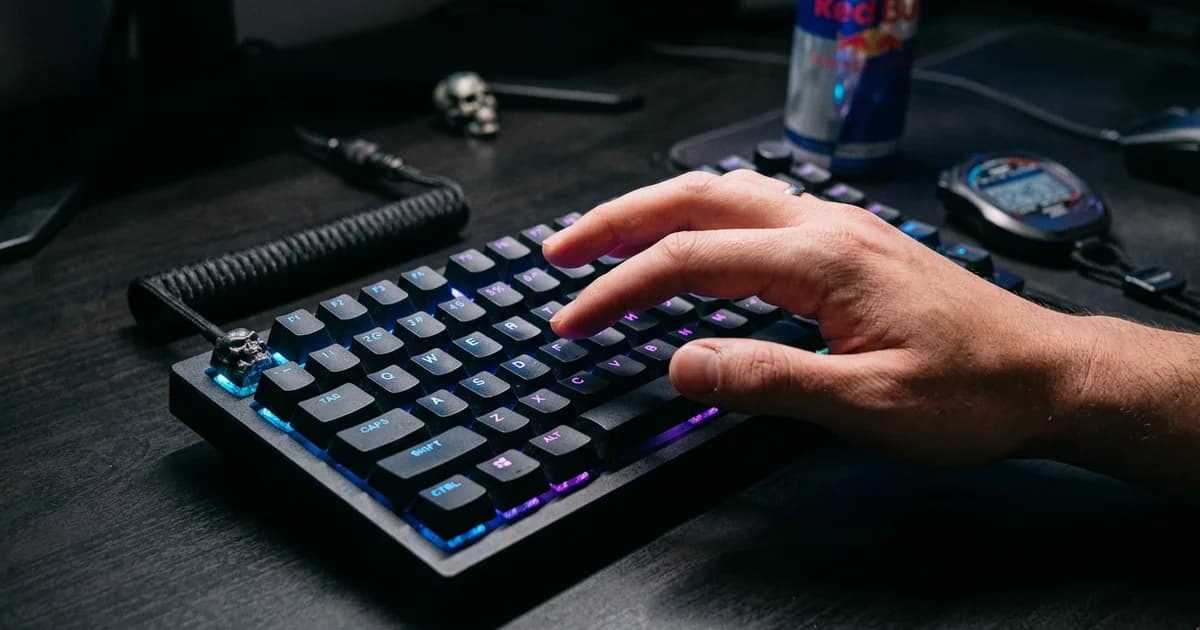
How to Improve Reaction Time: Exercises That Actually Work
Your reaction time is the gap between what happens and what you do about it. Learning how to improve reaction time exercises is essential whether you're a competitive gamer landing shots or an athlete making clean tackles. The good news: reaction time is a trainable skill with a clear physiological basis, and the right drills can shave real milliseconds off your response.
The average human visual reaction time sits around 250 milliseconds. Professional athletes and elite gamers typically operate between 160 and 210 milliseconds. That difference isn't genetic luck. It's built through deliberate practice, physical conditioning, and a few lifestyle factors most people ignore. Understanding how to improve reaction time exercises starts with understanding what separates the fast from the average.
Key Takeaways
- Reaction time is trainable. Knowing how to improve reaction time exercises can measurably reduce your response latency.
- Physical fitness matters more than you think. Aerobic exercise directly improves cognitive speed.
- Sleep is non-negotiable. Even one night of poor sleep increases reaction time.
- Stacking the right habits (and the right compounds) compounds the effect.
What Actually Determines Your Reaction Time?
Before you explore how to improve reaction time exercises, it helps to understand what you're training. Reaction time isn't a single event. It's a chain: your sensory system detects a stimulus, your brain processes it, selects a response, and then your motor system executes that response. Bottlenecks can exist at any point in that chain.
Some factors you can't control. Age slows reaction time. Auditory stimuli produce faster responses than visual ones. Left-handedness vs. right-handedness plays a minor role.
But the factors you can control are far more powerful: physical fitness, sleep quality, cognitive training, and what you put into your body. Those are where the real gains live, and they form the foundation of how to improve reaction time exercises effectively.
The Best How to Improve Reaction Time Exercises
1. Ball Drop Drills
This is the simplest drill with one of the highest payoffs. Have a partner hold a tennis ball at shoulder height. They release it without warning, and you catch it before it hits the ground.
Why it works: it trains the full reaction chain, from visual detection to motor execution, in a single fluid movement. No screens, no tech required. Vary the height and distance to keep your nervous system adapting. Ball drop drills are a staple for anyone studying how to improve reaction time exercises on a budget.
2. Reaction Ball Training
A reaction ball is a six-sided rubber ball that bounces unpredictably off any surface. Throw it against a wall and try to catch it. The irregular bounces force your brain to constantly recalculate trajectory and adjust your body position in real time.
BlazePod recommends standing about 10 meters from a wall for these drills. Start with underhand tosses and progress to harder throws as your reflexes sharpen. This is a favorite among combat sport athletes and tennis players for good reason: it trains both hand-eye coordination and lateral movement simultaneously. If you're serious about how to improve reaction time exercises, reaction ball training belongs in your rotation.
3. Lateral Shuffle Drills
Stand in an athletic stance. Have a partner point left or right (or use a random signal). Shuffle in that direction as fast as possible, then reset.
This drill targets the decision-to-movement pipeline. You're not just reacting with your hands; you're reacting with your entire body. That full-body recruitment pattern transfers directly to sports like basketball, soccer, and football where split-second directional changes determine outcomes.
4. Light-Based Reaction Training
Tools like BlazePod or ROX lights place LED pods around a space. They light up in random patterns, and you tap them as fast as you can. These systems track your reaction times down to the millisecond, giving you hard data on your progress.
The advantage here is specificity. You can program drills that mimic the exact stimulus patterns you face in your sport or game. A goalkeeper can train with lights arranged in a semicircle. A gamer can set up a tabletop version focused on finger response. Light-based systems are among the most data-driven ways to approach how to improve reaction time exercises.
5. Aim Trainers (For Gamers)
If your goal is faster reactions in FPS games, general athletic drills help, but aim trainers close the gap between physical reflexes and in-game performance. Platforms like Aimlabs and Aiming.Pro offer drills that track accuracy, reaction times, and mouse speed with detailed analytics.
The key with aim trainers: quality over quantity. Short, focused sessions of 15 to 20 minutes produce better results than grinding for hours with declining attention. Your nervous system learns best when it's fresh. For gamers researching how to improve reaction time exercises, aim trainers offer the most sport-specific option available.
6. Sparring and Competitive Drilling
Nothing trains reaction time like an unpredictable human opponent. Whether it's boxing, table tennis, or a 1v1 in your favorite game, live competition forces your brain to read cues, predict movement, and respond under pressure.
This is where reaction time meets decision-making. Lab drills train raw speed. Competition trains speed plus accuracy plus pattern recognition. You need both to fully master how to improve reaction time exercises.
How to Improve Reaction Time Exercises with Physical Fitness
Here's something most "reaction time tips" articles skip: your body's baseline fitness directly affects how fast your brain processes information.
A 2024 systematic review and meta-analysis published in Communications Psychology found that a single bout of exercise improves cognitive task performance, with particular benefits to reaction time. Cycling and high-intensity interval training (HIIT) showed the strongest effects.
A 2023 randomized controlled trial specifically studied e-sports players and found that acute moderate-intensity aerobic exercise improved cognitive function. If you're a competitive gamer who thinks the gym is irrelevant to your performance, the data disagrees.
Here's the minimum effective dose for cognitive benefits from exercise:
| Exercise Type | Duration | Frequency | Cognitive Benefit |
|---|---|---|---|
| Moderate cardio (cycling, jogging) | 20-30 min | 3-5x/week | Improved processing speed and reaction time |
| HIIT | 15-20 min | 2-3x/week | Enhanced executive function and working memory |
| Strength training | 30-45 min | 2-3x/week | Better muscle activation speed |
You don't need to become a marathon runner. But a consistent exercise habit is one of the highest-return investments you can make for faster reactions, and it amplifies every other method in your how to improve reaction time exercises toolkit.
The Sleep Factor Most People Underestimate
A 2025 study published in Frontiers in Neuroscience confirmed what decades of research have suggested: sleep deprivation leads to increased reaction time, reduced attention, and impaired alertness.
The Sleep Foundation reports that in one study, subjects who slept only five hours per night for a week showed steadily worsening reaction times as sleep debt accumulated. This isn't a marginal effect. Sleep-deprived reaction times can degrade to the point where they resemble those of someone who is legally intoxicated.
If you're doing all the drills but sleeping six hours a night, you're training with the parking brake on. Seven to nine hours of quality sleep is the foundation everything else builds on. No guide on how to improve reaction time exercises is complete without this point.
Nutrition and Supplementation for Faster Reactions
Your brain runs on chemistry. The speed of neurotransmitter release, the efficiency of signal propagation along nerve fibers, the clarity of attentional focus: all of these are influenced by what you consume.
Caffeine
Caffeine is the most well-studied cognitive enhancer on the planet. It blocks adenosine receptors, reducing drowsiness and increasing alertness. But dosage matters. Too much caffeine (above 300-400mg) can cause jitters and anxiety, which actually slow reaction time by introducing noise into your motor system.
The sweet spot for most people is 40 to 100mg, enough to sharpen attention without overstimulation.
L-Theanine
L-Theanine, an amino acid found naturally in tea, promotes alpha brain wave activity associated with calm focus. On its own, it's subtle. But combined with caffeine, the effects are measurable.
A study on PubMed found that 97mg of L-Theanine combined with 40mg of caffeine improved accuracy during task switching and self-reported alertness in young adults. The combination helped focus attention during demanding cognitive tasks.
Research on elite wrestlers published in the Journal of the International Society of Sports Nutrition found that combining caffeine with L-Theanine produced superior results in both Stroop reaction time and accuracy compared to either compound alone. The L-Theanine appears to smooth out caffeine's rough edges while preserving (and even enhancing) its cognitive benefits.
Theacrine and Methylliberine
These are lesser-known compounds structurally related to caffeine. Theacrine activates similar neural pathways but with a key difference: it doesn't appear to build tolerance the way caffeine does. Methylliberine has a faster onset and shorter duration, making it useful for stacking with longer-acting compounds to create a smooth, sustained cognitive boost.
Building Your Reaction Time Training Protocol
Knowing how to improve reaction time exercises isn't enough. You need a structure. Here's a practical weekly template:
Daily (5-10 minutes):
- Aim trainer session or ball drop drills
- Focus on quality reps, not volume
3x Per Week:
- 20-30 minutes of moderate cardio or HIIT
- Lateral shuffle drills or agility ladder work (10 minutes)
- 7-9 hours of sleep per night
- Consistent hydration (dehydration impairs cognitive speed)
- Strategic supplementation before training or competition
Track your reaction times weekly using a free online tool or an aim trainer's built-in analytics. You're looking for a downward trend over weeks, not overnight miracles. Consistency is what separates people who read about how to improve reaction time exercises from those who actually get faster.
Gain the Edge
Every drill, every workout, every hour of sleep compounds into faster, cleaner reactions. Now that you know how to improve reaction time exercises, there's one more variable worth mentioning.
Roon is a zero-nicotine sublingual pouch built specifically for cognitive performance. It combines 80mg of caffeine, L-Theanine, Theacrine, and Methylliberine, the exact stack the research points to for sustained focus without jitters or crash. In testing, it delivered an 11.5% improvement in reaction time, with effects lasting 6 to 8 hours and no tolerance buildup.
If you're serious about how to improve reaction time exercises and shaving milliseconds off your response, the training gets you most of the way there. The right fuel gets you the rest. Gain the edge.