How to Reset Your Dopamine Receptors
Roon Team

How to Reset Your Dopamine Receptors (Without Falling for Internet Myths)
You searched "how to reset my dopamine receptors" because something feels off. The things that used to motivate you, a good workout, a productive morning, finishing a project, barely register anymore. Meanwhile, you're reaching for your phone every three minutes like it owes you money.
You're not broken. Your dopamine system is just doing exactly what it was designed to do: adapt to overstimulation. The good news is that adaptation works both ways. If you're wondering how to reset my dopamine receptors, the answer lies in understanding that biology and working with it.
Here's what actually works, what doesn't, and how long the process takes.
Key Takeaways
- Your dopamine receptors downregulate in response to chronic overstimulation. This is normal neurobiology, not a character flaw.
- "Dopamine fasting" is a real concept wrapped in bad branding. The science supports reducing high-stimulation inputs, but you don't need to sit in a dark room.
- Recovery takes 2 to 12 weeks depending on the source of overstimulation and your baseline habits.
- Exercise, sleep, and strategic supplementation are the three highest-impact tools for anyone asking how to reset my dopamine receptors through evidence-based methods.
What Actually Happens to Your Dopamine Receptors
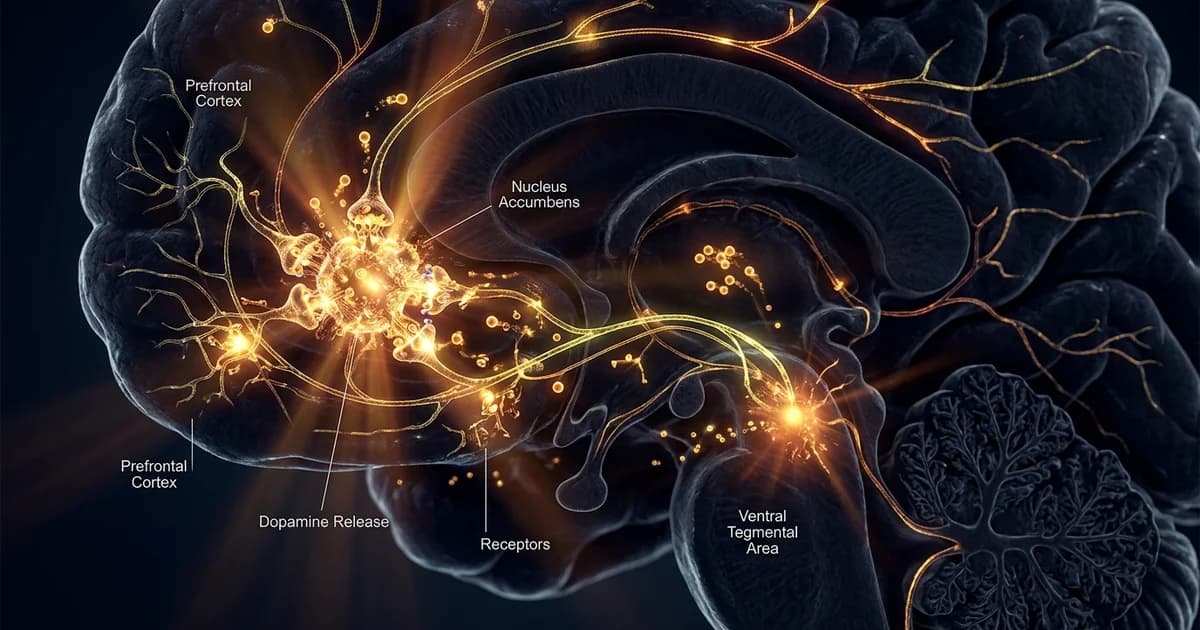
Dopamine doesn't work the way most internet content describes it. It's not a "pleasure chemical" that you spend like a currency. Dopamine is a signaling molecule that encodes prediction errors, the gap between what you expected and what you got. Understanding this mechanism is the first step in learning how to reset my dopamine receptors effectively.
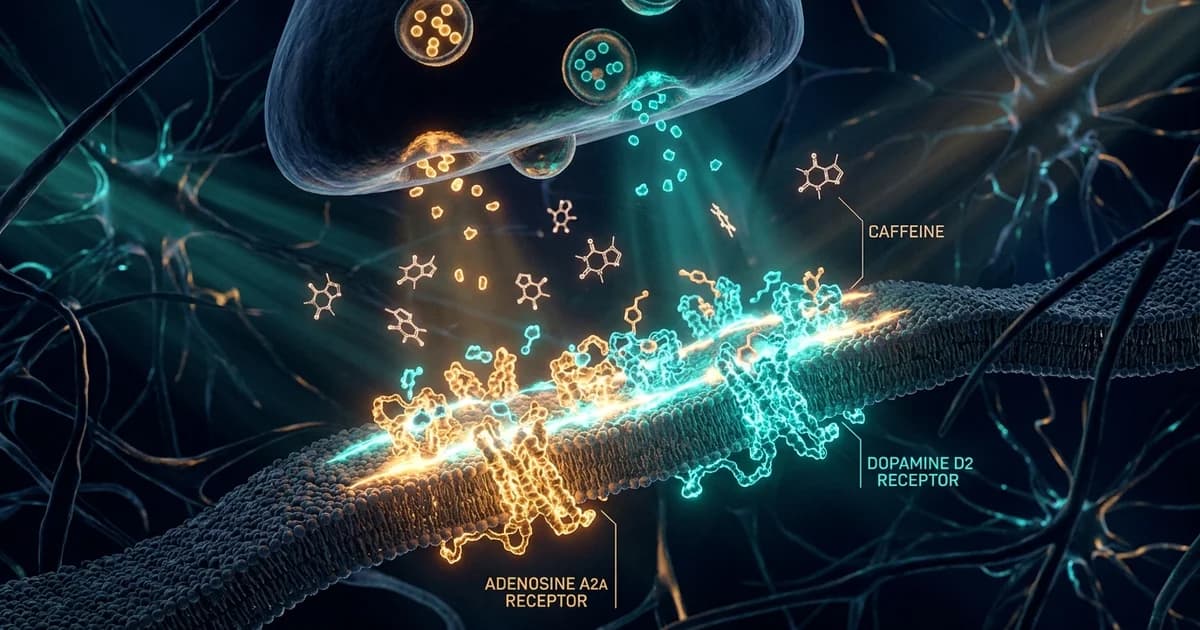
When you scroll social media, every swipe delivers a micro-hit of novelty. Your brain registers this as a repeated, high-frequency dopamine signal. In response, it does something logical: it reduces the number of available D2 receptors on the postsynaptic neuron. Fewer receptors means each signal has less impact.
This is called receptor downregulation, and it's the same mechanism behind caffeine tolerance, drug tolerance, and the reason your third cup of coffee doesn't hit like your first one did in college.
The result? You need more stimulation to feel the same level of motivation and reward. Normal activities feel flat. Your baseline drops. That's exactly why so many people search how to reset my dopamine receptors after months of feeling unmotivated.
How to Reset My Dopamine Receptors: The Evidence-Based Protocol
The phrase "dopamine reset" is a simplification, but it points to something real. You can support the upregulation of D2 receptors by systematically reducing overstimulation and reinforcing healthy dopamine signaling. Here's how to reset my dopamine receptors step by step.
1. Cut the High-Frequency Dopamine Sources
This is the most important step in figuring out how to reset my dopamine receptors, and the one most people skip.
Identify your top three sources of cheap dopamine. For most people, that list includes some combination of: infinite-scroll social media, pornography, highly processed food, and constant novelty-seeking (opening 40 browser tabs, switching between apps every 90 seconds).
You don't need to eliminate all pleasure from your life. That's the mistake the "dopamine fasting" trend made when it went viral. The Scientist reported that scientists have identified five different dopamine receptor subtypes, each with distinct roles. The goal isn't to stop all dopamine activity. It's to reduce the specific high-frequency, low-effort inputs that drive downregulation.
Practical approach: Pick your single worst offender and cut it for 30 days. For most people, that's phone-based social media. Set screen time limits. Delete apps from your home screen. Use a physical alarm clock so your phone isn't the first thing you touch in the morning.
2. Exercise Consistently (Not Occasionally)
Exercise is the single most well-supported intervention for anyone researching how to reset my dopamine receptors. Aerobic exercise increases D2 receptor availability in the striatum, the brain region most associated with motivation and reward processing.
This isn't a "go for a walk and you'll feel better" suggestion. The research points to sustained, moderate-to-vigorous exercise as the threshold. Think 30 to 45 minutes of running, cycling, swimming, or resistance training, performed at least four times per week.
The mechanism matters here. Exercise increases brain-derived neurotrophic factor (BDNF), which supports the growth and maintenance of dopaminergic neurons. It also reduces neuroinflammation, which can impair receptor function.
One session won't reset anything. Four to six weeks of consistent training starts to shift baseline receptor density. If you're serious about how to reset my dopamine receptors, consistent exercise is non-negotiable.
3. Protect Your Sleep Like Your Career Depends on It
Research from the National Institute on Alcohol Abuse and Alcoholism, led by Dr. Nora Volkow, demonstrated that even one night of sleep deprivation reduces D2/D3 receptor availability in the human brain. The study, published in the Journal of Neuroscience, used PET imaging to show measurable receptor downregulation after just a single sleepless night.
If you're trying to figure out how to reset my dopamine receptors while sleeping six hours a night, you're filling a bathtub with the drain open.
Target 7 to 9 hours. Prioritize consistent sleep and wake times over total duration. Your circadian rhythm regulates dopamine synthesis, and irregular sleep patterns disrupt that cycle.
4. Practice Strategic Boredom
This one sounds ridiculous. It works. And it's one of the most overlooked answers to how to reset my dopamine receptors naturally.
Your brain recalibrates its reward sensitivity based on your environment. If every waking moment is filled with stimulation (podcasts during commutes, music during workouts, scrolling during meals), your baseline for "interesting" keeps rising.
Schedule 20 to 30 minutes per day of zero-input time. No phone, no music, no screens. Walk. Sit. Let your mind wander. This isn't meditation (though meditation helps too). It's simply removing the constant drip of stimulation that keeps your receptors suppressed.
Within two weeks, you'll notice that simpler activities start to feel more engaging. That's your reward system recalibrating.
5. Eat for Dopamine Precursor Availability
Dopamine is synthesized from the amino acid tyrosine, which your body gets from protein. If your diet is low in protein, you're limiting the raw material your brain needs to produce dopamine in the first place. Nutrition is an often-missed piece of the puzzle for people asking how to reset my dopamine receptors.
High-tyrosine foods include:
- Eggs
- Fish (especially salmon and tuna)
- Chicken and turkey
- Greek yogurt
- Almonds and pumpkin seeds
- Soybeans and tofu
You don't need a tyrosine supplement unless you're on a severely restricted diet. A standard protein intake of 0.7 to 1 gram per pound of body weight covers most people.
6. Cold Exposure (The One "Biohack" With Real Data)
Cold water immersion has measurable effects on dopamine. A study published in the European Journal of Applied Physiology found that cold water immersion at 14°C (57°F) increased plasma dopamine concentrations by 250%.
The key detail: this was a sustained, gradual increase that lasted for hours after exposure. Unlike the sharp spike-and-crash pattern of social media or sugar, cold exposure produces a slow, broad dopamine elevation that doesn't trigger the same downregulation response. That's why cold exposure is a popular tool among people learning how to reset my dopamine receptors.
Start with 30-second cold finishes at the end of your shower. Work up to 2 to 3 minutes over several weeks. You don't need an ice bath.
How Long Does It Take to Reset Dopamine Receptors?
The honest answer: it depends on the severity and duration of the overstimulation. Anyone asking how to reset my dopamine receptors wants a concrete timeline, so here's what the research suggests.
| Stimulation Source | Estimated Recovery Timeline |
|---|---|
| Social media / phone overuse | 2-4 weeks of reduced use |
| Caffeine tolerance | 1-2 weeks of abstinence |
| Highly processed food patterns | 4-8 weeks of dietary change |
| Substance use (alcohol, nicotine) | 8-12+ weeks, varies by substance |
These timelines come from the general neuroplasticity research on receptor turnover rates. D2 receptors have a half-life of roughly 2 to 3 weeks, meaning your brain is constantly building new ones. When you remove the overstimulation signal, the new receptors that form aren't immediately downregulated. Over time, net receptor density increases.
The first two weeks are the hardest. After that, the compounding effect of better sleep, consistent exercise, and reduced stimulation starts to create a noticeable shift in baseline motivation and mood.
What Doesn't Work
Dopamine supplements marketed as "receptor resets": Most over-the-counter dopamine supplements contain L-DOPA (mucuna pruriens), which increases dopamine levels but does nothing for receptor density. Flooding the system with more dopamine while your receptors are downregulated is like turning up the volume on blown speakers. This is a common trap for people searching how to reset my dopamine receptors.
Short-term "dopamine fasts": A single weekend of avoiding screens won't change receptor density. The biology requires sustained behavioral change over weeks, not days.
Willpower alone: If you're relying on discipline to resist high-dopamine behaviors without changing your environment, you'll fail. Remove the triggers. Delete the apps. Don't keep junk food in the house. Design your environment so the default behavior is the one you want.
Supporting Your Dopamine System for the Long Run
Knowing how to reset my dopamine receptors isn't a one-time event. It's an ongoing process of keeping your reward system calibrated to real-world stimulation rather than artificial spikes.
The compounds that work best for long-term dopamine support are the ones that don't cause tolerance. This is where most stimulants fail. Caffeine works brilliantly for two weeks, then you need more of it to get the same effect. That's receptor downregulation doing its thing again.
Theacrine, a purine alkaloid structurally similar to caffeine, takes a different approach. Research published in Pharmacology Biochemistry and Behavior found that theacrine activates both adenosine and dopamine receptor pathways but, critically, did not induce tolerance after chronic exposure in animal models. A human study involving 300mg daily for eight weeks, as reported by Brighter Health, confirmed no tolerance buildup or withdrawal symptoms.
L-Theanine, found naturally in tea, adds another layer. A neuropharmacology review indexed on PubMed found that L-Theanine increases brain dopamine levels while also raising serotonin and GABA, creating a balanced neurochemical profile rather than a single-pathway spike.
Roon combines these compounds, Caffeine (80mg), L-Theanine, Theacrine, and Methylliberine, in a sublingual pouch designed to support dopamine pathways without the tolerance cycle that undermines most stimulants. No nicotine. No crash. No need to keep increasing the dose.
If you're serious about how to reset my dopamine receptors, start with the behavioral changes above. And when you want a daily cognitive support tool that works with your neurochemistry instead of against it, give Roon a look.