How to Be More Productive Without Working More Hours
Roon Team
How to Be More Productive Without Working More Hours
Short answer: To be more productive without adding hours, protect a few blocks of deep, distraction-free work, cut context switching, and support your focus with good sleep, movement, and steady inputs. Most people lose output to fragmentation, not a lack of time, so the fastest gains come from better systems rather than longer days.
Most people don't have a time problem. They have a focus problem. If you're searching for how to be more productive, the answer probably isn't what you expect.
The average office worker is productive for less than three hours in a typical workday, depending on which survey you look at, according to research cited by Apollo Technical. That means a huge part of the day disappears into communication, tool-switching, and scattered attention. Learning how to be more productive isn't about grinding longer. It's about protecting the hours that actually count.
This guide breaks down the specific, evidence-backed tactics that separate high performers from people who just look busy.
Key Takeaways
- Deep work, not more work: Blocking 2-4 hours of distraction-free time produces more output than a full day of scattered effort.
- Context switching is expensive: every interruption makes it harder to get back into the original task.
- Sleep and exercise aren't optional: They directly affect your cognitive capacity, not just your energy levels.
- Your chemistry matters: The right combination of compounds can extend your focus window without the crash or jitters of coffee alone.
Why You Feel Busy but Get Nothing Done
The core issue is context switching. Every time you check a notification, reply to a message, or glance at your phone, your brain pays a tax, which is why maintaining focus at work starts with cutting these interruptions. Research shows it takes over 20 minutes to fully refocus after a single interruption. Asana's 2023 research reported that knowledge workers use around 10 apps a day and spend about 60% of their time on 'work about work,' while a separate Asana figure estimated 3.6 hours per week lost to unnecessary meetings for leadership.
The problem usually is not laziness. It is fragmentation. And fragmentation is the biggest barrier to figuring out how to be more productive in any role.
The fix is usually less about motivation and more about having better systems, including behavioral systems for deep focus. The rest of this article gives you the specific systems that work.
How to Be More Productive: 8 Tactics That Actually Work
1. Time-Block Your Deep Work
Cal Newport's concept of deep work is simple: cognitively demanding tasks require uninterrupted focus. You can't write a report, study for an exam, or build a financial model while toggling between tabs.
Block 2-4 hours on your calendar for your most important task. Treat it like a meeting you can't cancel. No email. No Slack. No phone. For most people, this one habit does more for output than any productivity app ever will. Anyone serious about how to be more productive should start here.
If you're figuring out how to be more productive as a student, this is one of the most effective changes you can make. Block your study sessions the way an athlete blocks training time. The library isn't just a place to sit. It's a signal to your brain that it's time to focus.
2. Use Structured Breaks (The Pomodoro Method, Refined)
Working without breaks sounds productive. It isn't. A 2025 study published in MDPI's Behavioral Sciences suggests that university students who take systematic, pre-determined breaks have better concentration and lower fatigue than students who take breaks only when they feel like it.
The classic Pomodoro protocol is 25 minutes on, 5 minutes off. But that interval is a starting point, not a law. Some people focus better in 50-minute blocks with 10-minute breaks. Experiment. The principle matters more than the exact numbers: work in defined sprints, then recover deliberately. Structured breaks are a core part of how to be more productive without burning out.
3. Prioritize Sleep Like It's Part of Your Job
Sleep deprivation does not just make you tired. It makes concentration, memory, and decision-making noticeably worse. A RAND Corporation analysis calculated that the United States loses over $207.5 billion annually to chronic insomnia through reduced productivity and cognitive impairment. The Sleep Foundation estimates that fatigue-related productivity losses cost employers around $1,967 per employee per year.
Seven to nine hours isn't a luxury. It's the baseline your prefrontal cortex needs to handle planning, decision-making, and sustained attention. If you're sleeping six hours and wondering why your afternoons feel like wading through mud, you already have your answer. No strategy for how to be more productive works well for long if you are running on chronic sleep debt.
4. Move Your Body Before You Use Your Brain
Exercise isn't just about fitness. It directly primes your brain for cognitive work. A meta-analysis in the Journal of Sport and Health Science found consistent evidence that exercise increases levels of brain-derived neurotrophic factor (BDNF), a protein tied to improved learning, memory, and mood regulation.
You don't need a two-hour gym session. A 20-30 minute walk, bike ride, or bodyweight workout before your deep work block can measurably sharpen your focus. It helps to think of exercise as a warm-up for attention, not just for your body. Students wondering how to be more productive as a student should pay special attention: even a short morning walk before class can improve retention and test performance.
5. Build a "Shutdown Ritual" for Your Workday
Open loops kill focus. If you end your workday by just... stopping, your brain keeps processing unfinished tasks in the background. This is the Zeigarnik effect: incomplete tasks occupy more mental bandwidth than completed ones.
Create a 10-minute shutdown ritual at the end of each day, a habit that is central to staying organized and productive over time. Review what you accomplished. Write tomorrow's top three priorities. Close your tabs. Say "shutdown complete" out loud if you want (Newport actually recommends this). The point is to give your brain a clear signal that work is done.
This matters even more if you are trying to be a more productive person overall, not just during work hours. Without a clear boundary, work leaks into the rest of the day and makes real rest harder to get. Learning how to be a more productive person means learning when to stop just as much as when to push.
6. Batch Your Communication
Email and messaging are not emergencies. Treat them like batch tasks. Check email at two or three set times per day (say, 9 AM, 12 PM, and 4 PM). Outside those windows, close the tab. Batching is one piece of the bigger system we map out in our guide to being more focused and productive.
This feels uncomfortable at first. You'll worry about missing something urgent. You almost certainly won't. What you will notice is that your deep work blocks suddenly feel twice as long because you're not puncturing them every eight minutes to check your inbox. Batching communication is one of the simplest ways to learn how to be more productive with the time you already have.
7. Design Your Environment for Focus
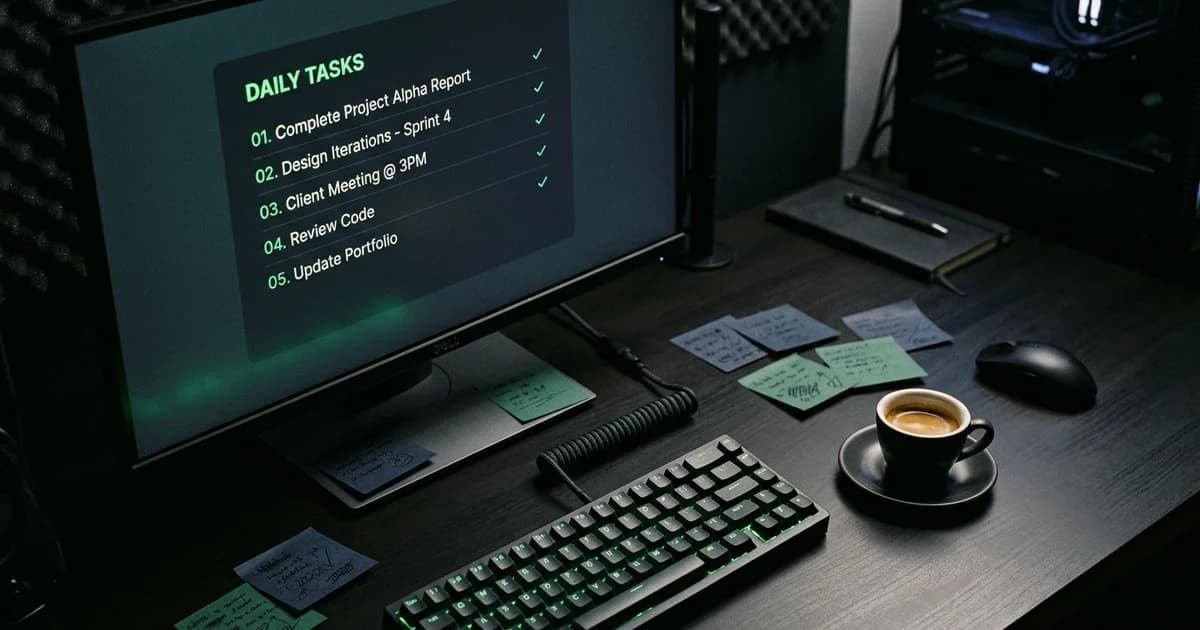
Your workspace sends signals to your brain. A cluttered desk, an open browser with 30 tabs, a phone sitting face-up next to your keyboard: these are all friction points that pull your attention away from the task in front of you.
Small changes compound. Put your phone in another room (or at least face-down in a drawer). Use a browser extension that blocks distracting sites during work blocks. Wear headphones, even if you're not playing music, as a social signal that you're unavailable. Research on smartphone notifications has found that they reliably distract individuals from primary tasks, particularly in study contexts.
If you're a student working from a dorm or shared apartment, environment design is even more important. How to be more productive as a student often comes down to where you study, not just how long. Find a consistent location where you only do focused work. Your brain will start associating that space with concentration.
8. Optimize Your Inputs (What You Put in Your Body Matters)
Productivity is not just behavioral. Your sleep, energy, and neurochemistry shape it too. What you consume directly affects your ability to sustain attention, and anyone learning how to be more productive should take their inputs seriously.
Most people default to coffee. And caffeine works, up to a point. For some people, a large coffee gives a quick lift and then leaves them feeling more scattered later in the day.
This is where the science of nootropic stacking gets interesting. A study published on PubMed found that combining L-theanine with 40 mg of caffeine improved accuracy during task switching and increased self-reported alertness, while reducing tiredness. L-theanine smooths out the jittery edge of caffeine without dulling its focus-enhancing effects.
Then there's theacrine, a purine alkaloid structurally similar to caffeine. A 2025 study in the Journal of the International Society of Sports Nutrition described theacrine as having a longer half-life than caffeine and suggested it may have a different habituation and side-effect profile, though the evidence base is still much smaller than caffeine's. Translation: it keeps working over time without the tolerance buildup that makes your third cup of coffee feel like water.
Methylliberine rounds out the picture. A study on PubMed suggest caffeine combined with theacrine and methylliberine may improve reaction time and aspects of cognitive performance, though this is still a much newer evidence base.
The takeaway: the right stack of compounds can extend your focus window and smooth out the energy curve that caffeine alone can't manage. For anyone serious about how to be a more productive person, optimizing brain chemistry is just as important as optimizing habits.
A Simple Productivity Framework You Can Start Tomorrow
| Time Block | Activity | Why It Works |
|---|---|---|
| 6:30 - 7:00 AM | Exercise (walk, run, or gym) | Elevates BDNF, primes the brain for focus |
| 7:00 - 7:30 AM | Shower, breakfast, review daily priorities | Sets intention before reactive tasks take over |
| 8:00 - 11:00 AM | Deep work block (phone off, notifications off) | Peak cognitive hours for most people |
| 11:00 - 11:30 AM | Communication batch (email, Slack, messages) | Contains reactive work to a defined window |
| 11:30 AM - 12:30 PM | Second deep work block or meetings | Uses remaining morning focus |
| 12:30 - 1:30 PM | Lunch and genuine rest | Recovery, not scrolling |
| 1:30 - 3:30 PM | Lighter tasks, collaboration, admin | Matches natural afternoon energy dip |
| 5:00 PM | Shutdown ritual | Closes open loops, protects your evening |
Adjust the times to fit your life. The structure matters more than the exact schedule. This framework turns the main ideas about how to be more productive into a day you can actually repeat.
Frequently Asked Questions
How can I be more productive without working longer hours?
Focus on output per hour, not total hours. Block 2 to 4 hours of uninterrupted deep work for your hardest task, batch email and messages into set windows, and remove phone and tab distractions. Most lost productivity comes from context switching, so protecting a few focused blocks usually beats adding more time to your day.
What is the single most effective productivity technique?
For most people it is time-blocking deep work. Schedule a 2 to 4 hour block on your calendar for your single most important task and treat it like a meeting you cannot move. No email, no Slack, no phone. This one habit tends to produce more meaningful output than any app, because it protects the hours when your thinking is sharpest.
How can I be more productive as a student?
Treat study sessions like training blocks. Pick a consistent location used only for focused work, block specific study times, and put your phone in another room. Short movement before studying, such as a 20 to 30 minute walk, can help prime your attention. Pair focused sprints with deliberate breaks instead of marathon cram sessions that fade fast.
Why do I feel busy but get nothing done?
Usually the problem is fragmentation, not laziness. Each notification, message, or quick phone check forces your brain to switch context, and research suggests it can take more than 20 minutes to fully refocus afterward. When your day is sliced into dozens of small interruptions, real work never gets a long enough runway. Protecting uninterrupted blocks fixes most of this.
How much does sleep affect productivity?
A lot. Sleep shapes concentration, memory, and decision-making, so chronic short sleep quietly erodes the cognitive capacity your work depends on. Most adults need seven to nine hours to keep planning and sustained attention sharp. If your afternoons feel foggy on six hours of sleep, the schedule is often the real bottleneck, not your willpower.
Can supplements or nootropics help me be more productive?
They can support focus, but only alongside good habits, not instead of them. Caffeine helps up to a point, and pairing it with L-theanine can smooth the jittery edge; one PubMed study found L-theanine with caffeine improved accuracy during task switching. Roon builds on this with a pouch combining 80 mg caffeine, 60 mg L-theanine, 25 mg methylliberine, and 5 mg theacrine for steady focus.
Putting the System Together
If you've read this far, you already know that learning how to be more productive is about building a system, not changing your personality. You need the right habits, the right environment, and the right inputs.
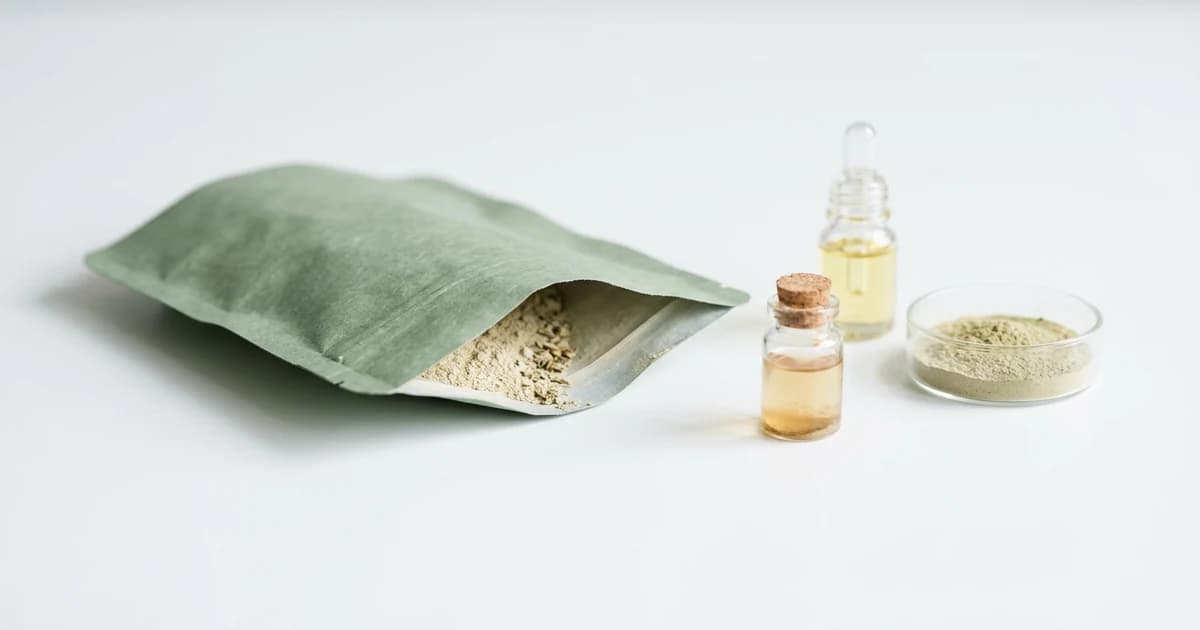
Roon was built around this idea. Roon's nootropic pouches are a zero-nicotine sublingual pouch that combines 80 mg of caffeine, L-theanine, theacrine, and methylliberine into a single stack designed for 6-8 hours of sustained, clean focus. No jitters. No crash. No tolerance buildup over time.
It's not a shortcut. It's the final piece of a system that already includes deep work blocks, structured breaks, and intentional environment design.
The bigger win is still the system itself: better focus blocks, better recovery, and fewer unnecessary interruptions. Try Roon →
By Roon Team