How to Be More Productive at Work From Home
Roon Team
How to Be More Productive at Work From Home (Without Burning Out)
You closed your laptop at 6 PM. You also opened it at 8 AM. And somehow, between those ten hours, you finished maybe three hours of real work. The rest? Slack threads, "quick" email checks, a meeting that could have been a voice memo, and a slow drift toward the couch that you're still not ready to talk about.
Learning how to be more productive at work from home isn't about working harder or logging more hours. It's about protecting the conditions that let your brain actually do its job.
A Stanford study led by economist Nicholas Bloom found that remote workers showed a 13% performance increase compared to their in-office peers. But that number comes with a catch: the gains came from fewer distractions and fewer breaks, not from some magical boost in willpower. Strip away those conditions, and remote work becomes a productivity trap instead of an advantage.
Here's how to make sure you land on the right side of that equation.
Key Takeaways for How to Be More Productive at Work From Home
- Your environment is your first productivity tool. A dedicated workspace with boundaries physically separates "work mode" from "home mode."
- Deep work needs protection. Context switching after a single interruption costs you over 20 minutes of refocus time.
- Structure beats motivation. Time blocking, batching, and ritual-based routines outperform willpower every time.
- Sustained focus is chemical, not just behavioral. What you put in your body shapes how long you can concentrate.
Why Remote Work Feels Productive (But Often Isn't)
There's a paradox at the heart of working from home. According to Apollo Technical, roughly 52% of U.S. employees with remote-capable jobs now work in hybrid arrangements, and 27% work fully remote. Most of them report feeling productive.
But feeling productive and being productive are different things. Remote workers tend to stay logged in longer, respond to messages faster, and attend more meetings than their in-office counterparts. That looks like output. It's actually just motion.
The real question isn't whether you're busy. It's whether you're completing the work that actually matters. Understanding how to be more productive at work from home starts with recognizing this distinction.
How to Be More Productive at Work From Home: 9 Strategies That Actually Work
1. Build a Workspace That Signals "Work"
Your brain relies on environmental cues to shift between cognitive states. Working from your bed tells your nervous system it's time to rest. Working from a dedicated desk, even a small one in the corner of a room, tells it something different.
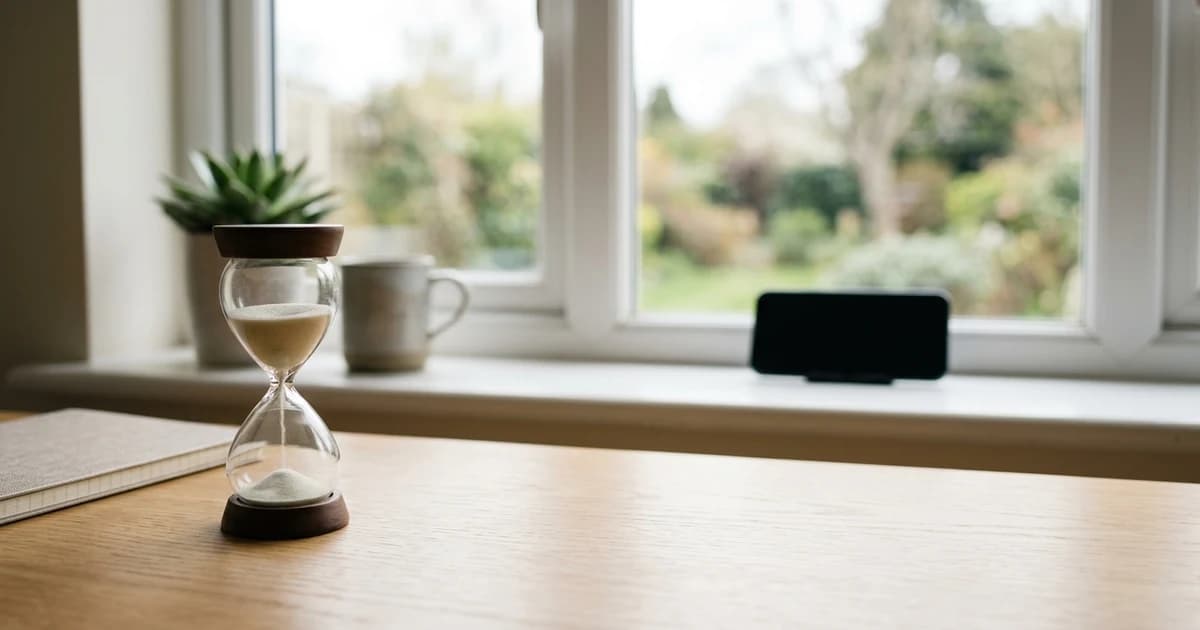
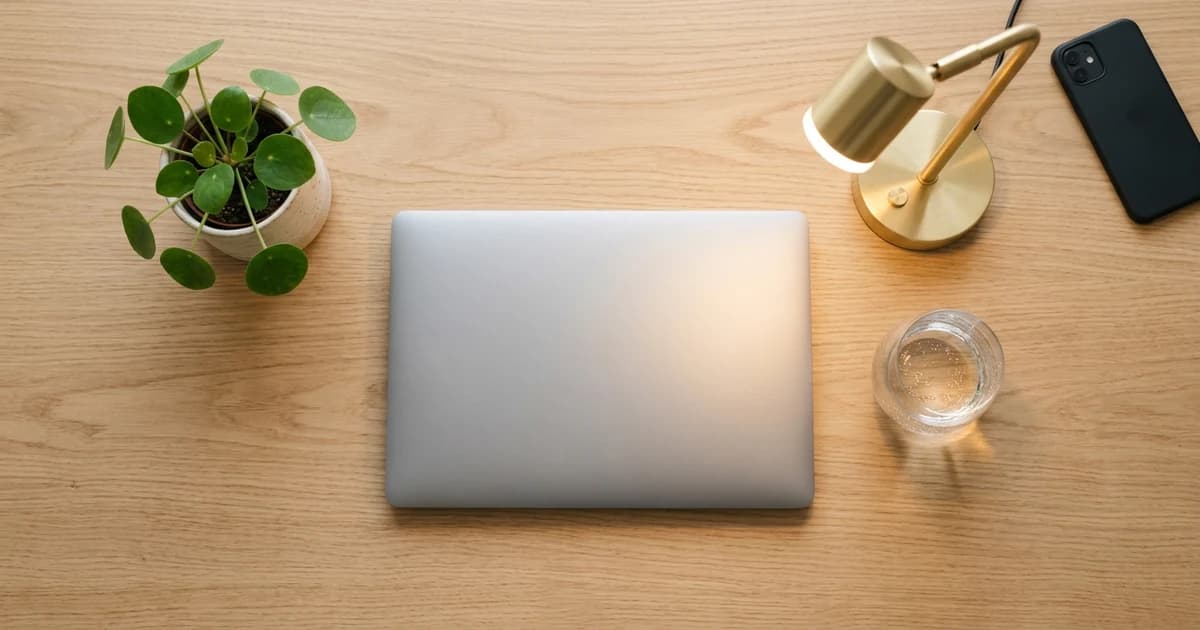
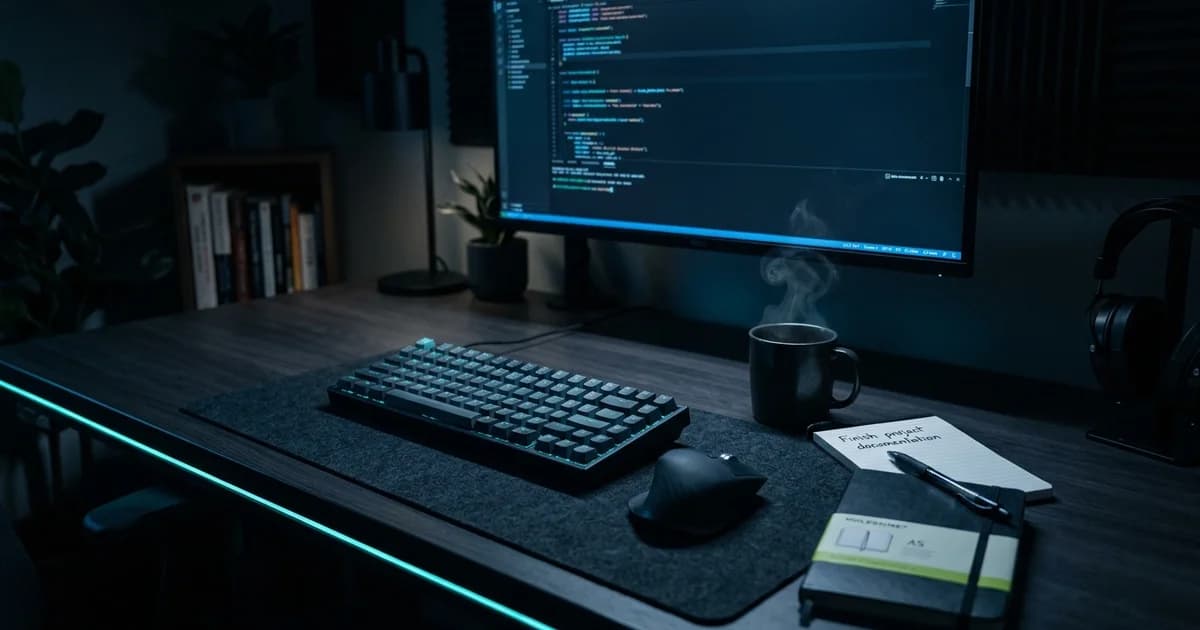
You don't need a home office with a standing desk and acoustic panels. You need a consistent spot that you only use for work. Same chair. Same table. Same lamp. The repetition builds an association over time, and that association reduces the mental friction of getting started. This single change shapes how to be more productive at work from home.
2. Protect Your Deep Work Blocks
Research from the University of California, Irvine found that after a single interruption, it takes an average of 23 minutes and 15 seconds to fully refocus on the original task. That means one "quick question" on Slack in the middle of a focused session doesn't cost you 30 seconds. It costs you nearly half an hour.
The fix: schedule two to three blocks of uninterrupted work per day, each lasting 60 to 90 minutes. Close Slack. Silence your phone. Put a status message up that says you're in a focus block. Treat these windows like meetings that can't be moved, because they're more valuable than most meetings you attend.
3. Time Block Your Entire Day
Time blocking means assigning every hour of your workday to a specific task or category of work before the day begins. It sounds rigid. It's actually freeing, because it removes the constant decision of "what should I do next?" Anyone studying how to be more productive at work from home should master this technique first.
A study cited by Harvard Business Review found that people who systematically allocate specific time blocks for focused work accomplish nearly twice as much as those who multitask throughout the day. The structure does the heavy lifting so your willpower doesn't have to.
Here's a sample time-blocked morning:
| Time | Block |
|---|---|
| 8:00 – 8:30 | Review priorities, plan the day |
| 8:30 – 10:00 | Deep work session #1 (most demanding task) |
| 10:00 – 10:15 | Break |
| 10:15 – 10:45 | Email and Slack catch-up |
| 10:45 – 12:00 | Deep work session #2 |
The key: your most cognitively demanding work goes in the morning, when your prefrontal cortex is freshest. Save email, admin, and meetings for the afternoon.
4. Batch Your Communication Windows
Most remote workers struggle with staying focused through the workday, checking email and Slack continuously throughout the day. This creates a low-grade state of alertness that fragments your attention even when you're not actively responding to anything. Batching communication is essential to how to be more productive at work from home.
Instead, batch your messages into two or three defined windows. Check messages at 10 AM, 1 PM, and 4 PM, for example. Respond in bulk. Then close the apps entirely until the next window. Message batching is just one lever; our guide to cutting distractions when you work remotely covers the rest of the setup.
This feels uncomfortable at first. You'll worry about missing something urgent. But here's the reality: almost nothing in your inbox is actually urgent. And the people who need you immediately will call.
5. Use the Two-Minute Rule for Small Tasks
If a task takes less than two minutes, do it immediately. If it takes longer, schedule it.
This rule, popularized by David Allen's Getting Things Done framework, prevents small tasks from piling up into a mental backlog that drains your working memory. Every unfinished micro-task occupies cognitive space, a phenomenon psychologists call the Zeigarnik effect. Clearing them quickly keeps your mind free for the work that actually requires concentration.
6. Engineer Your Breaks (Don't Just Take Them)
Breaks are essential to sustained focus without burnout, and they function as a performance tool, not an optional indulgence. They're a performance tool. But scrolling Instagram for ten minutes between focus blocks doesn't restore your cognitive resources. It depletes them further.
Effective breaks involve a genuine shift in sensory input:
- Walk outside for 10 minutes (sunlight resets your circadian alertness)
- Stretch or do light movement (increases blood flow to the prefrontal cortex)
- Sit quietly without screens (gives your default mode network time to consolidate information)
The pattern that works best for most people: 60 to 90 minutes of focused work followed by a 10 to 20 minute genuine break. This roughly aligns with your brain's natural ultradian rhythm, the biological cycle that governs peaks and dips in alertness throughout the day.
7. Set a Hard Stop Time
One of the biggest traps of remote work is the disappearing boundary between work and everything else. Without a commute to signal the end of the day, work bleeds into dinner, into the evening, into the hours you're supposed to be recovering.
Pick a time. 5:30 PM, 6 PM, whatever works for your schedule. When that time hits, close the laptop. Not "after one more email." Close it. The discipline of stopping on time forces you to prioritize better during the hours you do work, because you know the runway is finite. This boundary is central to how to be more productive at work from home without burning out.
8. Audit Your Tools (Most of Them Are Hurting You)
The average knowledge worker toggles between 35 different apps per day. Each toggle is a micro context-switch that chips away at your ability to sustain attention.
Do a tool audit. Ask yourself: which of these apps actually help me produce work, and which ones just make me feel connected? You probably need a document editor, a project management tool, a communication platform, and a calendar. Everything else is negotiable.
Fewer tools, fewer tabs, fewer notifications. Your attention is a finite resource. Stop letting software drain it.
9. Control Your Neurochemistry
How to be more productive at work from home isn't just a behavioral problem. It's a chemical one. Your ability to focus depends on the balance of neurotransmitters like dopamine, acetylcholine, and adenosine in your brain at any given moment.
This is why caffeine works. It blocks adenosine receptors, reducing the sensation of fatigue. But caffeine alone is a blunt instrument. Too much creates jitters and anxiety, which actively impair the kind of calm, sustained attention that deep work requires.
The smarter approach: pair caffeine with compounds that smooth out its effects. L-Theanine, an amino acid found naturally in tea, promotes alpha brain wave activity, the neural signature of relaxed focus. Combined with caffeine, it supports alertness without the anxious edge. Research on this pairing consistently shows improvements in attention and task-switching accuracy compared to caffeine alone.
The Productivity Stack: Environment + Structure + Chemistry
If you take one thing from this guide on how to be more productive at work from home, make it this: productivity at home isn't one thing. It's a system.
Your environment sets the stage. Your structure (time blocks, batched communication, hard stop times) protects your focus. And your chemistry, what's happening at the neurotransmitter level, determines how long you can sustain that focus once you've created the conditions for it.
Most productivity advice stops at the first two layers. It tells you to buy a better desk and download a Pomodoro timer. That's fine. But it ignores the biological bottleneck that determines whether any of those strategies actually work on a given day.
Built for the Deep Work Session
Roon was designed around this exact problem. It's a zero-nicotine sublingual pouch that combines 80 mg of caffeine with L-Theanine, Theacrine, and Methylliberine, four compounds that work together to support 6 to 8 hours of sustained, clean focus.
No jitters. No crash. No tolerance buildup that forces you to keep increasing the dose.
You build the workspace. You block the time. Roon handles the neurochemistry. That's how to be more productive at work from home, from environment to biology.