Fadogia Agrestis: Benefits, Dosage, and Safety
Roon Team
Fadogia Agrestis: Benefits, Dosage, and Safety (What the Science Actually Says)
Fadogia agrestis went from an obscure Nigerian shrub to one of the most searched supplements in the performance space, largely thanks to a single podcast appearance. Andrew Huberman mentioned it as part of his testosterone stack, and sales exploded overnight. But the hype has outpaced the evidence by a wide margin, and if you're considering adding it to your routine, you need the full picture before spending your money.
This guide breaks down the real research behind fadogia agrestis benefits, the dosage ranges people are using, and the safety concerns that most supplement brands conveniently leave off the label.
Key Takeaways
- All fadogia agrestis research on testosterone comes from rat studies. There are zero published human clinical trials as of 2025.
- Rat studies show dose-dependent testosterone increases, but also dose-dependent organ toxicity at higher amounts.
- Momentous, one of the most reputable supplement brands, discontinued their fadogia product due to insufficient safety data.
- Common dosages range from 300mg to 600mg daily, but no human study has validated any dose as safe or effective.
What Is Fadogia Agrestis?
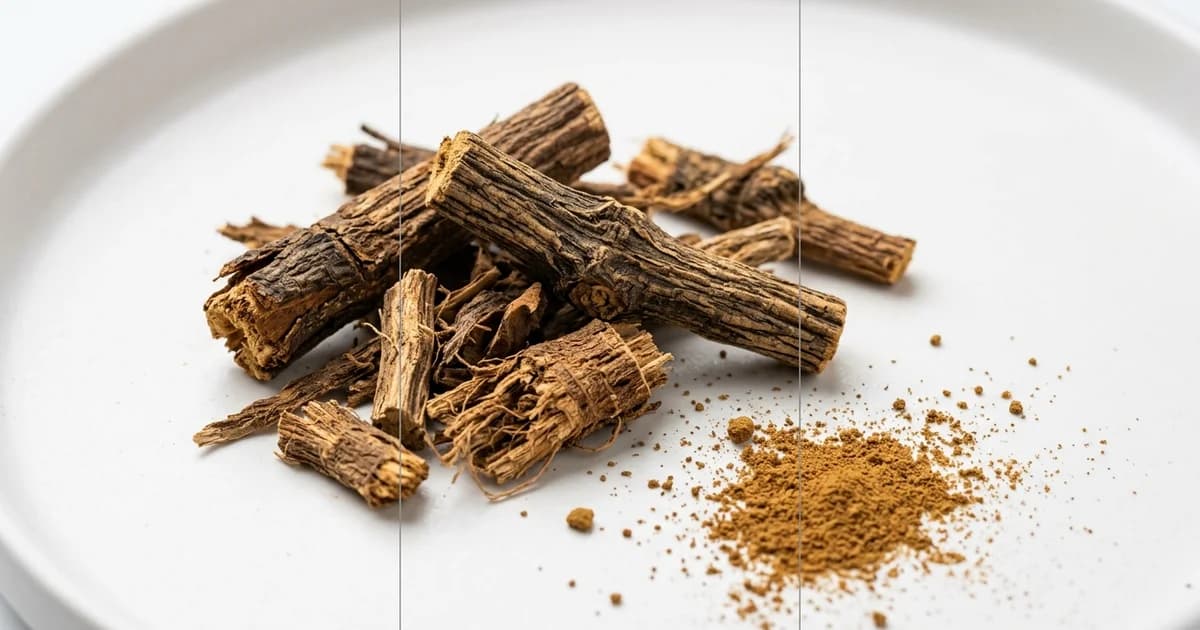
Fadogia agrestis is a flowering plant native to West Africa, traditionally used in Nigerian folk medicine as an aphrodisiac. The stem of the plant contains bioactive compounds, including alkaloids and saponins, that appear to interact with the endocrine system.
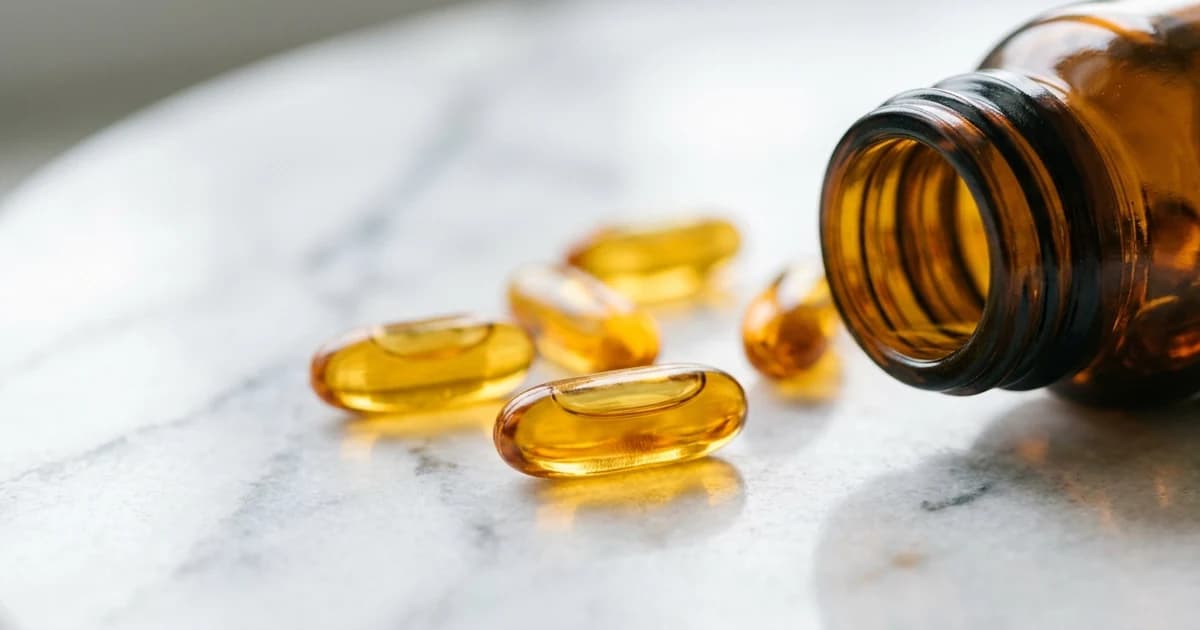
The supplement version is typically sold as an aqueous stem extract in capsule form. You'll find it marketed almost exclusively as a "natural testosterone booster," often stacked with Tongkat Ali.
The Fadogia Agrestis Benefits: What the Rat Studies Found
Here's where things get interesting, and where the nuance matters.
The most frequently cited study was published in 2005 by Yakubu et al. in the Asian Journal of Andrology. Researchers gave male rats aqueous fadogia agrestis extract for five days and measured serum testosterone. The results showed that fadogia agrestis increased blood testosterone concentrations in a dose-dependent manner.
The same study also observed improvements in sexual behavior metrics, including mount frequency and intromission frequency. These results are the foundation for virtually every marketing claim you see on fadogia supplement labels.
The Proposed Mechanism
Fadogia agrestis appears to work by increasing Luteinizing Hormone (LH), which then stimulates the testes to produce more testosterone. This is a different pathway than Tongkat Ali, which primarily works through aromatase inhibition. That mechanistic difference is why people stack the two together: the theory is they complement each other.
Andrew Huberman has discussed this mechanism on his podcast and reportedly takes 600mg of fadogia agrestis as part of his testosterone protocol. He has stated his testosterone levels went from 600 ng/dL to almost 800 ng/dL, though he takes multiple supplements simultaneously, making it impossible to attribute the increase to fadogia alone.
What the Studies Did NOT Show
The benefits narrative has a few holes worth noting:
- No human data. There are currently no human clinical trials on fadogia agrestis. Every testosterone claim traces back to the same small set of rat studies.
- Short study duration. The landmark Yakubu study lasted only five days. Nobody knows what happens at 30, 60, or 90 days of continuous use.
- **As with other animal-study-heavy compounds, hormonal responses in rodents don't map cleanly onto human physiology. Plenty of compounds that spike testosterone in rats do nothing in humans.
Fadogia Agrestis Dosage: What People Are Taking
Because there are no human trials, there is no clinically validated dose. Examine.com states that it is unclear whether consumption of fadogia agrestis is safe at any dosage, so no dosage can be recommended.
That said, the supplement market has settled on a few common ranges:
| Brand | Dose Per Serving | Form | Price Range |
|---|---|---|---|
| Double Wood Supplements | 600mg (2 capsules) | 10:1 Extract | ~$25 for 180 capsules |
| Nootropics Depot | 600mg | Capsule | ~$30 for 60 capsules |
| Tongkat Ali + Fadogia Stacks (various) | 400-600mg fadogia | Capsule combo | $30-$50 |
Double Wood recommends 300mg per day as their suggested dose. Huberman and other influencers have popularized the 600mg daily dose. Some products go as high as 1,000mg or more.
The rat studies used doses that, when converted to a human equivalent, fall in the range of roughly 18-100 mg/kg of body weight. The commonly sold 600mg dose for a 80kg human works out to about 7.5 mg/kg, which is below the lowest dose tested in rats. Whether that's reassuring or just means the dose is too low to do anything is an open question.
The Safety Problem: Toxicity Data You Should Know
This is where the fadogia agrestis story takes a turn.
A 2007 study by Yakubu et al. examined the effects of fadogia on testicular function in rats. The researchers concluded that the alterations brought about by the aqueous extract of fadogia agrestis stem are indications of adverse effects on the male rat testicular function, and this may adversely affect the functional capacities of the testes.
Yes, that's from the same research group that found the testosterone increase. The same plant that raised testosterone also showed signs of testicular toxicity at higher doses.
A separate toxicity study examined liver and kidney effects. According to research discussed on Akarali.com, fadogia showed toxicity to the liver and kidneys at a Human Equivalent Dosage of 607mg, which is uncomfortably close to the 600mg dose that many supplement brands sell.
The Momentous Decision
One of the most telling data points in this entire conversation: Momentous, a premium supplement brand, discontinued Fadogia Agrestis from their product line. For a company that initially sold fadogia (and benefited from the Huberman association), walking away from that revenue signals genuine concern about the safety profile.
Their position is that while traditional use and animal studies show promise, human clinical trials are limited. That's a polite way of saying the risk-reward calculation doesn't add up.
Known and Potential Side Effects
Based on the animal literature and anecdotal user reports, the concerns include:
- Liver stress at doses near or above 600mg (human equivalent)
- Kidney stress at similar dose ranges
- Testicular tissue changes including altered morphology at higher doses
- No long-term safety data at any dose in humans
If you're cycling fadogia (as many users do, typically 4-8 weeks on, 2-4 weeks off), you may be mitigating some risk. But "may" is doing heavy lifting in that sentence, because nobody has studied cycling protocols either.
Fadogia Agrestis vs. Tongkat Ali: A Quick Comparison
Since these two are almost always discussed together, here's how they stack up:
| Factor | Fadogia Agrestis | Tongkat Ali |
|---|---|---|
| Human clinical trials | None | Multiple (including RCTs) |
| Primary mechanism | LH stimulation | Aromatase inhibition |
| Safety profile | Toxicity concerns at common doses | Generally well-tolerated |
| Standardization | Poor, varies wildly by product | Better, eurycomanone content measurable |
| Traditional use | Nigerian folk medicine | Southeast Asian medicine (centuries) |
Based on available scientific evidence, Tongkat Ali demonstrates stronger research support, a better safety profile, and more reliable results for testosterone support compared to Fadogia Agrestis.
That doesn't mean fadogia is worthless. It means Tongkat Ali is a known quantity, while fadogia is still a bet.
What's Missing From the Fadogia Conversation
After looking at the full picture, a few gaps become clear across the fadogia agrestis supplement category:
**Like other hyped testosterone supplements, every brand selling fadogia is extrapolating from rat data. That's not unusual in the supplement world, but it's a bigger gamble than most consumers realize. You're paying $25-50 per bottle for a compound that might not move your testosterone at all in a human body.
No standardization across products. Unlike Tongkat Ali, where eurycomanone content provides a measurable quality marker, fadogia products vary wildly in their extraction methods and potency. Two "600mg fadogia" products from different brands could contain very different amounts of active compounds.
The testosterone-only framing is limiting. Most people reaching for fadogia want better performance, more energy, sharper focus. Testosterone is one lever for those outcomes, but it's a slow, indirect, and uncertain one (especially with an unproven compound). If your actual goal is to perform better today, waiting weeks for a possible hormonal shift from a poorly studied plant extract is a roundabout path.
No acute cognitive benefit. Fadogia doesn't do anything for focus, reaction time, or mental clarity. It's purely a hormonal play, and even that claim rests on shaky ground.
A More Direct Path to Performance
If what you're really after is sustained focus and clean energy without the guesswork, the approach worth considering is one that uses ingredients with actual human data behind them.
Roon was built around that principle. Roon's zero-nicotine focus pouches combine 80mg of caffeine with L-Theanine, Theacrine, and Methylliberine, four compounds with published human research supporting their effects on focus and energy.
Here's the practical difference. Caffeine and L-Theanine together have been studied in dozens of human trials showing improved attention and reduced jitteriness. Theacrine and Methylliberine extend the duration of that effect to 6-8 hours without the crash or tolerance buildup that straight caffeine causes. The sublingual delivery means it hits faster than a capsule and doesn't require digestion.
None of this is a testosterone booster, and Roon doesn't claim to be one. But if your goal is performing at a higher level right now, with ingredients that have been validated in humans, that's a different value proposition than hoping a Nigerian shrub extract will shift your hormones over the next few months.
You can check it out at takeroon.com.