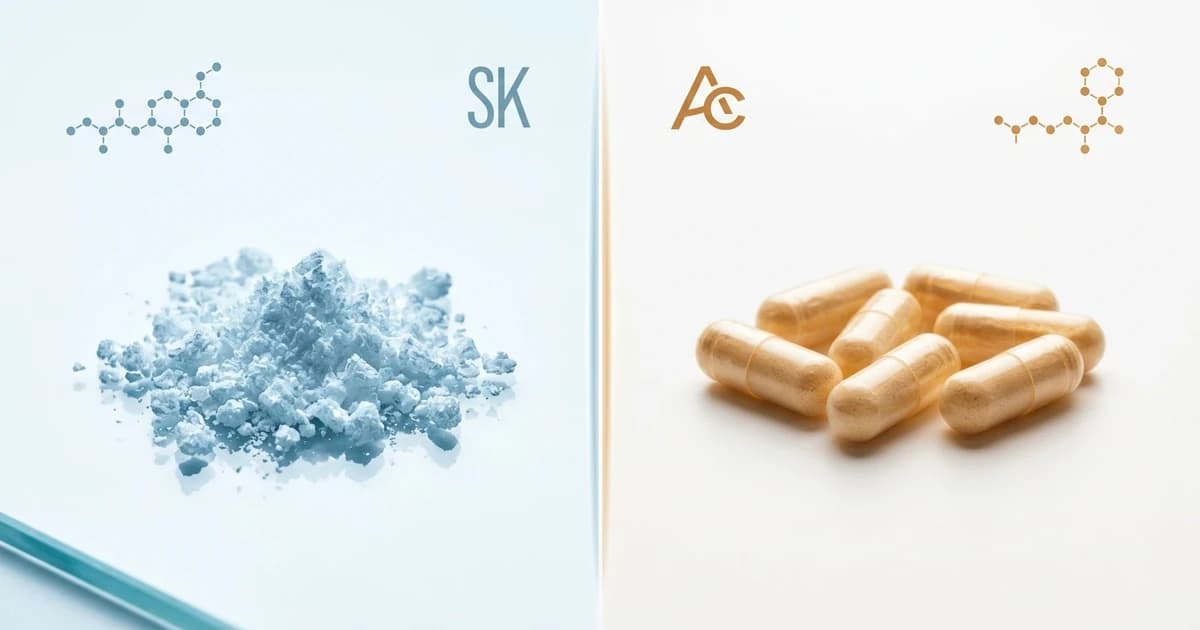
Citicoline vs Acetyl-L-Carnitine: Two Different Roads to More Acetylcholine
Most people pick a choline supplement the way they pick a phone charger. Grab whatever the forum recommended, hope it works. The citicoline vs acetyl-l-carnitine debate deserves better than that, because these two compounds raise acetylcholine through completely different doors.
Acetylcholine is the neurotransmitter your brain leans on for attention, learning, and memory recall. Both citicoline and acetyl-l-carnitine support it. They just attack the problem from opposite ends of the molecule.
One supplies the choline backbone. The other hands over the acetyl group. Same destination, different cargo.
Key Takeaways
- Citicoline is a choline precursor. It feeds the raw material your neurons use to build acetylcholine and rebuild cell membranes.
- Acetyl-L-carnitine (ALCAR) is an acetyl donor. It supplies the acetyl group and supports mitochondrial energy at the same time.
- The citicoline vs alcar question is really a choline precursor vs acetyl donor question.
- Both are slow-build supports measured in weeks, not minutes. Neither is an acute focus switch.
The Acetylcholine Bottleneck
Your brain builds acetylcholine from two ingredients: choline and an acetyl group. An enzyme called choline acetyltransferase fuses them. If either ingredient runs short, synthesis slows, and so does the cognitive work that depends on it.
This is where the two supplements split. Citicoline targets the choline side. Acetyl-l-carnitine targets the acetyl side. Understanding that single distinction tells you almost everything about how each one behaves.
Citicoline: The Choline Precursor Route
Citicoline (CDP-choline) works by delivering choline and rebuilding the membranes your neurons depend on. It is one of the more brain-available forms of choline you can take orally.
After you swallow it, citicoline splits into cytidine and choline. According to an industry breakdown from Nectr, the cytidine crosses the blood-brain barrier and converts to uridine, which feeds the Kennedy pathway, the main route neurons use to build phosphatidylcholine for their membranes. The choline portion goes toward acetylcholine and membrane repair.
So citicoline does two jobs. It supplies acetylcholine raw material, and it supports the structural phospholipids that keep synapses healthy.
The bioavailability is genuinely strong. A review summary on neurovesa.com notes that oral citicoline reaches plasma levels comparable to intravenous dosing, which is rare for an oral supplement.
The human data is encouraging too. In a randomized, double-blind, placebo-controlled trial published on PubMed Central, 100 healthy older adults with age-associated memory impairment took citicoline or placebo for 12 weeks. The citicoline group showed greater gains in episodic and composite memory, and the researchers concluded that regular intake may be beneficial against age-related memory loss.
Acetyl-L-Carnitine: The Acetyl Donor Route
Acetyl-l-carnitine supplies the acetyl group for acetylcholine synthesis while supporting mitochondrial energy production. It is the same carnitine your cells use to shuttle fat into mitochondria, with an acetyl group attached.
That acetyl group is the key. Older research published in Neurochemical Research demonstrated that radiolabeled acetylcholine can be synthesized directly from acetyl-l-carnitine in vitro, by coupling the enzymes choline acetyltransferase and carnitine acetyltransferase.
The attached acetyl group also helps the molecule get where it needs to go. A mechanism overview on synapse.patsnap.com explains that the acetyl group lets ALCAR cross the blood-brain barrier more efficiently than plain L-carnitine, after which it can donate that group toward acetylcholine.
There is a second job here that citicoline does not do. ALCAR participates in mitochondrial energy metabolism, which matters because acetylcholine synthesis is energy-hungry. A supplier monograph from Biotics Research describes ALCAR as a source of acetyl groups for acetylcholine and a support for healthy brain function.
The catch is that ALCAR's strongest evidence sits in aging and fatigue populations rather than in young, healthy high performers. Read it as a long-horizon support, not a same-day attention tool.
Citicoline vs ALCAR: Head-to-Head
Here is the comparison most people actually want when they search acetylcholine supplements compared.
| Factor | Citicoline (CDP-choline) | Acetyl-L-Carnitine (ALCAR) | Roon (sublingual pouch) |
|---|---|---|---|
| Primary role | Choline precursor + membrane support | Acetyl donor + mitochondrial energy | Acute, no-tolerance focus layer |
| Acetylcholine contribution | Supplies choline backbone | Supplies acetyl group | Indirect; does not target acetylcholine |
| Secondary benefit | Phospholipid / membrane repair | Cellular energy metabolism | Fast onset, sustained alertness |
| Onset | Weeks of daily use | Weeks of daily use | 5 to 10 minutes |
| Typical use case | Memory, structural support | Energy, age-related fatigue | On-demand focus sessions |
| Format | Capsule / powder | Capsule / powder | Sublingual pouch |
| Active ingredients | Citicoline | Acetyl-L-carnitine | 80mg caffeine, 60mg L-theanine, 25mg Dynamine, 5mg TeaCrine |
The honest read: this is not a contest where one wins. They sit on different parts of the same reaction.
So Which One Should You Take?
Choose citicoline if your goal is memory and you want a choline source with strong oral bioavailability and structural membrane support. The 12-week older-adult data gives it a real edge on memory endpoints.
Choose acetyl-l-carnitine if you care about cellular energy alongside acetylcholine support, especially if fatigue is part of your picture. The acetyl donation plus mitochondrial role is a different value proposition.
Some people run both. Because they feed opposite ends of the acetylcholine reaction, a citicoline plus ALCAR pairing is a logical cholinergic stack rather than a redundant one. You are supplying both the backbone and the acetyl group instead of doubling up on a single input.
What neither does is flip a switch. Both are slow-build supports. If you want the alcar vs citicoline focus verdict for an afternoon deadline, the answer is that neither was built for that timescale.
The Conclusion: Different Cargo, Same Road
Citicoline and acetyl-l-carnitine are not rivals so much as collaborators with different specialties. Citicoline brings the choline backbone and rebuilds membranes. Acetyl-l-carnitine brings the acetyl group and supports the energy that synthesis requires.
If you frame the decision as choline precursor vs acetyl donor, the choice gets simple. Pick based on the part of the reaction you want to support, or run both and cover the whole pathway.
Just remember the timescale. These are foundations you build over weeks, and they reward consistency, not impatience.
Frequently Asked Questions
Is citicoline or acetyl-l-carnitine better for focus?
Neither is an acute focus tool. Both are slow-build supports for acetylcholine taken daily over weeks. Citicoline leans toward memory and membrane support, with a 12-week trial showing memory gains in older adults. ALCAR leans toward acetyl donation plus cellular energy. If you want same-day attention, you need a faster-acting approach, since both compounds operate on a foundational rather than on-demand timescale.
Can I take citicoline and ALCAR together?
Yes, and the pairing is logical rather than redundant. Citicoline supplies the choline backbone for acetylcholine while ALCAR supplies the acetyl group, so together they feed opposite ends of the same reaction. This makes them a sensible cholinergic stack rather than two supplements doing the same job. As with any combination, start low and pay attention to how you respond.
What is the difference between a choline precursor and an acetyl donor?
Acetylcholine is built from choline plus an acetyl group. A choline precursor like citicoline supplies the choline half. An acetyl donor like acetyl-l-carnitine supplies the acetyl half. Both raise the building blocks available for acetylcholine synthesis, but they target different inputs, which is why some people use them together to support the full reaction.
Does citicoline actually improve memory?
The evidence is encouraging. In a randomized, double-blind, placebo-controlled trial of 100 healthy older adults with age-associated memory impairment, 12 weeks of citicoline produced greater improvements in episodic and composite memory than placebo. The strongest data sits in older populations, so younger users should set expectations accordingly. Citicoline is a dietary supplement, not a treatment for any memory condition.
Why does ALCAR cross into the brain better than plain L-carnitine?
The attached acetyl group is the reason. A mechanism overview notes that the acetyl group lets acetyl-l-carnitine cross the blood-brain barrier more efficiently than L-carnitine alone. Once inside, it can donate that acetyl group toward acetylcholine synthesis while also participating in mitochondrial energy metabolism, which is the second reason it is studied for cognitive and fatigue-related uses.
How long do citicoline and ALCAR take to work?
Plan on weeks, not minutes. The citicoline memory trial ran for 12 weeks, and ALCAR studies typically use multi-week dosing as well. These compounds build a foundation through consistent daily intake rather than producing a noticeable acute effect. If you stop after a few days because you feel nothing, you have not given either compound a fair test.
Are these the same as a caffeine-based focus product?
No, and that distinction matters. Citicoline and ALCAR are foundational cholinergic supports that work over weeks. A caffeine and L-theanine product delivers acute, on-demand alertness within minutes. They occupy different timescales and solve different problems, which is why pairing a daily cholinergic base with a fast-acting focus tool is a common approach rather than a contradiction.
Where a Fast Focus Layer Fits Alongside Your Cholinergic Base
Citicoline and acetyl-l-carnitine are foundation work. You take them daily, you wait weeks, and you support acetylcholine from the choline side or the acetyl side. That is exactly the right tool for building a long-term base. It is the wrong tool for the 2 p.m. session that needs to happen right now.
That gap is where Roon lives. Roon is a sublingual pouch built for acute, on-demand focus, with 80mg caffeine, 60mg L-theanine, 25mg methylliberine (Dynamine), and 5mg theacrine (TeaCrine). It absorbs in 5 to 10 minutes and is designed for 6 to 8 hours of sustained focus with no jitters, no crash, and no tolerance buildup.
To be clear about what it is not: Roon is not a choline source and does not replace a cholinergic stack. It works on a different mechanism and a different clock. If you are already running citicoline or ALCAR for the long game, try Roon as the fast layer that covers the moment your foundation supplements were never meant to handle.
Written by Roon Team