Brain Fog MS: What's Actually Happening in Your Head
Roon Team
Brain Fog MS: What's Actually Happening in Your Head (and What to Do About It)
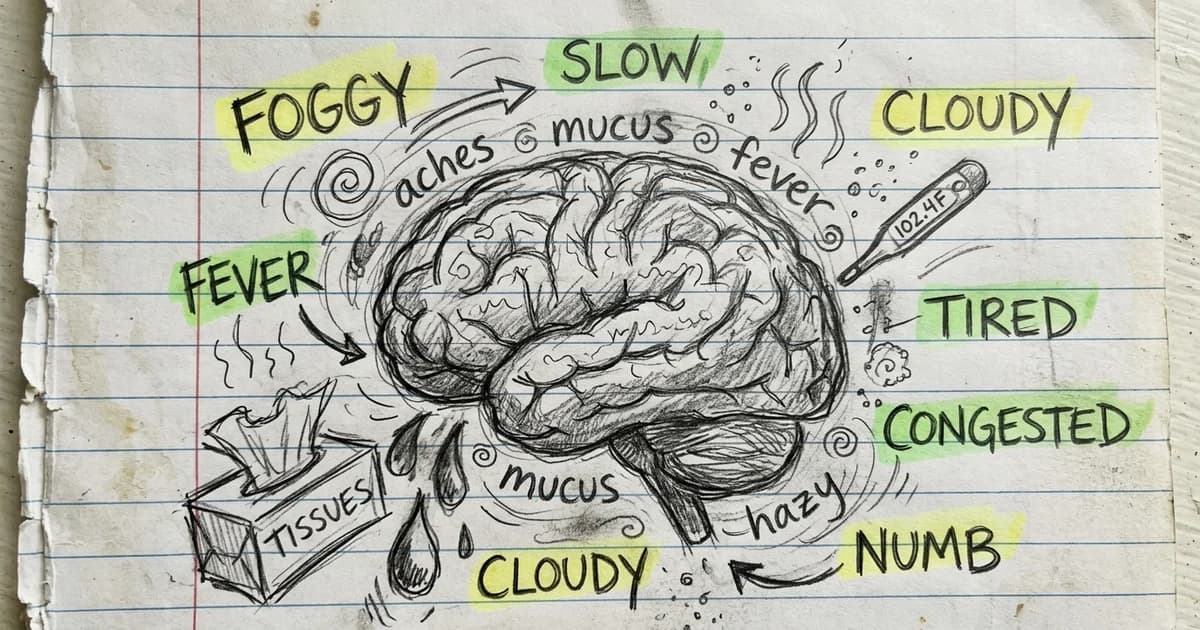
You forgot the word. It was right there, on the edge of your tongue, and then it vanished. You stared at your coworker, mid-sentence, while your brain buffered like a 2005 laptop. If you have multiple sclerosis, this experience has a name: brain fog MS. And it's not in your head. Well, it is. But not the way people mean when they say that.
Cognitive dysfunction affects somewhere between 40 and 65 percent of people living with MS, according to research published on PubMed. That's not a fringe symptom. That's roughly half the MS population dealing with foggy thinking, sluggish processing speed, and memory that feels like it has holes in it.
Yet brain fog MS gets a fraction of the attention that mobility issues or fatigue receive. Most people with MS will tell you it's one of the most frustrating parts of the disease. Here's what the science says about why brain fog MS happens, what makes it worse, and what you can actually do about it.
Key Takeaways:
- Brain fog MS is caused by demyelination and inflammation in brain regions responsible for memory, attention, and processing speed.
- Between 40 and 65% of MS patients experience measurable cognitive impairment.
- Processing speed and episodic memory are the two cognitive domains hit hardest.
- Exercise, sleep optimization, cognitive rehabilitation, and targeted nutrition all show real evidence for helping.
What Brain Fog MS Actually Looks Like
Brain fog is an informal term. Neurologists call it cognitive dysfunction or cognitive impairment. But "brain fog MS" captures the lived experience better than any clinical label: a persistent, cloudy feeling that makes thinking harder than it should be.
For people with MS, this usually shows up in specific ways. The National MS Society and clinical literature identify cognitive processing speed and episodic memory as the two domains most frequently affected. That means it takes longer to absorb new information, and recalling things you've already learned becomes unreliable.
But brain fog MS goes beyond memory. People with MS-related cognitive impairment often report trouble with:
- Attention and concentration: Losing focus mid-task, especially in noisy or stimulating environments.
- Word-finding: Knowing what you want to say but being unable to retrieve the right word.
- Multitasking: Struggling to hold multiple pieces of information at once.
- Spatial and visual processing: Difficulty judging distances or navigating familiar routes.
According to MyMSTeam, about half of people with MS have trouble with memory, focus, problem-solving, and processing or understanding information. Some also experience problems with visual or spatial skills.
These aren't signs of declining intelligence. IQ scores in MS patients typically remain stable. The issue is speed and retrieval, not capacity.
Why MS Causes Brain Fog: The Neuroscience
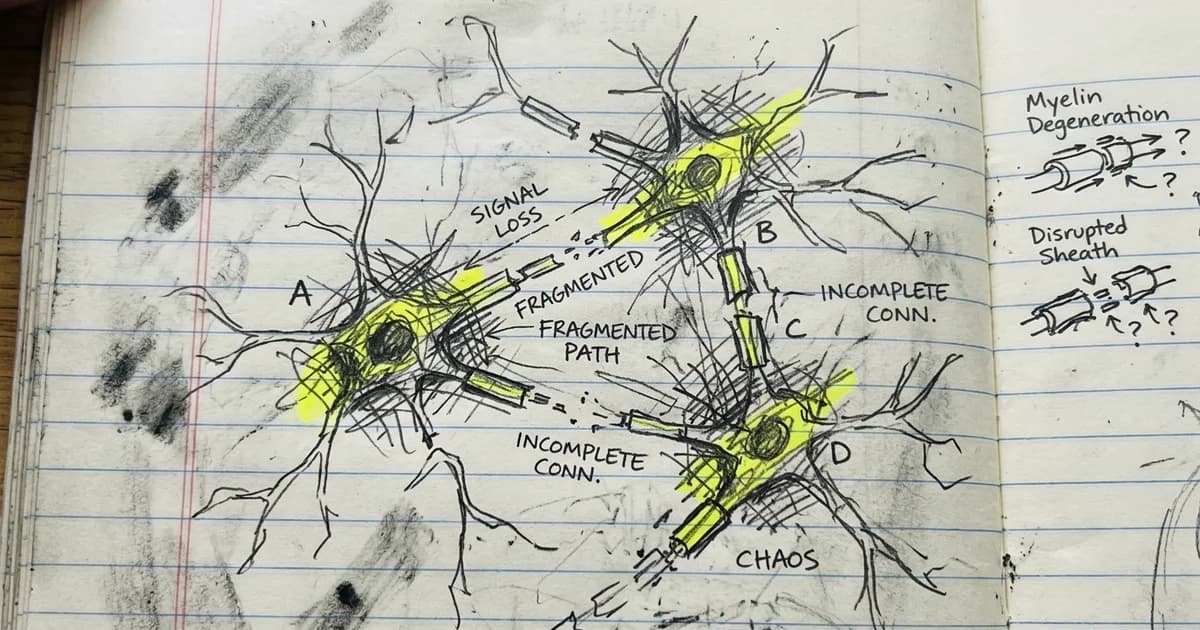
Multiple sclerosis is an autoimmune disease. Your immune system attacks myelin, the protective coating around nerve fibers in the brain and spinal cord. Think of myelin as the insulation on electrical wiring. When it degrades, signals slow down, misfire, or stop entirely.
MRI research has shown that MS lesions are heterogeneous, meaning they vary in size, location, and severity from person to person. Each lesion can impair cognition through different mechanisms, including chronic inflammation, demyelination, and axonal damage. This is why two people with brain fog MS can have wildly different cognitive profiles.
The damage isn't limited to white matter lesions, either. Grey matter atrophy, the gradual shrinking of brain tissue itself, is now recognized as an early marker of future cognitive decline. According to the MS Society UK, having a larger brain volume due to genetics may provide some protection or slow down the cognitive effects of MS-related brain damage.
There's also a fatigue connection that compounds brain fog MS. Research published in PMC suggests that cognitive fatigue in MS is linked to alterations in the functional connectivity of monoamine circuits. The underlying mechanisms of chronic fatigue in MS remain largely unknown, but growing evidence supports the role of aberrant monoaminergic neurotransmission. When your brain is already working harder to compensate for damaged pathways, mental exhaustion sets in faster.
The Inflammation Factor
Neuroinflammation doesn't just cause the initial myelin damage. It creates an ongoing hostile environment for neurons. Cleveland Clinic lists autoimmune conditions like MS among the common causes of brain fog, alongside sleep deprivation and blood sugar dysregulation.
This matters because inflammation is something you can partially influence through lifestyle. Not all of it. MS-driven neuroinflammation has its own disease trajectory. But the secondary inflammation from poor sleep, chronic stress, and dietary choices stacks on top of the disease process and makes brain fog MS worse.
How Brain Fog MS Differs from "Normal" Forgetfulness
Everyone forgets things. Everyone has days where thinking feels sluggish. The difference with brain fog MS is consistency and pattern.
Normal age-related forgetfulness tends to be occasional and random. Brain fog MS follows predictable patterns tied to the disease. It worsens during relapses. It correlates with lesion burden on MRI scans. And it disproportionately hits processing speed, which is not a hallmark of typical aging.
A large cross-sectional study found that roughly 28 to 52 percent of MS patients showed impairment on tests of processing speed, while 30 to 55 percent were impaired on memory tests. These numbers hold even in people with early-stage or relapsing-remitting MS.
The practical difference: forgetting where you put your keys once a week is normal. Consistently struggling to follow conversations, losing your train of thought multiple times per day, and needing twice as long to read a paragraph, that's the brain fog MS pattern.
What Makes Brain Fog MS Worse
Several factors amplify cognitive dysfunction in MS. Some are disease-related. Others are modifiable.
Disease Progression
Research from the MS Society UK indicates that more cognitive decline tends to occur in people with progressive MS compared to relapsing-remitting MS. Higher lesion load and greater brain atrophy both correlate with worse cognitive outcomes.
Sleep Disruption
MS frequently disrupts sleep through pain, spasticity, bladder dysfunction, and medication side effects. Poor sleep independently worsens cognitive function in anyone. Layer it on top of MS-related brain changes, and brain fog MS compounds.
Fatigue
MS fatigue is not the same as being tired. It's a pervasive, often overwhelming exhaustion that doesn't resolve with rest. And it directly impairs the brain's ability to concentrate and process information. The monoamine circuit disruptions mentioned earlier play a role here.
Heat Sensitivity
Many people with MS experience Uhthoff's phenomenon, where increased body temperature temporarily worsens neurological symptoms, including cognition. A hot shower, a warm day, or even exercise can trigger a temporary spike in brain fog MS symptoms.
Stress and Mental Health
Depression and anxiety are common in MS, affecting up to 50% of patients at some point. Both conditions independently impair memory, attention, and executive function. When combined with brain fog MS, the effect is cumulative.
Evidence-Based Strategies for Managing Brain Fog MS
There's no pill that reverses MS-related cognitive impairment. But there are strategies with real evidence behind them.
1. Cognitive Rehabilitation
MyMSTeam reports that cognitive rehabilitation therapy, which includes both restorative and compensatory approaches, may help improve attention, memory, planning abilities, and information processing speed in people with MS. This involves working with a neuropsychologist or occupational therapist on targeted exercises: memory drills, organizational strategies, and attention training.
It's not glamorous. It's repetitive, structured practice. But the data supports it.
2. Physical Exercise
A systematic review and meta-analysis published in 2023 found a statistically significant effect of exercise on improving cognitive function in MS patients. The effect size was small but real (Cohen's d = 0.20, p < 0.001). Aerobic exercise in particular appears to support brain health through improved blood flow, reduced inflammation, and promotion of neuroplasticity.
You don't need to run marathons. Consistent moderate-intensity activity, even walking, counts.
3. Sleep Hygiene
Fixing sleep won't fix MS. But it removes one of the biggest amplifiers of brain fog MS. Consistent sleep and wake times, a cool and dark bedroom, limited screen exposure before bed, and addressing MS-specific sleep disruptors with your neurologist are all worth the effort.
4. Compensatory Tools
Sometimes the best strategy is working around the fog rather than fighting through it. Can Do MS recommends maintaining a daily schedule in a visible place, using phone reminders for tasks and medications, and minimizing multitasking whenever possible.
Other practical tools:
- Single-tasking: Do one thing at a time. Close extra browser tabs. Put your phone in another room.
- Note-taking: Write things down immediately. Don't trust your memory to hold something for "just a minute."
- Energy mapping: Track when your cognition is sharpest during the day and schedule demanding tasks for those windows.
5. Nutritional Support
Your brain runs on chemistry. The neurotransmitters responsible for focus, attention, and mental clarity depend on specific inputs. Two compounds with strong research behind them for cognitive support are caffeine and L-theanine.
A study published on PubMed found that the combination of L-theanine and caffeine improved both speed and accuracy of attention-switching at 60 minutes and reduced susceptibility to distracting information in memory tasks. A systematic review in PMC confirmed that the caffeine and L-theanine combination has shown improvement in short-term sustained attention and overall cognition.
The key is the pairing. Caffeine alone can increase alertness but also jitters and anxiety. L-theanine smooths out that response, promoting calm focus rather than wired restlessness.
Building a Brain Fog MS Toolkit
Managing brain fog MS is not about finding one solution. It's about stacking small advantages.
Exercise reduces inflammation. Sleep protects cognitive reserves. Cognitive rehab strengthens specific mental skills. Compensatory tools reduce the daily burden on an already-taxed brain. And targeted nutritional compounds support the neurochemistry that underpins focus and clarity.
| Strategy | What It Targets | Evidence Level |
|---|---|---|
| Cognitive Rehabilitation | Memory, attention, processing speed | Strong (clinical trials) |
| Aerobic Exercise | Inflammation, neuroplasticity, blood flow | Moderate (meta-analyses) |
| Sleep Optimization | Fatigue, cognitive reserves | Strong (general neuroscience) |
| Compensatory Tools | Daily functioning, task management | Practical (clinical recommendation) |
| Caffeine + L-Theanine | Alertness, attention, focus | Strong (multiple RCTs) |
The goal isn't perfection. It's building a system that gives your brain the best possible conditions to work with.
Clear Thinking Starts with Better Inputs
If you're dealing with brain fog MS, whether from multiple sclerosis or the general cognitive wear of a demanding life, the fundamentals matter. Your brain needs the right fuel, delivered the right way.
That's the thinking behind Roon. It's a zero-nicotine sublingual pouch built around a stack of Caffeine (80mg), L-Theanine, Theacrine, and Methylliberine, four compounds that work together to support sustained focus for 6 to 8 hours without the jitters, crash, or tolerance buildup that comes with most stimulants.
It won't cure MS. Nothing in a pouch will. But if you're looking for a clean, reliable way to support mental clarity on the days when brain fog MS needs a little more help, it's worth a look. Visit takeroon.com to learn more.