Brain Fog Lupus: What's Actually Happening in Your Head
Roon Team
Brain Fog Lupus: What's Actually Happening in Your Head (and What to Do About It)
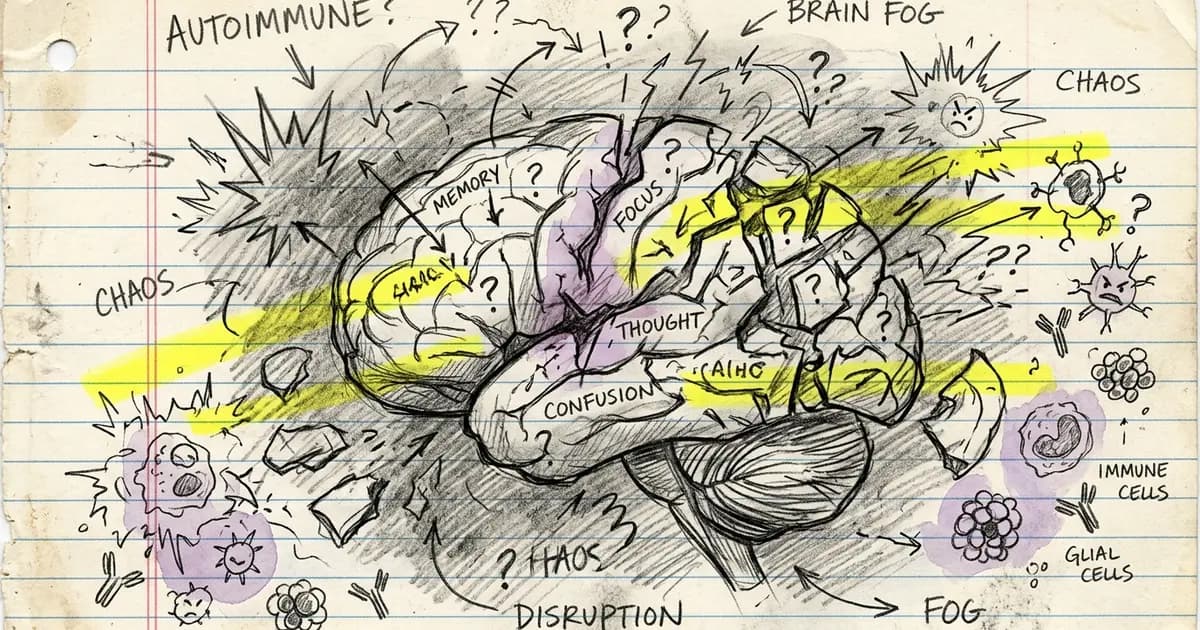
You're mid-sentence and the word just vanishes. Not on the tip of your tongue. Gone. You were about to explain something simple, something you've said a hundred times, and your brain just... stalls. If you have lupus, this isn't a quirky memory lapse. It's brain fog lupus patients know all too well, and it has a clinical name: lupus fog.
The frustrating part? Most people around you can't see it. Brain fog lupus causes doesn't show up on a standard MRI. It doesn't always correlate with disease activity scores. But it's real, it's measurable, and it affects somewhere between 20% and 80% of people with systemic lupus erythematosus (SLE), depending on how researchers define cognitive impairment.
That's not a small number. With roughly 204,000 Americans living with SLE according to CDC-funded research, tens of thousands of people are walking around with a brain that feels like it's running on half its usual bandwidth.
Key Takeaways:
- Brain fog lupus produces is a real, measurable cognitive symptom affecting memory, concentration, and processing speed.
- Multiple biological mechanisms drive it, including autoantibodies, inflammation, and blood-brain barrier disruption.
- Lupus medications themselves can sometimes worsen cognitive symptoms.
- Targeted lifestyle strategies and the right supplementation can help support clearer thinking day to day.
What Brain Fog Lupus Patients Actually Experience
Lupus fog isn't just "being forgetful." It's a cluster of cognitive disruptions that can hit several areas of mental performance at once.
Research from qualitative studies with SLE patients captures how people describe brain fog lupus brings: "cloudy in brain," "whole mind just leaves," "like extracting water from a stone." The most commonly reported problems are memory lapses and difficulty concentrating, but the symptom list runs deeper than that.
Here's what brain fog lupus typically looks like:
- Word-finding difficulty: You know the concept but can't produce the word. Mid-conversation, you freeze.
- Short-term memory gaps: Forgetting appointments, losing track of tasks, re-reading the same paragraph three times.
- Slowed processing speed: Information takes longer to register. Conversations feel like they're moving too fast.
- Difficulty planning and organizing: Executive function takes a hit, making multi-step tasks feel overwhelming.
- Mental fatigue: Your brain tires faster than it used to, even from routine cognitive work.
The Lupus Foundation of America notes that for many people, brain fog lupus symptoms come and go over time. They tend to flare alongside other lupus symptoms, though not always. Some people experience persistent cognitive difficulties even when their joints and skin are relatively calm.
The Biology Behind Brain Fog Lupus
This is where it gets interesting, and where brain fog lupus produces separates itself from the generic "brain fog" most people complain about after a bad night's sleep.
Autoantibodies Attacking Neural Tissue
Your immune system in SLE doesn't just target your joints and skin. It produces autoantibodies that can directly interfere with brain function. Research published in PNAS demonstrated that lupus autoantibodies cross-reacting with NMDA receptors, which are critical for memory and learning, can mediate cognitive impairment. These antibodies essentially disrupt the signaling pathways your neurons rely on to form and retrieve memories.
A study in Lupus journal confirmed that both anti-NMDA receptor and anti-ribosomal P autoantibodies contribute to brain fog lupus patients report, particularly in attention and memory domains.
Blood-Brain Barrier Breakdown
Normally, your blood-brain barrier (BBB) acts as a gatekeeper, keeping inflammatory molecules and immune cells out of brain tissue. In lupus, this barrier can become compromised. Anti-endothelial cell antibodies can damage the tight junctions between cells that form the BBB, allowing autoantibodies and inflammatory cytokines to cross into the central nervous system.
Once that barrier is breached, the brain's own immune cells, called microglia, can become activated. They release additional inflammatory cytokines that impair neuron function, creating a feedback loop of neuroinflammation that worsens brain fog lupus sufferers endure.
Systemic Inflammation and Cytokines
Even without direct antibody attacks on the brain, the chronic systemic inflammation that defines lupus takes a cognitive toll. Hospital for Special Surgery (HSS) explains that certain proteins called cytokines, released during active inflammation, can cause inflammation within the brain itself.
Research on accelerated immune aging in SLE patients found that lupus drives a process called accelerated immunosenescence, where the immune system ages faster than it should. This premature immune aging correlated with brain fog lupus involves, especially in attention, recall, and visuospatial processing.
The Medication Factor
Here's a wrinkle that doesn't get discussed enough: some lupus medications can contribute to brain fog lupus already creates. HSS notes that corticosteroids, especially at high doses, can cause mood changes, excitement, and sleeplessness, all of which degrade cognitive performance. You might be treating a lupus flare and inadvertently making the fog worse.
This creates a difficult balancing act. The medications controlling your disease activity might also be muddying your thinking. Tracking your cognitive symptoms alongside medication changes, with your rheumatologist's input, is one of the most practical steps you can take.
How Brain Fog Lupus Is Diagnosed
There's no single blood test that confirms brain fog lupus. Standard brain MRIs often show some abnormalities in lupus patients, but these don't consistently correlate with cognitive symptoms.
Diagnosis typically involves neuropsychological testing, a battery of standardized assessments that measure:
| Cognitive Domain | What's Tested |
|---|---|
| Verbal memory | Recalling word lists and stories |
| Attention | Sustaining focus over time |
| Processing speed | How quickly you handle new information |
| Executive function | Planning, organizing, mental flexibility |
| Visuospatial ability | Navigating spaces, interpreting visual data |
A meta-analysis of 78 studies found that using full neuropsychological batteries, the pooled prevalence of cognitive dysfunction in SLE patients was 38%. When researchers looked specifically at neuropsychiatric SLE (NPSLE), that number climbed to 39% with wider confidence intervals.
Your rheumatologist may also check for specific autoantibodies linked to neuropsychiatric lupus and order functional MRI imaging, which can sometimes reveal slower cognitive processing speed even when standard scans look normal.
Practical Strategies for Managing Brain Fog Lupus
Science is still catching up to effective pharmacological treatments for brain fog lupus specifically. But there's strong evidence that lifestyle strategies can make a real difference in day-to-day cognitive function.
Protect Your Sleep
This sounds basic, but it's foundational. Fatigue and poor sleep amplify every cognitive symptom lupus throws at you. The Lupus Foundation of America recommends developing a consistent sleep schedule and using relaxation techniques to improve sleep quality. If lupus pain is disrupting your sleep, that's a conversation to have with your doctor, because fixing sleep often has downstream effects on mental clarity.
Move Your Body (Within Your Limits)
Cleveland Clinic recommends getting 30 minutes of physical activity each day to help manage brain fog lupus causes. This doesn't mean high-intensity training. Walking, swimming, and yoga all count. Exercise increases blood flow to the brain, reduces systemic inflammation, and supports the production of brain-derived neurotrophic factor (BDNF), which helps with neuroplasticity.
The key is consistency over intensity. A daily 20-minute walk does more for your cognition than an occasional hour-long gym session followed by a three-day crash.
Build External Systems
Your brain is working harder than it should for basic tasks. Stop fighting that and start building systems around it.
- Use your phone for reminders, lists, and calendar alerts.
- Write down questions before doctor's appointments.
- Break complex tasks into smaller steps and tackle them one at a time.
- Take short breaks throughout the day (about 30 minutes) to reduce cognitive overload.
These aren't crutches. They're tools that free up your limited cognitive bandwidth for the things that actually matter.
Manage Stress Deliberately
Stress and anxiety can directly worsen brain fog lupus and may even trigger lupus flares. Deep breathing, meditation, and structured downtime aren't luxuries for people with SLE. They're part of the treatment plan.
Keep Your Brain Active
Cognitive exercises, puzzles, learning new skills, even reading challenging material, can help keep your mind stimulated. Think of it like physical therapy for your brain. The goal isn't to push through brain fog lupus creates by force, but to maintain and strengthen the neural pathways you still have.
Supporting Cognitive Function Beyond the Basics
Once you've addressed sleep, movement, stress, and external systems, there's still the question of what you're putting into your body to support cognitive performance.
The combination of caffeine and L-theanine has one of the strongest evidence bases for supporting focus and attention. A study involving 44 young adults found that 97 mg of L-theanine combined with 40 mg of caffeine helped focus attention during demanding cognitive tasks. That's a low dose of caffeine paired with L-theanine's calming, focus-sharpening properties.
Adding theacrine and methylliberine to that stack extends the benefits further. A randomized crossover study found that combining caffeine with theacrine and methylliberine increased cognitive performance and improved reaction time without negatively affecting mood. Research in the Journal of the International Society of Sports Nutrition showed that this combination provided similar cognitive benefits to higher doses of caffeine alone, with better sustained performance over time.
This matters for anyone dealing with brain fog lupus, because the goal isn't just a short spike of alertness followed by a crash. It's sustained, even cognitive support that lasts through the hours when you need your brain to actually work.
Clearing Brain Fog Lupus, One Layer at a Time
Brain fog lupus generates is a legitimate neurological symptom with identifiable biological drivers. It's not laziness, it's not aging, and it's not "all in your head" in the dismissive sense people sometimes mean. Autoantibodies, inflammation, blood-brain barrier disruption, and even your medications all play a role.
The path forward involves working with your medical team to manage disease activity, building practical systems that reduce cognitive load, and supporting your brain with the right inputs: quality sleep, regular movement, stress management, and targeted nutrition.
That last piece is exactly why Roon exists. It combines 80 mg of caffeine with L-theanine, theacrine, and methylliberine in a sublingual pouch designed for sustained mental clarity over 6 to 8 hours, with no jitters and no crash. For anyone navigating the daily reality of brain fog lupus, having a reliable, zero-nicotine tool for focus can make the difference between a productive afternoon and a lost one. Give it a try and see what clear thinking feels like again.