Are Caffeine Pouches Bad for You? What the Science Actually Says
Roon Team
Are Caffeine Pouches Bad for You? What the Science Actually Says
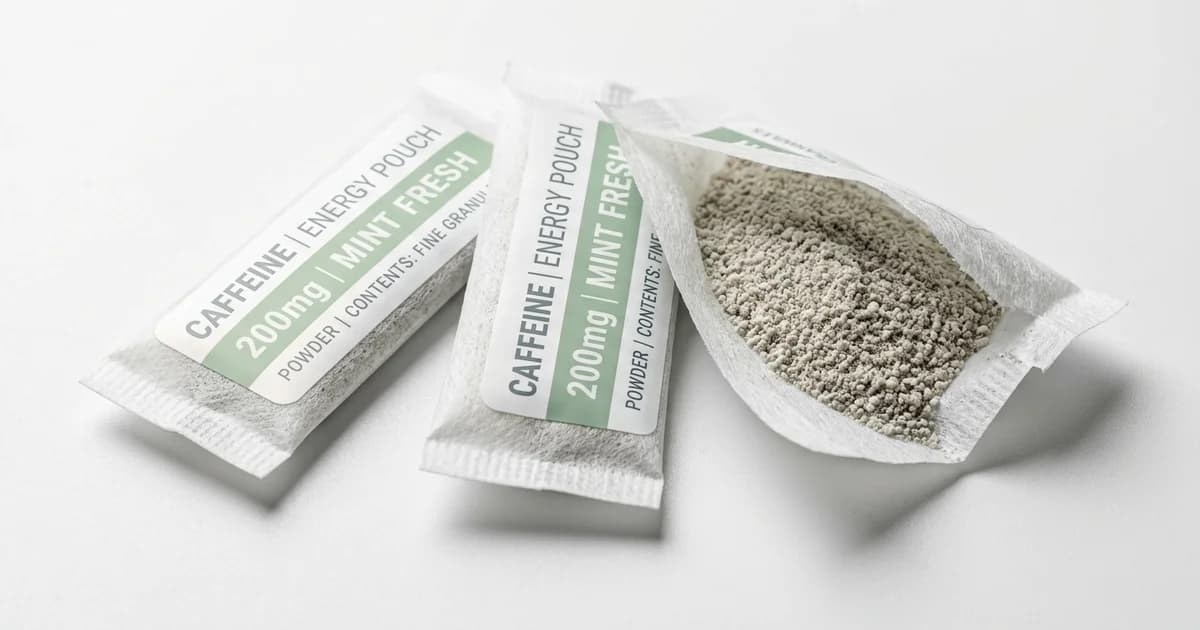
You've seen them at the gas station checkout, in your gym buddy's pocket, or all over your social feeds. Caffeine pouches are everywhere. And the question "are caffeine pouches bad for you" keeps showing up because, frankly, the answer depends on what's inside the pouch and how much of it you're consuming.
The short version: caffeine itself isn't the villain. The dose, the delivery method, and the other ingredients riding shotgun with caffeine determine whether a caffeine pouch is a clean performance tool or a jittery mess waiting to happen.
Here's what you need to know before you tuck one under your lip.
Key Takeaways
- Caffeine pouches aren't inherently dangerous, but many brands pack 150–200mg per pouch, which can cause heart palpitations, anxiety, and insomnia when absorbed quickly through oral tissue.
- The FDA recommends a daily caffeine limit of 400mg for healthy adults. A single high-dose pouch can eat up half that budget in minutes.
- Not all pouches are equal, and caffeine pouches by brand vary widely in dose, ingredients, and whether nicotine is present. Ingredients, dosage, and whether a pouch contains nicotine (or just caffeine) vary wildly between brands.
- The combination of caffeine with compounds like L-Theanine can reduce the negative side effects of caffeine while preserving the focus benefits.
How Caffeine Pouches Work (And Why Delivery Method Matters)
Placing a pouch under your lip, between your gum and lip, is the core mechanic of this delivery format. The caffeine absorbs through the oral mucosa, the thin membrane lining your mouth, and enters your bloodstream without passing through your digestive system first.
This is the same principle behind sublingual medications. The mucous membranes in your mouth are rich with blood vessels, which means compounds can reach circulation fast. A 2002 study published on PubMed found that caffeine absorbed through the oral cavity (via chewing gum) reached the bloodstream faster than caffeine swallowed in capsule form.
That speed is a double-edged sword. Faster absorption means quicker onset of focus and alertness. But faster absorption also means side effects hit harder if the dose is too high.
Are Caffeine Pouches Bad for You? It Comes Down to Three Factors
1. The Dose
This is where most caffeine pouches get into trouble. Many popular brands load their pouches with 150mg to 200mg of caffeine per serving. For context, a standard cup of brewed coffee contains roughly 95mg.
According to Rob van Dam, a professor of exercise and nutrition sciences at George Washington University, caffeine pouches deliver caffeine to the bloodstream quickly, and the rapid delivery combined with a high dose can cause increased heart rate, nausea, insomnia, and other severe symptoms.
The concern is especially acute for younger users. NBC News reported that youth caffeine use came under increasing scrutiny following high-profile reports of death and serious injury among young people who consumed heavily caffeinated products.
The FDA recommends that healthy adults cap their caffeine intake at 400mg per day. That's roughly four cups of coffee. If you're using a 200mg pouch twice a day, you're already at the limit before your morning espresso.
A pouch with 80mg of caffeine, on the other hand, sits well within safe territory. That's roughly one cup of coffee, delivered in a controlled, sustained way.
2. The Ingredients List
Caffeine is just one line item. What else is in the pouch matters just as much when asking are caffeine pouches bad for you.
Some caffeine pouches contain:
| Ingredient | Purpose | Concern Level |
|---|---|---|
| Caffeine (40–200mg) | Stimulant, alertness | Dose-dependent |
| Nicotine | Stimulant, addictive | High (dependency risk) |
| Artificial sweeteners | Flavor | Low to moderate |
| Taurine | Energy support | Generally low |
| B-Vitamins | Metabolic support | Low |
| L-Theanine | Calming focus | Low (beneficial) |
| Theacrine | Sustained energy | Low (beneficial) |
The biggest red flag is nicotine. Some brands market themselves as "energy pouches" but still contain nicotine. Always check the label. Nicotine is addictive, raises blood pressure, and has well-documented cardiovascular risks.
Zero-nicotine pouches that rely on caffeine and complementary nootropics, one of several oral caffeine pouch formats on the market, are a fundamentally different product category. Lumping them together is like comparing a glass of wine to a kombucha just because both come in a bottle.
3. The Absorption Profile
Not all stimulants hit the same way. Pure caffeine absorbed through the gums creates a sharp spike in blood concentration followed by a crash. You feel great for 90 minutes, then you feel worse than before you started.
This is why ingredient combinations matter more than any single compound. A double-blind, placebo-controlled study published in PMC found that when caffeine was combined with L-Theanine, the combination improved cerebral blood flow, cognition, and mood. A 2025 study on Iranian elite wrestlers published in the Journal of the International Society of Sports Nutrition found that L-Theanine mitigated the anxiety and tachycardia induced by caffeine alone, resulting in a more stable psychophysiological response.
In plain English: L-Theanine takes the edge off caffeine without dulling the focus. You get the alertness without the jitters.
The Real Risks: Are Caffeine Pouches Bad for You If Misused?
Let's not sugarcoat this. There are legitimate risks with caffeine pouches, and you should know about them.
Overconsumption Is Easy
Coffee has a built-in speed limit. Brewing takes time, drinking takes time, and your stomach tells you when you've had enough. Caffeine pouches remove all those friction points. You can go through three or four in a morning without thinking about it.
If each pouch contains 150mg, that's 450–600mg of caffeine before lunch. That exceeds the FDA's recommended daily limit and puts you in the zone for real side effects: anxiety, heart palpitations, digestive issues, and disrupted sleep.
Oral Health Concerns
Any product that sits against your gums for extended periods deserves scrutiny. While caffeine pouches are generally less harmful to oral tissue than smokeless tobacco, prolonged contact with flavoring agents, sweeteners, and pH modifiers can irritate the gums over time. Rotating the placement side and limiting use duration are practical steps.
Lack of Regulation
As CBC News reported, no caffeine pouch has been authorized for sale in Canada, and in most markets, caffeine pouches exist in a regulatory grey area. In the UK, caffeine pouches occupy a legal grey zone, classified as neither food nor medicine. In the United States, caffeine pouches generally fall under dietary supplement regulations, which means the FDA does not pre-approve them before they hit shelves.
This puts the burden on you to evaluate what you're putting in your body. Read labels. Check dosages. Look for third-party testing.
What a Well-Designed Caffeine Pouch Actually Looks Like
If the question is "are caffeine pouches bad for you," the honest answer is: badly designed ones are. But the format itself, sublingual delivery of a controlled caffeine dose, is sound pharmacology.
A well-designed caffeine pouch should check these boxes:
- Low, controlled caffeine dose (40–80mg per pouch, not 200mg)
- Zero nicotine (no exceptions)
- Complementary nootropics that smooth out the caffeine curve (L-Theanine, Theacrine, Methylliberine)
- No tolerance buildup, so you don't need more over time to get the same effect
- Clean ingredient list with no artificial junk
The combination of Theacrine and Methylliberine is worth paying attention to. Both are purine alkaloids structurally related to caffeine, but research suggests they produce sustained energy without the same tolerance escalation you get from caffeine alone. Theacrine, in particular, has been studied for its ability to support focus and motivation without increasing heart rate or blood pressure at the same rate as equivalent caffeine doses.
When these compounds work alongside a modest caffeine dose and L-Theanine, the result is a longer, smoother focus window. Think 6–8 hours of clean mental energy instead of a 90-minute spike followed by a wall.
Are Caffeine Pouches Bad for You Compared to Other Caffeine Sources?
Here's how common caffeine delivery methods compare:
| Method | Typical Caffeine | Onset Speed | Duration | Crash Risk | Extras |
|---|---|---|---|---|---|
| Drip Coffee | 95mg/cup | 30–45 min | 3–5 hrs | Moderate | Antioxidants |
| Espresso | 63mg/shot | 20–30 min | 2–3 hrs | Moderate | Minimal |
| Energy Drink | 80–300mg | 20–40 min | 2–4 hrs | High | Sugar, taurine |
| Pre-Workout | 150–400mg | 20–30 min | 2–4 hrs | High | Beta-alanine, etc. |
| Caffeine Pill | 100–200mg | 30–60 min | 4–6 hrs | Moderate | None |
| Caffeine Pouch (high-dose) | 150–200mg | 10–20 min | 2–4 hrs | High | Varies |
| Caffeine Pouch (low-dose + nootropics) | 40–80mg | 10–20 min | 6–8 hrs | Low | L-Theanine, Theacrine |
The bottom row is where the format shines. A low-dose caffeine pouch stacked with the right supporting compounds gives you faster onset than coffee, longer duration than an energy drink, and virtually none of the crash.
The Verdict: Are Caffeine Pouches Bad for You? Format Is Fine. Formulation Is Everything.
Caffeine pouches aren't inherently bad for you. The sublingual delivery format is efficient and well-understood. The problems start when brands treat "more caffeine" as a selling point, pack 200mg into a single pouch, skip the complementary ingredients, or sneak nicotine into the formula.
So are caffeine pouches bad for you? Only when the formulation ignores your biology. The right caffeine pouch delivers a moderate dose, clean ingredients, and compounds that work together to extend focus without spiking your heart rate or building tolerance.
A Better Way to Use the Format
Roon was built on exactly this principle. Roon is a zero-nicotine sublingual pouch with 80mg of caffeine, paired with L-Theanine, Theacrine, and Methylliberine, the four compounds that clinical research supports for sustained cognitive performance without the crash or tolerance buildup.
Where most caffeine pouches give you a hammer, Roon gives you a scalpel. Precise dosing, clean formulation, 6–8 hours of focus. No jitters, no dependency, no nonsense.
If you've been wondering are caffeine pouches bad for you but still curious about the format, Roon is the version designed to address every concern on this list. Try Roon and feel the difference a well-formulated pouch actually makes.