Aniracetam: The Fat-Soluble AMPA Modulator for Mood and Focus
Roon Team
Aniracetam: The Fat-Soluble AMPA Modulator for Mood and Focus
Most racetams chase memory. Aniracetam chases something subtler: the feeling of mental friction lifting, where words come faster and the background hum of worry quiets down. That dual character, sharper cognition paired with a calmer mood, is why this particular molecule has held a cult following for decades.
It is also one of the most pharmacologically frustrating nootropics ever studied. The same fat-loving structure that gives aniracetam its edge makes it almost comically hard for your body to absorb.
This is a deep look at how aniracetam actually works, what the research supports, how people dose it, and why its absorption problem is the most interesting thing about it.
Key Takeaways
- Aniracetam is a fat-soluble racetam and a positive allosteric modulator of AMPA glutamate receptors, the brain's main fast-signaling gatekeepers.
- It is studied for both cognition and mood, with animal research showing antidepressant-like and anxiety-reducing effects.
- Oral aniracetam bioavailability is brutally low. One review pegs it near 0.2%, with the rest destroyed by first-pass liver metabolism.
- Roughly 80% converts to anisoyl-GABA, a metabolite that drives much of the downstream effect.
- It is not FDA-approved as a drug or sold as a dietary supplement in the United States.
What Is Aniracetam?
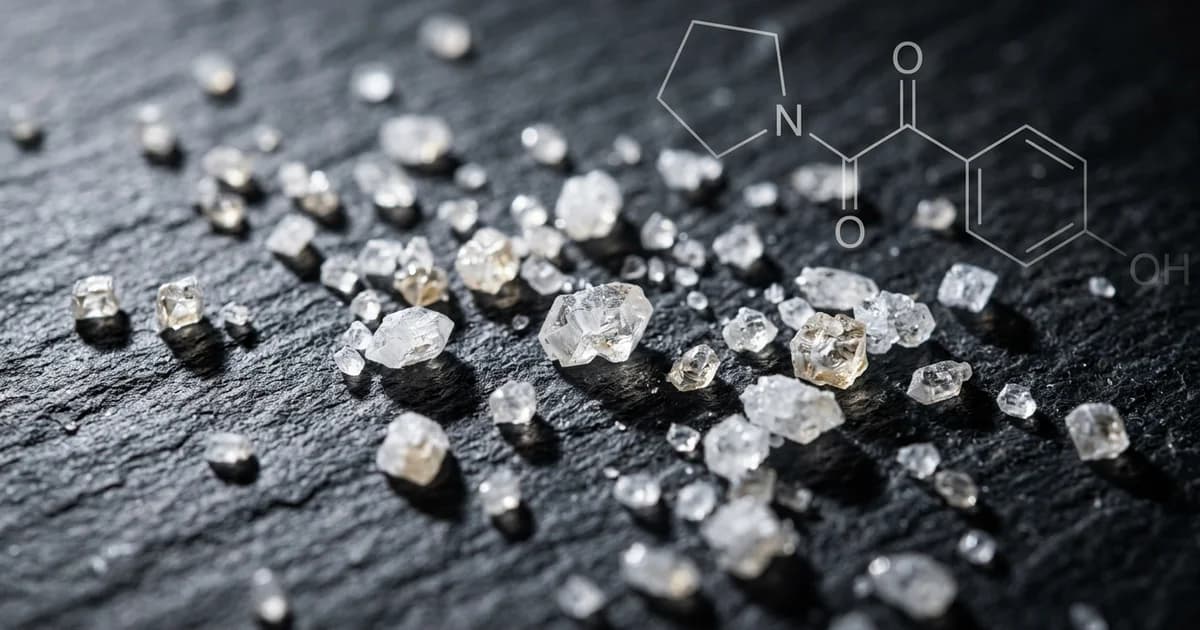
Aniracetam is a fat-soluble member of the racetam family, built as a more potent cousin of piracetam. Chemists at Hoffmann-La Roche synthesized it in the 1970s.
The structural trick was simple and consequential. Adding a methoxybenzoyl group to piracetam's pyrrolidone ring made it lipophilic (fat-loving) and roughly 3 to 8 times more potent by weight. That single change is the source of both its strengths and its absorption headache.
It has a real clinical history in Europe. It's been prescribed in parts of Europe for decades, sold as Ampamet in Italy and Memodrin in Greece, primarily for cognitive decline in elderly patients. In the United States it occupies a grayer zone, not approved as a drug and not legally marketed as a dietary supplement.
How Aniracetam Works: The AMPA Receptor Nootropic
Aniracetam works by making your brain's existing glutamate signals fire more efficiently, without forcing the receptors on. That distinction matters, and it is the core of what makes it an AMPA receptor nootropic.
Glutamate is the brain's primary excitatory neurotransmitter, and the AMPA receptor is the main gate for that fast signal. Aniracetam acts as a positive allosteric modulator of AMPA receptors, which means it doesn't activate them directly, it makes them work better when they're already firing.
The molecular detail is elegant. Research by Jin et al. (2005) in The Journal of Neuroscience showed aniracetam binds within the dimer interface of the AMPA receptor's ligand-binding domain, which slows deactivation so channels stay open longer. Earlier work reached the same conclusion from a different angle. Isaacson and Nicoll (1991) demonstrated at the cellular level that aniracetam reduces glutamate receptor desensitization and slows the decay of fast excitatory synaptic currents in the hippocampus.
That hippocampal effect is the bridge to learning and memory, since AMPA-driven synaptic strengthening underlies long-term potentiation.
The Acetylcholine and Mood Connection
Aniracetam does not stop at glutamate. Its main metabolite reaches into other systems entirely.
Shirane and Nakamura (2000) discovered that N-anisoyl-GABA, aniracetam's primary metabolite, enhances acetylcholine release in the prefrontal cortex via modulation of group II metabotropic glutamate receptors. More acetylcholine in the prefrontal cortex tracks with attention and verbal fluency, which lines up neatly with the subjective reports people give.
There is also a glutamate-plus-mGluR story here. Aniracetam exerts its effects through a dual allosteric modulation mechanism targeting both AMPA receptors and metabotropic glutamate receptors, not only directly enhancing glutamatergic transmission but also acting on broader neurotransmitter networks.
Aniracetam Benefits: What the Research Actually Shows
The honest summary: aniracetam shows promising aniracetam benefits for mood and cognition in animal and older clinical work, but human evidence is thinner than enthusiasts admit.
On mood, the animal data is the most interesting part. A peer-reviewed study found antidepressant-like effects of aniracetam in aged rats, with the effect being more pronounced when stress-induced immobility was accompanied by the brain dysfunction that occurs with aging. In other words, it seemed to help most where there was something to fix.
For aniracetam anxiety claims, keep your expectations calibrated. Some studies have shown decreased anxiety from aniracetam in rodents, but there aren't enough human studies to support this type of treatment for anxiety in people. The molecule is genuinely interesting here, but the human trials simply have not been run at scale.
On cognition in older adults, the European clinical history carries weight. Reviewers have reported that long-term use over a year supported mood and cognitive function in elderly subjects, with a tolerability profile they considered favorable for that population, as summarized by EvidenceLive. That tracks with its history as a prescription cognitive aid for senile cognitive disorders in parts of Europe.
A note on younger, healthy brains. One often-cited rodent study found aniracetam did not alter cognitive and affective behavior in adult C57BL/6J mice. Benefits may depend heavily on baseline, age, and whether there is existing dysfunction to correct.
The Absorption Problem: Aniracetam Bioavailability
Here is the catch that defines the whole molecule. Aniracetam bioavailability after an oral dose is shockingly low, because the liver destroys most of it before it ever reaches your bloodstream.
The numbers are stark. The low aqueous solubility of aniracetam and a low oral bioavailability of 0.2% have greatly limited the clinical utility of this compound, and it is extensively metabolized during first-pass metabolism in the liver. Animal data shows similar struggles, with bioavailability measured around 8.6 to 11.4% in rats, where aniracetam was largely metabolized to 4-p-anisamidobutyric acid, p-anisic acid, and 2-pyrrolidinone.
So what actually does the work? Largely the metabolite. About 80% of aniracetam is converted to anisoyl-GABA following peripheral administration in humans. That is why aniracetam is sometimes called a prodrug in practice. You swallow one thing, and your liver hands your brain something else.
Two more wrinkles make timing tricky. Aniracetam clears the body fast, with human pharmacokinetic data putting the parent compound's half-life on the order of half an hour to a couple of hours, and because it is fat-soluble, it absorbs better when taken with a meal containing fat. Low yield, short window, food-dependent. That combination is the practical reality of dosing it.
Why First-Pass Metabolism Matters So Much
First-pass metabolism is the liver toll booth. Anything you swallow gets routed through the gut and liver before it joins general circulation, and the liver can chemically dismantle a large fraction on the way through.
For a fat-soluble, liver-vulnerable compound like aniracetam, that toll is enormous. It is the single biggest reason oral dosing feels inconsistent from person to person and day to day.
Aniracetam Dosage and How People Take It
The commonly cited aniracetam dosage sits around 750 to 1,500 mg per day, split into two or three doses and taken with dietary fat. Standard dose is 750 to 1,500 mg per day taken with fat, split across 2 to 3 doses.
The reasoning behind that protocol comes straight from the pharmacology:
- Split dosing compensates for the short half-life and fast clearance.
- Taking it with fat improves absorption of a lipophilic molecule.
- Choline pairing is popular in the nootropics community, since the acetylcholine angle can otherwise leave some users with a dull headache.
None of this is medical advice, and aniracetam is not approved for use in the US. Anyone considering it should talk to a clinician, especially alongside other medications.
Aniracetam vs. Common Focus Options
How does aniracetam stack up against more accessible focus tools? Here is an honest comparison across the things that actually matter day to day.
| Option | Mechanism | Onset | Bioavailability / Reliability | US Status |
|---|---|---|---|---|
| Aniracetam | AMPA positive allosteric modulator, acetylcholine via anisoyl-GABA | ~20 to 30 min, but variable | Very low (~0.2% oral), food-dependent | Not FDA-approved, not a legal supplement |
| Piracetam | AMPA modulation, milder potency | Slow, needs loading | Water-soluble, better absorbed | Not FDA-approved as supplement |
| Caffeine alone | Adenosine antagonist | 30 to 45 min | High, but jittery and crashes | Legal, widely sold |
| Caffeine + L-theanine | Stimulation plus calming alpha-wave support | 30 to 60 min oral | High, well-tolerated | Legal, widely sold |
| Roon | Caffeine, L-theanine, methylliberine, theacrine via sublingual delivery | 5 to 10 min | High, bypasses first-pass gut metabolism | Legal, evidence-backed ingredients |
The point of putting these side by side is not that one wins everything. It is that aniracetam's biggest weakness, absorption, is exactly the variable other formats solve more cleanly.
If you want to go deeper on the calming half of the focus equation, our breakdown of L-theanine and caffeine for smooth focus covers why that pairing avoids the jitter problem.
Conclusion
Aniracetam is a genuinely fascinating molecule. As a positive allosteric modulator of AMPA receptors with a metabolite that lifts prefrontal acetylcholine, it has a plausible mechanism for the mood-and-focus combination its users describe, and its European clinical history in older adults gives it more credibility than most gray-market nootropics.
The hard truth is the absorption. With oral bioavailability near 0.2% and roughly 80% of the parent compound converted before it acts, aniracetam is a study in how a good mechanism can be undermined by bad delivery. Fat-solubility and first-pass metabolism are not footnotes here, they are the headline.
For most people, the practical lesson is bigger than one molecule. How a compound gets into your blood matters as much as what it does once it arrives.
Frequently Asked Questions
Is aniracetam legal in the United States?
Aniracetam is not approved by the FDA as a drug, and it is not legally marketed as a dietary supplement in the US. It has been prescribed in parts of Europe for cognitive decline, sold under names like Ampamet and Memodrin. In the US it sits in a regulatory gray zone, which is one reason its quality and labeling can vary widely. Anyone considering it should consult a clinician first.
Does aniracetam help with anxiety?
Animal research is encouraging but human evidence is limited. Several rodent studies have reported reduced anxiety, and aged-rat research showed antidepressant-like effects. The problem is that large, controlled human trials for anxiety simply have not been conducted. So while the mechanism is plausible, aniracetam is not a proven anxiety treatment, and it should not be used as a substitute for care from a qualified professional.
Why is aniracetam's bioavailability so low?
Two reasons work together. Aniracetam is fat-soluble and poorly water-soluble, and it is heavily broken down by first-pass metabolism in the liver before reaching circulation. One review cites oral bioavailability around 0.2%, with roughly 80% converting to the metabolite anisoyl-GABA. That metabolite drives much of the downstream effect, which is why aniracetam is sometimes described as a prodrug in practice.
What is the typical aniracetam dosage?
The commonly reported range is 750 to 1,500 mg per day, split into two or three doses and taken with food containing fat. The split dosing addresses its short half-life, and the dietary fat improves absorption of a lipophilic compound. Many users also pair it with a choline source. This is general information, not medical advice, and aniracetam is not approved for use in the US.
How fast does aniracetam work and how long does it last?
People often report feeling effects within 20 to 30 minutes, but the experience is variable because of inconsistent absorption. Aniracetam clears quickly, with human half-life estimates ranging from about half an hour to a couple of hours. That short window is why split dosing is standard. The catch is that low and variable bioavailability makes the actual onset and intensity hard to predict from one dose to the next.
Is aniracetam the same as piracetam?
No, though they are relatives. Aniracetam is the fat-soluble cousin of piracetam, created by adding a methoxybenzoyl group to piracetam's core structure. That change made it more lipophilic and roughly 3 to 8 times more potent by weight. Aniracetam is also more associated with mood and verbal fluency effects, while piracetam is the original, milder, water-soluble member of the racetam family.
Does aniracetam build tolerance?
There is limited formal human data on long-term tolerance specifically. Anecdotally, users report it remains effective with intermittent use, and some cycle it. Because the research base in healthy adults is thin, firm conclusions are hard to draw. If you are looking for sustained daily focus without the tolerance creep that affects many stimulants, the delivery format and ingredient choice matter as much as the molecule itself.
When Delivery Is the Real Bottleneck, Not the Ingredient
Aniracetam's story makes one thing obvious: a smart molecule is only as good as the path it takes into your blood. Fat-solubility and heavy first-pass liver metabolism are exactly the absorption problems that swallowing a capsule cannot fix.
That is the design problem Roon was built around. The sublingual pouch is placed under your lip, so the active ingredients absorb through the tissue in your mouth and skip the first-pass gut metabolism that wrecks compounds like aniracetam. The result is fast, predictable onset rather than the guesswork of low oral yield.
Roon uses four legal, evidence-backed ingredients: 80 mg caffeine, 60 mg L-theanine, 25 mg methylliberine (Dynamine), and 5 mg theacrine (TeaCrine), tuned for 5 to 10 minute onset and 6 to 8 hours of focus with no jitters, no crash, and no tolerance buildup. It is not a racetam, not a prescription cognitive aid, and not a substitute for sleep or medical care. It is a cleaner answer to the delivery problem aniracetam never solved. If predictable focus is what you want, try Roon.
Written by Roon Team