Alpha GPC for ADHD: Does It Actually Help With Focus?
Roon Team
Alpha GPC for ADHD: Does It Actually Help With Focus?
Most of the conversation around ADHD fixates on dopamine. That makes sense. Stimulant medications like Adderall and Ritalin work primarily on dopamine and norepinephrine pathways. But there's a second neurotransmitter system quietly gaining attention in ADHD research, and it centers on a nutrient most people have never heard of: choline. More specifically, alpha GPC for ADHD is becoming a serious topic among researchers and the nootropic-curious alike.
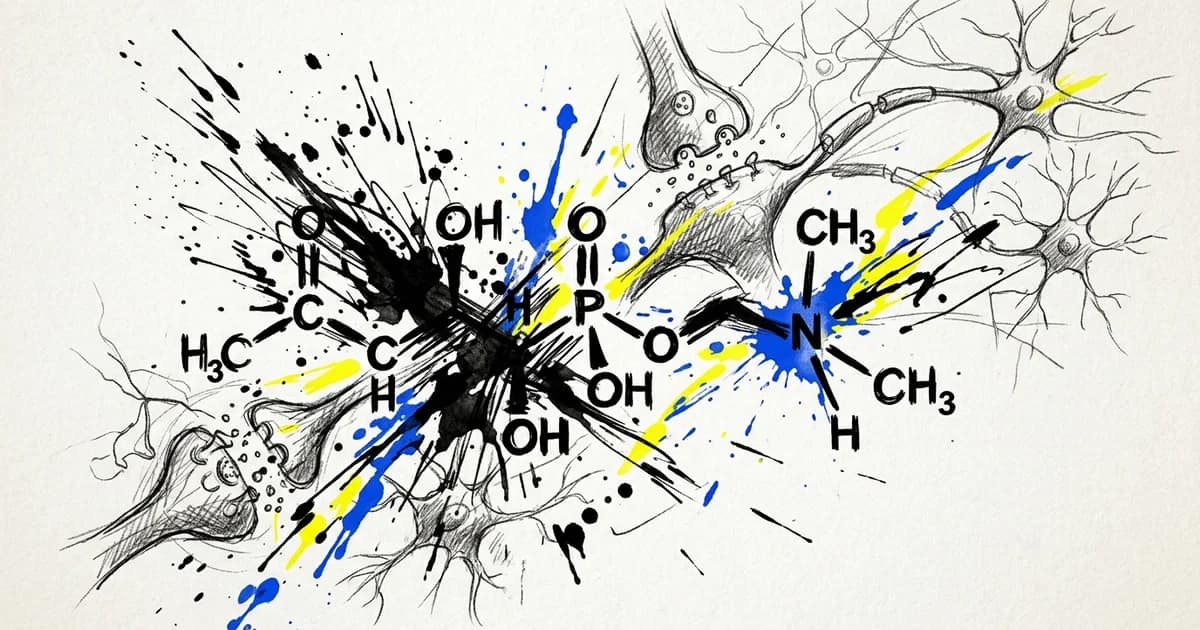
Alpha GPC (alpha-glycerylphosphorylcholine) is a choline compound that crosses the blood-brain barrier and feeds directly into acetylcholine production. Acetylcholine is the neurotransmitter responsible for attention, working memory, and learning. And a growing body of evidence suggests that people with ADHD may have measurable deficits in this exact system.
So does alpha GPC for ADHD actually help? Here's what the science says.
Key Takeaways
- ADHD involves more than dopamine. Research points to cholinergic (acetylcholine-related) dysfunction as a contributing factor in attention deficits.
- Alpha GPC is the most bioavailable choline source for the brain, with a 41% choline content by weight and strong blood-brain barrier penetration.
- Clinical studies show alpha GPC improves cognitive performance in areas like processing speed and attention in healthy adults. Direct ADHD trials are still limited.
- Alpha GPC for ADHD is not a replacement for prescribed medication. It may, however, support focus and cognitive function as part of a broader strategy.
The Acetylcholine Problem in ADHD
ADHD research has been dopamine-centric for decades. But acetylcholine (ACh) plays a direct role in the brain circuits that control attention, motor function, and memory. A study published in the Journal of Neurodevelopmental Disorders found that variations in the choline transporter gene (CHT, SLC5A7) are associated with ADHD, particularly the Combined subtype. The researchers observed a 2-3 fold elevation of a specific gene variant (Val89) in pediatric ADHD subjects compared to controls.
What does that mean in plain language? The gene responsible for moving choline into neurons, where it gets converted into acetylcholine, appears to work differently in people with ADHD. The result: reduced capacity to sustain acetylcholine production during tasks that demand sustained attention.
This isn't a fringe finding. A 2023 narrative review in the journal Nutrients examined choline's role in neurodevelopmental disorders including ADHD, noting that anterior corona radiata levels of choline were 27% lower in certain ADHD populations. And a separate line of research on nicotinic cholinergic receptors has shown that stimulating cholinergic pathways can reduce ADHD symptoms in adults, which is partly why so many people with ADHD self-medicate with nicotine.
The pattern is clear: acetylcholine matters in ADHD. The question is whether alpha GPC for ADHD is a practical way to support it.
What Alpha GPC for ADHD Actually Does in the Brain
Alpha GPC is a phospholipid form of choline. When you ingest alpha GPC, your body cleaves it into choline and glycerophosphate. The choline crosses the blood-brain barrier and serves as the primary building block for acetylcholine synthesis.
According to a 2023 review in Frontiers in Bioscience, alpha GPC is considered one of the most effective choline sources because of its 41% choline content by weight and its ability to efficiently cross the blood-brain barrier. Compare that to choline bitartrate, which has lower bioavailability and is less effective at reaching brain tissue.
Here's a quick comparison of common choline sources:
| Choline Source | Choline by Weight | Crosses Blood-Brain Barrier | Primary Use |
|---|---|---|---|
| Alpha GPC | ~41% | Yes, efficiently | Cognitive support, acetylcholine production |
| CDP-Choline (Citicoline) | ~18% | Yes | Neuroprotection, focus |
| Choline Bitartrate | ~40% | Poorly | General choline needs |
| Phosphatidylcholine | ~13% | Limited | Cell membrane support |
Alpha GPC's advantage is speed and efficiency. Alpha GPC delivers choline to the brain faster than most alternatives, which is why it's become the preferred form in cognitive performance stacks.
Alpha GPC for ADHD and Cognitive Performance: What the Studies Show
Direct clinical trials testing alpha GPC for ADHD populations are limited. That's worth being honest about. But the existing research on cognitive performance is relevant, because the cognitive domains alpha GPC improves, processing speed, attention, and motivation, overlap directly with the deficits seen in ADHD.
Processing Speed and Attention
A 2024 randomized, double-blind, placebo-controlled crossover study tested alpha GPC in 20 healthy males using three cognitive assessments: the Stroop test, the Flanker test, and the N-Back test. A single 630mg dose of alpha GPC improved total Stroop test scores and processing speed compared to placebo. The lower 315mg dose also showed tendencies toward improvement on several measures.
The Stroop test specifically measures selective attention and cognitive flexibility, two areas where people with ADHD consistently underperform. Faster processing speed on this test suggests better executive function, the exact cognitive domain that ADHD disrupts.
Motivation
A 2021 randomized, placebo-controlled study published in Nutrients found that alpha GPC supplementation increased motivation in healthy volunteers over a four-week period. Participants in the alpha GPC group reported higher motivation scores, particularly in evening measurements, compared to the placebo group.
Motivation deficits are one of the most frustrating aspects of ADHD. The inability to initiate tasks, even ones you want to do, is a hallmark of the condition. While this study wasn't conducted on ADHD subjects, the mechanism (enhanced cholinergic transmission) is directly relevant to alpha GPC for ADHD applications.
Preclinical Evidence
Animal studies have consistently shown that alpha GPC improves learning, memory, and attention by elevating acetylcholine levels in the hippocampus. A review on News Medical summarized the preclinical literature, noting alpha GPC's anti-amnesic and neuroprotective effects across multiple animal models.
Alpha GPC for ADHD Dosing: What the Research Suggests
Most cognitive studies use alpha GPC daily dosing ranges between 300mg and 1200mg per day. The 2024 Lindenwood University study found cognitive benefits at 630mg in a single acute dose. WebMD's overview notes that alpha GPC has most often been used in adult studies at doses of 400mg three times daily (1200mg total) for up to six months.
For general cognitive support, many nootropic users find that 300-600mg per day is a reasonable starting point. But dosing should always be discussed with a healthcare provider, especially if you're already taking ADHD medication. Alpha GPC increases acetylcholine, and combining alpha GPC with other cholinergic compounds or medications without guidance isn't smart.
A Note on Safety
Alpha GPC has a strong safety profile at standard doses. The most commonly reported side effects are mild: headache, heartburn, or digestive discomfort. A toxicity assessment referenced in News Medical's review found no adverse clinical symptoms in animals treated with choline supplements, with the exception of transient digestive issues.
That said, alpha GPC for ADHD is a supplement strategy, not a medication. Alpha GPC is not FDA-approved to treat ADHD or any other condition. If you have ADHD, work with your doctor. Alpha GPC may complement your existing approach, but it doesn't replace evidence-based treatment.
Why the Cholinergic Angle Matters for Alpha GPC and ADHD
The dopamine model of ADHD isn't wrong. It's just incomplete.
Think of it this way: dopamine drives the wanting to pay attention. Acetylcholine drives the ability to sustain it. Stimulant medications address the first part effectively. But many people on stimulants still report difficulty with sustained focus over long periods, working memory lapses, and afternoon cognitive fatigue. These are cholinergic problems.
The research on nicotinic cholinergic receptors and ADHD makes this explicit. Stimulating cholinergic pathways reduces ADHD symptoms in adults, and the relationship between ADHD and nicotine use (people with ADHD smoke at much higher rates) suggests that many are already self-medicating their cholinergic deficits, just through the worst possible delivery mechanism.
Alpha GPC for ADHD offers a way to support acetylcholine production without nicotine, without stimulants, and without the side effects that come with both.
The Bottom Line on Alpha GPC for ADHD
The honest answer: we don't yet have large-scale clinical trials testing alpha GPC for ADHD populations specifically. That research is needed, and it's likely coming given the growing interest in cholinergic pathways.
What we do have is a strong mechanistic rationale. People with ADHD show measurable cholinergic deficits. Alpha GPC is the most efficient way to deliver choline to the brain. And clinical studies in healthy adults demonstrate that alpha GPC improves the exact cognitive functions, attention, processing speed, motivation, that ADHD impairs.
Alpha GPC for ADHD is not a cure. It's not a replacement for medication if you need it. But as a targeted nutritional strategy to support the cholinergic side of the attention equation, alpha GPC has real science behind it.