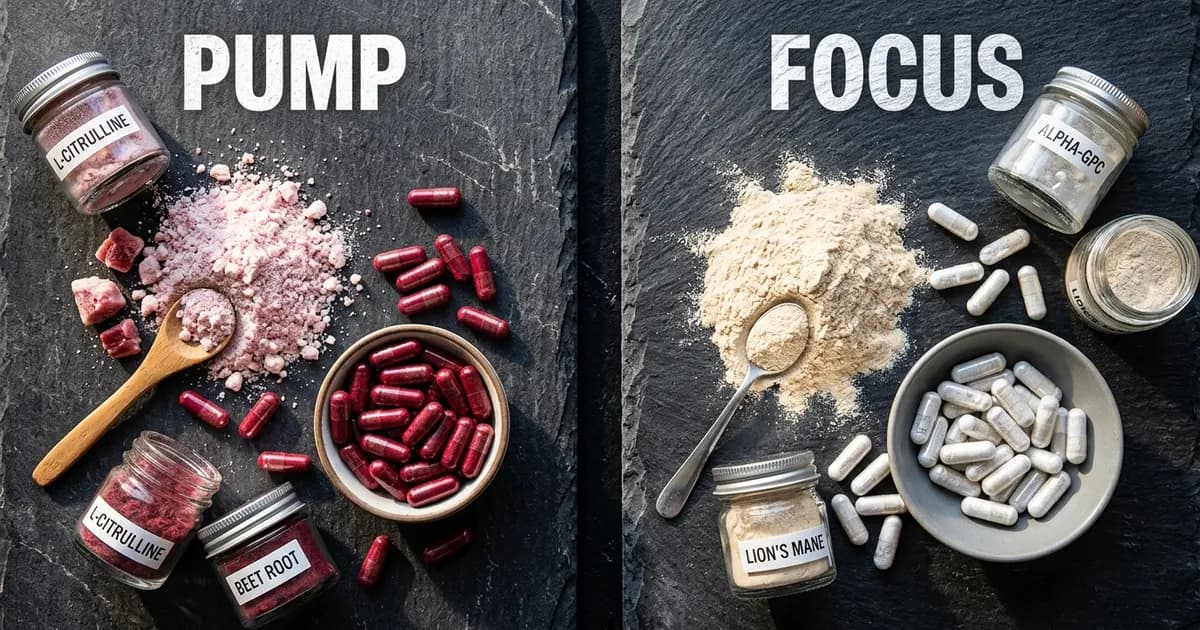
Why Pre-Workout Makes You Jittery and Shaky (and How to Train Wired-Calm Instead)
Roon Team
Why Pre-Workout Makes You Jittery and Shaky (and How to Train Wired-Calm Instead)
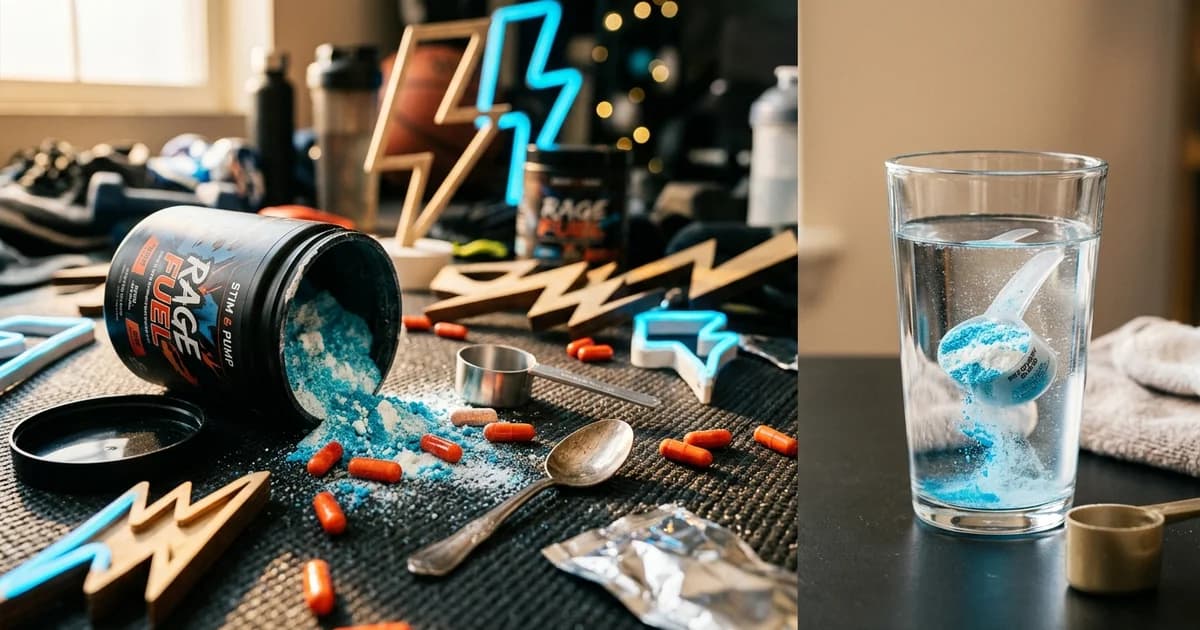
You scoop the powder, slam it back, and twenty minutes later your hands are buzzing, your heart is racing, and your brain feels like it's running three tabs at once. So can pre workout cause anxiety? For a lot of people, yes, and the reason is rarely a mystery once you read the label.
Most of that wired, shaky feeling comes down to dose and chemistry, not bad luck. The good news is you can keep the drive and reaction time without the chest-pounding edge.
Here's what's actually happening in your body, and how to train wired-calm instead.
Key Takeaways
- The jitters usually trace back to high caffeine doses (often 300 to 400 mg per scoop) hitting your nervous system all at once.
- The tingling and itching are a separate ingredient, beta-alanine, and that one is harmless.
- Research links high daily caffeine intake to a measurably higher risk of anxiety.
- Pairing caffeine with L-theanine is the most reliable way to get focus without the shakes.
- A non jittery pre workout isn't about removing stimulants, it's about dosing them smarter.
Does Pre-Workout Cause Anxiety? The Short Answer
Yes, pre-workout can cause anxiety, and the main culprit is the amount of caffeine packed into a single serving. Many popular formulas carry 300 to 400 mg of caffeine per scoop, which is the equivalent of three or four cups of coffee taken in one shot.
Your body doesn't read that as "time to focus." It reads it as a threat signal.
Caffeine blocks adenosine, the molecule that makes you feel tired, and triggers a spike in adrenaline. A little of that is great for training. Too much, too fast, and you get the racing heart, sweaty palms, and looping thoughts that feel a lot like a panic response.
The dose matters more than almost anything else. According to UCLA Health, people who consume 400 mg or more of caffeine daily have a much higher risk of anxiety than those who consume less than 400 mg. The same source notes that more than 90% of people in the United States consume caffeine, so most lifters carry a baseline load before they ever touch a scoop.
A 2024 meta-analysis published in Frontiers in Psychology found that caffeine intake increased the risk of anxiety, with the effect tied closely to dose size. Translation: it's not that caffeine is the enemy. It's that pre-workout brands keep cranking the number up to make the product "feel strong."
Why Your Pre-Workout Makes You Shaky and Tingly
The shaky feeling and the tingly feeling are two different ingredients doing two different things. People tend to lump them together, but they have nothing to do with each other.
The Shakes: Too Much Caffeine, Too Fast
The trembling hands and jittery legs are a stimulant overshoot. When caffeine floods your system faster than your liver can clear it, your nervous system stays in high gear. That's the tremor, the elevated heart rate, and the restless, can't-sit-still energy.
If you stack your pre-workout on top of morning coffee and an energy drink, you can easily clear 500 mg in a few hours. That's well past the threshold where most people start feeling uneasy rather than energized.
The Tingles: Beta-Alanine, and It's Harmless
The pins-and-needles itch on your face, scalp, and hands isn't caffeine at all. It's beta-alanine, an amino acid added for muscular endurance.
That sensation has a name: paresthesia. As Transparent Labs explains, beta-alanine activates G-protein-coupled receptors in the skin, which sets off the tingle. This physiological response is common and typically harmless. It usually starts 10 to 20 minutes after ingestion and fades on its own. It looks dramatic, but it's harmless.
The problem is that the itch makes the product feel potent, so brands keep it in. Feeling something is not the same as the product working.
Pre-Workout Anxiety: Who's Most at Risk
Some people can drink a triple espresso and nap. Others get one strong scoop and spend the next hour convinced something is wrong. The difference is mostly genetic and behavioral.
You're more likely to get pre workout anxiety if you:
- Metabolize caffeine slowly. Your CYP1A2 gene largely decides how fast you clear caffeine. Slow metabolizers feel more, for longer.
- Train on an empty stomach. No food means faster absorption and a sharper spike.
- Already run anxious. Caffeine amplifies whatever baseline state you bring to it.
- Stack stimulants. Coffee, then pre-workout, then a mid-workout energy drink adds up fast.
- Take it late in the day. Caffeine has a half-life of roughly five to six hours, so an evening scoop can wreck both your calm and your sleep.
If two or three of these describe you, the issue probably isn't that you're "sensitive." It's that your formula is overdosed for your physiology.
How to Train Wired-Calm Instead
Wired-calm is the goal: locked-in focus and steady drive, without the shakes. You get there by controlling the dose and adding one specific ingredient that smooths the caffeine out.
1. Cap Your Caffeine Around 100 to 200 mg
You do not need 400 mg to train hard. Most of the focus and output benefit from caffeine shows up at moderate doses. Start lower, around 100 mg, and only climb if you genuinely need it.
2. Add L-Theanine
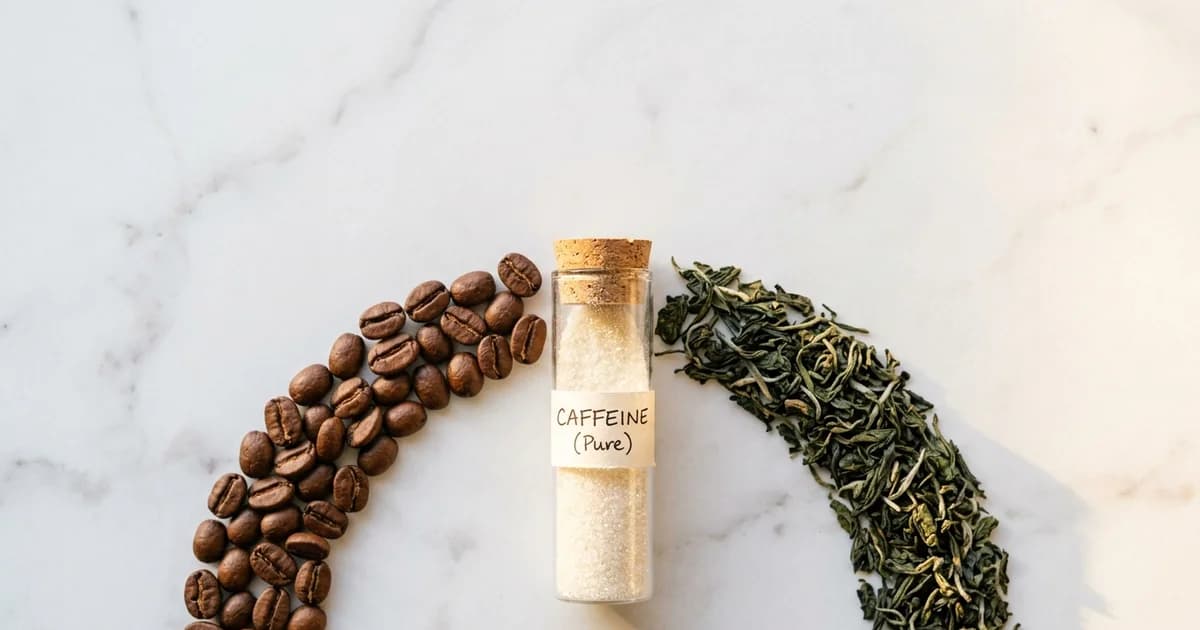
This is the single most useful fix. L-theanine is an amino acid found in green tea that promotes calm focus without sedation.
Pair it with caffeine and it takes the edge off the stimulation while keeping the alertness. The combination is why a cup of green tea feels smooth and a double espresso can feel frantic, even at similar caffeine levels. A roughly 2:1 or 1:1 ratio of theanine to caffeine is the sweet spot most people land on.
3. Eat Something First
A small amount of food slows absorption and softens the spike. Even a banana or a handful of rice helps you avoid the empty-stomach jolt.
4. Time It Right
Take your stimulant 30 to 60 minutes before training, and avoid anything past mid-afternoon if you train in the evening. Protecting sleep protects tomorrow's session.
5. Audit Your Total Daily Load
Add up coffee, tea, energy drinks, and pre-workout. The number that matters for anxiety is the daily total, not the single dose.
Best Pre-Workout That Doesn't Make You Jittery: A Comparison
The best pre workout that doesn't make you jittery is one with a sane caffeine dose, an L-theanine pairing, and no reliance on the beta-alanine tingle to feel "active." Here's how a few common categories stack up.
| Format | Caffeine per serving | Anti-jitter support | Tingle factor | Best for |
|---|---|---|---|---|
| High-stim powder pre-workout | 300 to 400 mg | Rarely included | High (beta-alanine) | Pump and volume training, if you tolerate stims well |
| Moderate "clean" pre-workout | 150 to 200 mg | Sometimes L-theanine | Medium | Lifters who want a pump with less edge |
| Black coffee | 95 to 120 mg | None | None | Cheap, simple energy with no extras |
| Green tea or matcha | 30 to 70 mg | Natural L-theanine | None | Light, smooth focus for low-intensity work |
| Roon sublingual pouch | 80 mg | 60 mg L-theanine built in | None | Mental drive and reaction time without the shakes |
Notice the pattern. The products that cause jitters are the ones leaning hardest on caffeine alone, while the smooth options either keep the dose low or pair it with theanine.
Conclusion
Pre-workout doesn't make you jittery because it's strong. It makes you jittery because it's dosed for sensation instead of performance. A 400 mg caffeine hit on an empty stomach will rattle almost anyone, and research ties that kind of intake to a real, measurable rise in anxiety risk.
You can keep the part you actually want. Cap the caffeine, pair it with L-theanine, eat something, and watch your total daily load. The shaky hands and racing heart are optional. Sharp, steady, wired-calm focus is the version of training that actually holds up rep after rep.
Frequently Asked Questions
Can pre-workout cause anxiety even if I've used it before?
Yes. Your sensitivity changes with sleep, stress, food intake, and how much other caffeine you've had that day. A scoop that felt fine on a rested, well-fed morning can trigger a racing heart on a stressed, empty-stomach afternoon. The dose hasn't changed, but your body's capacity to absorb it calmly has. If you suddenly feel anxious on a familiar formula, check your sleep and your total daily caffeine first.
How long does pre-workout anxiety last?
It usually tracks with caffeine's half-life, which is roughly five to six hours for most people. The peak discomfort tends to hit in the first 30 to 90 minutes, then tapers as your body clears the stimulant. Slow metabolizers can feel it longer. Drinking water, eating, and waiting it out are your main options once it's in your system.
Why does pre-workout make me tingle and itch?
That's beta-alanine, not caffeine. It activates nerve receptors in your skin and causes a harmless pins-and-needles sensation, usually on your face, scalp, and hands. It starts 10 to 20 minutes after you take it and fades on its own. It's a sign the ingredient is present, not a sign the product is working better.
Is a non jittery pre workout just one with less caffeine?
Lower caffeine helps, but the smarter fix is pairing caffeine with L-theanine. Theanine promotes calm focus and softens the stimulant edge without making you drowsy. A formula with 100 to 200 mg of caffeine plus theanine will usually feel far smoother than a 350 mg scoop with nothing to balance it. Format and timing matter too.
Does more caffeine mean a better workout?
No. Past a moderate dose, extra caffeine mostly adds side effects, not output. The focus and drive benefits show up at lower amounts, while anxiety risk climbs with the dose, especially above 400 mg daily. Chasing a bigger number tends to buy you jitters and a worse night's sleep rather than a better session.
Can I just drink coffee instead of pre-workout?
For many people, yes. Black coffee delivers clean, predictable caffeine without beta-alanine tingles or proprietary blends. The downside is no L-theanine, so a strong cup can still feel edgy on an empty stomach. Green tea or matcha is gentler because it includes theanine naturally, though the caffeine dose is lower.
If You Want Drive, Not the Jitters
Everything above points to the same fix: control the caffeine and pair it with something that keeps you calm. That's the exact problem Roon was built around.
Roon is a zero-nicotine sublingual pouch with a focused 4-ingredient stack: 80 mg caffeine, 60 mg L-theanine, 25 mg methylliberine (Dynamine), and 5 mg theacrine (TeaCrine). The caffeine sits at a sane dose, the L-theanine is built in to smooth it, and there's no beta-alanine, so no tingle. It absorbs through the cheek and gum for a 5 to 10 minute onset, then holds 6 to 8 hours of steady focus with no jitters, no crash, and no tolerance buildup.
To be clear, Roon is not a full pre-workout replacement. It won't give you a pump, and it has no creatine, citrulline, or beta-alanine. Think of it as the focus and reaction-time layer for training, the wired-calm part without the shakes. If your scoop has been leaving you rattled, try Roon as the mental drive on top of a simpler, lower-stim base.
Written by Roon Team