Vaping vs. Nicotine Pouches: A Head-to-Head Comparison
Vaping vs. Nicotine Pouches: A Head-to-Head Comparison
You're standing in a gas station staring at a wall of ZYN cans and disposable vapes, trying to figure out which one is the "better" choice. The debate over vaping vs nicotine pouches is one you're not alone in having. The nicotine pouch market hit roughly $3.13 billion in 2024 and is growing at over 36% per year, while 1 in 20 Americans now vapes. The vaping vs nicotine pouches question has become one of the most common in the nicotine space, and the answer is more nuanced than either side wants to admit.
Here's what the science actually says about both, what each one does to your body, and whether there's a third option worth considering.
Key Takeaways
- Nicotine pouches skip the lungs entirely, avoiding the chemical exposure that comes with inhaling vape aerosol.
- Both products deliver nicotine, which a 2025 European Heart Journal consensus report identified as directly toxic to the cardiovascular system regardless of delivery method.
- Vapes deliver nicotine faster and in higher concentrations, which can accelerate dependence.
- A zero-nicotine option exists for people who want the focus and ritual without the addiction risk.
What's Actually in a Vape?
Understanding what goes into vape aerosol is the first step in any honest vaping vs nicotine pouches comparison. That aerosol is not water vapor. That myth should have died years ago, but it persists.
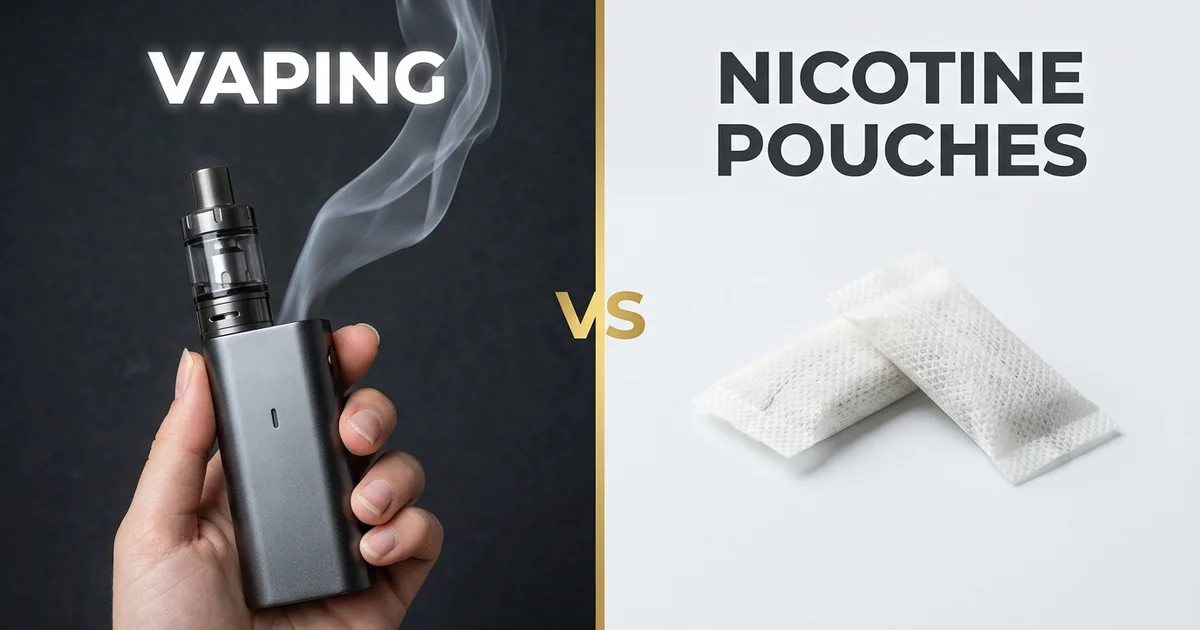
When you inhale from an e-cigarette, you're pulling in a heated mixture of propylene glycol, vegetable glycerin, nicotine, and flavoring chemicals. Some devices heat this liquid at high enough temperatures to produce byproducts like formaldehyde and acrolein, both of which are known to damage lung tissue. The American Lung Association notes that these are chemicals that simply don't belong in your lungs.
A single JUUL pod contains roughly 40 mg of nicotine, which the manufacturer equates to about one pack of cigarettes. Most disposable vapes on the market today pack even more.
A 2025 systematic review and meta-analysis published in PMC found that current vapers who had never smoked had a relative risk of 1.90 for respiratory symptoms compared to non-users. That's nearly double the risk, and the data included 119 studies.
What's in a Nicotine Pouch?
On the other side of the vaping vs nicotine pouches debate, nicotine pouches are small, white sachets you tuck between your gum and lip. They contain synthetic or tobacco-derived nicotine, plant-based fibers, flavorings, and pH adjusters. No tobacco leaf. No combustion. No inhalation.
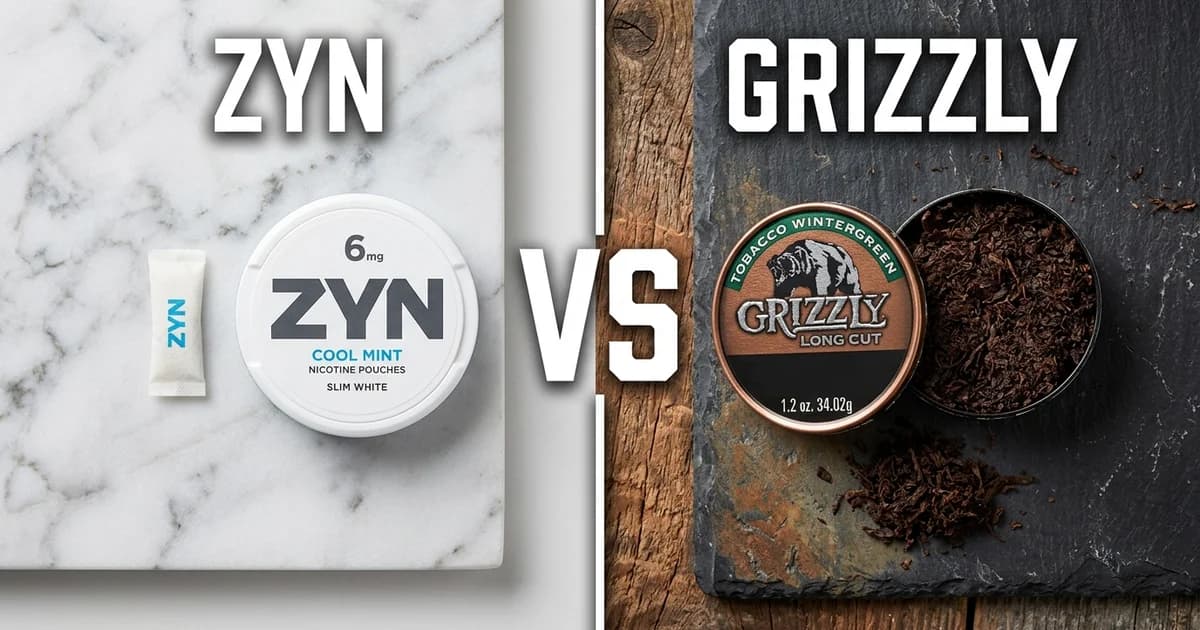
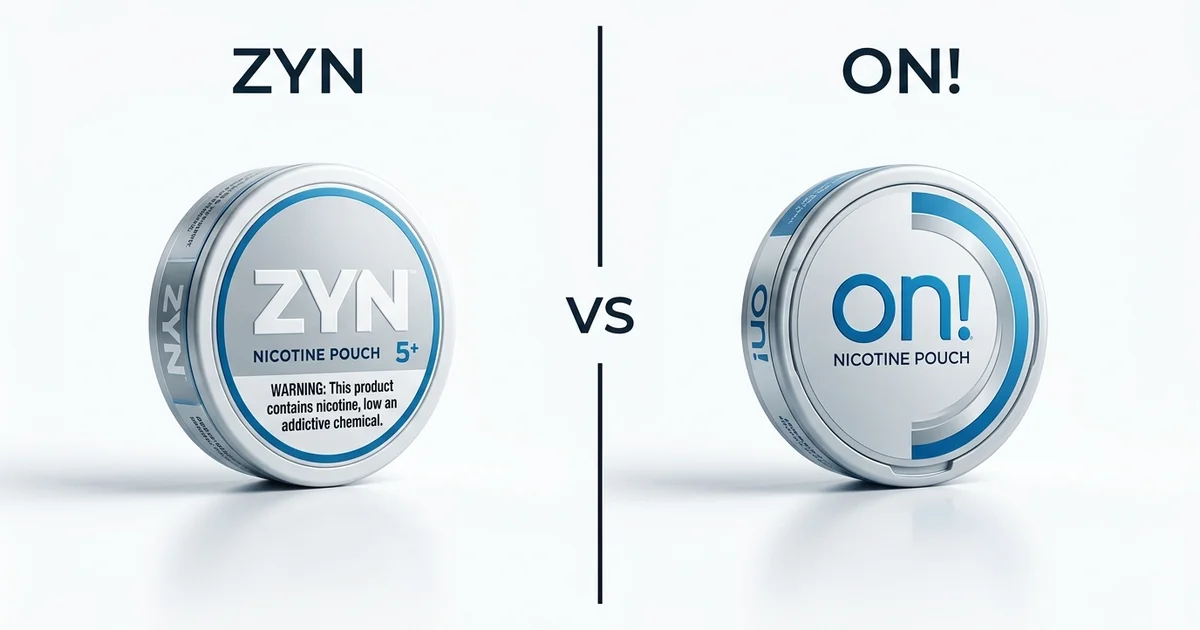
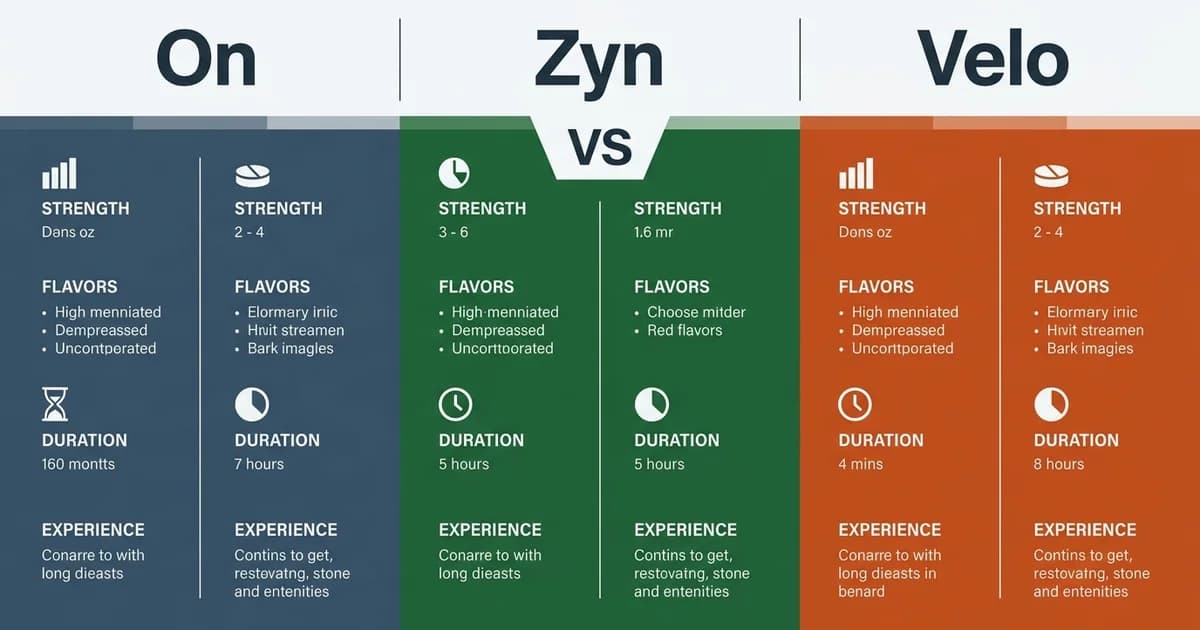
ZYN, the dominant brand in the U.S., sells pouches in 3 mg and 6 mg strengths. Other brands like On! offer a wider range, from 1.5 mg up to 8 mg per pouch.
Because there's nothing to inhale, nicotine pouches eliminate the respiratory risks associated with vaping. That's a real advantage. But "less harmful than vaping" is a low bar, and it doesn't mean these products are harmless.
Vaping vs Nicotine Pouches: The Real Comparison
Let's break the vaping vs nicotine pouches matchup down across the categories that actually matter.
Nicotine Delivery Speed
Vapes win on speed. Inhaled nicotine reaches the brain in roughly 10 to 20 seconds. Nicotine pouches absorb through the oral mucosa, which takes a few minutes to hit peak blood levels. For someone trying to manage cravings quickly, vapes feel more immediate. For someone trying to avoid the dopamine spike that reinforces addiction, the slower delivery of pouches is arguably better. This difference in delivery speed is one of the most important factors in the vaping vs nicotine pouches decision.
Health Risks
Neither product is safe. But the risk profiles are different, and understanding them is central to the vaping vs nicotine pouches comparison.
| Category | Vaping | Nicotine Pouches |
|---|---|---|
| Lung exposure | Yes. Aerosol contains formaldehyde, acrolein, VOCs | None. No inhalation required |
| Cardiovascular risk | Yes. Nicotine constricts blood vessels, raises heart rate | Yes. Same nicotine, same cardiovascular effects |
| Oral health | Dry mouth, gum irritation from chemicals | Gum irritation, potential gum recession with prolonged use |
| Addiction potential | High. Fast delivery reinforces dependence | High. Slower onset, but still nicotine |
| Long-term data | Limited (product is ~15 years old) | Very limited (mainstream adoption is recent) |
The European Society of Cardiology's 2025 consensus report was blunt: nicotine is toxic to the heart and blood vessels regardless of whether it comes from a vape, a pouch, a cigarette, or a shisha pipe. Lead researcher Dr. Thomas Münzel called nicotine "a direct cardiovascular toxin". This finding levels the playing field in the vaping vs nicotine pouches health debate.
Convenience and Discretion
Nicotine pouches are nearly invisible. No vapor cloud, no smell, no device to charge. You can use one in a meeting, on a plane, or at your desk without anyone noticing.
Vapes require a device, a charged battery, and produce visible aerosol. Many public spaces, offices, and airports have banned their use indoors. If discretion matters in your vaping vs nicotine pouches evaluation, pouches win this category outright.
Cost
A can of ZYN holds 15 pouches (20 in ZYN Ultra) and runs about $4 to $6 depending on the market. A disposable vape costs $8 to $15 and lasts a variable number of puffs. Refillable vape systems have higher upfront costs but lower per-use costs over time.
For most users, nicotine pouches are cheaper on a per-dose basis. But both products create ongoing expenses because nicotine dependence means you keep buying. Cost is often overlooked in the vaping vs nicotine pouches conversation, but it adds up fast.
Tolerance and Dependence
This is where both products share the same fundamental problem, and where the vaping vs nicotine pouches debate reaches a dead end. Nicotine, regardless of how you consume it, triggers neurobiological adaptations that lead to tolerance, dependence, and withdrawal symptoms when you stop. You need more over time to get the same effect. You feel worse when you go without it.
The Cleveland Clinic describes nicotine as one of the most addictive substances in the world, noting that dependence can develop after just a handful of uses. This applies equally to vapes and pouches.
The Question Nobody's Asking
Most comparisons of vaping vs nicotine pouches frame the debate as: which nicotine delivery system is less bad for you? That's a useful question if you're already dependent on nicotine and looking for harm reduction.
But if you're reaching for a vape or a pouch because you want focus, energy, or a mental edge, nicotine is a terrible tool for the job. The tolerance curve means any cognitive benefit disappears within weeks, and then you're just feeding a dependency to feel normal.
The better question, one that goes beyond vaping vs nicotine pouches entirely, is: can you get the focus without the nicotine?
A Third Option: Focus Without Nicotine
This is where the category gets interesting, and where the vaping vs nicotine pouches framework breaks down.
Roon is a sublingual pouch built for cognitive performance, not nicotine delivery. It contains zero nicotine. Instead, it uses a stack of caffeine (80 mg), L-Theanine (60 mg), methylliberine (25 mg), and theacrine (5 mg), compounds with actual research behind their cognitive effects.
A study published on PubMed found that the combination of L-Theanine and 40 mg of caffeine helped participants focus attention during demanding cognitive tasks. Separately, a randomized crossover study published in Cureus found that combining caffeine, theacrine, and methylliberine improved cognitive performance and reaction time without negative effects on mood.
And a double-blind, placebo-controlled trial on tactical personnel found that the combination of caffeine, methylliberine, and theacrine could support cognitive performance over a longer period compared to caffeine alone.
No nicotine means no tolerance buildup, no withdrawal, and no cardiovascular toxicity from nicotine exposure. You get 6 to 8 hours of sustained focus in the same convenient pouch format. For anyone weighing vaping vs nicotine pouches for cognitive reasons, Roon offers a cleaner path.
| Vaping | Nicotine Pouches | Roon | |
|---|---|---|---|
| Nicotine | Yes (high dose) | Yes (3-8 mg) | None |
| Lung risk | Yes | No | No |
| Cardiovascular risk from nicotine | Yes | Yes | No |
| Tolerance buildup | Yes | Yes | No |
| Cognitive support | Temporary (diminishes with tolerance) | Temporary (diminishes with tolerance) | Sustained (no tolerance with theacrine/methylliberine) |
| Format | Device required | Pouch | Pouch |
The Bottom Line on Vaping vs Nicotine Pouches
If you're choosing between vaping vs nicotine pouches, pouches are the less harmful option. No lung exposure, no device, no vapor cloud. But both products deliver nicotine, and nicotine comes with addiction, tolerance, and real cardiovascular risk. The vaping vs nicotine pouches comparison ultimately reveals that neither option is free of serious downsides.
If what you actually want is sharper focus and sustained mental performance, the smartest move is to skip the nicotine entirely.