Theacrine–Caffeine Interaction Study: Why Caffeine Makes Theacrine Hit Harder
Roon Team
Caffeine Makes Theacrine Hit Harder: The PK Interaction Study Behind the Stack
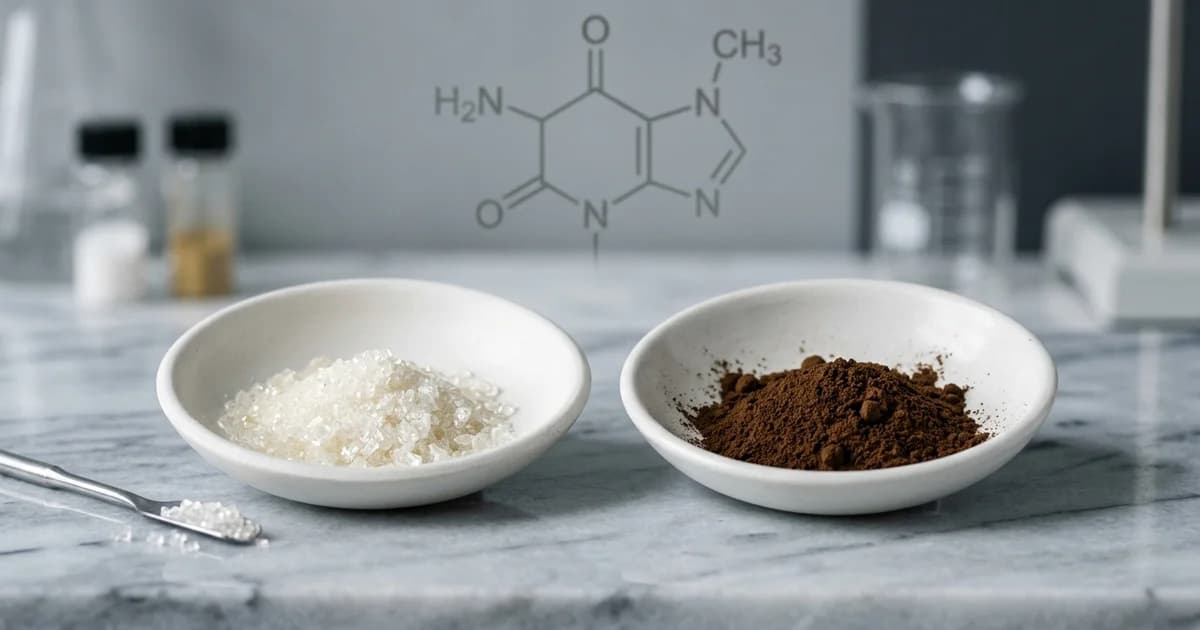
Mix caffeine with theacrine and you do not just get two stimulants in the same glass. You get more theacrine in your blood. That is the headline finding of the theacrine caffeine interaction study that quietly justified a generation of focus stacks, and most people who take these compounds together have never read it.
The study is small. The result is not subtle. Caffeine raises how much theacrine your body actually absorbs, without changing how long it lasts.
Here is what the pharmacokinetics show, why it matters for anyone stacking these two, and where the limits of the data sit.
Key Takeaways
- A 2017 human study found caffeine increased theacrine's peak blood concentration and total exposure (AUC).
- Caffeine lowered theacrine's oral clearance, which points to better oral bioavailability, not a longer half-life.
- Theacrine did not change caffeine's pharmacokinetics, so the boost runs one direction.
- The tested doses (125 mg theacrine, 150 mg caffeine) are higher than most consumer products, so read the result as a direction, not a dosing chart.
The Theacrine Caffeine Interaction Study, in Plain Terms
The core finding is simple: when you take caffeine alongside theacrine, your body absorbs more of the theacrine. The research that established this is Ziegenfuss and colleagues, published in 2017 in the Journal of Caffeine Research.
In a double-blind, placebo-controlled study, theacrine increased energy, concentration, and mood, while reducing fatigue. Because people so often take it with coffee or pre-workout, the researchers wanted to know whether the two compounds talk to each other in the bloodstream.
So they ran a controlled crossover. Eight healthy adults received theacrine, as TeaCrine (25 or 125 mg), caffeine (150 mg), or a combination of theacrine (125 mg) and caffeine (150 mg). Then they drew blood and measured what showed up.
The answer was clear. Caffeine coadministration increased maximum plasma concentration and area under the curve of theacrine without altering theacrine half-life. Theacrine had no impact on caffeine or paraxanthine pharmacokinetics.
You can read the full paper through the Journal of Caffeine Research or the open PDF hosted by the University of Memphis.
What "Hits Harder" Actually Means: Theacrine Pharmacokinetics
The phrase "hits harder" is loose. The data is specific. Two numbers carry the story.
First, peak blood levels rose. Caffeine coadministration increased both mean theacrine exposure parameters Cmax (38.6 vs 25.6 ng/mL) and AUC (1.2 vs 0.74), as well as geometric mean ratios. Cmax is the highest concentration theacrine reaches in your blood. AUC is the total amount of exposure over time. Both went up.
Second, and this is the mechanistic part, theacrine left the body more slowly. Specifically, caffeine decreased theacrine's oral clearance (CL/F), which correlated with enhanced theacrine exposure parameters, area under the plasma concentration time curve (AUC), and maximum concentration (Cmax).
Now the clever bit. The half-life did not move. The finding that theacrine's elimination half-life was unaffected by caffeine supports the conclusion that caffeine enhanced theacrine's oral bioavailability.
Bioavailability vs Half-Life: Why the Distinction Matters
If caffeine had stretched theacrine's half-life, the compound would simply hang around longer. That is not what happened.
Instead, the authors note that more theacrine made it into circulation in the first place. It is impossible to determine with certainty the exact mechanism for enhanced theacrine exposure, either decreased clearance and/or increased oral bioavailability, in the absence of intravenous data, however the finding that theacrine's elimination half-life was unaffected by caffeine supports the conclusion that caffeine enhanced theacrine's oral bioavailability.
So when people say caffeine and theacrine work together, this pharmacokinetic effect is the root of the claim. The TeaCrine half life stays steady. The amount that actually reaches your system goes up.
The Interaction Runs One Way
Here is a detail that gets lost in the supplement chatter: theacrine does not return the favor. The boost is not mutual.
The same study checked whether theacrine changed caffeine's profile. It did not. Theacrine left caffeine and its main metabolite, paraxanthine, untouched in the blood. That is why this is best described as caffeine lifting theacrine, not the two lifting each other.
This one-way effect tells you something practical. The order of the stack, which compound is "helping" which, is settled. Caffeine is the driver of higher theacrine blood levels caffeine pairs with, not the passenger.
How Theacrine and Caffeine Compare
The two compounds are cousins, not twins. Caffeine is a methylxanthine. Theacrine is a methylurate class purine alkaloid that triggers diverse pharmacologic responses, including psychostimulatory activity by modulation of adenosinergic and dopaminergic pathways.
Here is how they line up, and where Roon's four-ingredient pouch sits relative to each compound alone.
| Factor | Caffeine | Theacrine (TeaCrine) | Roon Pouch (4-ingredient stack) |
|---|---|---|---|
| Class | Methylxanthine | Methylurate purine alkaloid | Caffeine + theacrine + L-theanine + methylliberine |
| Primary action | Adenosine blockade | Adenosine and dopamine pathways | Combined, balanced for steady focus |
| Tolerance pattern | Builds with daily use | Reported low tolerance over weeks | Formulated to avoid tolerance buildup |
| Onset (sublingual) | Slower via stomach | Slower via stomach | 5 to 10 minutes sublingual |
| PK interaction | Raises theacrine exposure | No effect on caffeine | Uses the interaction direction by design |
| Typical focus window | 3 to 5 hours, then crash risk | Long, smooth | 6 to 8 hours, no crash reported |
The table makes the logic visible. The interaction study is the reason caffeine and theacrine belong in the same product rather than two separate pills taken hours apart.
The Honest Limits of the Data
Good science breakdowns name the caveats. This one has three.
The sample was tiny. Eight people is enough to detect a strong pharmacokinetic signal, not enough to map every individual response. Treat the effect as real but the precise magnitude as a starting estimate.
The doses were high. The combination arm used 125 mg theacrine with 150 mg caffeine. Many consumer products, including sublingual pouches, use far less. So the theacrine pharmacokinetics here describe the direction of the effect, not the exact blood levels you would hit at a smaller dose.
And the study measured blood, not behavior, for the interaction itself. Higher theacrine exposure is a reasonable bridge to stronger effect, but the paper's interaction analysis was pharmacokinetic. The mood and fatigue benefits came from theacrine's earlier work, referenced inside the same paper.
Conclusion
The takeaway from the Ziegenfuss theacrine caffeine research is narrow and durable. Caffeine increases how much theacrine your body absorbs, it does so by improving oral bioavailability rather than extending the half-life, and the effect runs one direction.
That single finding reframes how you should think about stacking. These two compounds are not redundant stimulants competing for the same receptor. One measurably improves the delivery of the other.
The science is small in sample but clean in result. If you are going to take theacrine, the data says it makes sense to take it with caffeine, and to read the high study doses as a map of the direction, not a prescription for your own intake.
Frequently Asked Questions
Does caffeine really increase theacrine absorption?
Yes, in the available human data. The 2017 study found that adding caffeine raised theacrine's peak blood concentration and total exposure. The mechanism appears to be improved oral bioavailability, since theacrine's elimination half-life stayed the same when caffeine was added. The sample was eight adults, so the direction is well supported even if the exact magnitude needs larger studies to confirm.
Does theacrine increase caffeine's effect too?
No. The interaction is one-directional. In the same study, theacrine had no measurable effect on caffeine or its main metabolite, paraxanthine. Caffeine lifts theacrine blood levels, but theacrine does not change caffeine's pharmacokinetics. So the pairing helps in one direction: caffeine helps theacrine, not the reverse.
What is theacrine's half-life?
The study's main point about the TeaCrine half life is that caffeine did not change it. Theacrine's elimination half-life stayed constant whether it was taken alone or with caffeine. That stability is exactly what told the researchers the higher blood levels came from better absorption rather than slower clearance. The paper focused on the comparison, not on promoting a single half-life figure as a marketing number.
What doses did the study use?
Participants received theacrine as TeaCrine at 25 mg or 125 mg, caffeine at 150 mg, or a combination of 125 mg theacrine with 150 mg caffeine. The combination arm, which showed the interaction, used the higher theacrine dose. These amounts are larger than what many consumer focus products contain, so the result is best read as the interaction direction.
Is the theacrine caffeine interaction strong enough to matter?
The effect was statistically meaningful in the study, with clear increases in both Cmax and AUC. Whether it translates to a noticeable difference in how you feel depends on dose, your own metabolism, and what else is in your stack. The pharmacokinetic signal is solid. The behavioral payoff at lower doses has not been mapped as precisely.
Where can I read the original study?
It was published in 2017 in the Journal of Caffeine Research by Ziegenfuss and colleagues, titled "Assessment of the Drug-Drug Interaction Potential Between Theacrine and Caffeine in Humans." You can find it through the Journal of Caffeine Research or the University of Memphis PDF.
Why This Study Is the Argument for Pairing Caffeine and Theacrine
This is the pharmacokinetic case for putting caffeine and theacrine in the same product instead of taking them apart. The 2017 interaction data shows caffeine improves theacrine's absorption, which is precisely why two of Roon's four ingredients are caffeine and theacrine, formulated together rather than as an afterthought.
One honest note. Roon uses 80 mg caffeine and 5 mg theacrine per pouch, both lower than the study's 125 mg theacrine and 150 mg caffeine. So the study supports the interaction direction, not Roon's specific blood levels. Roon is also not a replacement for sleep, real training, or sound nutrition. It is a focus tool, not a fix for the basics.
What the pouch does add is the rest of the stack: L-theanine to smooth the caffeine edge and methylliberine for fast onset, in a sublingual format that works in 5 to 10 minutes and aims for 6 to 8 hours of steady focus with no jitters and no crash. If you want to see how all four ingredients work together, read our four-ingredient stack explainer. Try Roon if you want the caffeine and theacrine pairing built in, not improvised.
Written by Roon Team