Supplements for Brain Health: What Actually Works
Roon Team
Supplements for Brain Health: What Actually Works (And What's Just Marketing)
Short answer: Most brain health supplements are underdosed or backed by thin evidence, but a few hold up. The caffeine plus L-Theanine pairing has the strongest clinical support for attention, creatine helps short-term memory under stress or sleep loss, and omega-3s support long-term brain structure. Dose, delivery, and smart combinations matter more than the length of an ingredient list.
Most supplements for brain health are backed by weak evidence, and many products overpromise what they can actually do.
Harvard Health put it bluntly: nothing legally contained in supplements has been proven to cure cognitive decline. The shelves at your local pharmacy are lined with bottles promising sharper memory, laser focus, and the mental clarity of a 25-year-old. The vast majority of those claims rest on shaky science, proprietary blends with undisclosed doses, or single rat studies extrapolated to humans.
But "most don't work" is not the same as "none work." A handful of supplements for brain health have earned real clinical support for cognitive performance. The trick is knowing which ones, at what doses, and in what combinations.
Key Takeaways:
- Most brain health supplements rely on weak or nonexistent evidence. A few ingredients stand out.
- Caffeine + L-Theanine is the most well-studied nootropic stack, with clinical data showing improvements in attention, accuracy, and reaction time.
- Creatine has emerging evidence for memory and reasoning, especially under stress or sleep deprivation.
- Omega-3 fatty acids support long-term brain structure but won't give you a same-day cognitive boost.
- Ingredient combinations matter more than single compounds. The dose matters as much as the ingredient itself.
The Problem With Most Brain Fog Supplements
Walk into any supplement store and you'll find dozens of products labeled as brain focus supplements or brain memory supplements. Most brain fog supplements share the same problem: they list ingredients with some scientific backing, then bury them in a proprietary blend at doses too low to do anything.
A capsule containing 10mg of Bacopa monnieri sounds scientific. But the clinical trials showing memory benefits used 300mg daily for 12 weeks. That's a 30x difference. The label may be technically accurate, but the dose is often far below what clinical studies actually used.
This is the dirty secret of the supplement industry. Brands marketing supplements for brain health list clinically studied ingredients at clinically irrelevant doses. You see the ingredient name and assume it works. You never check the math.
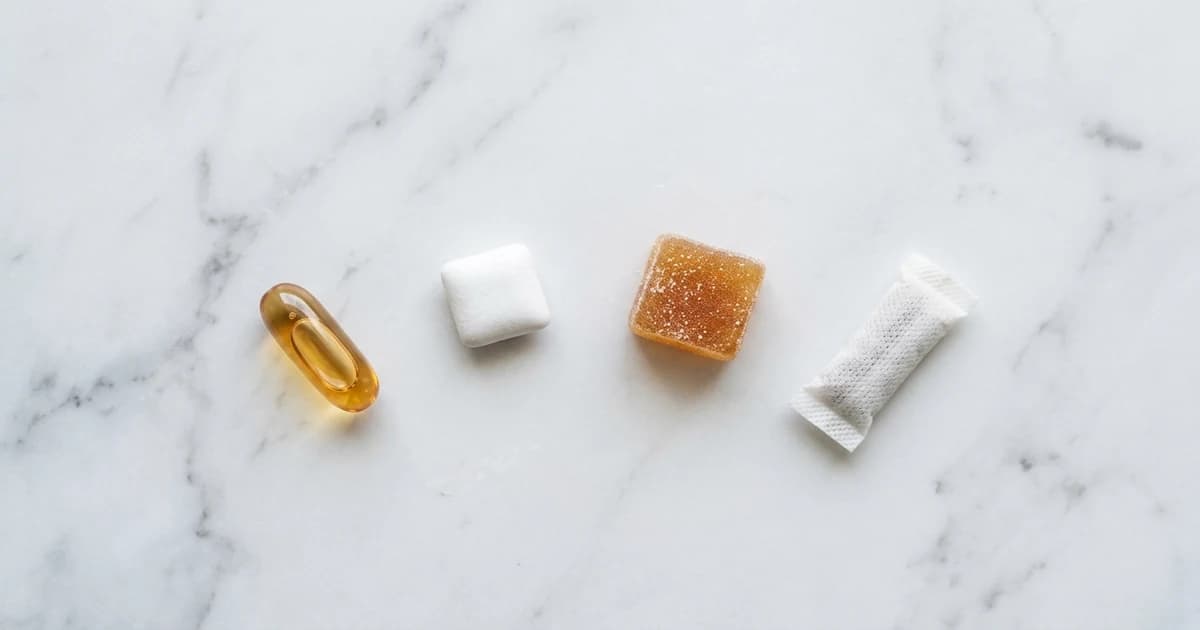
Then there's the issue of bioavailability. Your gut destroys many compounds before they reach your brain. Fat-soluble ingredients taken without food. Water-soluble compounds packed into slow-release capsules. The delivery method matters as much as the ingredient list.
This is why the best brain health supplements aren't necessarily the ones with the longest ingredient lists. They're the ones that get the right compounds, at the right doses, to the right place.
Supplements for Brain Health That Have Real Evidence
Let's separate the science from the marketing. These are the ingredients where human clinical trials (not rat studies, not in vitro petri dish experiments) show measurable cognitive benefits.
Caffeine + L-Theanine: The Gold Standard Stack
You already know caffeine works. It's the most widely consumed psychoactive substance on the planet. But caffeine alone is a blunt instrument: it increases alertness while also increasing anxiety, jitteriness, and the inevitable crash.
L-Theanine changes the equation. This amino acid, found naturally in green tea, promotes alpha brain wave activity associated with calm, focused attention. Alone, it's subtle. Paired with caffeine, it becomes one of the better-supported ingredient combinations for attention and alertness.
A study published on PubMed found that 97mg of L-Theanine combined with 40mg of caffeine improved focus during demanding cognitive tasks. A separate trial showed the combination improved both speed and accuracy on attention-switching tasks, while also reducing susceptibility to distracting information during memory tests.
The ratio matters here. Too much caffeine relative to L-Theanine and you get wired. Too little caffeine and you don't get the activation energy. The research consistently points to a roughly 2:1 ratio of L-Theanine to caffeine as the sweet spot. For anyone searching for supplements for brain fog, this pairing is the strongest starting point.
Theacrine and Methylliberine: Caffeine's Smarter Cousins
Theacrine (sold commercially as TeaCrine) and methylliberine (sold as Dynamine) are purine alkaloids structurally related to caffeine. They activate similar neurological pathways but with two key differences. They may offer a different subjective profile from caffeine alone, though long-term tolerance data is still much thinner than it is for caffeine. They also modulate dopamine signaling differently.
A 2022 study published on PubMed tested the combination of caffeine, theacrine, and methylliberine on cognitive performance. The results: improved performance on the Flanker Test of Inhibitory Control and faster reaction times on the Psychomotor Vigilance Task. The caffeine-only group, by contrast, showed increased self-reported anxiety. The combination group did not.
A separate trial published in the Journal of the International Society of Sports Nutrition found that combining caffeine with methylliberine and theacrine produced similar vigilance benefits to a much higher dose of caffeine alone, with better cardiovascular outcomes.
This is the direction supplements for brain health are heading: not more stimulant, but smarter stimulant stacks. The goal isn't to crank up arousal. It's to raise the floor of sustained cognitive output without the side effects that make high-dose caffeine unsustainable.
Creatine: Not Just for Muscles
Creatine is the most studied sports supplement in history. Its role among supplements for brain health is newer to the conversation but gaining serious traction.
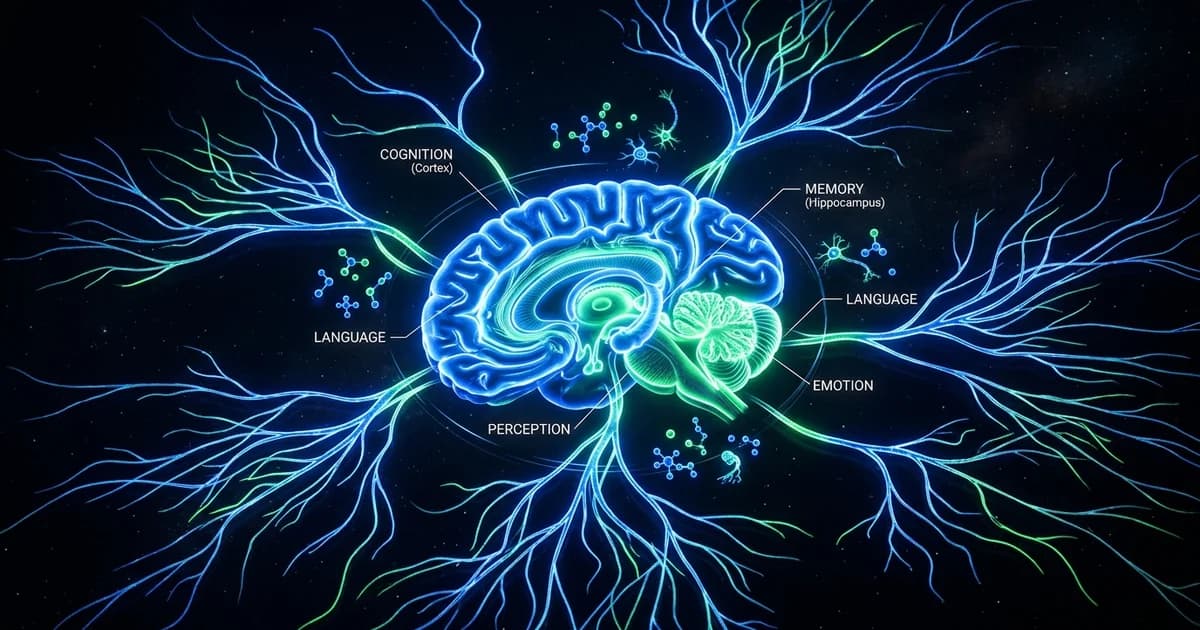
Your brain uses about 20% of your body's total energy. Creatine helps regenerate ATP, the molecular currency of cellular energy. When your brain is under stress (sleep deprivation, complex problem-solving, mental fatigue), creatine supplementation appears to provide a measurable buffer.
A 2024 systematic review and meta-analysis on PubMed examined creatine's effects on cognitive function in adults. The findings supported benefits for short-term memory and reasoning, particularly in populations under cognitive stress. A study published in Scientific Reports found that even a single dose of creatine improved cognitive performance during sleep deprivation.
The catch: creatine's cognitive effects are most pronounced when your brain is already taxed. If you slept well, ate well, and aren't under pressure, you may not notice much. It's a stress buffer, not a daily sharpener. Still, for those evaluating supplements for brain fog tied to fatigue or poor sleep, creatine is worth considering, especially when mental fatigue or sleep loss is part of the picture.
Dosing also matters. Most cognitive studies use 3 to 5 grams per day, the same range used for athletic performance. Below that, you're unlikely to saturate brain creatine stores enough to see a difference.
Omega-3 Fatty Acids: The Long Game
Omega-3s, particularly DHA, are structural components of brain cell membranes. Your brain is roughly 60% fat by dry weight, and DHA is the most abundant omega-3 in brain tissue.
A 2025 meta-analysis published in Scientific Reports reviewed omega-3 supplementation and cognitive function across multiple trials. The evidence supports a role in maintaining cognitive function over time, particularly in older adults. That makes omega-3s one of the best brain health supplements for long-term maintenance.
But here's what omega-3s won't do: give you a noticeable boost in focus or memory within hours of taking them. They're a long-term structural investment, not an acute performance tool. Think of them like maintaining the hardware of your computer rather than upgrading the software.
If you're looking for supplements for brain fog that provide same-day relief, omega-3s aren't your answer. If you're building a long-term strategy around supplements for brain health, they make more sense as part of a long-term brain-health plan than as an immediate focus aid.
For acute cognitive performance (the kind you need before a presentation, a deep work session, or a long study block), you need compounds that act within minutes, not months. That's where stimulant-based stacks with fast delivery methods earn their place among effective supplements for brain health.
What Doesn't Work: Popular Brain Supplements Without Strong Evidence
Many products sold as brain fog supplements rely on these compounds, but the evidence doesn't hold up:
| Ingredient | The Claim | The Reality |
|---|---|---|
| Ginkgo Biloba | Improves memory and blood flow to the brain | Large-scale trials (including the GEM study with 3,000+ participants) found no benefit for cognitive decline prevention |
| Most B-Vitamin Complexes | "Brain fuel" and "mental energy" | Only helps if you're actually deficient. Most people eating a normal diet aren't |
| Proprietary "Neuro" Blends | Dozens of ingredients for "total brain support" | Usually underdosed across the board. More ingredients ≠ more effective |
| Single-Ingredient Nootropics | One compound does everything | The brain is too complex for one molecule to optimize. Combinations outperform isolates |
How to Evaluate Supplements for Brain Health
Before buying any cognitive supplement, run it through this checklist:
- Are the doses disclosed? If the label says "proprietary blend" without individual ingredient amounts, walk away.
- Are the doses clinically relevant? Cross-reference each ingredient's dose against the published research. A token amount of a proven ingredient is the same as no ingredient at all.
- Is the delivery method appropriate? Sublingual delivery (absorbed under the tongue) bypasses the digestive system and reaches the bloodstream faster than capsules. This matters for supplements for brain health where onset speed and bioavailability are priorities.
- Does the combination make pharmacological sense? The best brain health supplements pair ingredients that complement each other. Caffeine + L-Theanine is a textbook example: one provides activation, the other smooths out the rough edges.
- Is there human clinical data? Animal studies and in vitro research are starting points, not proof. Demand human trials before trusting any supplements for brain fog.
Frequently Asked Questions
Do brain health supplements actually work, or is it all marketing?
Most products lean on weak evidence or clinically irrelevant doses, so the marketing often outpaces the science. A small group of ingredients holds up: caffeine with L-Theanine, creatine, and omega-3 fatty acids. The difference comes down to disclosed doses, clinically relevant amounts, and combinations that make pharmacological sense. Read the label math before you trust the claim.
Which brain health supplement has the strongest evidence?
The caffeine plus L-Theanine pairing has the most human clinical data. Trials show it improves attention, accuracy, and reaction time while smoothing the jitters caffeine alone can cause. Research points to roughly a 2:1 ratio of L-Theanine to caffeine as the sweet spot, and a controlled trial found gains in both speed and accuracy on attention tasks. It is the strongest single starting point for focus.
How much creatine supports cognitive function?
Most cognitive studies use 3 to 5 grams of creatine per day, the same range used for athletic performance. Below that, you are unlikely to saturate brain creatine stores enough to notice a difference. Creatine's effects show up most when your brain is taxed by sleep loss, mental fatigue, or hard problem-solving, so treat it as a stress buffer rather than a daily sharpener.
Will omega-3s give me a same-day focus boost?
No. Omega-3s, especially DHA, are structural components of brain cell membranes and support cognitive function over the long term, particularly in older adults. They will not deliver a noticeable jump in focus or memory within hours. If you need acute performance before a presentation or a long study block, fast-acting stimulant stacks are a better fit than omega-3s.
Why does the dose on a supplement label matter so much?
A label can list a clinically studied ingredient at a fraction of the researched dose. Bacopa monnieri trials, for example, used 300mg daily for 12 weeks, while some products contain only 10mg. The name looks scientific, but a token amount works the same as none at all. Always cross-reference each ingredient's dose against the published research before you buy.
What should I look for in a focus supplement for deep work?
For acute focus, prioritize fast onset, transparent doses, and a combination that pairs activation with calm. Caffeine with L-Theanine is the textbook example, and adding theacrine and methylliberine can extend energy without the anxiety spikes of high-dose caffeine. Roon's sublingual pouches use this approach with 80mg caffeine, 60mg L-Theanine, 25mg methylliberine, and 5mg theacrine in clinically studied doses.
Invest in Your Brain With the Right Supplements for Brain Health
Your brain is the most metabolically expensive organ you own. It burns through roughly 20% of your daily calories despite being about 2% of your body weight. It deserves better than a mystery capsule with a flashy label.
The research on supplements for brain health points clearly toward specific combinations: caffeine paired with L-Theanine for focused attention, theacrine and methylliberine for sustained energy without tolerance buildup or anxiety spikes.
That's exactly what Roon is built on. Roon's sublingual nootropic pouches deliver 80mg of caffeine, L-Theanine, theacrine, and methylliberine. The doses are transparent and grounded in human research. No nicotine. No crash. No guesswork about doses.
Four ingredients. Clinically studied doses. Absorbed in minutes, not hours. If you're going to choose supplements for brain health, they should be built on evidence, not marketing.
By Roon Team