The Best Magnesium for Muscle Recovery and Sleep in 2026
Roon Team
The Best Magnesium for Muscle Recovery and Sleep in 2026
Roughly half of all Americans don't get enough magnesium from their diet, which makes finding the best magnesium for muscle recovery and sleep a top priority for active people. That's according to research published in PubMed, which found that 48% of the U.S. population consumed less than the recommended daily amount. If you're training hard and sleeping poorly, this one mineral might be the missing variable.
But "magnesium" isn't a single thing. There are over a dozen forms, each absorbed differently and each doing slightly different work in the body. Picking the best magnesium for muscle recovery and sleep means understanding which forms actually reach the tissues that matter, and which ones just give you an expensive trip to the bathroom.
Key Takeaways:
- Magnesium glycinate is the top all-around pick for both sleep quality and muscle recovery, with strong clinical backing and minimal GI side effects.
- Magnesium L-threonate is the best option if your priority is brain health alongside sleep.
- Magnesium malate shines for exercise recovery and reducing post-workout soreness.
- The form you choose matters more than the brand. Cheap magnesium oxide has poor bioavailability compared to chelated forms.
Why the Best Magnesium for Muscle Recovery and Sleep Matters
Magnesium is involved in over 300 enzymatic reactions in the body. Two of the most relevant: muscle contraction and relaxation, and the regulation of neurotransmitters that control your sleep-wake cycle.
When you exercise, your muscles burn through magnesium. Hard training can deplete stores even faster, leaving you with lingering soreness, cramps, and restless nights. A 2020 study published in PubMed found that magnesium supplementation reduced muscle soreness, lowered perceived exertion, and improved perceived recovery compared to placebo.
On the sleep side, magnesium helps activate the parasympathetic nervous system, the branch responsible for calming you down. It also regulates melatonin and binds to GABA receptors, the same receptors targeted by most prescription sleep aids, which is part of why magnesium for anxiety and sleep is so widely studied. Low magnesium levels are consistently linked to poor sleep quality, especially in adults over 40. That's why choosing the best magnesium for muscle recovery and sleep can address both problems at once.
The 5 Best Forms of Magnesium for Muscle Recovery and Sleep
Not every magnesium supplement belongs in your nightstand drawer. Here's a breakdown of the forms that actually deliver results, ranked by their dual effectiveness for recovery and rest.
1. Magnesium Glycinate (Best All-Around)
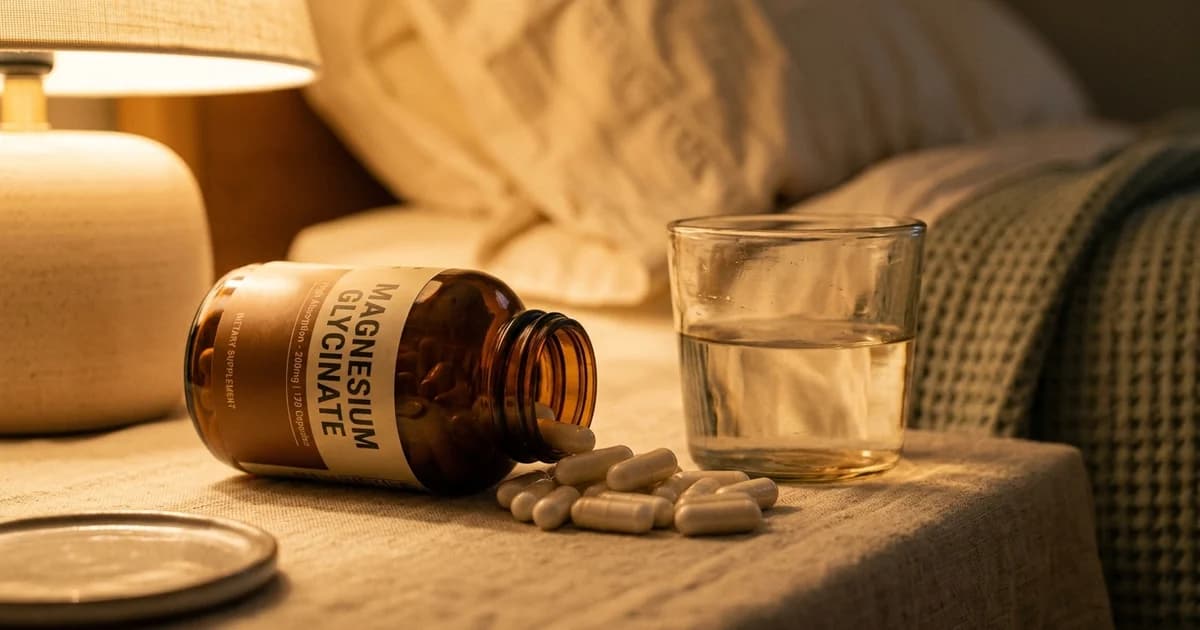
This is the gold standard and the top contender for the best magnesium for muscle recovery and sleep. Magnesium glycinate is chelated, meaning the magnesium is bound to glycine, an amino acid that has its own calming properties.
A 2025 randomized, placebo-controlled trial found that magnesium bisglycinate (a form of glycinate) produced a greater reduction in insomnia severity scores compared to placebo over four weeks. The glycine component contributes to this effect. Research shows glycine helps lower core body temperature before sleep, which is a key trigger for sleep onset.
On the muscle side, glycinate's high bioavailability means more magnesium actually reaches skeletal muscle tissue. It's also one of the gentlest forms on the stomach, so you won't deal with the cramping or loose stools that come with oxide or citrate. For anyone searching for the best magnesium for muscle recovery and sleep in a single capsule, glycinate checks both boxes.
Best for: The person who trains regularly and wants a single supplement that covers both recovery and sleep.
Typical dose: 200-400 mg elemental magnesium, taken 30-60 minutes before bed.
2. Magnesium L-Threonate (Best for Brain + Sleep)
If your sleep problems come with brain fog, this form deserves a look. Magnesium L-threonate is the only form shown to effectively cross the blood-brain barrier and raise magnesium concentrations in the brain.
A randomized, double-blind, placebo-controlled trial published in Frontiers in Nutrition found that six weeks of magnesium L-threonate supplementation improved overall cognition, working memory, and reaction time. It also improved subjective sleep quality, though objective sleep measures (like time spent in deep sleep) didn't change.
The trade-off: L-threonate delivers less elemental magnesium per dose than glycinate. A standard serving of 2,000 mg Magtein (the patented form) provides only about 144 mg of elemental magnesium. That means it's a better cognitive support tool than a pure muscle recovery supplement. If your primary goal is the best magnesium for muscle recovery and sleep, L-threonate works best when paired with a second form like glycinate or malate.
Best for: Knowledge workers, students, or anyone whose poor sleep is tanking their daytime mental performance.
Typical dose: 1,500-2,000 mg magnesium L-threonate, split between morning and evening.
3. Magnesium Malate (Best for Exercise Recovery)
Magnesium malate pairs magnesium with malic acid, a compound involved in the Krebs cycle, your body's core energy production pathway. This makes it a strong choice for athletes focused on reducing fatigue and accelerating recovery between sessions.
A systematic review published in PMC examined multiple studies on magnesium supplementation and muscle soreness across different physical activities. The findings consistently showed that magnesium reduced post-exercise soreness and improved feelings of recovery.
Malate is well-absorbed and easy on the digestive system. It doesn't have the same direct sleep benefits as glycinate, but by reducing physical discomfort and muscle tension after training, it can indirectly improve your ability to fall asleep. Many people researching the best supplements for sleep and recovery stack malate with glycinate to cover both bases.
Best for: Endurance athletes, CrossFitters, and anyone whose recovery bottleneck is physical soreness rather than a racing mind.
Typical dose: 200-400 mg elemental magnesium, taken post-workout or with dinner.
4. Magnesium Taurate (Best for Heart Health + Recovery)
Magnesium taurate combines magnesium with taurine, an amino acid with antioxidant properties and a role in cardiovascular function. Research published in PMC has shown that magnesium taurate can help support healthy blood pressure and protect against oxidative stress in the cardiovascular system.
Taurine itself supports muscle function and may help reduce exercise-induced oxidative damage. This makes magnesium taurate a solid pick for older athletes or anyone with cardiovascular concerns who also wants recovery support. While it may not be the best magnesium for muscle recovery and sleep on its own, it fills a useful niche for those with heart health priorities.
It's gentle on the stomach and has a mild calming effect, though it's not as well-studied for sleep specifically as glycinate or L-threonate.
Best for: Athletes over 40, anyone with cardiovascular health goals alongside recovery needs.
Typical dose: 200-400 mg elemental magnesium daily.
5. Magnesium Citrate (Budget-Friendly, With Caveats)
Magnesium citrate is one of the most common and affordable forms available. It has decent bioavailability and is widely studied. Trace Minerals notes that citrate is quickly utilized by the body, making it a reasonable option for general muscle support.
The caveat: citrate has a well-known laxative effect at higher doses. If you're taking 300+ mg before bed, you might find yourself making unwanted nighttime trips. For that reason, it works better as a daytime recovery supplement than a sleep aid. People searching for the best magnesium for muscle recovery and sleep on a budget often start here, but most upgrade to glycinate once they experience the GI drawbacks.
Best for: Budget-conscious users who want basic magnesium support and don't have a sensitive stomach.
Typical dose: 200-300 mg elemental magnesium. Start low to assess GI tolerance.
Quick Comparison: Best Magnesium for Muscle Recovery and Sleep at a Glance
| Form | Sleep | Muscle Recovery | Bioavailability | GI Tolerance | Price |
|---|---|---|---|---|---|
| Glycinate | ★★★★★ | ★★★★☆ | High | Excellent | $$ |
| L-Threonate | ★★★★☆ | ★★★☆☆ | High (brain) | Good | $$$ |
| Malate | ★★★☆☆ | ★★★★★ | High | Good | $$ |
| Taurate | ★★★☆☆ | ★★★★☆ | Moderate-High | Excellent | $$ |
| Citrate | ★★★☆☆ | ★★★☆☆ | Moderate | Poor at high doses | $ |
What to Look for When Buying the Best Magnesium for Muscle Recovery and Sleep
The supplement aisle (or Amazon search results) can be overwhelming. Here's how to filter the noise:
Check the elemental magnesium content. The number on the front of the bottle is often the total compound weight, not the actual magnesium. A capsule labeled "500 mg magnesium glycinate" might only contain 70-100 mg of elemental magnesium. Always read the supplement facts panel.
Look for third-party testing. Brands that submit to NSF, USP, or independent lab testing (like ConsumerLab) are worth the premium. A ConsumerLab review found that some popular magnesium supplements contained cheaper oxide forms instead of the glycinate or citrate listed on the label. Knowing what's actually in the bottle is essential to finding the best magnesium for muscle recovery and sleep.
Avoid magnesium oxide for targeted goals. Oxide is the cheapest form and has the lowest bioavailability (around 4%). It's fine as a laxative. It's not fine if you're trying to improve sleep or recovery.
Time it right. For sleep, take your magnesium 30-60 minutes before bed. For recovery, post-workout or with your evening meal works well. If you're using L-threonate, splitting the dose between morning and evening may give better cognitive results. The best magnesium for muscle recovery and sleep only works if you take it consistently and at the right time.
Sleep Fuels Performance. So Does What You Do When You're Awake.
Getting your magnesium dialed in is one of the smartest moves you can make for nighttime recovery. Choosing the best magnesium for muscle recovery and sleep means better muscle repair, sharper reaction times, and a brain that actually works the next morning. Research from Frontiers in Sleep confirms what most of us already feel: poor sleep quality directly impairs cognitive function during waking hours.
But sleep is only half the equation. What you do with those waking hours matters just as much.
If you're stacking your nighttime routine with the best magnesium for muscle recovery and sleep, clean sleep habits, and proper recovery protocols, the next logical step is optimizing your daytime focus to match. Roon is a zero-nicotine sublingual pouch built for exactly that. It pairs caffeine (80 mg) with L-Theanine, Theacrine, and Methylliberine to deliver 6-8 hours of clean, sustained focus without jitters, crashes, or tolerance buildup.
Sleep well. Then show up sharp. Optimize your waking hours.