Short Attention Span ADHD
Roon Team
Short Attention Span ADHD: The Science Behind Why You Can't Focus (and What Actually Helps)
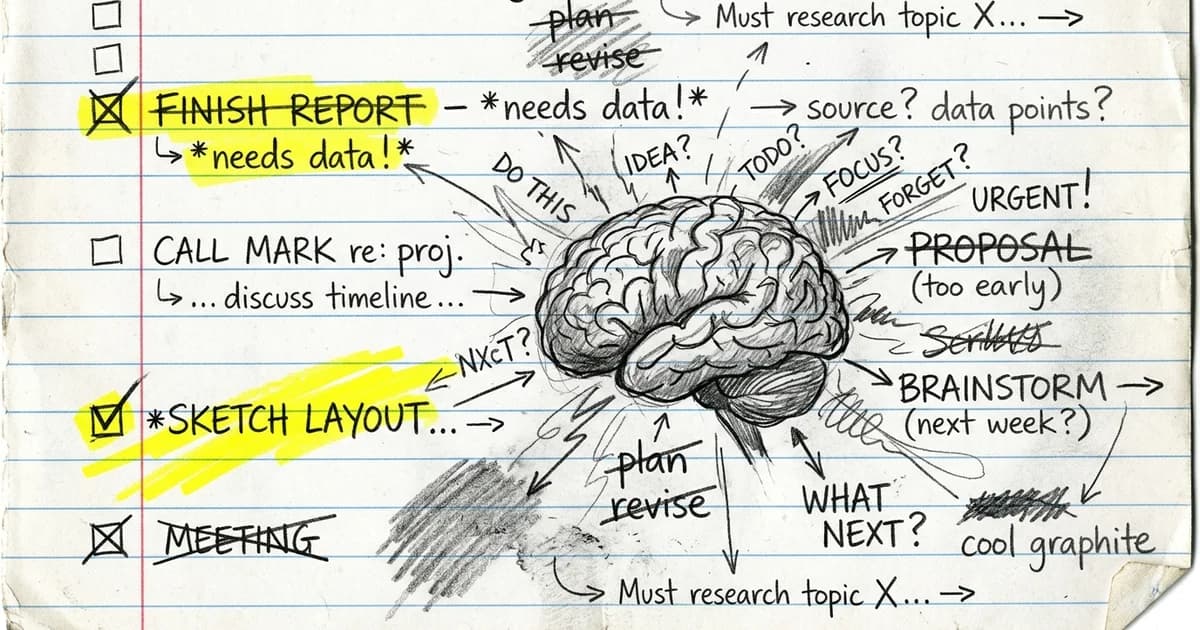
You sat down to work 20 minutes ago. Since then, you've checked your phone twice, opened three browser tabs you didn't need, and completely forgotten what you were supposed to be doing. A short attention span ADHD pattern feels frustrating. But when it happens every single day, across every area of your life, you start to wonder: is this just distraction, or is this something more?
That question matters more than you think. Understanding what attention span means makes clear that the difference between a short attention span and ADHD isn't just academic. It changes how you approach the problem, which tools actually work, and whether you need professional help. Here's what the science says about short attention span ADHD.
Key Takeaways:
- A short attention span is situational. ADHD is a persistent neurological condition affecting how your brain regulates focus.
- Short attention span ADHD involves structural and chemical differences in the prefrontal cortex, not a lack of willpower.
- Dopamine dysregulation plays a central role, but the full picture is more complex than "low dopamine."
- Lifestyle strategies and targeted nootropic compounds can support focus whether you have ADHD or not.
Short Attention Span ADHD vs. Ordinary Distraction: They're Not the Same Thing
Everyone has days where focus feels impossible. Bad sleep, stress, a boring task, too much screen time. These are common culprits behind a temporary short attention span, and they're usually reversible. Remove the trigger, and your focus returns.
ADHD is different. According to the Cleveland Clinic, ADHD doesn't mean you lack attention. It means your brain has a harder time controlling and directing attention to certain tasks. You might struggle to read a report for five minutes but lose three hours inside a video game without blinking. That paradox, the coexistence of distractibility and hyperfocus, is one of the defining features of short attention span ADHD.
A short attention span caused by external factors tends to be situational and influenced by things like stress, sleep deprivation, or overwhelming task lists. Short attention span ADHD symptoms, on the other hand, are pervasive. They show up at work, at home, in relationships, and in conversations. They've been showing up since childhood, even if nobody noticed.
Here's a simple way to think about it:
| Feature | Short Attention Span | ADHD |
|---|---|---|
| Onset | Situational, recent | Lifelong, starting in childhood |
| Consistency | Varies by context | Present across settings |
| Hyperfocus | Rare | Common (on high-interest tasks) |
| Impact | Mild, temporary | Affects work, relationships, daily life |
| Response to rest/sleep | Improves | Persists |
If the second column sounds familiar across the board, it's worth talking to a clinician about short attention span ADHD.
What's Actually Happening in the Short Attention Span ADHD Brain
ADHD isn't a character flaw or a motivation problem. It's a neurodevelopmental condition with measurable differences in brain structure and chemistry.
The Prefrontal Cortex Problem
The prefrontal cortex sits right behind your forehead. It handles executive functions: planning, prioritizing, impulse control, and sustained attention. In people with short attention span ADHD, this region tends to be less active and sometimes structurally smaller. That's not a metaphor. Brain imaging studies have confirmed these differences repeatedly.
When your prefrontal cortex is underperforming, everything downstream suffers. You can't filter out irrelevant stimuli. You can't hold a task in working memory long enough to finish it. You can't resist the pull of something more interesting.
The Dopamine Question
For decades, the dominant theory was simple: ADHD equals low dopamine. Stimulant medications like Ritalin work by increasing dopamine availability, which seemed to confirm the theory.
The reality is more nuanced. A review published in PMC examining over 40 years of evidence found that while altered dopamine signaling is involved in short attention span ADHD, it's not a straightforward deficiency. The issue is more about dysregulation, how dopamine is released, received, and recycled, rather than simply having too little of it.
Research from the University of Cambridge has even questioned whether dopamine dysfunction is the primary cause of ADHD at all, suggesting that other neurotransmitter systems (including norepinephrine and GABA) play larger roles than previously thought.
What does this mean for you? It means that "boost your dopamine" isn't a complete solution. Real cognitive support for short attention span ADHD needs to address multiple neurochemical pathways at once.
The Symptoms Most People Miss
When people picture short attention span ADHD, they imagine a hyperactive kid bouncing off the walls. That stereotype misses the majority of adults living with the condition.
Inattentive-Type ADHD
The inattentive presentation of ADHD (formerly called ADD) is quieter. You're not bouncing off walls. You're staring at a wall, trying to remember what you were just thinking about. Common signs include:
- Frequently losing things (keys, phone, wallet, the thread of a conversation)
- Difficulty following through on tasks that aren't immediately rewarding
- Chronic lateness and poor time estimation
- "Zoning out" during meetings or conversations
- Making careless mistakes on work you actually understand
These symptoms get misread as laziness, apathy, or low intelligence. They're none of those things. They're hallmarks of short attention span ADHD that go unrecognized.
Emotional Dysregulation
This one rarely makes the diagnostic checklists, but clinicians see it constantly. People with short attention span ADHD often experience emotions at higher intensity. Frustration hits harder. Rejection feels catastrophic. Boredom becomes physically painful. This isn't a separate condition. It's part of how ADHD affects the brain's ability to regulate internal states.
The Compensation Tax
Many adults with ADHD have spent years building elaborate systems to compensate: alarms, reminders, color-coded calendars, rigid routines. From the outside, they look organized. On the inside, they're exhausted. This "compensation tax" is real, and it's one reason short attention span ADHD often goes undiagnosed in high-functioning adults.
Why Your Short Attention Span ADHD Symptoms Might Be Getting Worse
Even if you don't have ADHD, you've probably noticed your ability to focus declining. You're not imagining it.
The Digital Attention Problem
Modern technology is designed to fragment your attention. Every notification, every autoplay video, every infinite scroll trains your brain to expect constant novelty. Over time, this weakens your capacity for sustained, voluntary attention, and rebuilding sustained attention is the exact challenge that deep work requires.
This doesn't cause ADHD, but extreme difficulty holding focus can mimic short attention span ADHD symptoms closely enough to create real confusion. And for people who do have ADHD, it makes everything worse.
Sleep and Attention
Sleep deprivation impairs prefrontal cortex function. After one night of poor sleep, your brain looks remarkably similar to an ADHD brain on a scan: reduced activity in the frontal regions, impaired working memory, weakened impulse control. Chronic sleep debt compounds these effects.
If your attention has gotten worse recently, check your sleep before you check anything else. Poor sleep can create short attention span ADHD-like symptoms even in neurotypical brains.
Stress and Cortisol
Chronic stress floods your brain with cortisol, which directly impairs the prefrontal cortex. The same brain region that ADHD already compromises. Stress doesn't just feel like it makes focusing harder. It physically does.
What Actually Helps Short Attention Span ADHD (Beyond Medication)
Whether you have diagnosed ADHD or a short attention span driven by lifestyle factors, certain strategies and compounds have solid evidence behind them.
Behavioral Strategies That Work
Time-blocking with external cues. Your brain won't track time well on its own. Use visible timers. Work in defined blocks (25-50 minutes) with scheduled breaks. The structure compensates for weak internal time management, a core challenge of short attention span ADHD.
Reduce decision fatigue. Every small decision (what to eat, what to wear, which task to start) drains the same prefrontal resources you need for focus. Automate or pre-decide as much as possible.
Movement before focus. Even 10 minutes of moderate exercise increases dopamine and norepinephrine availability in the prefrontal cortex. A short walk before a work session can be more effective than another cup of coffee.
The Neurochemistry of Focus
Your ability to sustain attention depends on several chemical systems working together:
- Dopamine drives motivation and reward signaling. It determines whether a task feels "worth" doing.
- Adenosine accumulates while you're awake and promotes fatigue. Caffeine works by blocking adenosine receptors.
- GABA is the brain's primary inhibitory neurotransmitter. It helps quiet neural noise so you can concentrate on one thing.
- Norepinephrine sharpens alertness and helps you respond to important stimuli while ignoring distractions.
Short attention span ADHD almost always involves disruption in at least one of these systems. That's why single-ingredient solutions (just caffeine, just a B-vitamin) tend to underwhelm. The problem is rarely one-dimensional.
Compounds With Evidence
Caffeine + L-Theanine is one of the most studied nootropic pairings in cognitive science. A study published on PubMed found that 40mg of caffeine combined with 97mg of L-theanine improved focus and attention during demanding cognitive tasks. The L-theanine smooths out caffeine's rough edges, promoting calm alertness instead of anxious energy.
A systematic review in PMC went further, noting that the L-theanine and caffeine combination showed improvements in cognitive domains impaired by ADHD, suggesting it may be a potential therapeutic consideration for short attention span ADHD challenges.
A randomized controlled trial published in Scientific Reports found that while caffeine alone actually worsened inhibitory control, the L-theanine and caffeine combination improved overall cognition and attention measures. The combination matters. Neither compound performs as well alone.
Theacrine and Methylliberine are structurally related to caffeine but behave differently. Theacrine activates dopamine pathways without building tolerance the way caffeine does over time. Methylliberine has a faster onset and complements theacrine's longer duration. Together, they extend the focus window beyond what caffeine can deliver on its own.
Getting a Real Answer
If you suspect short attention span ADHD, self-diagnosis isn't enough. A proper evaluation involves clinical interviews, symptom history going back to childhood, and often standardized rating scales. Many adults get diagnosed in their 30s or 40s after years of struggling with what they assumed was just a short attention span.
Talk to a psychiatrist or psychologist who specializes in ADHD. Not a general practitioner running through a checklist in seven minutes. The diagnosis changes your options, and the options are better than you think.
Cut Through the Fog of Short Attention Span ADHD
A short attention span, whether it stems from ADHD, poor sleep, chronic stress, or the constant pull of your phone, comes down to neurochemistry. Your prefrontal cortex needs the right chemical environment to do its job. Understanding short attention span ADHD is the first step toward reclaiming your focus.
The steps after that are the ones covered above: a proper evaluation if the pattern goes back to childhood, and the sleep, movement, and environment changes that give the prefrontal cortex something to work with.