Shilajit: Benefits, Dosage, and What Science Actually Says
Shilajit: Benefits, Dosage, and What Science Actually Says
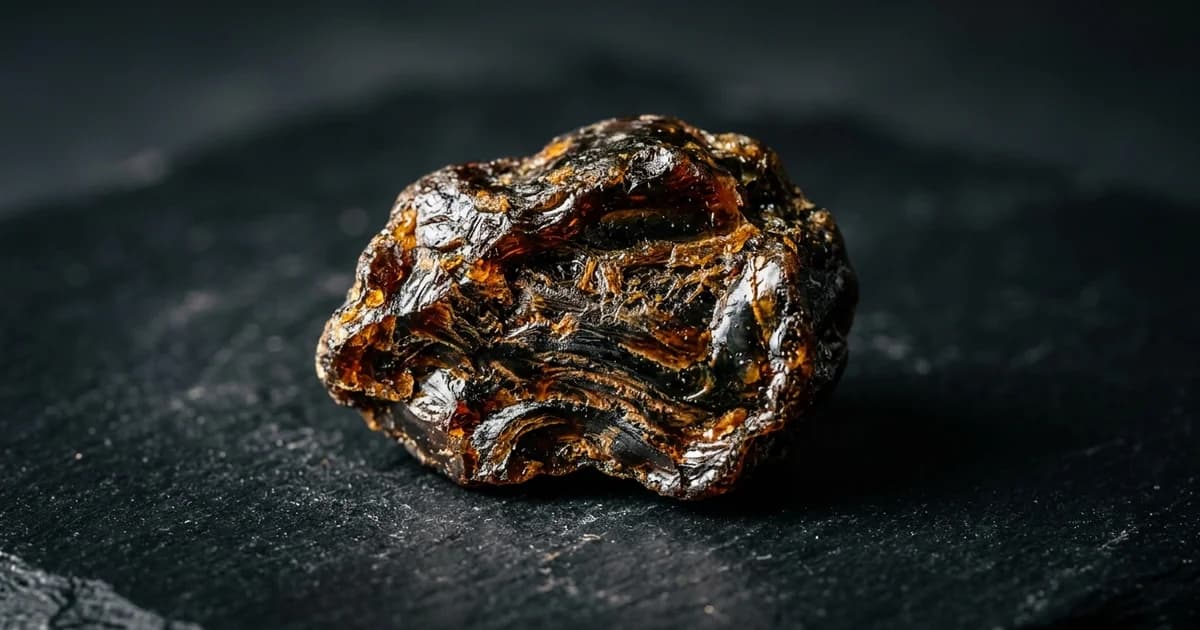
You've seen the clips. A tar-like resin scraped from Himalayan rocks, dissolved in warm water, and sold as a cure for everything from low energy to low testosterone. Shilajit is one of the most hyped supplements of 2025, and the gap between the marketing and the science is wide enough to drive a truck through.
That doesn't mean it's worthless. It means you need to know what the research actually supports, what it doesn't, and what to watch out for before you spend $40 to $80 on a jar of black goo.
Key Takeaways:
- Shilajit is a mineral-rich resin used in Ayurvedic medicine for centuries, with fulvic acid as its primary active compound.
- Clinical evidence supports modest benefits for testosterone, energy, and cognition, but most studies are small and short-term.
- Heavy metal contamination is a real risk with unprocessed or poorly sourced products.
- Popular shilajit supplements vary wildly in purity, fulvic acid content, and price.
What Is Shilajit, Exactly?
Shilajit is a sticky, dark resin that seeps from sedimentary rock in high-altitude mountain ranges, primarily the Himalayas, Altai Mountains, and Caucasus. It is a potent and very safe dietary supplement, restoring the energetic balance and potentially able to prevent several diseases. The substance forms over centuries from the slow decomposition of plant matter compressed between layers of rock.
Its primary bioactive component is fulvic acid, which typically makes up 60-80% of a quality extract. Shilajit is a safe, fluvic mineral complex exudate that is common to Ayurvedic medicine and is composed of fulvic acids, dibenzo-α-pyrones, proteins, and minerals. It also contains over 40 trace minerals, amino acids, and essential fatty acids.
In Ayurvedic tradition, shilajit has been classified as a rasayana, a rejuvenating substance meant to promote longevity. The modern supplement industry has latched onto these traditional claims. But what does the clinical data actually show?
Shilajit Benefits: What the Research Supports
Testosterone
This is the claim that sells the most jars, and small-study testosterone claims are a recurring theme across supplements in this space. And there is some data behind it.
A randomized, double-blind, placebo-controlled study evaluated purified shilajit (PrimaVie) at 250mg twice daily in healthy male volunteers aged 45-55. After 90 consecutive days, the shilajit group showed statistically meaningful increases (P < 0.05) in total testosterone, free testosterone, and dehydroepiandrosterone (DHEAS) compared with placebo.
The numbers: researchers found that after 90 days, the PrimaVie group showed a 20% increase in total testosterone levels and a 19% increase in free testosterone levels.
A separate trial in infertile men found similar results. One human intervention with 200mg shilajit (54.8% fulvic acid) daily for 90 days in infertile men was associated with an increase in testosterone by 23.5% (4.85ng/mL to 5.99ng/mL) in serum.
Sounds impressive. But context matters. Both studies were small (fewer than 100 participants each), lasted only 90 days, and were conducted by groups with ties to the PrimaVie ingredient supplier, a pattern common to testosterone-boosting supplement research across the category. That doesn't invalidate the findings, but it means we need larger, independent replications before drawing firm conclusions.
Energy and Mitochondrial Function
Shilajit's fulvic acid acts as a natural chelator, helping transport nutrients into cells and supporting mitochondrial function. The theory: better mitochondrial efficiency means more cellular energy.
A study examining shilajit supplementation on fatigue-induced decreases in muscular strength found that 8 weeks of PrimaVie shilajit supplementation had no effects on pre-fatigue strength or body weight values. The results were mixed. Shilajit did help maintain strength after a fatiguing protocol, but it didn't make participants stronger at baseline.
This is a pattern you'll see repeatedly with shilajit research: modest, context-dependent effects rather than the dramatic results the marketing suggests.
Cognitive Function
A PMC review on shilajit as a phytocomplex highlighted fulvic acid's potential role in preventing tau protein aggregation, a hallmark of Alzheimer's disease.
A 2024 study published in Integrative Medicine found that shilajit derived from the Altai Mountains contained safe levels of heavy metals and was shown to inhibit the production of amyloid beta-induced proinflammatory cytokines in macrophages and in an animal model.
Promising? Yes. But almost all the cognitive research is preclinical, meaning it was done in cell cultures or animal models, not humans. The leap from "inhibits inflammation in a petri dish" to "makes you think better" is enormous.
Immune and Antiviral Properties
Research into shilajit as an antiviral supplement suggests it may have immunomodulatory properties. But 2015 and 2020 studies observed these effects in test tubes, not in humans. Until human trials confirm these findings, this remains speculative.
Shilajit Dosage: How Much Should You Take?
In clinical trials, shilajit dosing has ranged from 200 to 2,000mg daily, although the most commonly used dosing regimen seems to be 500mg daily, split into two daily doses.
According to WebMD, processed shilajit is possibly safe when used in doses of 2 grams daily for 45 days or up to 500mg daily for up to 48 weeks.
Banner Health notes that shilajit is well tolerated in most adults when taken at daily doses of up to 2,000mg, but that doesn't mean it's safe for everyone.
The practical recommendation: 250-500mg per day of a purified, standardized extract with at least 50% fulvic acid content. Start at the lower end and assess tolerance.
The Safety Problem No One Talks About
Here's where shilajit gets tricky. Because it's a naturally occurring resin formed in rock, it can concentrate heavy metals like lead, mercury, arsenic, and thallium.
The Cleveland Clinic warns that the FDA doesn't regulate supplements, which means you can't know for sure what you're taking. A 2025 study found that some shilajit supplements actually had higher levels of the toxic heavy metal thallium than the raw variety.
That's worth reading twice. Some "purified" products tested worse for heavy metals than the unpurified resin.
Safety tips include reading the label carefully to make sure the product lists the form and amount of shilajit, as some products exaggerate their contents or fail to include the active ingredient, fulvic acid.
Popular Shilajit Supplements Compared
The shilajit market is flooded with options. Here's how the most talked-about products stack up:
| Brand | Form | Fulvic Acid | Serving Size | Key Feature | Price Range |
|---|---|---|---|---|---|
| Nootropics Depot (PrimaVie) | Capsule | 60-75% | 250mg | Clinically studied extract, third-party tested | ~$15-25 |
| Pürblack | Live Resin | Not standardized | Varies | Patented purification process, premium positioning | ~$60-100 |
| Double Wood | Capsule | Listed on label | 500mg | U.S.-manufactured, transparent labeling | ~$20-25 |
| Elm & Rye | Capsule | Standardized | Varies | Subscription model, lab-tested | ~$50-60 |
Nootropics Depot's use of PrimaVie ensures a high fulvic acid concentration of 60-75% and is the same extract used in most clinical trials, which makes it the most evidence-backed option.
Double Wood has built its reputation on clean, U.S.-based manufacturing and transparent labeling, and their shilajit capsules carry that same DNA. They list fulvic acid percentages right on the bottle, which is more than most capsule brands do.
Pürblack positions itself at the luxury end of the market with a patented purification method, though independent verification of its claims is limited.
User surveys suggest that most users spend between $205-$431 annually on shilajit supplements. Any products costing less than $100 per year are likely inauthentic, under-dosed, or lack third-party safety testing.
What's Missing from Shilajit Supplements
After looking at the science and the products, a few gaps become clear.
The cognitive claims outrun the evidence. Shilajit's brain-related research is almost entirely preclinical. If you're buying shilajit specifically for focus or mental clarity, you're betting on animal studies and cell cultures, not human trials.
There's no immediate effect. Every positive clinical outcome required 8-12 weeks of consistent daily use. Shilajit doesn't give you sharper focus at 2pm on a Tuesday. It's a long-game supplement with slow, cumulative effects (if they materialize at all).
The delivery is inconvenient. Resin forms require dissolving in warm water and taste, charitably, like wet earth. Capsule forms solve the taste problem but add questions about absorption. Neither format is designed for on-the-go use.
Contamination risk is real and ongoing. Even with purified extracts, the heavy metal issue looms. You're trusting a supply chain that stretches from remote mountain ranges to your doorstep, with limited regulatory oversight at every step.
It doesn't address the actual mechanisms of focus. Shilajit works (when it works) through mineral replenishment and mitochondrial support. It doesn't directly modulate the neurotransmitter systems, like adenosine and dopamine, that govern real-time attention and mental performance.
A Different Approach to Cognitive Performance
If what you actually need is reliable, on-demand focus without the guesswork, the approach matters more than the trend.
Roon was built around a different philosophy: instead of relying on a single traditional ingredient with limited clinical backing, it combines four compounds with well-studied mechanisms into a sublingual pouch. 80mg of caffeine blocks adenosine receptors to reduce fatigue. L-Theanine promotes alpha brain wave activity, smoothing out the jittery edge that caffeine alone can produce. Theacrine and Methylliberine extend the duration of the effect to 6-8 hours while reducing the tolerance buildup that makes caffeine less effective over time.
No resin. No warm water ritual. No 12-week waiting period to maybe feel something. You place it on your gums and the active ingredients absorb through the oral mucosa within minutes.
Shilajit may have a role in your long-term supplement stack for mineral support and general wellness. But for the moments when you need your brain to perform right now, the science points toward compounds that directly target cognitive pathways. That's exactly what Roon was designed to do.