Nicotine Gum To Quit Vaping: What You Need to Know
Roon Team
Nicotine Gum To Quit Vaping: What You Need to Know
You told yourself the vape was temporary. A bridge away from cigarettes, or just something to do with your hands. Now it's two years later, you're ripping through a pod a day, and you're Googling "nicotine gum to quit vaping" at 1 a.m. You're not alone. According to Gallup polling data from July 2025, about 8% of Americans report vaping in the past week, and young adults aged 18 to 25 make up the largest share of users.
The logic behind using nicotine gum to quit vaping seems clean: swap the vape for a slower, lower-dose nicotine source, taper down, and walk away free. But the reality is messier than the packaging suggests.
This article breaks down how nicotine gum to quit vaping actually works, which brands hold up, what the science says about success rates, and where the whole strategy falls short.
Key Takeaways:
- Nicotine gum delivers nicotine through your mouth's lining, not your lungs, making it a slower and less addictive delivery method than vaping.
- NRT products like nicotine gum increase quit rates by 50-60% compared to going cold turkey.
- Most people use nicotine gum incorrectly, which tanks its effectiveness.
- The biggest risk? Trading one nicotine habit for another.
How Nicotine Gum to Quit Vaping Works (And Why Most People Use It Wrong)
Nicotine gum is not regular gum. If you chew it like Hubba Bubba, you'll get a stomachache and almost zero benefit.
The correct method is called "chew and park." According to the CDC's guide on nicotine gum, you bite down slowly until you feel a tingling or peppery sensation, then park the gum between your cheek and gums for about a minute. The nicotine absorbs through the buccal mucosa, the soft tissue lining your mouth. When the tingle fades, you chew again. Repeat for about 30 minutes per piece.
This is sublingual-adjacent delivery. It bypasses your digestive system and lungs entirely, which means the nicotine hits slower and less intensely than a vape pull. That's the point. Using nicotine gum to quit vaping means stepping down the spike, not matching it.
Compare that to vaping, where nicotine salt formulations cross the blood-brain barrier in roughly 10-20 seconds. Gum takes 15-30 minutes to reach peak plasma levels. The slower absorption curve is what makes nicotine gum to quit vaping useful as a cessation tool, but it's also why many vapers find it unsatisfying at first. Your brain is used to a faster hit.
Most gum comes in two strengths: 2mg and 4mg. If you're vaping heavily (a pod or more per day), you'll likely start on the 4mg dose. The MedlinePlus guidelines recommend stopping after 12 weeks of use and chewing no more than 24 pieces per day.
Does Nicotine Gum to Quit Vaping Actually Work? What the Research Says
Here's the honest answer: nicotine gum was designed and tested for cigarette smokers, not vapers. The FDA approved it as a smoking cessation aid, and the clinical trials behind it focused on combustible tobacco. There's limited research specifically on using NRT to quit vaping.
That said, the pharmacology is the same. Nicotine is nicotine, whether it comes from a Juul pod or a Marlboro Red. And the data on NRT for nicotine dependence in general is solid.
A Cochrane systematic review found high-quality evidence that all licensed forms of NRT, including gum, increase quit rates by 50% to 60% compared to placebo. That's a real effect. But context matters: a 50-60% improvement over a baseline quit rate of roughly 5% still means most people relapse.
The Truth Initiative puts it bluntly: quitting unassisted results in relapse 95% of the time. NRT improves those odds, but it doesn't flip them.
For vapers specifically, the challenge with nicotine gum to quit vaping is that vaping delivers nicotine faster and in higher concentrations than most NRT products. A single Juul pod contains roughly 40-60mg of nicotine salt. A piece of 4mg gum releases its dose slowly over 30 minutes. The pharmacokinetic mismatch means nicotine gum may not satisfy cravings the way you expect.
Best Nicotine Gum to Quit Vaping: Comparing Your Options
If you've decided to try nicotine gum to quit vaping, here are the three brands that dominate the market, according to Vaping360's 2025 roundup and SnusBoss's comparison guide:
| Brand | Strengths Available | Pieces Per Pack | Flavor Range | Notes |
|---|---|---|---|---|
| Nicorette | 2mg, 4mg | 20-160 | Mostly mint varieties | The legacy brand. FDA-approved, widely available at pharmacies. |
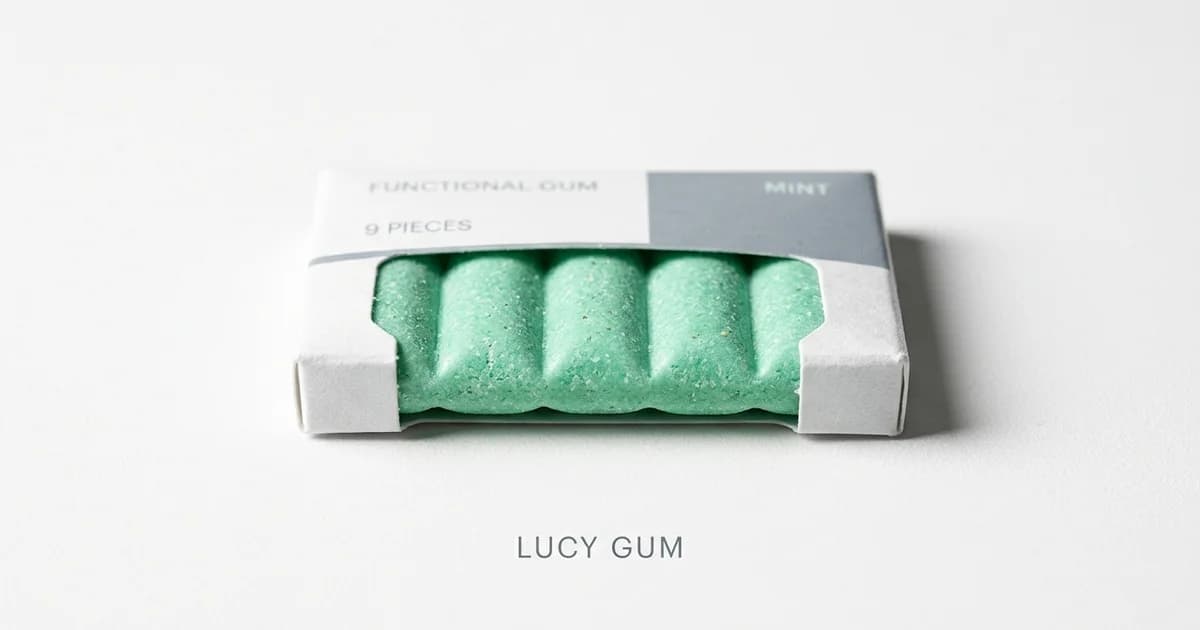
| Lucy | 2mg, 4mg, 6mg | 50-100 | Fruit-forward options | Direct-to-consumer. Popular with younger users. More flavor variety. |
| Rogue | 4mg | 20 per tin | Limited (mint, fruit) | Best value per piece. Compact tin format. |
The best nicotine gum to quit vaping depends on your usage pattern. Heavy vapers (one pod or more daily) should start with 4mg. If you're a lighter user, 2mg may be enough to blunt the withdrawal without over-delivering nicotine.
What About Nicotine Lozenges and Patches?
Gum isn't your only NRT option. Patches deliver a steady, low-level dose of nicotine over 16-24 hours, which helps with baseline cravings. Some people combine a patch with nicotine gum to quit vaping, using the patch for steady coverage and the gum for acute craving spikes. The CDC recommends this combination approach for people who struggle with gum alone.
Lozenges work similarly to gum (buccal absorption) but dissolve on their own. If you hate the chew-and-park routine, lozenges may feel more natural.
One thing to keep in mind: none of these products are FDA-approved specifically for quitting vaping. They're approved for smoking cessation. Doctors still recommend them off-label for vapers because the underlying nicotine dependence is pharmacologically identical, but don't expect the packaging to mention e-cigarettes.
The Side Effects Nobody Warns You About
Nicotine gum side effects are real, and they go beyond the fine print. University Hospitals lists the common ones: mouth and throat irritation, nausea, hiccups, jaw pain, racing heartbeat, and dizziness. Most of these happen because people chew the gum too aggressively or too frequently.
The Cleveland Clinic adds that you should report heart palpitations, skin rashes, or swelling to your doctor immediately.
But the side effect that gets the least attention is the most common one: you just keep using it.
A study published in BMC Public Health (PMC) documented cases of nicotine gum dependency, including in people who had never smoked. Users reported classical dependency criteria: compulsive use, doses higher than intended, failed quit attempts, and continued use despite wanting to stop. WebMD's reporting on Nicorette addiction notes that some people have used nicotine gum for up to five years.
The gum is supposed to be a 12-week bridge, but for many people using nicotine gum to quit vaping, it becomes the destination, making quitting nicotine gum itself the next challenge.
There's also the jaw fatigue factor that rarely shows up in reviews. Chewing 10-15 pieces of nicotine gum per day puts real strain on your temporomandibular joint. After a few weeks, some users report persistent jaw soreness that makes the whole process feel like punishment.
The Real Problem: You're Still on Nicotine
This is the part most "how to quit vaping" articles skip. Nicotine gum to quit vaping works as a harm reduction tool. It separates the nicotine from the combustion or the aerosolized chemicals. That's genuinely useful.
But if your goal is to be free of nicotine entirely, NRT only solves half the equation. You're still feeding the same receptor. You're still dependent on the same molecule. You've changed the vehicle, not the destination.
The oral fixation piece matters too. Vapers don't just crave nicotine. They crave the ritual: something in the mouth, a moment of pause, a sensory signal that says "break time." Nicotine gum partially addresses this. Pouches address it even better because the format is closer to what your brain associates with the habit.
A Smarter Taper Strategy
If you're serious about using nicotine gum to quit vaping for good, consider a structured step-down:
- Weeks 1-4: Replace vaping with 4mg nicotine gum or pouches. Match your usual frequency.
- Weeks 5-8: Drop to 2mg. Reduce frequency by 25%.
- Weeks 9-12: Switch to a zero-nicotine alternative that still satisfies the oral habit. Cut frequency in half.
- Week 13+: Use the zero-nicotine option only when cravings spike.
The key to this approach is that step three doesn't leave a void. You're not white-knuckling through empty-handed. You're replacing the chemical dependency while keeping the behavioral pattern intact.
Most taper plans fail at the transition from "low-dose nicotine" to "nothing." That gap is where relapse lives. Having a zero-nicotine oral product ready for that moment changes the math entirely.
Beyond Nicotine Gum to Quit Vaping: What Comes After You Taper
Quitting nicotine is a two-front war. The chemical withdrawal lasts about two to four weeks. The behavioral habit, the hand-to-mouth motion, the oral fixation, the "I need something right now" impulse, that lasts much longer.
This is where most people who used nicotine gum to quit vaping relapse. Not because the withdrawal is unbearable, but because there's nothing in the gap. The ritual disappears, and your brain starts negotiating. "Just one pod." "Just for today."
The smartest quitters don't eliminate the ritual. They replace it with something that serves them instead of draining them.
Roon was built for exactly this moment. It's a zero-nicotine sublingual pouch that delivers 80mg of caffeine, L-Theanine, Theacrine, and Methylliberine, a stack designed to support sustained focus for six to eight hours without jitters or a crash. A study published in Nutritional Neuroscience found that the combination of L-Theanine and caffeine improved accuracy during cognitive task switching and increased alertness, which is the opposite of what nicotine withdrawal does to your brain.
Same pouch format. Same oral ritual. Same moment of pause. Zero nicotine. And instead of feeding a dependency, you're actually supporting cognitive performance.
If you're tapering off nicotine gum to quit vaping and need something on the other side, Roon fills the gap without pulling you back in.