Smoking Oral Fixation Replacement: What Actually Works
Roon Team

Smoking Oral Fixation Replacement: What Actually Works (and What Doesn't)
Finding a smoking oral fixation replacement is one of the hardest parts of quitting cigarettes. Your body stopped craving nicotine weeks ago. But your hand still reaches for something, your mouth still wants to hold something, and your brain still expects that familiar loop of reach, place, inhale. A real smoking oral fixation replacement isn't about willpower. It's about understanding what your nervous system is actually asking for.
Most cessation programs focus entirely on the chemical side of addiction. Patches deliver nicotine through your skin. Gums let you chew it. But none of them address the physical ritual that kept you lighting up 15, 20, 30 times a day. That ritual is the part most people underestimate, and it's the part that pulls them back to cigarettes when they haven't found a proper smoking oral fixation replacement.
Key Takeaways
- Oral fixation is a separate behavioral dependency from nicotine addiction, and it requires its own replacement strategy.
- The habit loop (cue, routine, reward) is stored in the basal ganglia, which means it operates below conscious awareness.
- Nicotine replacement therapies often fail to address the hand-to-mouth and oral components of the smoking habit, making a dedicated smoking oral fixation replacement essential.
- The most effective oral fixation replacements provide both physical sensation and a functional benefit, giving your brain a new reward to latch onto.
Why Oral Fixation Outlasts Nicotine Withdrawal
Nicotine leaves your bloodstream within 72 hours. The physical withdrawal peaks around day three and fades within two to four weeks. But the behavioral patterns? Those stick around for months, sometimes years, which is why a smoking oral fixation replacement matters long after the chemical cravings fade.
According to Nicorette's research on oral fixation, the concept traces back to Freud's developmental stages. During the first 18 months of life, infants explore the world through their mouths. That oral drive doesn't disappear. It gets channeled into adult behaviors: chewing gum, biting pens, snacking when you're not hungry, smoking.
For smokers, the mouth becomes a central part of the habit loop. Healthline notes that adults with oral fixations are more likely to smoke because the act of moving a cigarette to the mouth provides the necessary oral stimulation. It's not just about nicotine delivery. The cigarette itself, the weight of it between your fingers, the sensation on your lips, becomes the routine your brain craves. That's why any effective oral fixation cigarette replacement must replicate these sensory elements.
This is why so many people who successfully quit nicotine still relapse. CDC data from 2022 shows that 53.3% of adults who smoked made a quit attempt in the past year, but only 8.8% actually succeeded. The chemical addiction is only half the equation. The behavioral loop is the other half, and without a smoking oral fixation replacement, it's the one most people can't overcome.
The Habit Loop: What Your Brain Is Really Doing
Every cigarette you ever smoked reinforced a three-part neurological pattern: cue, routine, reward.
The cue might be stress, boredom, finishing a meal, or walking outside. The routine is the physical act of smoking, the hand-to-mouth motion, the inhale, the exhale. The reward is the dopamine hit and the sensory satisfaction.
Research on habit formation shows that once this loop repeats enough times, it gets encoded in the basal ganglia, a brain region that handles automatic behaviors. The loop becomes so deeply wired that the cue alone triggers a craving before you've consciously decided to act.
Here's the problem with nicotine patches: they deliver the chemical reward but completely skip the routine. Your brain still expects the hand-to-mouth motion. It still expects the oral sensation. When those expectations go unmet, the craving intensifies, not for nicotine, but for the behavior. This is exactly why a smoking oral fixation replacement is so critical to long-term success.
Xero Picks describes it well: the hand-to-mouth motion becomes as automatic as blinking after thousands of repetitions. Nicotine patches and gum address the chemical dependency, but they bypass the behavioral loop entirely.
That's why an effective oral fixation cigarette replacement needs to satisfy the physical ritual, not just the chemistry.
Common Smoking Oral Fixation Replacement Options (Ranked)
Not all replacements are equal. Some address the oral component well but introduce new problems. Others miss the point entirely. Here's an honest breakdown of each smoking oral fixation replacement option.
Chewing Gum
The most common recommendation. It keeps your mouth busy, and nicotine gum adds a chemical taper. The downside: constant chewing can cause jaw pain, digestive issues from swallowed air, and the nicotine versions still maintain chemical dependency.
Oral fixation score: 6/10. Addresses the mouth, ignores the hand-to-mouth ritual.
Toothpicks and Cinnamon Sticks
Old school, but effective for some people as a smoking oral fixation replacement. They replicate the feeling of holding something between your lips. Zero chemical benefit, zero cost, zero side effects. The limitation is that they offer no sensory reward beyond the physical presence, so your brain's reward center stays unsatisfied.
Oral fixation score: 5/10. Good for the physical habit, weak on the reward.
Snacking (Sunflower Seeds, Carrots, Celery)
Nicorette recommends celery, carrot sticks, and cucumbers as an oral fixation cigarette replacement because they provide the oral activity without adding much in the way of calories. The hand-to-mouth motion is there. The crunch provides sensory feedback.
The risk: this is how many ex-smokers gain weight. Swapping cigarettes for constant snacking trades one problem for another, making it a poor long-term oral fixation replacement for smoking.
Oral fixation score: 6/10. Satisfying but unsustainable as a primary strategy.
Nicotine Pouches (Zyn, On!, etc.)
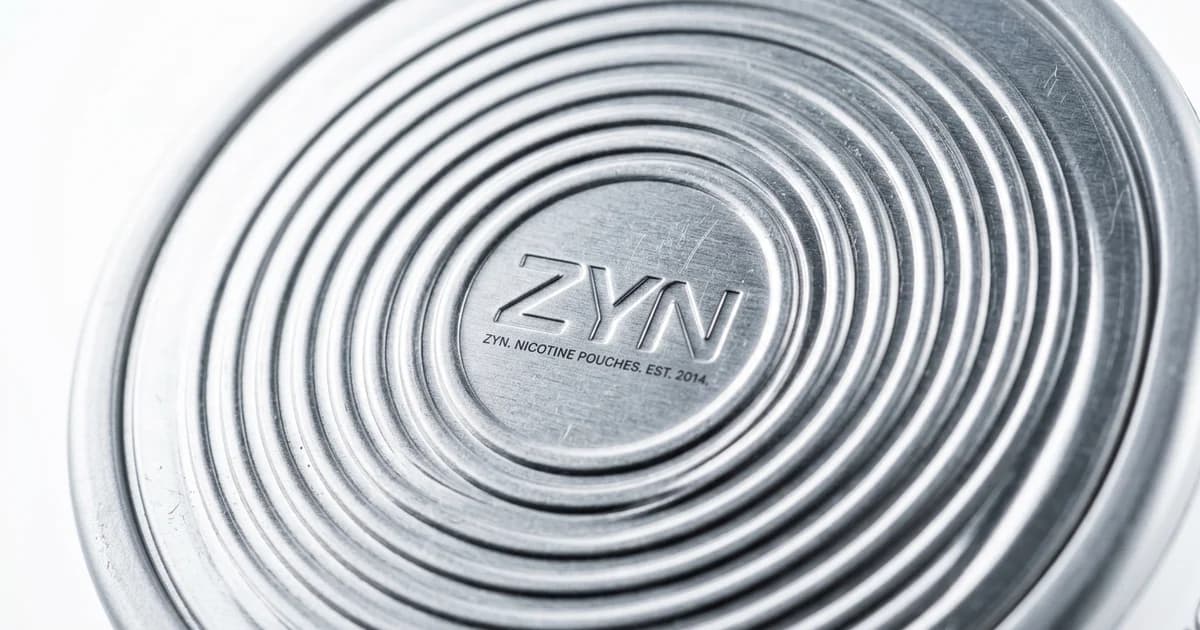
These address the oral fixation well as a smoking oral fixation replacement. You tuck a pouch between your gum and lip, which provides a physical sensation and nicotine delivery. The format is discreet and smoke-free.
The catch: you're still consuming nicotine. You've changed the delivery method, not the dependency. For people trying to break free from nicotine entirely, these are a lateral move, not a step forward.
Oral fixation score: 7/10. Strong on the oral component, but maintains the addiction.
Functional Pouches (Zero-Nicotine)
This is the newer category and the strongest smoking oral fixation replacement available. Zero-nicotine pouches that contain functional ingredients like caffeine, L-theanine, or herbal blends replicate the physical experience of a nicotine pouch (the tuck, the sensation against the gum, the flavor release) without any nicotine.
The advantage: they address the oral fixation and provide a new, positive reward signal for your brain. Instead of dopamine from nicotine, you get sustained focus from nootropic compounds.
Oral fixation score: 9/10. Addresses the physical ritual and gives the brain a new reward.
What Makes a Smoking Oral Fixation Replacement Actually Work
Based on the neuroscience of habit loops, the best oral fixation replacement for smoking needs to check three boxes:
1. It Must Replicate the Physical Ritual
Your brain expects something in your mouth or between your fingers. Any smoking oral fixation replacement that skips this step will feel incomplete. Pouches, gum, and handheld alternatives all score well here. Patches and pills score zero.
2. It Must Provide a Genuine Reward
The habit loop requires a reward to close. If the replacement offers no sensory or cognitive payoff, your brain will keep searching for the old one. This is why plain toothpicks work for a few days but rarely stick long-term as a smoking oral fixation replacement.
A study published in Cureus found that a combination of caffeine, theacrine, and methylliberine improved reaction time and cognitive performance without negative mood effects. That kind of functional benefit gives the brain something real to associate with the new routine.
Similarly, research published on PubMed found that the combination of L-theanine and caffeine improved accuracy during task switching and self-reported alertness while reducing tiredness. The pairing creates a calm, focused state without the jittery edge of caffeine alone, which is exactly the type of reward an oral fixation replacement for smoking should deliver.
3. It Must Be Sustainable
Anything that introduces a new dependency (nicotine pouches), causes weight gain (constant snacking), or creates social friction (chewing loudly in meetings) won't last. The ideal smoking oral fixation replacement fits into your existing life without requiring you to explain it, hide it, or manage its side effects.
The Comparison Table
| Replacement | Oral Fixation | Hand-to-Mouth | Reward Signal | Nicotine-Free | Sustainable |
|---|---|---|---|---|---|
| Nicotine Gum | ✅ | ❌ | ✅ (nicotine) | ❌ | ⚠️ |
| Toothpicks | ✅ | ✅ | ❌ | ✅ | ⚠️ |
| Snacking | ✅ | ✅ | ✅ (taste) | ✅ | ❌ |
| Nicotine Pouches | ✅ | ❌ | ✅ (nicotine) | ❌ | ⚠️ |
| Functional Pouches | ✅ | ❌ | ✅ (cognitive) | ✅ | ✅ |
Building a New Loop Instead of Fighting the Old One
The mistake most people make is trying to eliminate the habit loop through sheer discipline. That's fighting your own neurology. The smarter approach is substitution with a smoking oral fixation replacement: keep the cue, replace the routine, upgrade the reward.
When the cue hits (stress, boredom, post-meal), you reach for the oral fixation replacement for smoking instead. The oral sensation satisfies the routine. And the functional benefit, whether that's focus, calm, or energy, gives your brain a reward worth remembering.
Over time, the new loop overwrites the old one. Not because you forced it, but because you gave your brain something better through a smoking oral fixation replacement that actually works.
A Pouch That Works as Your Smoking Oral Fixation Replacement
This is exactly the principle behind Roon. It's a zero-nicotine, sublingual pouch built with caffeine (80 mg), L-theanine, theacrine, and methylliberine, a stack designed to deliver six to eight hours of sustained focus without jitters, crashes, or tolerance buildup.
For anyone looking for an oral fixation replacement for smoking, Roon checks every box: the physical ritual of a pouch, the sensory feedback of sublingual delivery, and a genuine cognitive reward that makes the new habit worth keeping. It's the smoking oral fixation replacement built on neuroscience, not nicotine.
You don't need another nicotine product dressed up as progress. You need a replacement that actually replaces something. Try Roon.