Vaping vs. Pouches: A Head-to-Head Comparison
Roon Team
Vaping vs. Pouches: A Head-to-Head Comparison
The vaping vs. pouches debate keeps getting louder, and for good reason. The nicotine pouch market alone is projected to hit $44.2 billion by 2034, growing at nearly 20% per year. Meanwhile, vaping faces mounting regulatory pressure and a growing body of research linking it to serious respiratory problems. Millions of people are actively weighing vaping vs. pouches right now.
This article breaks down the real differences: delivery method, health profile, convenience, cost, and what the science actually says about each one.
Key Takeaways
- Vaping delivers nicotine through your lungs, exposing you to heated chemicals including formaldehyde and acrolein. Pouches absorb through oral tissue, bypassing the respiratory system entirely.
- Nicotine pouches carry fewer known health risks than vaping, though both still deliver nicotine and carry addiction potential.
- Neither option is "safe" if it contains nicotine. Both create dependence. The vaping vs. pouches question is really about which tradeoffs you're willing to accept.
- A third category exists: nicotine-free performance pouches that deliver cognitive benefits without the addiction loop.
How Vaping Actually Works
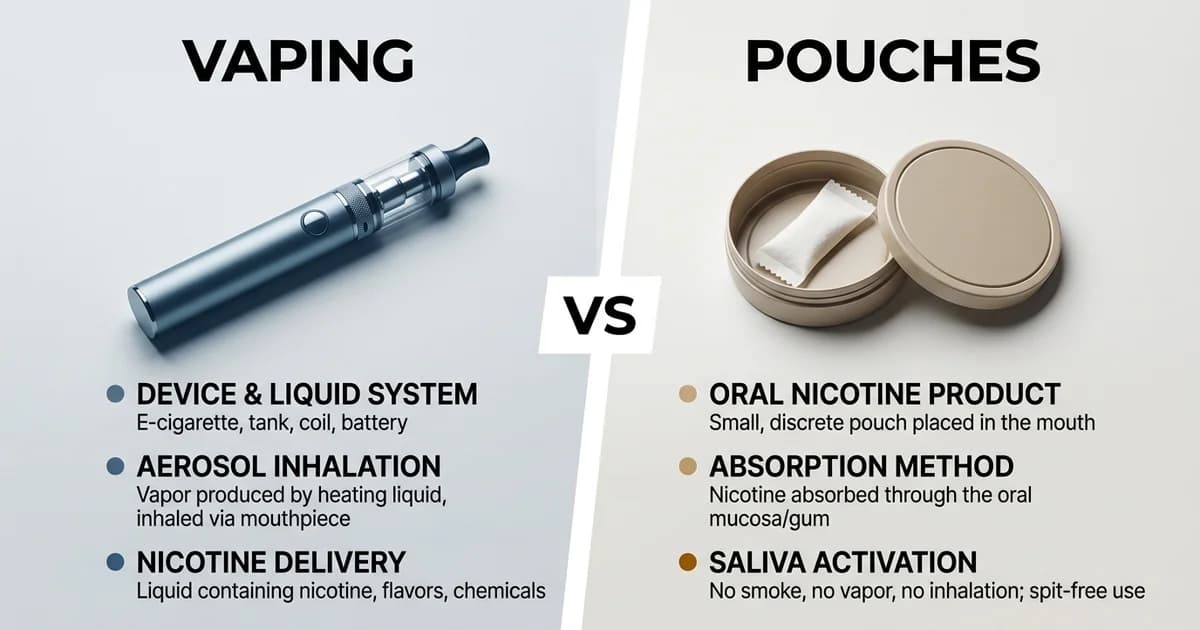
E-cigarettes heat a liquid solution (typically containing nicotine, propylene glycol, vegetable glycerin, and flavorings) into an aerosol you inhale. The nicotine hits your bloodstream fast through the lungs, which is part of the appeal. You feel it within seconds.
But speed comes with baggage. That aerosol isn't just water vapor. According to the American Lung Association, e-cigarettes produce a number of dangerous chemicals including acetaldehyde, acrolein, and formaldehyde. These aldehydes are linked to both lung disease and cardiovascular disease.
The hardware itself adds another variable. Cheap coils, counterfeit cartridges, and overheated devices can increase the concentration of toxic byproducts. A review published on PMC found that carcinogens like formaldehyde, acetaldehyde, and nitrosamines have been detected in e-cigarette vapor. You're trusting a battery-powered heating element inches from your face to perform consistently every single time. This is one reason the vaping vs. pouches conversation has shifted so heavily toward pouches in recent years.
How Nicotine Pouches Work
Nicotine pouches sit between your gum and lip. The nicotine absorbs through the oral mucosa, a process called buccal absorption. It's slower than inhaling vapor. You won't feel the hit in five seconds. But the release is steadier, and your lungs stay completely out of the equation.
Most leading nicotine pouch options contain either tobacco-derived or synthetic nicotine, plus food-grade fillers, pH adjusters, and flavoring. There's no combustion, no aerosol, no heating element. The chemical exposure profile is dramatically simpler than vaping, which is a key distinction in the vaping vs. pouches comparison.
That said, nicotine is still nicotine. The Cleveland Clinic notes that high-dose pouches may build nicotine tolerance quickly and speed up the addiction process. Strength matters. A 6mg pouch and a 12mg pouch are very different products.
Vaping vs. Pouches: The Full Comparison
| Category | Vaping | Nicotine Pouches |
|---|---|---|
| Delivery Method | Inhaled aerosol (lungs) | Sublingual/buccal absorption (oral tissue) |
| Nicotine Speed | Fast (seconds) | Gradual (minutes) |
| Chemical Exposure | Formaldehyde, acrolein, heavy metals, ultrafine particles | Nicotine, food-grade fillers, flavorings |
| Lung Involvement | Yes | None |
| Discretion | Visible vapor, smell | Invisible, no odor |
| Device Required | Yes (battery, coils, juice) | No |
| Addiction Risk | High | High (dose-dependent) |
| Regulatory Status | Heavily regulated, bans in some regions | Less regulated, growing scrutiny |
The Lung Question in Vaping vs. Pouches
This is where the comparison gets serious. Vaping puts substances directly into your lungs. Pouches don't.
A long-term study reported by the NHLBI at the NIH found that e-cigarette use raises the risk of developing chronic lung diseases like asthma, bronchitis, emphysema, and COPD. This was the first longitudinal study to establish that link, and it held even after controlling for tobacco use.
Then there's the EVALI crisis. According to research tracked on PMC, 2,807 EVALI cases and 68 deaths had been reported as of February 2020. While most cases were linked to THC-containing cartridges with vitamin E acetate, the outbreak exposed how little oversight exists over what people actually inhale through vape devices. The CDC tracked the outbreak before the COVID-19 pandemic shifted public health priorities.
Nicotine pouches bypass all of this. No aerosol means no lung exposure, no ultrafine particles settling in your airways, and no risk of inhaling contaminants from faulty hardware. The oral delivery route has its own considerations (gum irritation, potential effects on oral tissue with long-term use), but the respiratory risk profile is essentially zero. On the lung question alone, vaping vs. pouches has a clear winner.
The Nicotine Problem Both Share
Here's what the vaping vs. pouches debate often glosses over: both products exist to deliver nicotine. And nicotine, regardless of how it enters your body, is an addictive stimulant that rewires your brain's reward system.
Nicotine triggers dopamine release. Your brain adapts. You need more to feel the same effect. That's tolerance. Eventually, you're not using the product to feel good. You're using it to avoid feeling bad. This cycle plays out identically whether your nicotine comes from a vape cloud or a pouch tucked in your lip.
The withdrawal symptoms are the same too: irritability, difficulty concentrating, anxiety, cravings. Whether you vaped your way into dependency or pouched your way there, the exit ramp looks equally unpleasant. The delivery method changes the risk to your lungs. It doesn't change the grip on your brain.
The "which is safer" question, whether comparing pouches versus smokeless tobacco or vaping, is valid but incomplete. Framing the choice as vaping vs. pouches misses a better question: do you actually need the nicotine at all?
If you're using vapes or pouches for the focus, the calm alertness, the feeling of being dialed in, nicotine is a blunt instrument for that job. It borrows from tomorrow's baseline to pay for today's boost. Every dose deepens the dependency, and the cognitive benefits diminish as tolerance builds.
Convenience and Lifestyle
On pure convenience, pouches win. No charging, no refilling, no clouds of vapor announcing your presence. You can use a pouch in a meeting, on a plane, at your desk. Nobody knows.
Vaping requires hardware maintenance: charged batteries, filled tanks, replacement coils. Devices leak. They break. They get confiscated at building entrances. The ritual appeals to some people, but it's objectively more cumbersome than tearing open a can and placing a pouch. For anyone evaluating vaping vs. pouches on practicality alone, the answer is straightforward.
Cost varies widely. A disposable vape might run $8-15 and last a few days. A can of nicotine pouches costs roughly the same and lasts a similar duration. The real cost difference shows up in the long game: vape hardware, replacement parts, and premium juice add up. Pouches have a flatter cost curve.
There's also the social factor. Vaping in public has become polarizing. Many workplaces, restaurants, and airports ban it outright. The visible cloud and lingering scent make it impossible to be subtle. Pouches, by contrast, are invisible. No one at the conference table needs to know.
The Third Option: Performance Without Nicotine
Most people comparing vaping vs. pouches are really comparing nicotine delivery systems. But a growing number of people aren't looking for nicotine at all. They want the focus. The sustained mental clarity. The edge, without the dependency.
That's the gap Roon fills. Roon's nicotine-free pouches are built around a stack of four active ingredients: caffeine (80 mg), L-theanine, theacrine, and methylliberine. Together, these compounds support 6-8 hours of sustained focus without jitters, crashes, or tolerance buildup.
No nicotine means no addiction loop. No lung exposure means no respiratory risk. The sublingual delivery is fast, clean, and discrete.
If the reason you vape or pouch is cognitive performance, the vaping vs. pouches debate becomes irrelevant. Roon gives you the output without the cost. See how Roon compares.