Natural Ways to Get Energy Without Caffeine
Roon Team

Natural Ways to Get Energy Without Caffeine: What Actually Works
You're three coffees deep and still dragging. If you've been searching for natural ways to get energy without caffeine, you're not alone. Your eyelids feel heavy by 2 p.m., and the fourth cup just makes your hands shake without clearing the fog. Most people treat caffeine like a utility bill: non-negotiable, automatic, never questioned. But there are proven natural ways to get energy without caffeine that work just as well, sometimes better, for sustained alertness throughout the day.
The problem isn't that caffeine is bad. It's that relying on it as your only energy tool is like owning a toolbox with nothing but a hammer. You need more options.
Key Takeaways:
- Sleep quality, hydration, light exposure, movement, and breathing patterns all directly regulate your energy levels, no stimulants required.
- Cold exposure triggers a measurable spike in norepinephrine and dopamine, two neurochemicals tied to alertness and mood.
- Small, strategic habits stacked together often outperform another cup of coffee, making them effective natural ways to get energy without caffeine.
- If you do use caffeine, pairing it with L-Theanine changes the experience entirely.
Why You're Tired in the First Place
Before exploring natural ways to get energy without caffeine, it helps to understand the actual biology of fatigue. Your energy levels are governed by two primary systems: your circadian rhythm (the internal 24-hour clock) and your sleep-wake homeostasis (the pressure to sleep that builds the longer you're awake).
A molecule called adenosine accumulates in your brain throughout the day. The more adenosine, the sleepier you feel. Caffeine works by blocking adenosine receptors, which is why it makes you feel alert. But it doesn't eliminate the adenosine. It just masks it. When the caffeine wears off, all that built-up adenosine floods your receptors at once. That's the crash.
So the real question isn't "how do I block the tiredness signal?" It's "how do I actually produce more energy and reduce adenosine buildup naturally?"
1. Fix Your Sleep (Yes, Really)
This sounds obvious, and that's exactly why most people skip it. According to UPMC HealthBeat, aiming for seven to nine hours of sleep each night is the single most effective natural energy strategy. They also recommend turning off screens at least one hour before bed to help your body wind down.
But sleep duration is only half the equation. Sleep quality matters more than sleep quantity once you're past the seven-hour threshold. Two people can sleep eight hours and wake up with completely different energy levels based on how much deep sleep and REM sleep they got. Optimizing sleep is one of the most reliable natural ways to get energy without caffeine.
A few things that reliably improve sleep quality:
- Keep your room cold. Between 65-68°F is the sweet spot for most people.
- Cut alcohol within three hours of bed. Alcohol fragments your sleep architecture, even if it helps you fall asleep faster.
- Wake up at the same time every day. Consistency trains your circadian rhythm better than any supplement.
2. Get Morning Sunlight Within 30 Minutes of Waking
Light is the most powerful signal your brain uses to set its internal clock. When photons hit specialized cells in your retina (called intrinsically photosensitive retinal ganglion cells), they send a direct signal to your suprachiasmatic nucleus, the brain's master clock. Morning light exposure ranks among the simplest natural ways to get energy without caffeine.
Research published in PubMed found that early morning light exposure resulted in roughly a 35% increase in cortisol levels after waking. That cortisol spike isn't stress. It's your body's natural "wake up" signal that promotes alertness and energy for the first half of the day.
Huberman Lab recommends using bright overhead lights in the morning and through midafternoon to support the release of dopamine, norepinephrine, and epinephrine, all molecules tied to motivation, attention, and drive.
The protocol is simple: get outside for 5-10 minutes within 30 minutes of waking. Overcast day? Stay out for 15-20 minutes. The light intensity outdoors, even on a cloudy morning, dwarfs what indoor lighting provides.
Natural Ways to Get Energy Without Caffeine: Movement, Water, and Breath
Move for 10 Minutes (Not 60)
You don't need a full gym session to boost your energy. A 10-minute walk works. Northwestern Medicine notes that spending time around nature, even briefly, makes people feel more energized.
The mechanism is straightforward. Exercise increases blood flow to the brain, raises core body temperature, and triggers the release of endorphins and catecholamines (adrenaline and noradrenaline). These effects kick in within minutes, not hours. Brief movement is one of the most accessible natural ways to get energy without caffeine.
The mistake most people make: they think exercise has to be intense to "count." Low-intensity movement, a walk around the block, a few sets of bodyweight squats, some light stretching, produces a reliable energy boost without the fatigue that follows a hard workout.
Drink Water Before You Drink Anything Else
You wake up mildly dehydrated every single morning. After 7-8 hours without fluid, your blood volume drops, your brain gets less oxygen, and your cognitive function takes a hit. Even mild dehydration (as little as 1-2% of body weight) has been shown to cause fatigue, reduced concentration, and headaches. Hydration is one of the most overlooked natural ways to get energy without caffeine.
The fix is free and takes 30 seconds: drink 16-20 ounces of water within the first 15 minutes of your day. Before coffee. Before checking your phone. Before anything.
If plain water feels like a chore, add a pinch of sea salt and a squeeze of lemon, or explore caffeine-free energy drinks that actually work. The sodium helps with absorption, and the taste makes it easier to drink quickly.
Use Your Breathing as a Switch
Your autonomic nervous system has two modes: sympathetic (alert, active) and parasympathetic (calm, resting). You can manually toggle between them using specific breathing patterns. Breathwork is one of the fastest natural ways to get energy without caffeine, and it costs nothing.
To increase energy and alertness, try cyclic hyperventilation: inhale sharply through the nose, exhale passively, and repeat for 25-30 breaths. This deliberately shifts your nervous system into a sympathetic state, raising adrenaline and increasing alertness. It's the same principle behind Wim Hof-style breathing.
For a more moderate boost, try the physiological sigh: two quick inhales through the nose followed by a long exhale through the mouth. This resets your CO2 balance and sharpens focus within a single breath cycle.
Both techniques are free, take under two minutes, and work anywhere.
3. Cold Exposure: The Fastest Non-Chemical Energy Boost
A cold shower isn't just a willpower flex. It's a pharmacological event, and one of the most potent natural ways to get energy without caffeine.
A systematic review published in PLOS One examined the effects of cold-water immersion on health outcomes including fatigue, energy, mood, concentration, and alertness. Research from PMC found that even a single cold-water immersion increased positive affect, with the change mainly associated with higher alertness and feeling more active and attentive.
A review in The Journal of Neuropsychiatry and Clinical Neurosciences explains the mechanism: cold-water immersion triggers the release of key hormones and neurotransmitters tied to energy and focus. The norepinephrine spike from cold exposure can last for over an hour, which is comparable to the duration of a standard cup of coffee.
You don't need an ice bath. End your regular shower with 30-60 seconds of the coldest water you can tolerate. That's enough to trigger the neurochemical response.
4. Eat for Energy, Not Just for Hunger
Your food choices directly dictate your afternoon energy levels. The post-lunch crash that most people blame on "needing more coffee" is almost always a blood sugar issue, and there are targeted ways to beat the afternoon slump without reaching for another cup. Adjusting what you eat is one of the most sustainable natural ways to get energy without caffeine.
Northwestern Medicine recommends a combination of carbohydrates, fats, and proteins at each meal, noting that carbs provide quick energy while protein and fats prevent you from burning through it too fast.
A few practical rules:
| Energy-Draining Meals | Energy-Sustaining Meals |
|---|---|
| Bagel with cream cheese | Eggs with avocado and whole grain toast |
| Pasta with marinara | Grilled chicken with vegetables and olive oil |
| Sugary granola bar | Handful of almonds with an apple |
| Large bowl of white rice | Smaller portion of rice with salmon and greens |
The pattern is clear: meals high in refined carbs and low in protein cause a blood sugar spike followed by a crash. Balanced meals keep your glucose steady, and steady glucose means steady energy.
5. Strategic Napping (Done Right)
A nap can be the most effective energy tool in your arsenal, but only if you keep it short. The ideal nap length is 10-20 minutes. That's enough to reduce adenosine levels and restore alertness without entering deep sleep. As natural ways to get energy without caffeine go, a well-timed nap is hard to beat.
Go longer than 30 minutes and you risk sleep inertia, that groggy, disoriented feeling that makes you worse off than before you napped. Set an alarm. Don't negotiate with it.
The best nap window is between 1:00 and 3:00 p.m., when your circadian rhythm naturally dips. Napping after 3:00 p.m. can interfere with nighttime sleep, which defeats the entire purpose.
When You Do Want Caffeine, Make It Work Smarter
Here's the thing: caffeine isn't the enemy. Even after adopting natural ways to get energy without caffeine, there are times when a small dose of caffeine makes sense. The problem is how most people use it. Uncontrolled doses, poor timing, and no complementary compounds to smooth out the ride.
OSF Healthcare highlights that matcha contains both caffeine and L-Theanine, an amino acid that promotes calm focus. That combination is the key insight. L-Theanine doesn't reduce caffeine's energy boost. It removes the jittery, anxious edge that comes with it.
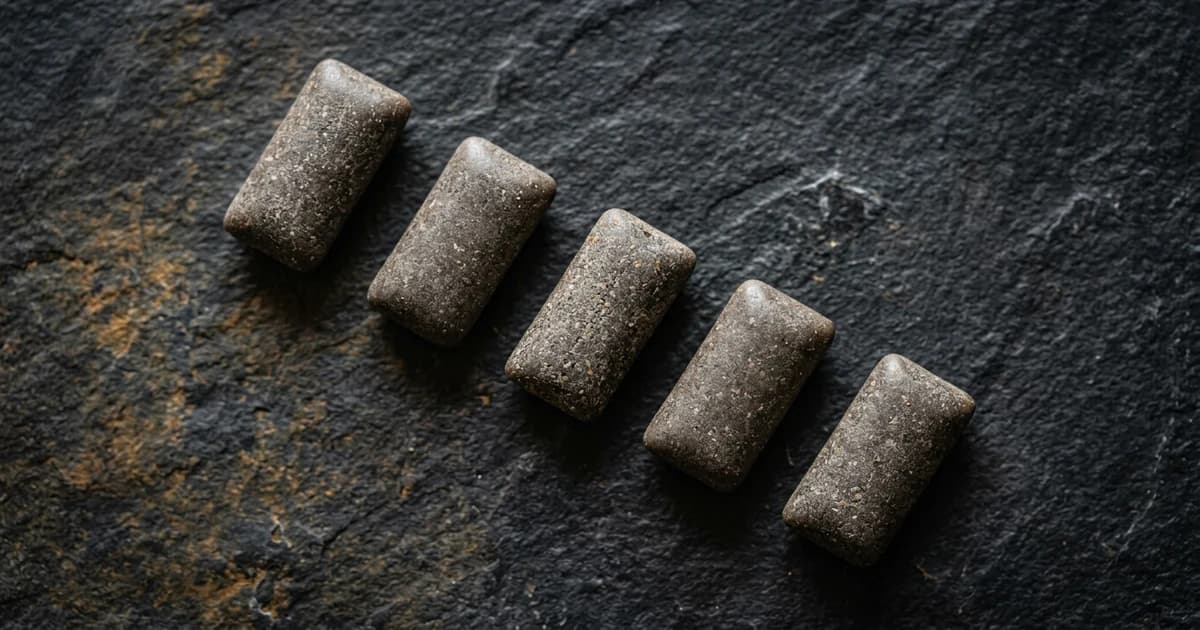
That's exactly the principle behind Roon. It pairs 80 mg of caffeine (comparable to a cup of coffee) with L-Theanine, Theacrine, and Methylliberine in a zero-nicotine sublingual pouch. The difference is the stack and the curve: L-Theanine smooths the caffeine, while Theacrine and Methylliberine extend it to 6-8 hours of clean, sustained focus without the jitters, the crash, or the tolerance buildup that comes from pounding espresso shots all day.
You don't have to choose between caffeine and no caffeine. Whether you're stacking natural ways to get energy without caffeine or looking for a smarter stimulant option, you just need a better system.
Clean energy, zero crash. Try Roon.