Mushroom Coffee Replacement: What Actually Works
Roon Team
Mushroom Coffee Replacement: What Actually Works (and What Doesn't)
You switched to mushroom coffee searching for a healthy replacement for coffee, expecting clearer focus, less jitters, and a healthier morning ritual. Maybe it delivered on some of that. Maybe it didn't. Either way, you're now searching for a mushroom coffee replacement, and that tells you something worth paying attention to.
The mushroom coffee market is projected to hit nearly $4.9 billion by 2032, which means a lot of people bought in. But market growth doesn't equal individual satisfaction. The question isn't whether mushroom coffee is popular. The question is whether it's actually doing what you need it to do for focus, energy, and daily performance, or whether a mushroom coffee replacement deserves serious consideration.
Let's break down what mushroom coffee gets right, where it falls short, and what the science actually supports when you're looking for a better mushroom coffee replacement.
Key Takeaways
- Mushroom coffee blends typically contain about half the caffeine of regular coffee, which reduces jitters but also reduces the energy boost many people need.
- The functional mushrooms in these blends (Lion's Mane, Chaga, Reishi) have real bioactive compounds, but the doses in most commercial products are too low to match what's used in clinical research.
- A good mushroom coffee replacement should solve the core problem: sustained mental energy without crashes, jitters, or tolerance buildup.
- The caffeine + L-theanine combination has stronger clinical evidence for cognitive performance than most mushroom extracts at consumer-level doses.
What Mushroom Coffee Actually Contains
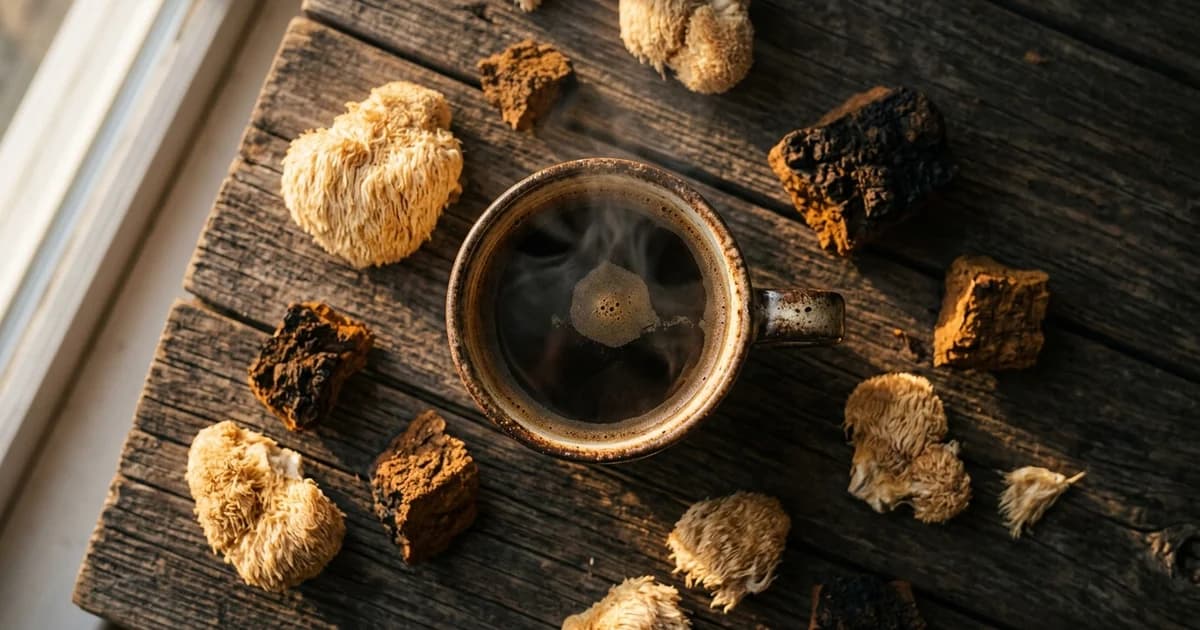
Mushroom coffee isn't just ground-up mushrooms in a cup. According to Harvard Health, these blends typically use medicinal mushrooms like Chaga, Lion's Mane, Reishi, Cordyceps, and Turkey Tail, chosen for their real or perceived health benefits. The mushrooms are harvested, dried, and processed into extracts, then blended with regular or instant coffee grounds.
The most common species you'll see on labels:
| Mushroom | Claimed Benefit |
|---|---|
| Lion's Mane | Cognitive support, nerve growth factor |
| Chaga | Antioxidant, immune support |
| Reishi | Stress reduction, sleep quality |
| Cordyceps | Physical energy, oxygen utilization |
| Turkey Tail | Gut health, immune function |
Each of these mushrooms contains bioactive compounds, particularly beta-glucans, that have shown real effects in preclinical research. As reported by News Medical, these polysaccharides have demonstrated immunomodulatory effects in various preclinical studies.
The problem isn't that these mushrooms are useless. The problem is dosing, and it's the main reason people start looking for a mushroom coffee replacement in the first place.
The Dosing Problem No One Talks About
Most mushroom coffee brands pack between 2,000 and 2,500 mg of total mushroom blend per serving. That sounds like a lot until you realize it's split across four to six different species. You're getting maybe 300 to 500 mg of any single mushroom extract.
Research on Lion's Mane and cognitive function, for example, typically uses doses of 750 mg to 3,000 mg of a single extract daily. When your mushroom coffee gives you 400 mg of Lion's Mane alongside five other mushrooms, you're getting a fraction of what the science actually tested.
This is the gap between marketing and pharmacology. The label lists impressive ingredients. The dose doesn't match the research. Understanding this gap is the first step toward choosing a mushroom coffee replacement that actually delivers results.
Caffeine Content: Less Isn't Always More
One of the main selling points of mushroom coffee is reduced caffeine. According to Healthline, mushroom coffee drinks have about half the amount of caffeine as a regular cup of coffee. That puts most blends around 40 to 50 mg per serving, compared to roughly 96 mg in a standard brewed cup.
For people who are caffeine-sensitive, that's a legitimate benefit. But for anyone who actually needs sustained mental energy for focused work, cutting caffeine in half without adding a proven cognitive support compound just means you're getting... less energy. The reduced jitters come with reduced performance, and that's a trade-off most people don't realize they're making until the afternoon slump hits. A strong mushroom coffee replacement should keep the moderate caffeine dose while adding compounds that enhance its effects.
Why People Search for a Mushroom Coffee Replacement
The reasons are consistent across forums, reviews, and product comparisons. They come down to three things.
1. The taste. Mushroom coffee has an earthy, sometimes bitter profile that many people never fully adjust to. Brands like RYZE and MUD\WTR have worked hard on flavor, but the underlying mushroom notes remain polarizing. RYZE's own marketing acknowledges the taste is "a bit more mushroomy" than traditional coffee, and independent reviewers consistently flag this.
2. The cost. A 30-serving bag of premium mushroom coffee runs $30 to $60. That's $1 to $2 per cup for instant coffee with mushroom extract. Regular specialty coffee costs less and delivers a more familiar experience. A mushroom coffee replacement that offers better value per serving is a reasonable expectation.
3. The underwhelming results. This is the big one. People try mushroom coffee expecting sharper focus and calmer energy. Some get it. Many don't notice much difference from regular coffee, especially once the novelty wears off. UCLA Health notes that there's some evidence the extracts can be hard on digestion, and people with kidney issues or digestive troubles may be more vulnerable to these effects.
When the taste is rough, the price is high, and the results are subtle at best, looking for healthy caffeine alternatives to mushroom coffee makes sense.
What to Look for in a Mushroom Coffee Replacement
If you're moving on from mushroom coffee and exploring caffeine alternatives to coffee, you probably still want the same core outcome: clean mental energy that lasts for hours without the crash or jitters of traditional coffee. That's a reasonable goal. Here's what the evidence says your mushroom coffee replacement should prioritize.
Caffeine, But the Right Amount
The sweet spot for cognitive performance isn't zero caffeine or 200+ mg. It's a moderate dose, enough to activate alertness without triggering the anxiety and cardiovascular stress that comes with overconsumption.
Around 80 mg hits that range for most people, roughly one cup of coffee's worth. Any mushroom coffee replacement should pair a moderate caffeine dose with compounds that enhance and extend its effects, rather than swinging back to the 150 to 300 mg doses found in energy drinks and large coffees.
L-Theanine: The Compound That Actually Has the Data
Here's where the science gets interesting. L-theanine is an amino acid found naturally in tea leaves, and its interaction with caffeine is one of the most well-studied combinations in cognitive performance research. It's also what separates a mediocre mushroom coffee replacement from a great one.
A study published on PubMed found that the combination of moderate levels of L-theanine and caffeine improved accuracy during task switching and self-reported alertness, while reducing self-reported tiredness. Another PubMed-indexed study compared 50 mg of caffeine with and without 100 mg of L-theanine and found measurable improvements in cognition and mood when both were present.
A study published in the Journal of Nutrition via ScienceDirect found an increase in target discriminability for the combined caffeine and L-theanine treatment relative to placebo, with caffeine alone showing weaker effects and L-theanine alone showing none.
The pattern is clear: caffeine provides the alertness, and L-theanine smooths out the rough edges. Together, they produce a focused, calm energy state that neither compound achieves alone. This isn't marketing copy. It's replicated across multiple controlled trials.
Theacrine and Methylliberine: The Tolerance Problem, Solved
One of caffeine's biggest drawbacks is tolerance. Drink it daily for two weeks, and you need more to get the same effect. This is why your first coffee of the day eventually becomes your third.
Theacrine and methylliberine are purine alkaloids structurally related to caffeine. Research indexed on medRxiv shows that theacrine exerts psychostimulatory action via modulation of the adenosinergic and dopaminergic pathways, similar to caffeine, but unlike caffeine, theacrine does not appear to be associated with tolerance.
According to Compound Solutions, research indicates that even after consuming 300 mg of TeaCrine (theacrine) every day for eight weeks straight, individuals demonstrated no signs of dependency, tolerance buildup, or withdrawal.
Methylliberine works on a faster timeline, providing a quicker onset of alertness. Nootropics Depot explains that because theacrine and methylliberine act as negative allosteric modulators rather than full receptor blockers, they likely build tolerance much less quickly than caffeine.
When you stack caffeine with theacrine and methylliberine, you get the immediate alertness of caffeine, the extended duration of theacrine, and the rapid onset of methylliberine, without the escalating tolerance cycle. Any mushroom coffee replacement worth considering should address the tolerance issue head-on.
Mushroom Coffee Replacement Options: A Comparison
Here's how the main categories stack up when you're evaluating your mushroom coffee replacement options:
| Option | Caffeine | Key Active Compounds | Tolerance Risk | Crash Risk | Evidence Level |
|---|---|---|---|---|---|
| Regular Coffee | 96+ mg | Caffeine only | High | Moderate-High | Strong (for caffeine) |
| Mushroom Coffee | 40-50 mg | Caffeine + mushroom extracts | Moderate | Low-Moderate | Mixed (low-dose mushrooms) |
| Green Tea | 25-50 mg | Caffeine + L-theanine (natural) | Moderate | Low | Moderate |
| Energy Drinks | 80-300 mg | Caffeine + sugar/taurine | High | High | Strong (for caffeine) |
| Nootropic Stacks | Varies | Caffeine + L-theanine + theacrine + methylliberine | Low | Low | Strong (multiple RCTs) |
The nootropic stack approach stands out as the strongest mushroom coffee replacement because it addresses every weakness of the other options: controlled caffeine dose, proven cognitive enhancers, and compounds that resist tolerance buildup.
What a Better Daily Driver Looks Like
The ideal mushroom coffee replacement checks four boxes:
- Moderate caffeine (~80 mg) for baseline alertness without overstimulation.
- L-theanine to smooth out caffeine's edge and promote focused calm.
- Theacrine for extended duration and zero tolerance buildup.
- Methylliberine for fast onset without the jittery spike.
This isn't a theoretical stack. These compounds have been studied individually and in combination, and the data supports their use for sustained cognitive performance.
The delivery method matters too. Sublingual absorption (under the tongue) bypasses the digestive system, which means faster onset and more predictable dosing than anything you drink. No brewing, no blender, no waiting 30 minutes for your gut to process it. For a mushroom coffee replacement, that convenience factor is hard to beat.
Clean Energy Without the Compromise
If you started with mushroom coffee because you wanted something better than your fourth cup of drip, you were asking the right question. The answer just wasn't mushrooms at sub-clinical doses mixed into instant coffee. The right mushroom coffee replacement pairs proven nootropic compounds at effective doses with a delivery system built for speed and consistency.
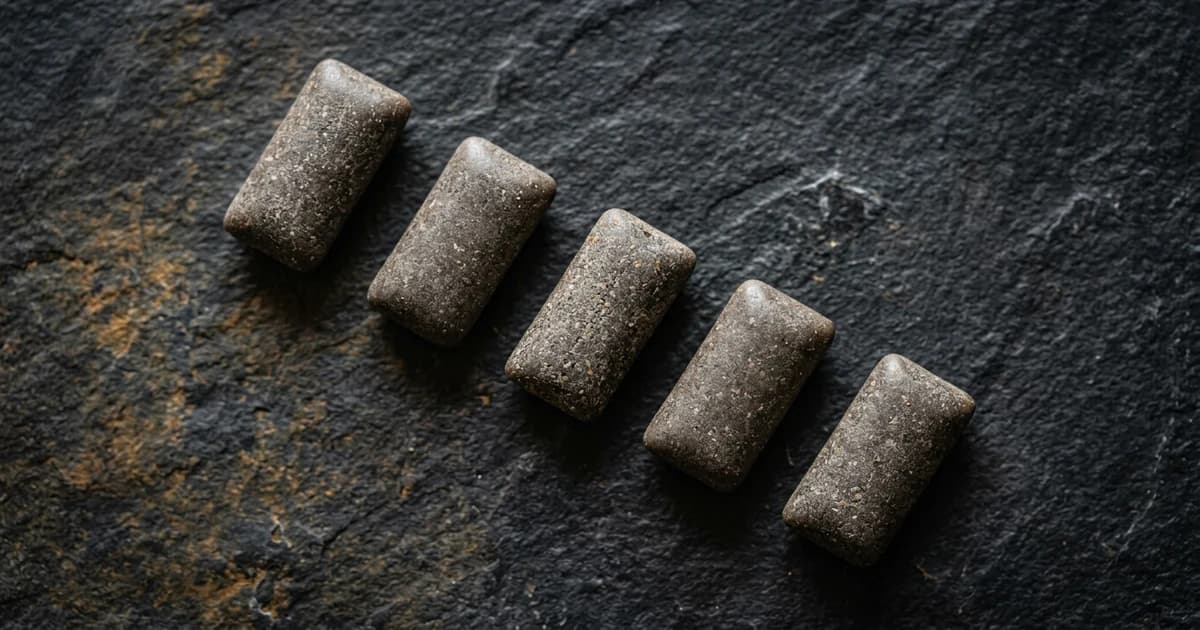
Roon puts 80 mg of caffeine alongside L-theanine, theacrine, and methylliberine into a zero-nicotine sublingual pouch. It delivers six to eight hours of sustained focus. No brewing. No crash. No tolerance buildup.
Clean energy, zero crash. That's the mushroom coffee replacement worth making.