Low Sugar Mocktail Recipes: A Complete Guide to Drinks That Actually Taste Good
Most mocktail recipes are sugar bombs pretending to be healthy. If you're searching for low sugar mocktail recipes that actually deliver on flavor, you already know the problem: you swap out the vodka, pat yourself on the back, and then pour in four ounces of simple syrup without blinking. That's not a wellness decision. That's a costume change.
The real challenge with low sugar mocktail recipes isn't finding them. It's finding ones worth drinking twice. The good news: once you understand a few core principles about sweetness, balance, and flavor building, you can make drinks that rival anything on a cocktail bar's menu, with a fraction of the sugar.
Key Takeaways
- Most commercial mocktail mixers contain 20-40g of sugar per serving, which is close to or exceeding the American Heart Association's daily recommended limit.
- The best low sugar mocktail recipes rely on fresh herbs, citrus, bitters, and sparkling water instead of syrups and juice concentrates.
- Excess sugar doesn't just affect your waistline. It directly impairs memory, attention, and cognitive performance.
- Building a low sugar mocktail comes down to five ingredient categories: a base, an acid, a sweetener (used sparingly), a botanical, and a topper.
Why Most "Healthy" Mocktails Aren't
Here's the problem nobody talks about at brunch. A typical mocktail recipe calls for fruit juices, flavored syrups, and sometimes even soda as a base. A single serving can contain 30 to 50 grams of sugar. For context, the American Heart Association recommends no more than 25 grams per day for women and 36 grams for men. One drink, and you've already blown past your daily limit.
The average American adult consumes about 17 teaspoons of added sugar every day, which is two to three times the recommended amount. Mocktails made with store-bought mixers, grenadine, or agave-heavy recipes contribute to that number more than most people realize. That's exactly why low sugar mocktail recipes matter.
This doesn't mean your drinks need to taste like sparkling water with a sad lime wedge. It means you need better mocktail recipes low sugar enough to keep you within healthy limits.
The Sugar and Your Brain Problem
Sugar's impact goes beyond calories and blood sugar spikes. A systematic review published in PMC found that overconsumption of sugar is associated with impaired cognitive function, including deficits in memory and learning. The mechanism is straightforward: chronic high sugar intake triggers inflammation, reduces the expression of brain-derived neurotrophic factor (BDNF), and disrupts the signaling pathways your neurons rely on.
Research from Nova Southeastern University confirms that cognitive functions like learning, memory, and executive thinking are closely tied to how effectively the brain uses glucose. Flooding the system with excess sugar doesn't give you more fuel. It gums up the machinery.
So when you reach for a "healthy" mocktail loaded with 40 grams of sugar, you're not just making a dietary choice. You're making a cognitive one. This is one more reason to keep low sugar mocktail recipes in your regular rotation.
The Five Building Blocks of Low Sugar Mocktail Recipes
Every great cocktail (and mocktail) follows a basic formula. Once you learn it, you stop needing recipes entirely.
1. The Base
This is the primary liquid. For low sugar mocktail recipes, skip fruit juices and reach for:
- Brewed herbal tea (hibiscus, chamomile, rooibos), chilled
- Coconut water (naturally lower in sugar than most juices)
- Kombucha (fermented, so most of the sugar has been consumed by cultures)
2. The Acid
Acidity is what makes a drink refreshing. Without it, every low sugar mocktail tastes flat.
- Fresh lemon juice
- Fresh lime juice
- Apple cider vinegar (a tablespoon adds tang without sweetness)
- Grapefruit juice (small amounts, as it's lower in sugar than orange juice)
3. The Sweetener (Used Sparingly)
The goal with any low sugar mocktail recipe is a hint of sweetness, not a sugar bath. Your best options:
| Sweetener | Sugar per Teaspoon | Notes |
|---|---|---|
| Raw honey | ~6g | Use sparingly; strong flavor does more with less |
| Maple syrup | ~4g | Works well in autumn-flavored drinks |
| Stevia drops | 0g | No calories; slight aftertaste for some people |
| Monk fruit sweetener | 0g | Clean taste; blends well in cold liquids |
| Muddled fruit | Varies | A few raspberries or a slice of peach adds natural sweetness |
The key: one teaspoon or less per drink. If you need more than that, your other flavors aren't doing enough work.
4. The Botanical
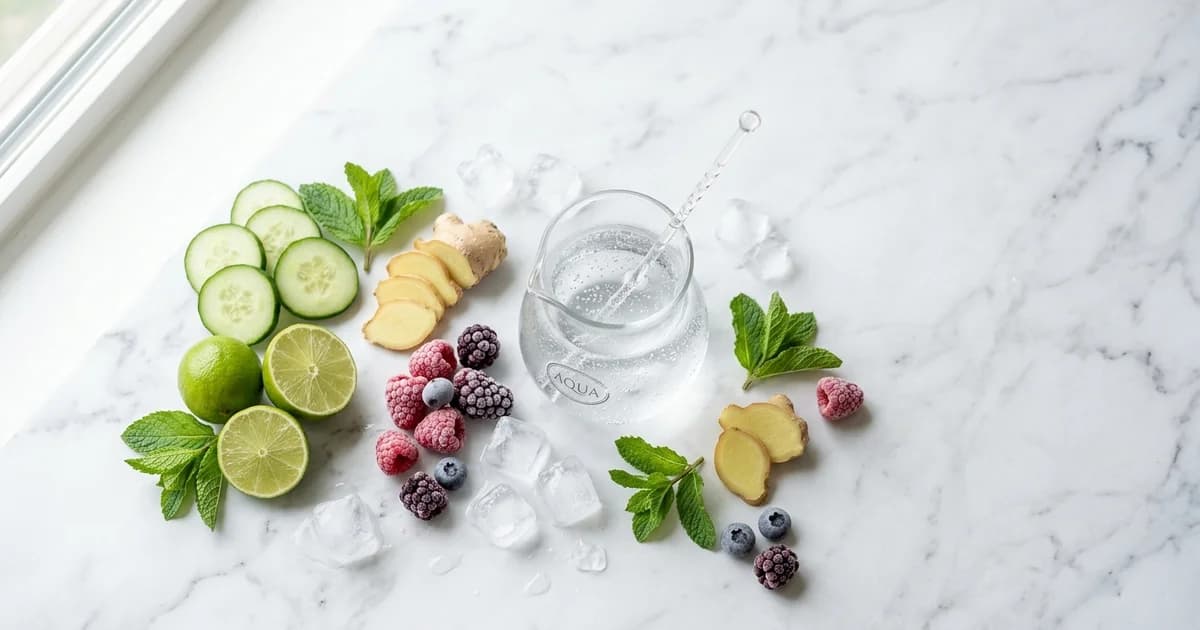
This is what separates a great low sugar mocktail from flavored water. Fresh herbs and aromatics add complexity without a single gram of sugar.
- Fresh mint (classic for a reason)
- Basil (pairs beautifully with strawberry or watermelon)
- Rosemary (muddle lightly; a little goes a long way)
- Ginger (freshly grated or sliced; anti-inflammatory and sharp)
- Aromatic bitters (most are zero-calorie and add enormous depth)
5. The Topper
Bubbles make everything feel more like a real drink.
- Club soda or sparkling mineral water (zero sugar, zero calories)
- Tonic water (be careful here; regular tonic has nearly as much sugar as soda, so use sugar-free versions)
Six No Sugar Mocktail Recipes Worth Making
These no sugar mocktail recipes use little to no added sweetener. Each one takes under five minutes.
The Ginger Smash
- 2 oz brewed ginger tea, chilled
- 1 oz fresh lime juice
- 3 fresh mint leaves, muddled
- 4 oz sparkling water
- 2 drops liquid stevia (optional)
Muddle the mint in the bottom of a glass. Add ice, pour in the ginger tea and lime juice, top with sparkling water. Stir once. This is one of the simplest low sugar mocktail recipes you can make. Total added sugar: 0g.
Hibiscus Citrus Spritz
- 3 oz chilled hibiscus tea
- 1 oz fresh grapefruit juice
- 1 tsp raw honey (dissolved in the warm tea before chilling)
- 4 oz club soda
- Grapefruit slice for garnish
This one looks stunning in a wine glass. The hibiscus gives it a deep ruby color, and the grapefruit keeps it tart. Total added sugar: approximately 6g.
Cucumber Basil Cooler
- 4 thin cucumber slices
- 3 basil leaves
- 1 oz fresh lemon juice
- 5 oz sparkling water
- Pinch of sea salt
Muddle cucumber and basil gently. Add ice, lemon juice, and sparkling water. The salt sounds odd, but it rounds out the flavor the way sugar would. Among no sugar mocktail recipes, this one is a standout. Total added sugar: 0g.
The Spiced Apple
- 3 oz unsweetened apple cider
- 1 oz fresh lemon juice
- 1 cinnamon stick
- 2 dashes aromatic bitters
- 3 oz sparkling water
Stir the cider, lemon juice, and bitters over ice. Top with sparkling water and use the cinnamon stick as a stirrer. Tastes like fall without the sugar crash. Total added sugar: 0g (natural sugars from the cider only).
Watermelon Rosemary Fizz
- 3 oz fresh watermelon juice (blend and strain fresh watermelon)
- 1 small sprig rosemary
- 1 oz lime juice
- 4 oz sparkling water
Lightly muddle the rosemary. Combine all ingredients over ice. Watermelon is naturally sweet, so no added sweetener is needed. If you want no sugar mocktail recipes that still taste indulgent, start here. Total added sugar: 0g.
The Shrub
Shrubs are drinking vinegars, and they're one of the oldest low sugar mocktail techniques in existence.
- 1.5 oz raspberry shrub (equal parts raspberries, apple cider vinegar, and a small amount of honey, left to macerate for 48 hours, then strained)
- 5 oz sparkling water
- Fresh raspberries for garnish
The vinegar does the heavy lifting. It creates a tartness that tricks your palate into thinking the drink is more complex than it is. Total added sugar per drink: approximately 3-4g.
Tips for Keeping Low Sugar Mocktail Recipes Flavorful
If you're building your own mocktail recipes low sugar style, keep these principles in mind:
Muddle, don't juice. Muddling a few berries in the glass releases flavor and aroma without dumping in concentrated fruit sugar. Two muddled strawberries have about 1.5g of sugar. Two ounces of strawberry juice has closer to 12g.
Use bitters liberally. A few dashes of Angostura or orange bitters add layers of flavor complexity. Most bitters are used in such small quantities that their sugar and calorie content is negligible. This is one of the easiest ways to elevate low sugar mocktail recipes.
Chill your teas. Herbal teas brewed strong and chilled are the most underrated base for mocktail recipes low sugar drinkers love. Hibiscus, chamomile, peppermint, and rooibos all bring distinct flavor profiles with zero sugar.
Salt is your secret weapon. A tiny pinch of flaky sea salt in a citrus-forward drink enhances sweetness perception without adding any actual sugar. Bartenders have known this for years.
Batch your bases. Make a large pitcher of chilled herbal tea or cucumber water at the start of the week, and you'll have low sugar drinks for all ages ready in seconds. When you want a drink, you're 60 seconds away from a good low sugar mocktail instead of reaching for a sugary shortcut.
The Bigger Picture: Low Sugar Mocktail Recipes and How You Think
The sober curious movement is accelerating. According to Circana, 25% of Americans aged 21 and older didn't drink any alcohol in 2024, and 65% of Gen Z plans to drink less in 2025. People are rethinking what they put in their glass, and for good reason.
But cutting alcohol is only half the equation. If you replace a gin and tonic with a mocktail that has 40 grams of sugar, you've traded one cognitive drag for another. The NIAAA notes that the sober curious movement is fundamentally about a more mindful approach to consumption. That mindfulness should extend to sugar, which is why low sugar mocktail recipes deserve a permanent place in your routine.
What you drink affects how you feel, how clearly you think, and how well you perform for the rest of the day. Choosing low sugar mocktail recipes keeps your blood sugar stable, avoids the inflammatory cascade that excess sugar triggers, and lets your brain operate without interference.
Optimize Your Day Beyond the Glass
Rethinking your drinks is one piece of a larger pattern: being intentional about what you consume and how it affects your performance. That's the same thinking behind Roon, a zero-nicotine sublingual pouch built with Caffeine, L-Theanine, Theacrine, and Methylliberine. It's designed to support 6 to 8 hours of sustained focus without jitters, crashes, or tolerance buildup.
Skip the sugar-loaded energy drink. Make a better mocktail. And when you need your mind sharp, Roon is there. Optimize your day.