Dry January Constipation: Why Quitting Alcohol Backs You Up
Roon Team
Dry January Constipation: Why Quitting Alcohol Backs You Up (and How to Fix It)
You gave up booze for the month. You expected better sleep, clearer skin, maybe a few extra dollars in your bank account. What you didn't expect? Dry January constipation. Yet here you are, a week into sobriety, and your digestive system has apparently gone on strike.
You're not broken. Dry January constipation is a well-documented, temporary side effect of removing alcohol from your routine, and it has more to do with how your gut adapted to drinking than anything going wrong without it.
Key Takeaways:
- Dry January constipation is common and typically resolves within one to three weeks.
- Alcohol acts as a gut stimulant. Removing it forces your digestive system to recalibrate.
- Dehydration, dietary shifts, and microbiome disruption all contribute to dry January constipation.
- Simple fixes like increasing fiber, hydration, and movement can speed recovery.
Why Does Dry January Constipation Happen?
The short answer: your gut got used to alcohol doing part of its job.
Alcohol, especially in lower concentrations like beer and wine, accelerates gastric emptying. It stimulates motility, the muscular contractions that push food through your intestines. For regular drinkers, this stimulant effect becomes part of the body's baseline rhythm. Remove it suddenly, and the system slows down, which is exactly why dry January constipation catches so many people off guard.
A study published in Diseases of the Colon & Rectum found that after alcohol withdrawal, colorectal transit time increased from 24.9 hours to 33.3 hours. That's roughly a 34% slowdown. The delay was concentrated in the rectosigmoid region, the final stretch of your large intestine before the rectum. Slower transit means drier, harder stools and less frequent bowel movements.
This isn't a sign that sobriety is bad for you. It's a sign that your body is adjusting to a new normal.
The Three Mechanisms Behind Dry January Constipation
1. Your Gut Motility Hits the Brakes
As noted above, alcohol stimulates the bowel. It can increase motility, and for some people, regular drinking essentially keeps things moving on a schedule. When you quit, your gut doesn't immediately compensate. The muscles of your colon slow their contractions, and stool sits longer in the large intestine, losing water content and becoming harder to pass. This motility slowdown is the primary driver of dry January constipation.
According to WebMD, drinks with a high alcohol content (above 15%) may actually slow gut motility while lower-concentration beverages speed it up. So the specific effect depends on what you were drinking. But either way, removing alcohol entirely creates a disruption your body needs time to sort out.
2. Dehydration Lingers Longer Than You Think
Alcohol is a diuretic. It suppresses vasopressin (antidiuretic hormone), causing your kidneys to flush more water than normal. A 2017 trial found that moderate amounts of stronger alcoholic beverages produced a measurable, short-term diuretic effect.
Here's the catch: if you were chronically mildly dehydrated from regular drinking, your body may still be playing catch-up in the first week of January. Your colon absorbs water from stool as it passes through. When you're dehydrated, it absorbs more, leaving behind dry, compacted waste. This dehydration carryover is one reason dry January constipation can persist even after you start drinking more water. It takes time for your body's fluid balance to fully reset.
3. Your Gut Microbiome Is in Flux
This one is less obvious but just as important for understanding dry January constipation. Alcohol changes the composition of your gut bacteria. Research published in Alcohol, Clinical and Experimental Research found evidence for gut dysbiosis in individuals with alcohol use disorder. A 2024 study in PMC investigated how the gut microbiome associates with alcohol consumption at a population level, confirming that alcohol remains a risk factor that alters microbial composition.
When you stop drinking, those bacterial populations begin to shift again. This rebalancing period, which can take one to two weeks, often comes with bloating, gas, and yes, constipation. Think of it as your gut's microbial ecosystem going through a transition period. The end result is better. The middle part is uncomfortable.
How Long Does Dry January Constipation Last?
For most people, the worst of dry January constipation hits within the first few days and peaks around the 24 to 72 hour mark. According to AlcoholAwareness.org, constipation and bloating can appear within the initial 6 to 12 hours after stopping alcohol, with symptoms peaking during the 24 to 72 hour window.
The good news: it's temporary. Most people report normalized bowel movements within a few weeks of quitting. Your gut motility recalibrates. Your hydration levels stabilize. Your microbiome settles into a healthier baseline. The timeline varies based on how much you were drinking before, your diet, and your overall health, but two to three weeks is a reasonable window for most people dealing with dry January constipation.
If constipation persists beyond three to four weeks or is accompanied by severe pain, blood in your stool, or sudden weight loss, see a doctor. Those symptoms point to something beyond a simple adjustment period.
One more thing: people who were heavier drinkers before January tend to experience a longer adjustment window. If you were having several drinks most nights, give your system a full month before judging the results. The body doesn't reset overnight, but it does reset.
How to Fix Dry January Constipation: Practical Steps That Actually Work
You don't need to white-knuckle your way through this, and there are proven strategies for finishing Dry January that go well beyond managing digestion. A few targeted adjustments can relieve dry January constipation and make a real difference.
Drink More Water (Seriously, More)
Your body is recalibrating its fluid balance. Help it out. Aim for at least eight glasses a day, and add an extra glass or two if you were a regular drinker. Warm water in the morning can also stimulate the gastrocolic reflex, the signal that tells your colon to start moving. Proper hydration is the single most effective first step for easing dry January constipation.
Increase Fiber Gradually
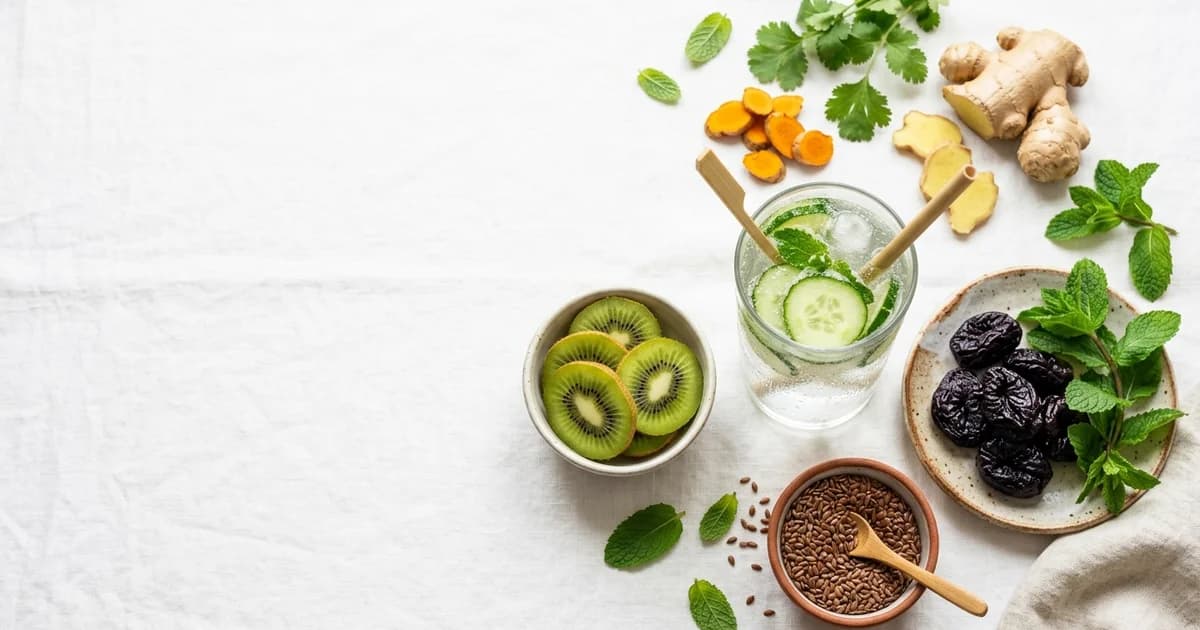
Fiber adds bulk to stool and helps it retain water, making it easier to pass. Focus on soluble fiber sources: oats, flaxseed, chia seeds, sweet potatoes, and most fruits. But ramp up slowly. Dumping a massive amount of fiber into an already sluggish gut can make bloating worse before it gets better.
| Fiber Source | Soluble Fiber per Serving | Good For |
|---|---|---|
| Oats (1 cup cooked) | ~4g | Breakfast staple, gentle on the gut |
| Chia seeds (2 tbsp) | ~5g | Easy to add to smoothies or yogurt |
| Flaxseed (2 tbsp) | ~3g | Mild laxative effect |
| Sweet potato (1 medium) | ~2g | Versatile, nutrient-dense |
| Pear (1 medium) | ~3g | High water content too |
Move Your Body
Exercise stimulates peristalsis, the wave-like contractions that move food through your digestive tract. You don't need to run a marathon. A 20 to 30 minute walk after meals is enough to get things going. Yoga poses that involve twisting can also help stimulate the colon. Regular movement is one of the best natural remedies for dry January constipation.
Don't Forget About Coffee (Without the Alcohol Chaser)
If you were a "beer after work, coffee in the morning" person, make sure you're keeping the coffee. Caffeine stimulates colonic motility on its own. Some people inadvertently cut back on coffee during Dry January because their whole routine shifts. Keep that morning cup. It's doing more for your gut than you realize.
Consider Magnesium
Magnesium citrate draws water into the intestines and softens stool. It's one of the gentlest, most effective options for occasional constipation, and it works especially well for dry January constipation because it directly addresses the dehydrated-stool problem. Start with 200 to 400mg before bed. It also supports sleep quality, which tends to improve during Dry January anyway.
Give Probiotics a Shot
Since your microbiome is in transition, a broad-spectrum probiotic can help speed the rebalancing process. Look for one with Lactobacillus and Bifidobacterium strains, which have the strongest evidence for supporting regularity. Probiotics won't cure dry January constipation overnight, but they can shorten the adjustment window.
What Dry January Constipation Tells You About Your Gut
Here's the bigger picture. If quitting alcohol for 30 days throws your digestion into chaos, that's useful information. It means alcohol was playing a larger role in your gut function than you realized, and relying on a substance to maintain basic regularity isn't a foundation you want to build on.
Thirty percent of Americans participated in Dry January in 2025, a 36% increase from the year before. The sober curious movement isn't a fad. It's a recalibration of how people think about what they put in their bodies. And the temporary discomfort of dry January constipation is just your gut catching up to a decision your brain already made.
The digestive benefits of reduced alcohol intake are well documented. Bladder & Bowel Community notes that reducing alcohol intake can directly benefit your digestive and urinary systems, with wider impacts through improved mood and energy levels. Once you push through the adjustment period, most people find their digestion is actually better without alcohol in the mix. Less bloating. More predictable bowel movements. Reduced inflammation throughout the GI tract. Your gut was never designed to run on ethanol. It just learned to cope with it. Dry January constipation is the short-term cost of a long-term gain.
Clean Focus for the Sober Curious
Dry January often starts as an experiment and turns into something bigger. You realize you don't miss the hangovers. You sleep better. You think more clearly. And you start looking for ways to maintain that clarity without reaching for substances that come with trade-offs.
That's exactly where Roon fits. It's a zero-nicotine sublingual pouch built around a stack of caffeine (80 mg), L-Theanine, Theacrine, and Methylliberine, designed to deliver six to eight hours of sustained focus without the jitters, crashes, or tolerance buildup that come with most stimulants. No alcohol. No nicotine. No compromise.
If you're rethinking what you put in your body this January, your gut will thank you. And your brain might appreciate the upgrade too. Try Roon.