Mocktail Punch Recipes: The Only Guide Worth Bookmarking
Roon Team
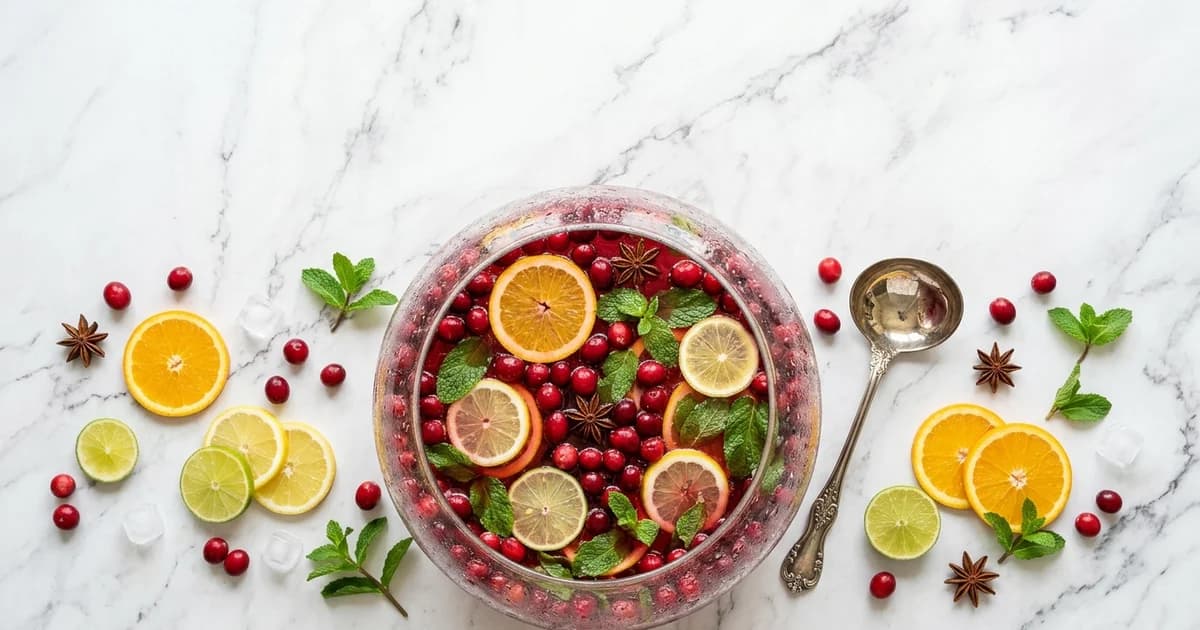
Mocktail Punch Recipes: The Only Guide Worth Bookmarking
You brought a gorgeous punch bowl to the party. You filled it with cranberry juice, ginger ale, and a scoop of rainbow sherbet. Everyone smiled. Nobody was impressed. It's time to rethink your mocktail punch recipes from the ground up.
The problem with most mocktail punch recipes isn't effort. It's that they treat "non-alcoholic" as a constraint instead of a starting point. The result? Drinks that taste like they're missing something, because they are. They're missing intention.
That changes here. This guide covers how to build mocktail punch recipes that actually taste layered and complex, which ingredients pull their weight and which ones sabotage you, and why the move away from alcohol is less about deprivation and more about drinking smarter.
Key Takeaways
- Great mocktail punch recipes start with balance, not a formula. Learn the ratio of tart, sweet, bitter, and fizz, and you can improvise anything.
- Sugar is the silent problem in most non-alcoholic drinks. A punch that replaces vodka with extra juice can pack more calories than the cocktail version.
- The sober-curious movement is mainstream now. Nearly 49% of Americans planned to drink less in 2025, and the non-alcoholic beverage market is projected to exceed $1.65 trillion globally.
- Functional ingredients like adaptogens and nootropics are showing up in mocktails for a reason. People want drinks that do something.
Why Mocktail Punch Recipes Deserve Better Than Sherbet and Sprite
For decades, non-alcoholic punch meant one thing: sugar. Fruit juice concentrate, carbonated soda, maybe a frozen fruit ring floating on top. It looked festive. It tasted one-dimensional. The best mocktail punch recipes today leave that era behind entirely.
The shift away from alcohol has forced a reckoning. According to a 2025 Circana report, nearly two in three Gen Z adults plan to drink less, and 39% plan to stay dry for the entire year. That's not a fad. That's a generational preference rewriting the beverage industry.
And when people stop drinking alcohol, they don't stop wanting interesting drinks, which is why non-alcoholic drink recipe ideas have expanded so dramatically in recent years. They just get more critical of what's in the glass. That's exactly why better mocktail punch recipes matter.
A Baylor College of Medicine analysis pointed out something most people overlook: mocktails aren't automatically healthier than cocktails. Most contain heavy amounts of sugar, fruit juice, and tonic water. Strip out the alcohol and replace it with more sweetener, and you've traded one health problem for another.
The fix isn't complicated. It's structural.
The Four-Part Framework for Building Any Mocktail Punch Recipes
Forget following recipes blindly. Learn this ratio and you can build mocktail punch recipes out of whatever's in your kitchen.
Every good punch needs four elements:
| Element | Role | Examples |
|---|---|---|
| Tart | Provides backbone and brightness | Fresh citrus juice, shrubs, tamarind, hibiscus |
| Sweet | Balances acidity (use less than you think) | Honey syrup, agave, maple, fruit purees |
| Bitter/Herbal | Adds complexity and depth | Non-alcoholic bitters, tonic, brewed tea, ginger |
| Fizz/Dilution | Lightens the drink and adds texture | Sparkling water, kombucha, coconut water |
The classic cocktail ratio is roughly 2:1:1 (spirit : sour : sweet), with dilution from ice. For mocktail punch recipes, you're replacing the spirit's role with the bitter/herbal component. That's where most recipes fail. They skip the complexity layer entirely and just pile on more juice.
The Tart Foundation
Citrus is the easiest option. Fresh-squeezed lemon or lime juice gives you clean acidity without added sugar. Grapefruit works too, especially with herbal flavors.
For something less expected, try shrubs. A shrub is a drinking vinegar, usually fruit macerated with sugar and apple cider vinegar. It sounds aggressive. It's actually one of the best tools for adding depth to mocktail punch recipes. A raspberry shrub with sparkling water and a few dashes of bitters makes a two-ingredient punch that tastes like it took an hour.
The Sweet Spot (Literally)
Here's where people go wrong. The instinct is to make it sweet enough to mask the absence of alcohol. Resist that.
Use honey syrup (equal parts honey and hot water, stirred until dissolved) instead of simple syrup. It has a rounder sweetness that doesn't spike as sharply on the palate. Agave works for lighter, more tropical punches.
A good rule: start with half the sweetener you think you need. You can always add more. You can't take it out. This principle holds true across all mocktail punch recipes, regardless of flavor profile.
The Complexity Layer
This is the ingredient that separates standout mocktail punch recipes from flavored sugar water.
Non-alcoholic bitters are your best friend here. A few dashes of Angostura or orange bitters add an herbal backbone that mimics what spirits normally provide. Brewed tea is another option. A strong chai concentrate or a cold-brewed Earl Grey adds tannins, the same drying, slightly astringent quality you get from wine.
Fresh ginger, muddled or juiced, brings heat. Rosemary and thyme can be steeped into a simple syrup. These are small additions that change the entire character of the punch.
The Fizz Factor
Carbonation makes everything feel more festive. Sparkling water is the neutral option. But consider kombucha for a slightly funky, probiotic-rich twist, or tonic water if you want quinine's pleasant bitterness.
Add the fizz last, right before serving. Carbonation dies fast in a punch bowl. If you're serving over a long period, keep the sparkling component in a separate bottle and let guests top off their own glasses. This small detail separates polished mocktail punch recipes from flat, lifeless bowls by the end of the night.
Five Mocktail Punch Recipes That Actually Work
1. The Citrus Shrub Punch
- 2 cups raspberry or blackberry shrub
- 1 cup fresh lemon juice
- ½ cup honey syrup
- 6 cups sparkling water
- Angostura bitters (8-10 dashes)
- Garnish: fresh berries, lemon wheels
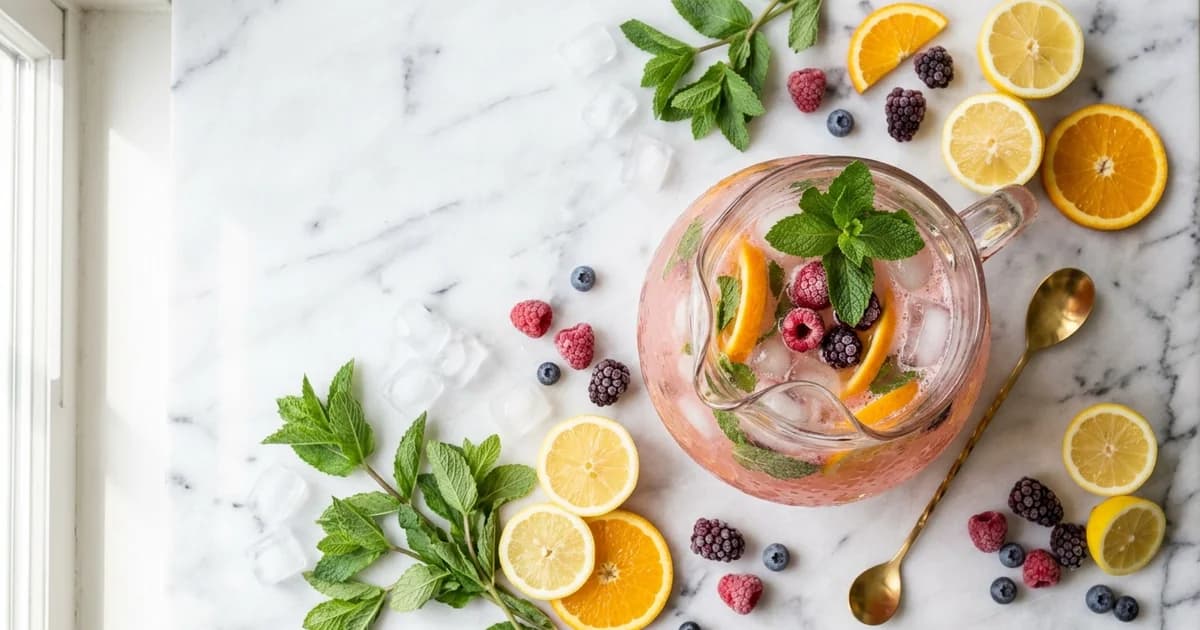
Combine everything except sparkling water in a punch bowl. Stir well. Add ice, then pour in sparkling water just before guests arrive. This is one of the simplest mocktail punch recipes in the lineup, and one of the most impressive.
2. The Ginger-Hibiscus Cooler
- 3 cups brewed hibiscus tea (cooled)
- 1 cup fresh lime juice
- ¾ cup agave syrup
- 2 cups ginger beer (non-alcoholic)
- 2 cups sparkling water
- Garnish: lime slices, candied ginger
Hibiscus gives this a deep ruby color and a tart, cranberry-like flavor. The ginger beer adds spice and carbonation in one ingredient.
3. The Orchard Punch
- 2 cups unfiltered apple cider
- 1 cup pear nectar
- ½ cup fresh lemon juice
- ¼ cup maple syrup
- 4 cups sparkling water
- 6 dashes orange bitters
- Garnish: thin apple slices, cinnamon sticks
This one peaks in fall but works year-round. The maple and apple combination has a warmth that doesn't need alcohol to feel complete. Among seasonal mocktail punch recipes, this is a crowd favorite.
4. The Tropical Tonic
- 2 cups pineapple juice (fresh if possible)
- 1 cup coconut water
- ¾ cup fresh lime juice
- ½ cup passion fruit puree
- 3 cups tonic water
- Garnish: pineapple wedges, mint sprigs
The quinine in tonic water gives this a slightly bitter edge that keeps it from becoming a smoothie. The coconut water adds body without adding sweetness.
5. The Earl Grey Garden Party
- 3 cups cold-brewed Earl Grey tea
- 1 cup fresh lemon juice
- ½ cup lavender simple syrup
- 4 cups sparkling water
- 8 dashes Angostura bitters
- Garnish: lemon wheels, fresh lavender
The bergamot in Earl Grey gives this a perfumed, sophisticated quality. The bitters tie everything together. Of all the mocktail punch recipes here, this is the one for the person who says they don't like sweet drinks.
The Hidden Cost of "Healthy" Party Drinks
Here's something worth sitting with. A standard margarita contains roughly 270 calories, most of it from sugar and alcohol. A typical fruit punch mocktail? It can hit 200 calories per glass from sugar alone, with none of the social lubricant people were looking for in the first place.
The Baylor College of Medicine piece makes the point clearly: just because a drink is alcohol-free doesn't make it a health food. The sugar in fruit juices, the high-fructose corn syrup in commercial ginger ales, the flavored syrups: they all add up.
This is why the framework matters more than any single recipe. When you build mocktail punch recipes around tart and bitter elements first, and treat sweetness as an accent rather than a base, you end up with a drink that's lower in sugar, more interesting to taste, and easier on your body the next morning.
The Functional Mocktail Movement
The most interesting trend in the non-alcoholic space isn't what's being removed. It's what's being added.
Functional mocktails, drinks infused with adaptogens, nootropics, and other bioactive compounds, are showing up everywhere from specialty bars to grocery store shelves. Lion's mane for focus. Ashwagandha for stress. L-theanine for calm alertness. These ingredients are starting to influence mocktail punch recipes as well, with hosts adding functional elements to their party bowls.
The logic is straightforward. If you're going to drink something, why not have it do something useful? Alcohol sedates. Caffeine stimulates but crashes. The new generation of functional ingredients aims for a middle ground: calm energy, sustained focus, social ease without impairment.
This isn't fringe wellness anymore. The global non-alcoholic beverage market is projected to exceed $1.65 trillion by 2025, driven by exactly this kind of demand. People want drinks that taste good and make them feel good. Not buzzed. Not wired. Just sharp.
Optimize Your Day, Starting With What You Drink
The thread connecting all of this, the better mocktail punch recipes, the lower sugar, the functional ingredients, is the same idea: what you put in your body should work for you, not against you.
That principle doesn't stop at the punch bowl. It applies to your morning routine, your 2 PM slump, your pre-workout focus, every moment where your brain needs to perform and your body needs to cooperate.
That's the thinking behind Roon. It's a zero-nicotine sublingual pouch built with Caffeine (80mg), L-Theanine, Theacrine, and Methylliberine, four compounds that work together to promote sustained focus for 6-8 hours without the jitters, the crash, or the tolerance buildup that comes with most stimulants.
No mixing required. No sugar. No guesswork. Just clean, sustained cognitive performance when you need it.
If you're rethinking what you drink at parties with smarter mocktail punch recipes, maybe it's time to rethink what you reach for the rest of the day too. Start with Roon.