The Alpha-Wave Study: How L-Theanine Produces "Calm Alertness" in the EEG
Roon Team
The Alpha-Wave Study: How L-Theanine Produces "Calm Alertness" in the EEG
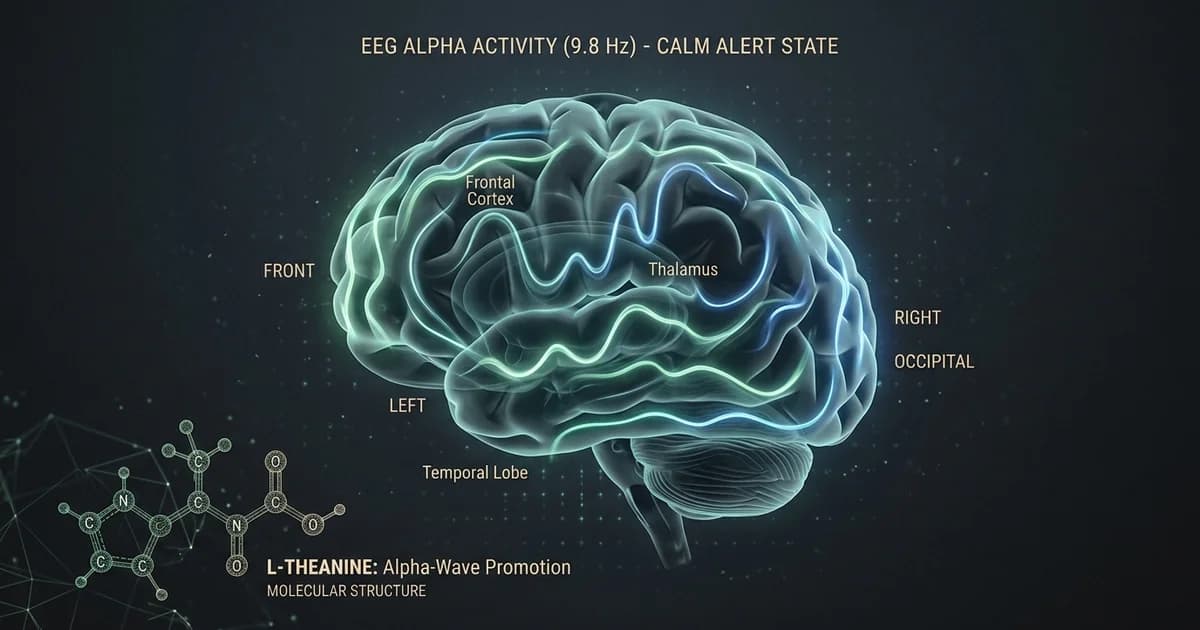
You can drink a cup of green tea and feel both settled and sharp at the same time. That sensation has a name in the lab, and it shows up on an electroencephalogram as a spike in one specific brain rhythm. The clearest evidence comes from the l-theanine alpha waves study published in 2008 by Anna Nobre and colleagues at Oxford, which measured what the amino acid in tea actually does to your scalp electrical activity.
The result was not sedation. It was a state researchers describe as "relaxed alertness," and it has a measurable EEG signature.
This is the science behind why theanine feels different from a sedative, and why it pairs so well with caffeine.
Key Takeaways
- The Nobre L-theanine study found that oral L-theanine increases alpha brain wave activity, the rhythm linked to wakeful relaxation rather than drowsiness.
- Alpha waves (roughly 8 to 12 Hz) rise when you are calm but mentally engaged, not when you are falling asleep.
- The strongest alpha and stress-buffering effects tend to appear at higher doses, around 200 mg, while smaller doses still shift attention.
- Theanine's alpha effect explains why it smooths the edge off caffeine without dulling focus.
What the L-Theanine Alpha Waves Study Actually Measured
Alpha activity is the brain's signature of calm, attentive wakefulness. In the 2008 paper by Nobre, Rao, and Owen, published in the Asia Pacific Journal of Clinical Nutrition, researchers gave participants L-theanine and recorded their EEG.
They reported that theanine increased activity in the alpha frequency band, both at rest and during attention tasks. That rise tracked with subjective feelings of relaxation, but without the slowing into theta and delta rhythms you would expect from a sedative.
So the brain looked relaxed and online at once. That combination is the whole point.
The team framed the finding as evidence that theanine promotes a state of relaxation without drowsiness. It is a short paper, more of a research note than a sprawling trial, but it became one of the most cited references for theanine EEG alpha brain waves for a simple reason. It gave a clean physiological picture to a feeling people already recognized from drinking tea.
Alpha Waves 101: Why "Calm Alertness" Has an EEG Signature
Your brain runs on rhythms, and each frequency band maps loosely to a mental state.
| Brain Wave | Frequency | Associated State |
|---|---|---|
| Delta | 0.5 to 4 Hz | Deep sleep |
| Theta | 4 to 8 Hz | Drowsiness, light sleep, deep daydreaming |
| Alpha | 8 to 12 Hz | Wakeful rest, calm focus, eyes closed but awake |
| Beta | 12 to 30 Hz | Active thinking, alertness, some anxiety |
| Gamma | 30 Hz+ | High-level processing, intense concentration |
Alpha sits in a useful middle zone. It rises when you close your eyes, when you meditate, and when you are calm but not asleep. It tends to drop when you are anxious, mentally scattered, or jittery.
This is why theanine relaxed alertness is more than marketing language. When theanine pushes alpha up while leaving you awake and responsive, it is nudging your brain toward the state where you feel steady and focused at the same time.
Caffeine, by contrast, mostly drives beta-band arousal. On its own, that arousal can tip into the wired, restless feeling you know too well. Pair it with something that raises alpha, and the rough edges round off.
The Dose Question: How Much Theanine Moves Your Brain Waves
The size of the effect depends heavily on dose, which matters for anyone reading the l-theanine brain waves dose research closely. Lower amounts shift attention and reaction time, while larger amounts produce the more pronounced alpha and stress-related changes.
A study published in ScienceDirect's Journal of Functional Foods examined theanine's effect on attention and reaction time and found dose-related benefits on neurophysiological measures of attention. The takeaway across this literature is consistent. More theanine, up to a point, means a clearer signal.
For the stronger relaxation and stress-buffering effects, the dose climbs. Recent clinical work on branded theanine has tested 200 mg and reported benefits for stress and mental focus. A longer-term clinical study covered by NutraIngredients examined AlphaWave L-theanine at that level and confirmed safety alongside cognitive and stress-management benefits.
Here is the honest read for the alpha band attention theanine question. If your goal is a strong, standalone alpha-driven calm, the research points to roughly 200 to 250 mg. If your goal is to take the jitter off caffeine, smaller doses do real work as part of a stack.
Why Theanine and Caffeine Belong Together
Theanine and caffeine balance each other on the EEG. Caffeine raises arousal and sharpens vigilance. Theanine raises alpha and softens the overstimulation. Run them together and you get the alertness of caffeine with less of the tremor and tension.
This is the mechanism behind the popular caffeine plus theanine "stack" you see in focus products and in the work of people who study attention. The combination has been studied for sustained attention and accuracy, and the general pattern favors the pair over caffeine alone for steady cognitive work.
The ratios people use vary. A common starting point is roughly 2:1 theanine to caffeine for a calmer profile, though plenty of products run closer to 1:1 or lean caffeine-heavy when the goal is energy with a smoother feel. If you want to go deeper on the pairing, our guide to the caffeine and L-theanine stack breaks down the ratios.
What the Study Does Not Say
The alpha-wave finding is real, but it has limits worth stating plainly.
First, an increase in alpha activity is a brain-state marker, not a guarantee of better grades or a faster workout. It is a physiological correlate of calm focus, and the leap to real-world performance depends on the task, the dose, and the person.
Second, theanine is not a sedative and not a sleep aid in the way melatonin is. It supports a relaxed-but-awake state. Some people take it before bed because that calm helps them wind down, but the EEG story is about wakeful alpha, not deep sleep.
Third, the original 2008 paper was small and brief. It is best read as one well-aimed data point in a larger body of work, not as the final verdict.
Conclusion
L-theanine earns its reputation because the "calm alertness" people feel maps onto something you can actually measure. The amino acid raises alpha-band activity, the EEG rhythm of wakeful relaxation, without dragging the brain toward the slower waves of drowsiness.
The effect scales with dose. Around 200 mg drives the clearest standalone calm, while smaller amounts still shift attention and pair beautifully with caffeine to smooth its arousal. That pairing, grounded in opposing effects on the EEG, is the most practical lesson from the alpha-wave research.
Calm and focus are not opposites in the brain. With the right input, they share a frequency.
Frequently Asked Questions
What are alpha brain waves and why do they matter?
Alpha waves are electrical rhythms in the brain that cycle at roughly 8 to 12 Hz. They rise during wakeful rest, calm focus, and meditation, and they tend to fall during anxiety or scattered thinking. Researchers treat alpha activity as a marker of "relaxed alertness," the state where you feel settled and mentally engaged at the same time. That is why a rise in alpha is the headline finding of the theanine EEG research.
What did the Nobre L-theanine study find?
The 2008 study by Nobre, Rao, and Owen reported that oral L-theanine increased alpha-band activity on EEG recordings, both at rest and during attention tasks. The rise tracked with subjective relaxation but did not slow the brain into the theta and delta rhythms typical of drowsiness. The authors described this as relaxation without sedation, which became a foundational reference for theanine's calming-yet-alert reputation.
How much L-theanine do I need to affect alpha waves?
It depends on your goal. The stronger, standalone alpha and stress-buffering effects in the research tend to appear around 200 to 250 mg. Smaller doses, in the 50 to 100 mg range, still influence attention and reaction time and work well alongside caffeine. So a low dose is useful in a stack, while a higher dose is what you want for a pronounced standalone calming effect.
Is L-theanine a sedative?
No. Theanine supports a relaxed but awake state rather than putting you to sleep. The EEG evidence shows it boosts alpha activity, the rhythm of calm wakefulness, instead of pushing the brain into the slower waves associated with sleep. Some people use it in the evening because that calm helps them unwind, but it does not work like a sedative or a classic sleep aid.
Why is theanine paired with caffeine?
The two have opposite effects on brain arousal. Caffeine raises beta-band activity and alertness, which can tip into jitters. Theanine raises alpha activity and softens that overstimulation. Together they tend to deliver the focus and energy of caffeine with less tension and restlessness, which is why the combination is so common in cognitive performance products.
Does L-theanine work immediately?
Theanine is absorbed reasonably quickly, with effects on subjective calm and EEG activity reported within roughly 30 to 60 minutes of an oral dose in studies. The exact timing depends on dose, format, and whether you take it on an empty stomach. Sublingual formats, which absorb under the tongue, can shorten that window compared with swallowing a capsule.
The Reason Theanine Takes the Edge Off Caffeine
The alpha-wave research explains a feeling, not a miracle. Theanine raises the EEG rhythm of calm wakefulness, and that is the neurophysiological reason it smooths the jittery edge off caffeine. This is exactly the logic behind Roon, a zero-nicotine sublingual pouch built around a four-ingredient stack: 80 mg caffeine, 60 mg L-theanine, 25 mg methylliberine (Dynamine), and 5 mg theacrine (TeaCrine).
A point of honesty on dose. The strongest standalone alpha effects in the literature show up around 200 to 250 mg, which is above the 60 mg in each pouch. So Roon's theanine is there to round off the caffeine and support a steadier focus, not to drive a big standalone alpha effect on its own. That is the role it plays best.
The sublingual format absorbs in 5 to 10 minutes and is designed for 6 to 8 hours of focus with no jitters, no crash, and no tolerance buildup. If you want caffeine that feels smoother, try Roon and judge the difference yourself.
Written by Roon Team