How to Improve Reaction Time in Sport
Roon Team
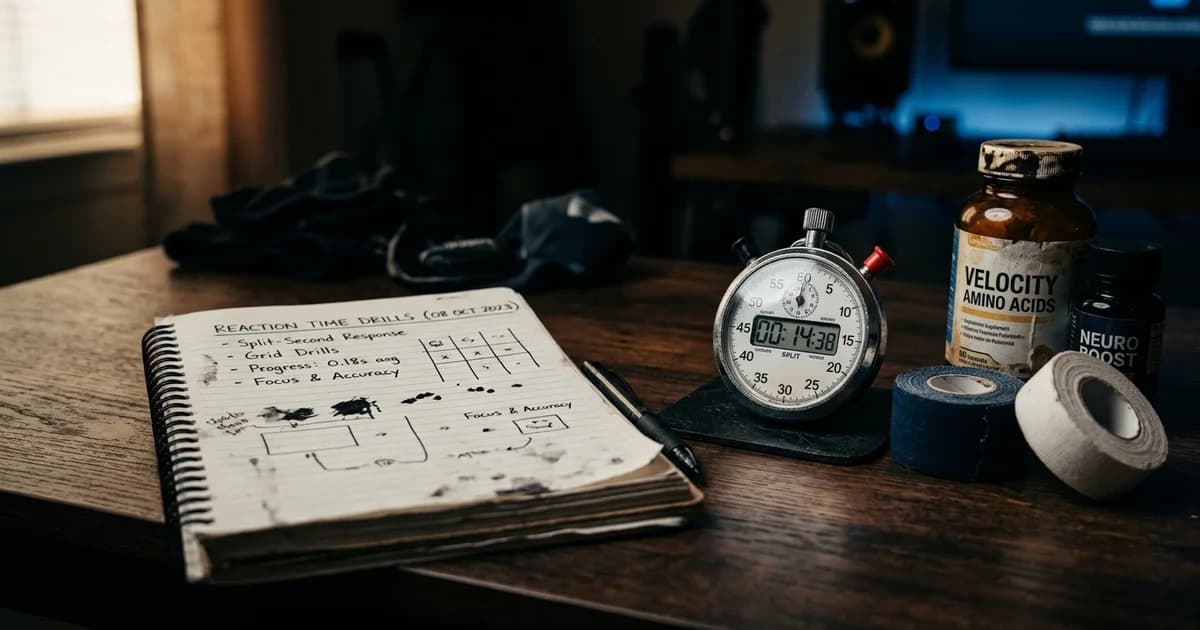
How to Improve Reaction Time in Sport: 8 Proven Methods That Actually Work
If you want to know how to improve reaction time in sport, start with this: the gap between a gold medal and fourth place is often less than a blink. In the 100m sprint, it's hundredths of a second. In combat sports, it's the difference between landing a counter and eating a jab. Understanding how to improve reaction time in sport begins with accepting one fact: reaction time is trainable. It's not some genetic gift you either have or don't.
Professional athletes typically respond to visual stimuli in 160 to 210 milliseconds, while the general population sits between 200 and 300 milliseconds. That 40-to-90 millisecond gap isn't talent. It's training.
Here's what the science says about closing it.
Key Takeaways
- Reaction time is a skill, not a fixed trait. Learning how to improve reaction time in sport through targeted drills can shave dozens of milliseconds off your response.
- Sleep, hydration, and nutrition affect your reaction speed as much as any physical drill.
- Cognitive training (not just physical training) strengthens the neural pathways responsible for fast responses.
- Specific compounds like caffeine paired with L-theanine have been shown to improve reaction time without the downsides of stimulants alone.
What Actually Determines Your Reaction Time in Sport?
Reaction time isn't just about fast-twitch muscle fibers. It's a chain: your eyes (or ears) detect a stimulus, your brain processes it, your brain selects a response, and your motor neurons fire to execute that response. A delay anywhere in that chain slows you down.
Three types of reaction time matter in sport:
- Simple reaction time: one stimulus, one response. A sprinter hearing the gun.
- Choice reaction time: multiple stimuli, multiple possible responses. A goalkeeper reading a penalty kick.
- Recognition reaction time: filtering relevant stimuli from noise. A point guard spotting the open man in a full-court press.
Most sports rely on choice and recognition reaction time, which are harder to train but also where the biggest gains live. Knowing how to improve reaction time in sport means understanding which type your discipline demands most.
How to Improve Reaction Time in Sport: 8 Methods Backed by Research
1. Sport-Specific Reaction Drills
Generic "reaction training" only gets you so far. The drills that produce real transfer to competition mimic the actual decision-making environment of your sport. This is the foundation of how to improve reaction time in sport at any level.
For team sports, that means partner-based drills where a coach calls directional changes while you're already in motion. The NSCA recommends placing two cones 10 yards apart and sprinting forward until a coach signals "switch," forcing an immediate deceleration and direction change. This trains your ability to process a stimulus while your body is already committed to movement.
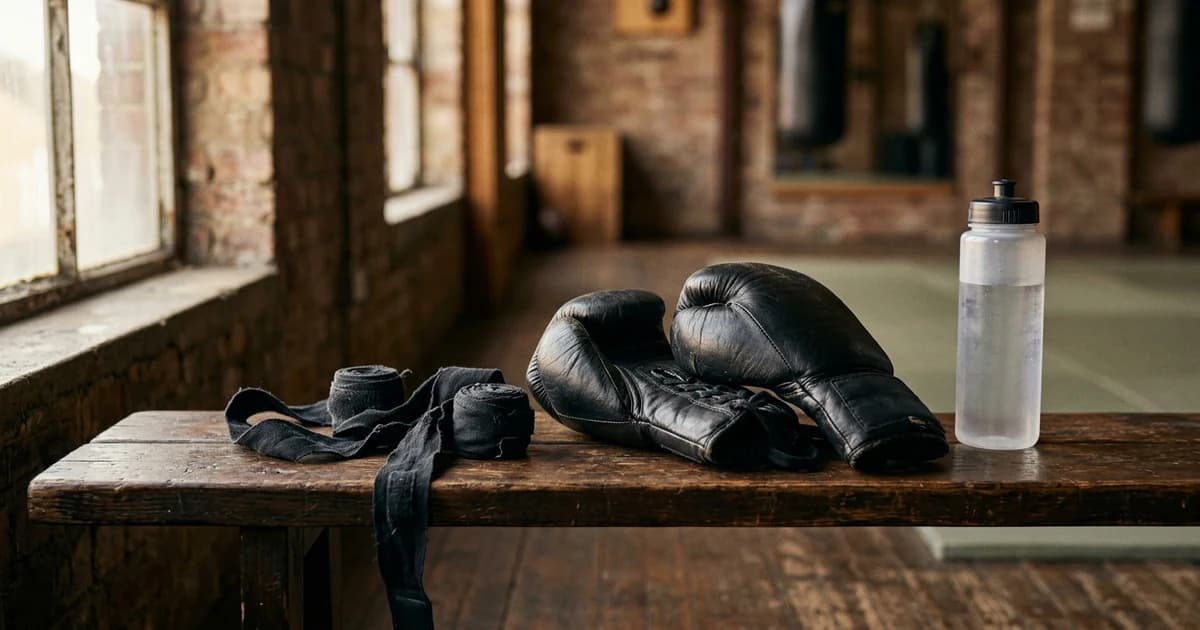
For combat sports, shadow drilling against unpredictable cues (a training partner calling combinations or flashing mitts at random intervals) builds the stimulus-response patterns you'll actually use in a fight.
The key: the drill should force a decision, not just a reaction.
2. Light and Sound Reaction Systems
Reactive light systems (like BlazePod or similar tools) have gained traction in professional training facilities for good reason. They remove the predictability that human training partners inevitably introduce, making them a powerful tool for anyone studying how to improve reaction time in sport.
These systems target different types of reflex and response, whether it's explosive power, stability, or lateral quickness. You can program random intervals, vary the number of active targets, and track your improvement over weeks with hard data.
If you don't have access to a light system, a simple tennis ball drill works: have a partner stand behind you and toss a tennis ball over your shoulder. You catch it before it bounces twice. Low-tech, high-transfer.
3. Cognitive Training and Dual-Task Exercises
Your brain is the bottleneck in the reaction time chain, not your muscles. Reaction time improves when the brain's neural pathways are strengthened through repetitive training, and that includes mental exercises like puzzles and pattern-recognition games alongside physical drills. This cognitive approach is central to how to improve reaction time in sport beyond the physical.
Dual-task training is especially effective. This means performing a cognitive task (calling out numbers, solving simple math) while simultaneously executing a physical movement. It trains your brain to process information under load, which is exactly what competition demands.
A 2022 study from the University of Oregon found that athletes were around 20 milliseconds faster on average in reaction time tasks compared to non-athletes, with median scores roughly 30 milliseconds faster. That gap is built through years of exactly this kind of combined cognitive-physical training. We look at what explains that gap, training, sleep, and stimulant timing among them, in our guide to the science of improving reaction speed.
4. Vision Training
Your eyes are the front end of the reaction time chain. If they're slow to pick up information, everything downstream suffers. Vision training is an often-overlooked piece of how to improve reaction time in sport.
Peripheral vision exercises involve focusing on a central point while training awareness of your surroundings without looking directly at them. Regular practice expands your useful field of view, meaning you detect relevant stimuli sooner.
Eye-tracking drills, saccade training (rapid eye movements between fixed points), and near-far focus exercises all contribute. Many professional sports teams now employ dedicated vision coaches, and for good reason: a faster eye is a faster athlete.
5. Fix Your Sleep
This one isn't glamorous, but it might be the highest-impact change you can make if you're serious about how to improve reaction time in sport.
Research published in PMC shows that sleep deprivation prolongs reaction time and reduces alertness in both athletes and non-athletes. The effect compounds: the longer you go with inadequate sleep, the worse it gets. According to the Sleep Foundation, participants whose sleep was restricted to five hours per night showed steadily increasing reaction times as they accumulated sleep debt over the course of a week.
A separate study on college student athletes concluded that short-term sleep deprivation adversely affects cognitive function, including reaction time, even when anaerobic performance remains intact. Your muscles might still work fine on bad sleep. Your brain won't.
Seven to nine hours. Every night. Non-negotiable if you're serious about performance.
6. Stay Hydrated
Dehydration as mild as 2% body mass loss impairs performance in tasks requiring attention, psychomotor skills, and immediate memory. A meta-analysis published on PubMed confirmed that dehydration impairs cognitive performance, with the most pronounced effects on attention, executive function, and motor coordination when water deficits exceed 2% of body mass.
For athletes training in hot conditions or competing in long-duration events, dehydration is a reaction time killer hiding in plain sight. Weigh yourself before and after training to track fluid loss, and develop a hydration protocol that keeps you ahead of the deficit. Any plan for how to improve reaction time in sport must account for fluid balance.
7. Train Under Fatigue
Your reaction time in a fresh state means very little if it falls apart in the fourth quarter. The ability to maintain fast responses while fatigued separates elite athletes from everyone else, and it's a critical part of how to improve reaction time in sport for real-world competition.
Build reaction drills into the end of your training sessions, not just the beginning. Run your cone drills after a conditioning circuit. Do your light-board work after sparring rounds. This trains your nervous system to maintain processing speed when your body is depleted.
The goal isn't to be fast when you're fresh. It's to be fast when you're tired.
8. Use the Right Compounds (Not Just Caffeine)
Caffeine improves reaction time. That's well-established. But caffeine alone comes with trade-offs: jitteriness, anxiety, tolerance buildup, and a crash that can leave you slower than baseline. Smart supplementation is another avenue for how to improve reaction time in sport.
The more interesting research is on caffeine combined with other compounds. A 2021 randomized crossover study published on PubMed tested a combination of caffeine, theacrine (TeaCrine), and methylliberine (Dynamine) on male esports athletes. The combination improved cognitive performance and reaction time on the Psychomotor Vigilance Task without increasing anxiety, a side effect that caffeine alone did produce.
A separate double-blind, placebo-controlled trial on tactical personnel found that combined caffeine, methylliberine, and theacrine produced similar reaction time benefits to double the dose of caffeine alone, without the blood pressure spikes. That's the same speed benefit with fewer downsides.
L-theanine adds another layer. A study on PubMed testing 97mg of L-theanine with 40mg of caffeine found the combination improved cognitive performance and subjective alertness. L-theanine smooths out caffeine's rough edges, promoting focus without the jittery overshoot.
A 2025 study published in the Journal of the International Society of Sports Nutrition on elite wrestlers confirmed that L-theanine reduced overall reaction time on a visual probe task when combined with caffeine. For athletes researching how to improve reaction time in sport through supplementation, this combination is well supported.
A Quick-Reference Training Plan
| Training Method | Frequency | Time Investment | Primary Benefit |
|---|---|---|---|
| Sport-specific reaction drills | 3-4x per week | 10-15 min per session | Decision-making speed |
| Light/sound reaction systems | 2-3x per week | 10 min per session | Stimulus processing speed |
| Cognitive/dual-task training | 3x per week | 15 min per session | Neural pathway strength |
| Vision training | 3-4x per week | 5-10 min per session | Faster visual processing |
| Sleep optimization | Daily | 7-9 hours | Baseline cognitive function |
| Hydration protocol | Daily | Ongoing | Sustained attention and motor skill |
| Fatigued-state drills | 2x per week | End of session | Performance under stress |
Gain the Edge: How to Improve Reaction Time in Sport for Good
Every method on this list works. But they work best in combination, and the margins in sport are thin enough that even small, consistent advantages compound into real results. Knowing how to improve reaction time in sport is only half the equation; executing on it daily is what separates good athletes from great ones.
That's the thinking behind Roon, a zero-nicotine sublingual pouch built around the exact compound stack the research supports: caffeine (80mg), L-theanine, theacrine, and methylliberine. The combination has been clinically shown to produce 11.5% faster reaction times while delivering 6 to 8 hours of sustained focus without jitters, crashes, or tolerance buildup.
You can train your reaction time with drills, sleep, and hydration. You can also give your nervous system the raw materials it needs to fire faster. Roon does that in about 30 seconds, no water required.