How to Improve Muscle Memory: 7 Methods Backed by Neuroscience
Roon Team
How to Improve Muscle Memory: 7 Methods Backed by Neuroscience
You've practiced the guitar riff a hundred times. Your fingers know the notes. Then you step on stage and your hands turn into strangers. The problem isn't your muscles. It's your brain. If you want to know how to improve muscle memory, the answer starts not in the gym or the practice room, but in your neuroscience.
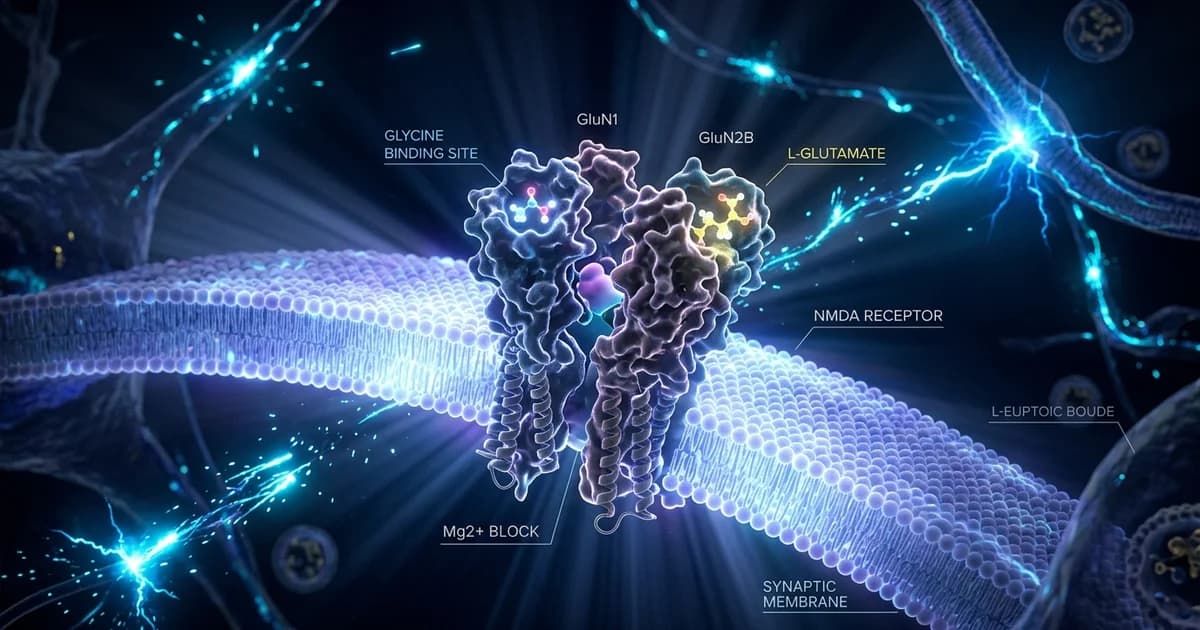
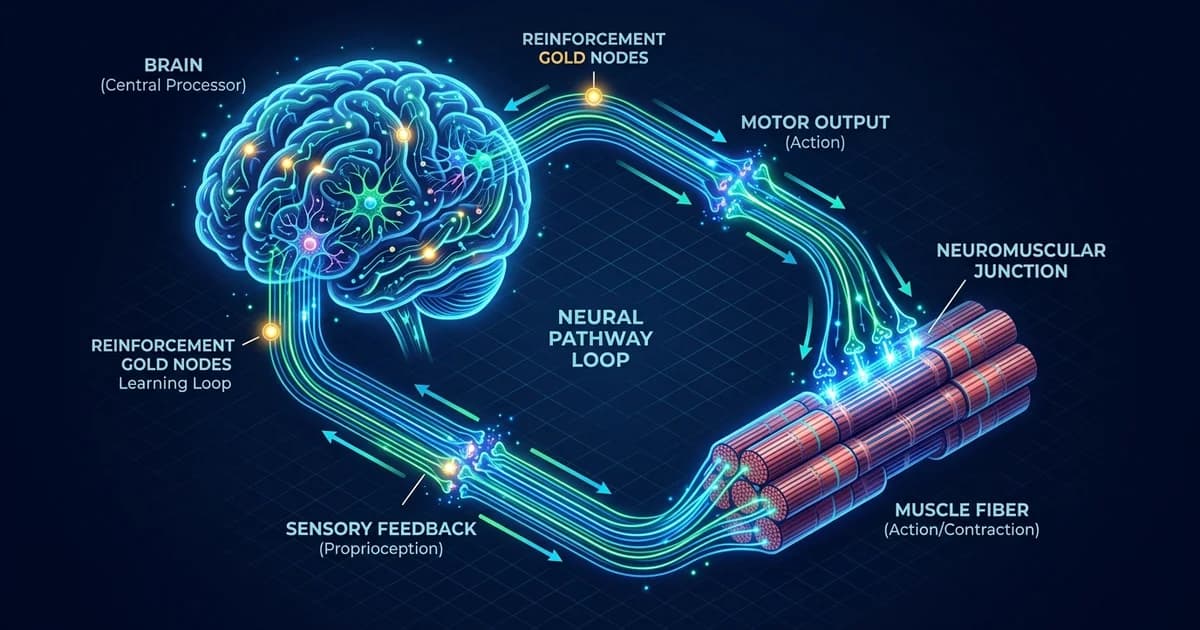
Understanding how to improve muscle memory begins with a correction: the term itself is misleading. Your biceps don't store memories. Your brain does. Specifically, your motor cortex, cerebellum, and basal ganglia work together to encode movement patterns into what neuroscientists call procedural memory, the system responsible for skills you perform on autopilot.
The good news? This system is trainable. And the methods that accelerate it aren't the ones most people use. Below are seven evidence-based strategies for how to improve muscle memory faster and more durably.
Key Takeaways
- Muscle memory is brain memory. It's encoded in your cerebellum, basal ganglia, and motor cortex, not in the muscle fibers themselves.
- Repetition is necessary but not sufficient. How you practice matters more than how much you practice.
- Sleep is non-negotiable. Motor memory consolidation happens during sleep, not during the practice session.
- Mental rehearsal works. Visualizing a movement activates many of the same neural pathways as physically performing it.
What Muscle Memory Actually Is (And Isn't)
The phrase "muscle memory" suggests your muscles somehow learn and remember. They don't. Muscle memory is not a literal memory stored in muscles, but rather a form of procedural memory that involves the brain's motor cortex, cerebellum, and basal ganglia.
When you practice a movement, your brain builds and strengthens neural pathways dedicated to that specific motor pattern. According to Cleveland Clinic, your muscle memory develops in three phases: a cognitive phase where you consciously think through each step, an associative phase where repetition makes the movement smoother, and an autonomous phase where the skill becomes automatic.
That third phase is the goal. It's the point where a pianist doesn't think about individual keys, a basketball player doesn't think about their free throw form, and a surgeon's hands move with precision that conscious thought would only slow down. Knowing how to improve muscle memory means understanding how to reach this autonomous phase efficiently.
There's also a second, distinct type of muscle memory that exists at the cellular level. Research published in The Journal of Physiology (Cumming et al., 2024) found that strength training increases the number of myonuclei in muscle fibers, and these extra nuclei persist even after you stop training. When you return to the gym after a long break, those retained myonuclei help your muscles rebuild faster than they did the first time around.
Both forms of muscle memory, neural and cellular, respond to specific training strategies. Here are seven that work.
1. Practice With Intention, Not Just Repetition
The biggest myth about how to improve muscle memory is that mindless repetition is enough. It isn't.
Deliberate practice, a concept formalized by psychologist Anders Ericsson, requires focused attention on specific weaknesses, immediate feedback, and progressive difficulty. Research from PMC defines the conditions for deliberate practice: the task must be well-defined with a clear goal, the participant must be able to perform it independently, and they must receive immediate, actionable feedback on each attempt.
This is the difference between playing through a song ten times and isolating the four bars you keep fumbling. The first approach feels productive. The second one actually is. Deliberate practice is the single most important principle for how to improve muscle memory effectively.
Practical application:
- Isolate the weak link. If you're learning a tennis serve, don't just serve 200 balls. Identify whether the toss, the backswing, or the contact point is the problem, then drill that element alone.
- Set micro-goals. "Practice guitar for an hour" is vague. "Nail the chord transition in bars 12-16 at 80 BPM" is deliberate.
- Get feedback. Film yourself. Use a coach. Compare your form to a reference. Without feedback, you're just reinforcing errors.
2. Use Variable Practice to Build Adaptable Skills
Here's a counterintuitive finding: practicing the exact same movement the exact same way every time can actually limit your long-term retention. If you're serious about how to improve muscle memory, you need to introduce variability.
A 2024 meta-analysis published in Scientific Reports examined a concept called contextual interference, the idea that mixing up your practice conditions (random practice) leads to better long-term retention than drilling one movement in a fixed block. The researchers found that random practice schedules in laboratory settings effectively improved motor skills retention.
This works because variability forces your brain to reconstruct the motor plan each time rather than running on autopilot. The reconstruction process is harder in the moment, but it builds a more flexible, durable memory trace.
What this looks like in practice:
- Musicians: Instead of playing the same piece start to finish repeatedly, alternate between different sections, tempos, or keys.
- Athletes: Rotate between related skills in a single session. A basketball player might alternate free throws, three-pointers, and mid-range shots rather than shooting 50 free throws in a row.
- Martial artists: Mix combinations rather than drilling a single technique for 20 minutes straight.
You'll feel less polished during the session. That's the point. The struggle is the signal that deeper encoding is happening.
3. Sleep on It (Literally)
Your practice session builds the raw material. Sleep is where your brain actually installs the upgrade. Anyone learning how to improve muscle memory needs to treat sleep as part of the training protocol, not an afterthought.
A meta-analysis on ScienceDirect reviewing 48 studies (over 1,600 participants total) confirmed that sleep facilitates the consolidation of motor memories better than an equivalent period of wakefulness. The effect was consistent across multiple types of motor tasks, including finger-tapping sequences and mirror-tracing tasks.
Research published in npj Science of Learning explains the mechanism: sleep provides a favorable molecular and cellular environment for plasticity, the key process through which motor learning improves performance and memory.
The practical takeaway is simple but often ignored:
- Don't sacrifice sleep to add practice time. An extra hour of drilling at midnight is worse than sleeping and letting consolidation do its work.
- Schedule skill practice before bed. Motor memories practiced closer to sleep onset may benefit from faster consolidation.
- Naps count. Even short daytime naps have been shown to support motor memory consolidation.
If you're training hard but sleeping six hours a night, you're leaving performance on the table. Sleep is one of the most underrated answers to how to improve muscle memory.
4. Visualize the Movement (Mental Rehearsal)
You can build muscle memory without moving a single muscle.
A meta-analytic review on ScienceDirect analyzing 37 studies and 115 effects confirmed that mental practice enhances skilled performance, and this finding has held up for over five decades of research. The effect is strongest for tasks lasting one to six weeks and for externally cued movement tasks.
A 2025 study published in PMC went further, finding that imagery practice lasting around ten minutes, three times a week, over approximately one hundred days had the most positive impact on athletes' performance.
Mental rehearsal works because imagining a movement activates many of the same motor regions in your brain as physically performing it. Research from PMC on surgeons found that mental rehearsal was associated with greater neural efficiency in motor regions, suggesting reduced attentional demands and greater task automaticity. This makes visualization a powerful tool for how to improve muscle memory between physical sessions.
How to do it effectively:
- Be specific, and learn to visualize the exact details: don't just vaguely imagine "playing well." Don't just vaguely imagine "playing well." Visualize the exact finger positions, the feel of the keys, the sound of each note.
- Use first-person perspective. See the movement from behind your own eyes, not as a spectator watching yourself.
- Keep sessions short. Ten to fifteen minutes of focused visualization is more effective than an hour of unfocused daydreaming.
Mental rehearsal isn't a replacement for physical practice. It's a force multiplier.
5. Space Your Practice Sessions
Cramming doesn't work for motor skills any more than it works for exam prep. Spacing is one of the most reliable principles for how to improve muscle memory over the long term.
Wikipedia's summary of muscle memory research highlights an important finding: if you learn a finger pattern and then immediately try to learn another one, the first pattern can be forgotten. But if you wait six hours between the two, the first pattern is retained.
This is the spacing effect applied to motor learning. Your brain needs time between sessions to consolidate what it just learned. Stacking too many new motor patterns into a single session creates interference.
Guidelines for spacing:
- Spread practice across multiple shorter sessions rather than one marathon session. Three 20-minute sessions across a week beat one 60-minute session.
- Allow at least several hours between learning different motor skills to avoid interference.
- Be patient with the timeline. The autonomous phase of muscle memory (where a skill becomes truly automatic) takes weeks to months of consistent, spaced practice.
6. Slow Down Before You Speed Up
Speed is the enemy of clean motor encoding. When you practice a movement too fast before you've mastered its form, you encode errors into the pattern. Those errors become part of the muscle memory, and they're harder to fix later than they were to prevent. This principle is central to how to improve muscle memory cleanly from the start.
The approach is straightforward: perfect the pattern at low speed first, then gradually increase tempo.
Musicians understand this intuitively. You learn a piece at half tempo with a metronome, increasing by 5-10 BPM only after you can play it cleanly at the current speed. The same principle applies to any motor skill.
- Athletes: Walk through a new play before running it at game speed.
- Dancers: Mark choreography slowly before performing it full-out.
- Typists: Focus on accuracy before speed. The speed will come once the neural pathways are clean.
Rushing this process is the single most common mistake people make when trying to build muscle memory. Slow, correct repetitions build clean neural pathways. Fast, sloppy repetitions build fast, sloppy habits.
7. Strengthen the Brain Behind the Muscle
Every method on this list depends on the same organ: your brain. The brain regions behind motor skills, including the motor cortex, cerebellum, basal ganglia, and prefrontal cortex, handle the encoding, consolidation, and retrieval of every movement pattern you've ever learned. These regions handle the encoding, consolidation, and retrieval of every movement pattern you've ever learned. If you want to know how to improve muscle memory at its source, you need to support these brain systems directly.
Anything that supports general cognitive function, particularly working memory and sustained attention, also supports your ability to build and access motor skills. Working memory is the system your brain uses during the cognitive and associative phases of motor learning, when you're actively holding movement instructions in mind while executing them.
Nutrition, sleep, stress management, and the right cognitive support all play a role in how to improve muscle memory from the top down.
How to Improve Muscle Memory: Putting It All Together
Building faster, more durable muscle memory isn't about grinding through more reps. It's about training smarter. Here's a summary of every strategy for how to improve muscle memory covered in this article.
| Strategy | Why It Works | When to Use It |
|---|---|---|
| Deliberate practice | Targets specific weaknesses with feedback | Every practice session |
| Variable practice | Builds flexible, durable motor traces | After initial skill acquisition |
| Sleep | Enables neural consolidation | Every night, especially after practice |
| Mental rehearsal | Activates motor networks without fatigue | Between physical sessions, before competition |
| Spaced practice | Prevents interference, allows consolidation | Across your weekly schedule |
| Slow practice | Encodes clean movement patterns | When learning any new skill |
| Cognitive support | Strengthens the brain systems behind motor learning | Daily |
The common thread across all seven methods is that muscle memory is a brain process first. Your muscles execute. Your brain learns. Mastering how to improve muscle memory means optimizing the brain that drives every movement.
Invest in Your Brain
If you're serious about building better motor skills, the bottleneck isn't your body. It's your brain's ability to encode, consolidate, and recall complex movement patterns under pressure. Every strategy for how to improve muscle memory ultimately depends on sharp cognitive function.
That's why we built Roon. Roon's nootropic pouches are a zero-nicotine sublingual pouch containing Caffeine (80mg), L-Theanine, Theacrine, and Methylliberine, a stack designed to support sustained focus and working memory for 6-8 hours without the jitters, crash, or tolerance buildup that come with most stimulants.
Working memory is the foundation of the cognitive and associative phases of motor learning. When it's sharp, you learn faster. When it's foggy, you're just going through the motions.
Give your brain the support it needs. Try Roon today.