How to Improve Memory with ADHD: 8 Strategies That Actually Work
You forgot the thing again. The appointment, the password, the point you were about to make mid-sentence. If you have ADHD, your memory isn't broken. It's wired differently. And learning how to improve memory with ADHD starts with understanding why it fails in the first place.
Working memory, the brain's ability to hold and manipulate information in real time, is one of the core deficits in ADHD. According to a study published in the Journal of the International Neuropsychological Society, central executive working memory impairments are present in 75% to 81% of pediatric ADHD cases. This isn't a willpower problem. It's a neurocognitive one.
The good news: you can build systems, habits, and routines that compensate for these gaps. Here's how to improve memory with ADHD using eight evidence-based strategies.
Key Takeaways
- Working memory deficits affect the majority of people with ADHD, making it harder to hold information, follow multi-step instructions, and recall details on demand.
- External systems beat internal effort. Offloading information to physical tools and digital aids reduces the load on your working memory.
- Exercise, sleep, and attention to focus quality all improve memory performance in ADHD brains, backed by clinical research.
- Stimulant-free compounds like caffeine combined with L-theanine have shown measurable improvements in sustained attention and cognition, supporting anyone figuring out how to improve memory with ADHD naturally.
Why ADHD Makes Your Memory Unreliable
ADHD doesn't erase memories. It disrupts the process of encoding them in the first place. If your brain never fully registered the information, there's nothing to recall later. Understanding this encoding gap is the first step in figuring out how to improve memory with ADHD.
This happens because of how ADHD affects the prefrontal cortex, the region responsible for working memory, attention regulation, and executive function. When this system underperforms, you get the classic symptoms: losing track of conversations, forgetting why you walked into a room, missing deadlines you knew about ten minutes ago.
A Frontiers in Psychiatry study (2024) from Florida State University confirmed that working memory deficits in children with ADHD are not just one of many problems. They appear to be a central driver of broader cognitive difficulties, affecting performance across multiple neuropsychological tests.
For adults, the picture is similar. The deficit doesn't disappear with age. It just shows up differently: missed bills, forgotten groceries, the inability to hold a phone number in your head long enough to dial it. That's why learning how to improve memory with ADHD matters at every stage of life.
How to Improve Memory with ADHD: 8 Evidence-Based Strategies
1. Build an External Memory System
Stop trying to remember everything. You won't. And that's fine.
The most effective approach to how to improve memory with ADHD is externalization, moving information out of your head and into a reliable system. This means:
- A single capture tool (a notes app, a pocket notebook, a whiteboard by your door) where every task, idea, and reminder goes immediately.
- Visual cues in your environment. Put your keys on top of your bag. Leave the form you need to mail on the driver's seat. According to Millennial Therapy, visual aids like habit trackers and physical charts work better than phone reminders for many ADHD adults because they stay visible and don't require you to remember to check them.
- Time-blocking your calendar. If it's not on the calendar, it doesn't exist. Schedule everything, including "reply to that email" and "eat lunch."
The goal isn't to train your memory to be better. It's to make your memory less necessary.
2. Use the "Say It, Write It, Do It" Encoding Method
If you're serious about how to improve memory with ADHD, engage multiple channels at once. Say the information out loud. Write it down by hand. Then take the first physical action related to it immediately.
This works because ADHD brains encode information more reliably when multiple sensory systems are activated simultaneously. Hearing yourself say "I need to call the dentist at 2 PM," writing it on a sticky note, and then setting the calendar event right now creates three separate memory traces instead of one.
One trace might fade. Three rarely do.
3. Exercise Regularly (Yes, This Actually Helps Memory)
Exercise is one of the most well-supported interventions for ADHD-related cognitive deficits, and one of the most overlooked answers to how to improve memory with ADHD. A 2024 meta-analysis published in Frontiers in Psychology found that aerobic exercise improves executive function in children with ADHD, including working memory and cognitive flexibility.
A separate 2025 network meta-analysis in Frontiers in Psychology examined different exercise types and found that aerobic activities like running, swimming, and cycling can reduce symptoms of hyperactivity, impulsivity, and inattention. The researchers noted that long-term exercise increases nutrient supply to neurons in the hippocampus, the brain's memory center.
You don't need to train for a marathon. Thirty minutes of moderate cardio, three to five times per week, is enough to see cognitive benefits. Walk, swim, bike, play a sport. The best exercise for your ADHD memory is the one you'll actually do consistently.
4. Prioritize Sleep (Your Memory Depends on It)
Sleep is where short-term memories get consolidated into long-term storage. For people with ADHD, this process is already fragile, and poor sleep makes it worse. Anyone exploring how to improve memory with ADHD should treat sleep as a non-negotiable priority.
The Sleep Foundation reports that preliminary studies have found behavioral sleep interventions improve not only sleep quality but also ADHD symptoms, daily functioning, and working memory. The connection between ADHD and sleep problems runs deep: up to 75% of adults with ADHD report sleep difficulties.
Practical steps that help:
- Set a consistent bedtime, even on weekends. Your circadian rhythm doesn't know it's Saturday.
- Cut screens 60 minutes before bed. Blue light suppresses melatonin, and the dopamine hits from scrolling keep your ADHD brain wired.
- Keep your bedroom cold and dark. Optimal sleep temperature is around 65°F (18°C).
If you fix nothing else on this list, fix your sleep. It's the foundation everything else sits on.
5. Break Information into Smaller Chunks
Working memory has a limited capacity. For ADHD brains, that limit is even tighter. So stop trying to cram seven-step instructions into a system built to handle three. Chunking is a simple but powerful part of how to improve memory with ADHD.
Chunking means breaking large pieces of information into smaller, grouped units. Instead of memorizing a ten-digit phone number as a string of individual digits, you group it: 555, 867, 5309. Your brain treats each chunk as a single unit, reducing the load.
Apply this to daily life:
- Break a long to-do list into three categories (morning, afternoon, evening) instead of one overwhelming scroll.
- When someone gives you multi-step directions, repeat back each step before moving to the next.
- Study or read in 20-minute blocks with short breaks rather than marathon sessions.
6. Practice Mindfulness (Even Five Minutes Counts)
Mindfulness isn't about clearing your mind. For someone with ADHD, that's a losing battle. It's about noticing when your attention drifts and gently pulling it back. This attention-redirection skill is directly tied to how to improve memory with ADHD, because stronger attention means stronger encoding.
A 2024 meta-analysis in PMC reviewing 111 randomized controlled trials found that mindfulness-based interventions improve cognitive functioning across multiple domains, including attention and working memory. A 2025 systematic review in Medicine specifically examined mindfulness-based interventions for adults with ADHD and found them to be a promising non-pharmacological approach.
Start small. Five minutes of focused breathing in the morning. An app-guided body scan before bed. The point isn't to become a monk. It's to build the muscle of redirecting attention, which directly supports memory encoding.
7. Use Spaced Repetition for Things You Need to Learn
If you need to retain specific information (for school, work certifications, a new language), spaced repetition is the most efficient method available and a key tactic in how to improve memory with ADHD for academic or professional settings.
The concept is simple: review information at gradually increasing intervals. Instead of cramming everything the night before, you review it after one day, then three days, then a week, then a month. Each review strengthens the memory trace right before it would have faded.
Tools like Anki or RemNote automate this process, showing you flashcards exactly when you're about to forget them. For ADHD brains, this is particularly effective because it removes the need to decide when to study. The system decides for you.
8. Optimize Your Focus Chemistry
Your ability to form memories is directly tied to the quality of your attention. If you're half-focused when someone tells you their name, you won't remember it. Not because your memory failed, but because your attention did. That's why optimizing focus chemistry is central to how to improve memory with ADHD.
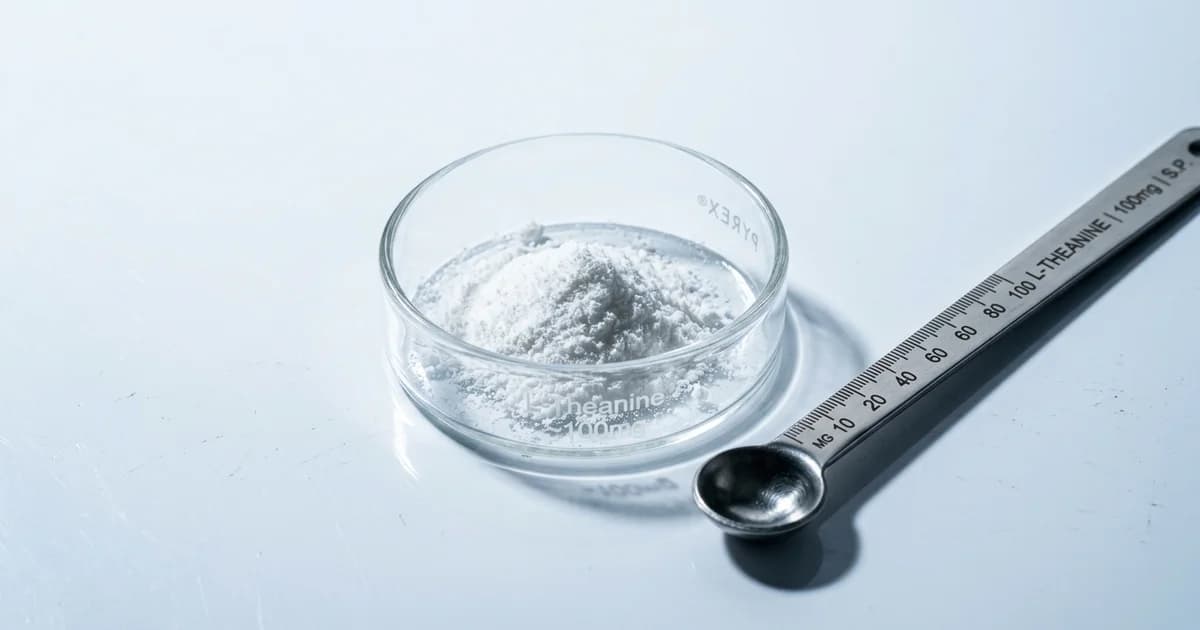
This is where the chemistry of focus matters. A study published on PubMed found that a combination of 97mg of L-theanine and 40mg of caffeine improved cognitive performance and increased subjective alertness compared to placebo. The combination helped participants focus attention during demanding cognitive tasks.
Research from Scientific Reports went further, testing L-theanine and caffeine specifically in children with ADHD. The combination improved total cognition composite scores and sustained attention performance. Caffeine alone actually worsened inhibitory control, but when paired with L-theanine, the combination produced a net positive cognitive effect.
The takeaway: caffeine by itself can make ADHD worse (more jittery, less controlled). But caffeine balanced with L-theanine creates a cleaner, more sustained focus state, supporting the kind of attention that makes memory possible.
The Memory Problem Is Really a Focus Problem
Most of what we call "bad memory" in ADHD is actually bad attention. You can't remember what you never encoded. And you can't encode what you weren't focused on. That's the core insight behind how to improve memory with ADHD: fix the attention, and the memory follows.
That's why the strategies above work on two levels. Some (like external systems and chunking) reduce the demand on your memory. Others (like exercise, sleep, and focus optimization) improve the quality of attention that feeds into memory.
The combination matters more than any single tactic. Stack them. An external capture system plus consistent exercise plus decent sleep will do more for your memory than any single supplement or app. If you've been searching for how to improve memory with ADHD, the answer isn't one trick. It's a system.