ADHD-Adjacent Focus: Daily Habits for a Busy, Distracted Brain (No Prescription)
Roon Team
ADHD-Adjacent Focus: Daily Habits for a Busy, Distracted Brain (No Prescription)
You open your laptop to write one email. Forty minutes later you have nineteen tabs open, a half-eaten snack, and no email. Sound familiar?
Learning how to focus better with ADHD, or with an ADHD-adjacent brain that simply runs hot and scattered, is less about willpower and more about building an environment your attention can actually survive in. You are not broken. Your wiring just rewards novelty faster than the average brain, and modern life feeds that wiring constantly.
This guide skips the lectures. It gives you daily habits, backed by research, that help a distracted brain hold a single thought long enough to finish it. No prescription required, and no promises this replaces medical care.
Key Takeaways
- A scattered brain responds better to changed environments than to harder effort.
- Sleep, movement, and protein-forward meals do more for attention than most people expect.
- Short, time-boxed work blocks beat marathon sessions for distractible minds.
- Caffeine paired with L-theanine supports calm, steady focus without the jitter spike.
- None of this replaces a clinician if you suspect clinical ADHD.
Why a Distracted Brain Needs a Different Playbook
Roughly one in 16 American adults, about 15.5 million people, now carries a current ADHD diagnosis. An estimated 6.0% of adults had a current ADHD diagnosis, equivalent to one in 16, or approximately 15.5 million U.S. adults, and approximately one third of adults with ADHD take stimulant medication. Plenty more sit in the gray zone: undiagnosed, subclinical, or just chronically overstimulated.
If you are in that group, the standard productivity advice fails you. "Just focus" is not a strategy. Your brain treats a boring task and an open browser as a competition, and the browser usually wins.
The fix is not more discipline. It is designing your day so the right choice is also the easy choice. That starts with the unglamorous stuff most articles skip.
Build the Foundation First: Sleep, Food, and Movement
Before any app or supplement, fix the three inputs that quietly run your attention.
Sleep Is the First Focus Tool
Skimping on sleep wrecks attention faster than almost anything else. Lack of sleep impacts cognitive performance and focus. A tired distracted brain is a distracted brain with the brakes removed.
Aim for a consistent sleep and wake time, even on weekends. For a busy mind that resists shutting down, a hard screen cutoff 45 minutes before bed does more than any meditation app. The goal is not perfection. It is removing the nightly attention debt you keep borrowing against.
Movement Sharpens a Scattered Mind
Exercise is one of the most reliable, drug-free ways to support focus. Research on adults with ADHD found that a single session of aerobic exercise can improve attention and executive function in the window right after the workout.
You do not need a two-hour gym block. A brisk 20-minute walk before a hard task primes your brain to hold attention. Treat movement as a pre-focus ritual, not a separate chore.
Eat for Stable Energy, Not Spikes
A blood-sugar crash feels exactly like an attention crash. Front-load protein at breakfast, keep refined sugar low in the morning, and your focus stops riding a rollercoaster. This is the simplest lever most people ignore.
How to Focus Better With ADHD: Systems That Work With Your Brain
The core skill is not concentration. It is making focus the default by removing friction and adding structure. Here is the natural focus for a distracted brain that actually holds.
Shrink the Task Until It Stops Scaring You
A scattered mind freezes at "write the report." It moves on "open the doc and write one ugly sentence." Cut every task down to a first action so small it feels almost dumb. Momentum does the rest.
Time-Box With Short Sprints
Long work sessions are where distractible brains go to die. Try 25-minute sprints with a 5-minute break, the classic Pomodoro structure. The ticking clock turns a vague obligation into a finite game, and your brain likes finite games.
If 25 feels long, start with 15. The point is a finish line you can see.
Make Your Environment Boring on Purpose
Your phone is engineered to win the fight for your attention. So take it out of the room. Use a separate browser profile for deep work with social media blocked, and keep one task visible at a time.
You will not out-discipline a slot machine in your pocket. You can put the slot machine in another room.
Capture, Don't Chase
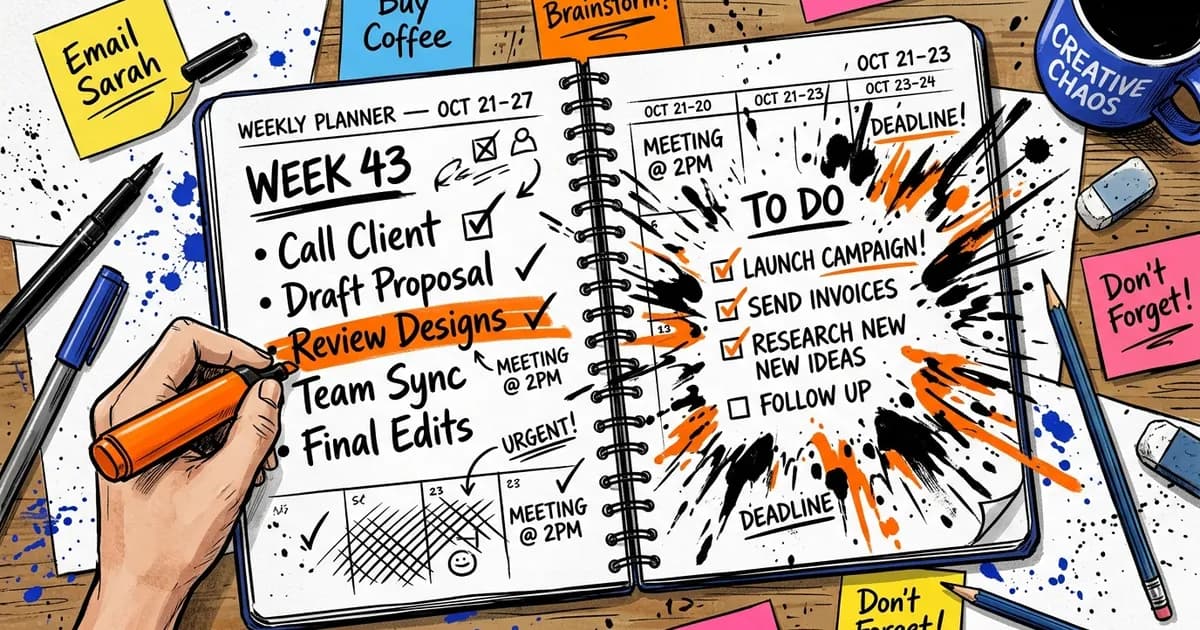
A busy brain throws random thoughts at you mid-task. "Buy detergent." "Reply to Sam." Keep a single notepad open, dump the thought, and return to work. Chasing every intrusive thought is how an hour disappears.
Smart Caffeine: How to Focus With a Scattered Mind Without the Jitters
Caffeine works, but raw caffeine alone often makes a scattered mind worse, trading dullness for anxious, buzzy energy. The upgrade is pairing it with L-theanine, an amino acid found in tea.
Studies on the combination show it improves task switching and accuracy better than caffeine on its own, while smoothing out the edginess. The caffeine drives alertness. The L-theanine keeps it calm and directed.
This pairing is the reason a cup of green tea feels clearer than the same caffeine from drip coffee. You can get the same effect, in a more controlled dose, from a focus supplement built around that ratio.
A Quick Comparison of On-Demand Focus Options
| Option | Onset | Focus Window | Crash Risk | Best For |
|---|---|---|---|---|
| Drip coffee | 20-40 min | 2-4 hrs | Moderate to high | A quick morning lift |
| Energy drink | 15-30 min | 2-3 hrs | High (sugar + caffeine) | Short bursts, not sustained work |
| Plain caffeine pill | 30-45 min | 3-5 hrs | Moderate, often jittery | Cheap stimulation, little finesse |
| L-theanine + caffeine capsule | 30-45 min | 4-6 hrs | Low | Calm, steady desk work |
| Roon sublingual pouch | 5-10 min | 6-8 hrs | Low (no crash, no tolerance buildup) | Fast onset, long no-crash focus |
Roon sits at the fast-onset, long-window end because it skips the stomach. The pouch absorbs sublingually and pairs 80 mg caffeine with 60 mg L-theanine plus two slower-acting compounds, which I will get to below.
Stack Your Day: A Simple Focus Routine
You do not need all of this at once. Pick three and run them for a week.
- Morning: Protein breakfast, sunlight, and a short walk before your first hard task.
- First deep block: Phone in another room, one task visible, 25-minute sprint.
- Mid-morning: Smart caffeine with L-theanine, timed for your most demanding work.
- Afternoon dip: A second walk instead of a third coffee.
- Evening: Screen cutoff 45 minutes before a consistent bedtime.
The magic is not any single habit. It is stacking small wins so your distracted brain stops fighting itself all day.
Conclusion
Focus is not a personality trait you either have or lack. For a busy, distracted brain, it is the predictable output of better sleep, regular movement, stable blood sugar, short structured work blocks, and a boring environment that removes the easy distractions.
Layer smart caffeine on top of those habits and you give your attention a steady runway instead of a spike and a crash. Start with the foundation, add structure, and treat any chemical help as the final 10 percent, not the first move. A scattered mind responds to design, not pressure.
Frequently Asked Questions
Can you improve focus with ADHD without medication?
Yes, many people support their focus with daily habits alone. Consistent sleep, regular aerobic exercise, protein-forward meals, and short time-boxed work blocks all help a distracted brain hold attention longer. These approaches support focus rather than treat ADHD as a condition. If you suspect clinical ADHD, talk to a clinician, since habits and medical care are not mutually exclusive.
What is the fastest way to refocus when my mind keeps wandering?
Shrink the task and reset the environment. Pick the smallest possible first action, put your phone in another room, and start a 15-minute timer. The visible finish line gives a scattered mind something concrete to push toward. When intrusive thoughts pop up, write them on a single notepad and return to work instead of chasing each one.
Does caffeine help or hurt ADHD-style focus?
It can do both. Caffeine alone often produces jittery, anxious energy in an already busy brain. Pairing it with L-theanine changes the experience, supporting calmer and steadier attention. Research on the combination shows better task switching and accuracy than caffeine on its own, which is why a balanced dose tends to work better than a large cup of coffee.
How does exercise help a distracted brain?
Aerobic movement appears to prime the brain for attention shortly afterward. Research on adults with ADHD found that a single session of aerobic exercise improved measures of attention and executive function. You do not need long workouts. A brisk 20-minute walk before a demanding task is enough to use that post-exercise window for your hardest work.
Why does sleep matter so much for focus?
Sleep loss directly degrades attention, working memory, and the ability to filter distractions. A tired distracted brain has fewer resources to suppress the next shiny thing that grabs it. Fixing sleep is often the single most powerful move for natural focus, since no habit or supplement fully compensates for chronic sleep debt.
How long should my focus blocks be?
Shorter than you think. Many distractible minds do best with 15 to 25 minute sprints followed by a short break. The finite window turns a vague task into a game with a clear end, which is easier for a scattered mind to commit to than an open-ended marathon session.
The On-Demand Layer After You Fix the Basics
Everything above costs you nothing but consistency, and it should come first. Sleep, movement, food, and structure are the load-bearing walls of focus for a distracted brain. No pouch, pill, or app rebuilds those for you.
Roon is built for the part those habits cannot cover: the on-demand window when you have done the work and still need clean, fast attention right now. It is a zero-nicotine sublingual pouch with 80 mg caffeine, 60 mg L-theanine, 25 mg methylliberine (Dynamine), and 5 mg theacrine (TeaCrine). Because it absorbs under the lip instead of through the stomach, it kicks in within 5 to 10 minutes and supports 6 to 8 hours of steady focus with no jitters, no crash, and no tolerance buildup.
To be clear, Roon supports focus. It is not a substitute for sleep, for good systems, or for medical care if you suspect clinical ADHD. Build the foundation first, then try Roon for the moments you need your attention to show up on command.
Written by Roon Team