How to Focus Working From Home
How to Focus Working From Home (Without Losing Your Mind by 2 PM)
You sat down at your desk three hours ago. You've answered 40 Slack messages, opened your inbox six times, let the dog out twice, and somehow ended up watching a 12-minute YouTube video about how bridges are built. Actual deep work completed? Almost zero. If you're trying to figure out how to focus working from home, you're not alone.
Roughly 22% of the U.S. workforce now works remotely, a massive jump from pre-pandemic levels. And while remote work has clear advantages (no commute, no fluorescent lighting, no one microwaving fish in the break room), it comes with a specific problem: your home was designed for comfort, not concentration.
This guide breaks down the specific, evidence-based strategies that actually help you focus work from home, even when your couch is ten feet away.
Key Takeaways
- Your environment is the first domino. A dedicated workspace with physical boundaries does more for how to focus working from home than any productivity app.
- Context switching is the real enemy. Every time you check your phone or toggle to Slack, it takes an average of 23 minutes to fully regain deep focus.
- Time blocking works. Structuring your day into focused intervals protects your best cognitive hours from being eaten alive by meetings and admin.
- What you put in your body matters. Caffeine strategy, hydration, and nutrition directly affect how long you can sustain attention.
Why Focus Is Harder at Home (It's Not Just You)
The office, for all its flaws, was engineered for work. Fluorescent lights, uncomfortable chairs, the social pressure of your boss walking by. All of it nudged you toward productivity, even when you didn't feel like it.
Home has none of those guardrails. Your fridge is right there. Your bed is right there. Your phone is right there, and nobody is watching. That's why learning how to focus working from home requires deliberate effort.
A survey from Invedus found that 75% of remote workers spend time on non-work activities like social media, online shopping, and streaming during the workday. That's not a moral failing. That's a design problem. Your environment isn't set up to support sustained attention, so your brain defaults to whatever is easiest and most stimulating.
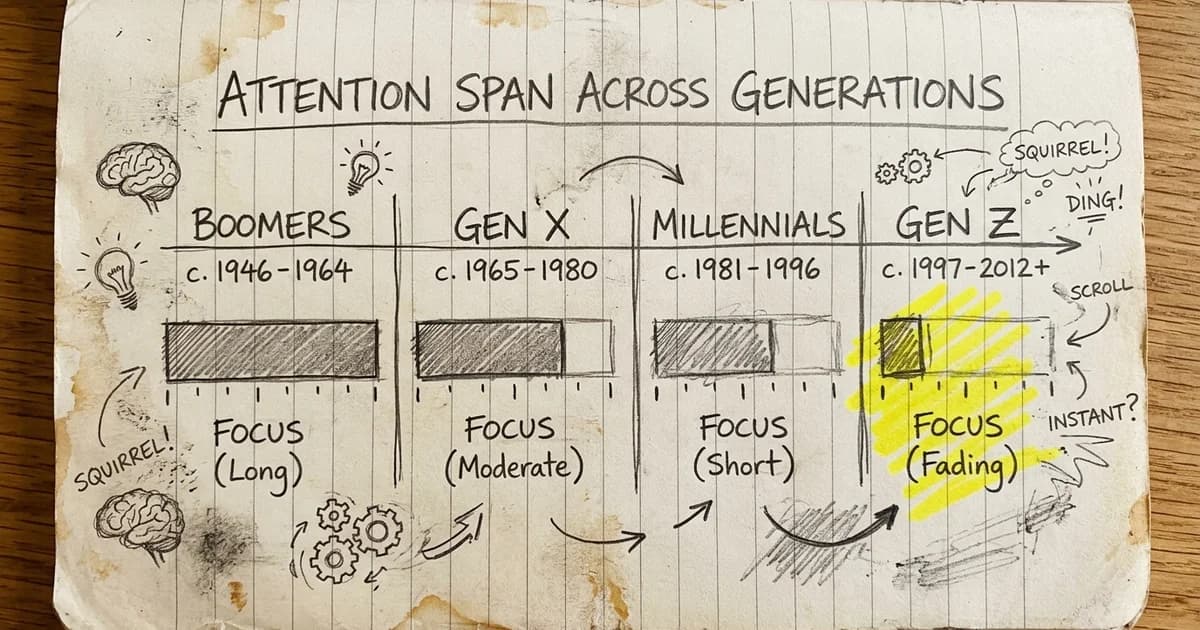
The other issue is invisible: attention residue. Research from Sophie Leroy at the University of Washington found that when you switch from Task A to Task B, part of your attention stays stuck on Task A. You're physically looking at the new task, but your brain is still chewing on the old one. A UC Irvine study showed it takes an average of 23 minutes and 15 seconds to fully regain focus after an interruption. If you're getting pinged on Slack every 15 minutes, you may never actually reach deep focus at all. Understanding this science is the first step in figuring out how to focus while working from home.
How to Focus Working From Home: The Environment Setup
Before you touch a single productivity hack, fix your workspace. This is the single most impactful change you can make for your ability to focus work from home.
Designate a Work-Only Zone
Your brain builds associations between spaces and behaviors. If you work from your couch, your brain associates the couch with both Netflix and spreadsheets. That creates a constant tug-of-war.
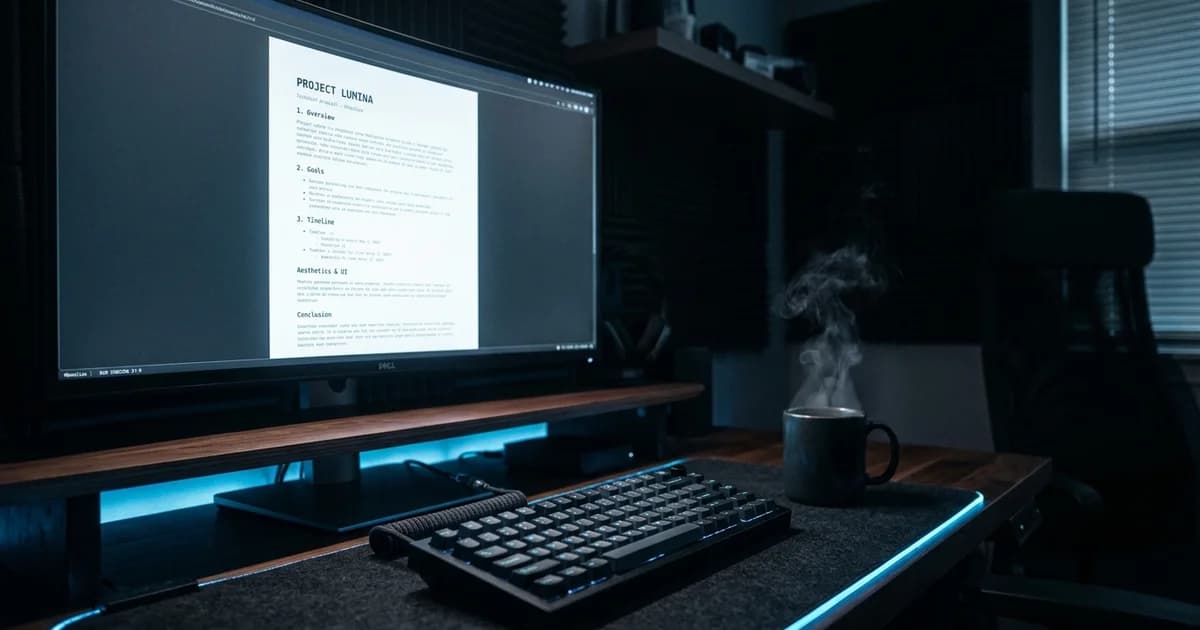
Pick one spot in your home that is only for work. It doesn't need to be a full home office. A specific chair at the kitchen table works, as long as you only sit there when you're working. When you're done, leave that spot. This trains your brain to flip into "work mode" when you sit down, and it's one of the simplest answers to how to focus when working from home.
Control Your Sensory Environment
Three things to get right:
- Noise. If your home is loud, use noise-canceling headphones or a white noise app. Brown noise, in particular, has gained popularity for its ability to mask distracting sounds without being irritating.
- Lighting. Natural light is ideal. If that's not available, use a daylight-temperature desk lamp (around 5000K). Dim, warm lighting signals "relax" to your brain.
- Temperature. Research consistently shows cognitive performance peaks in rooms between 70°F and 77°F. If your home office is too hot or too cold, your focus suffers before you even open your laptop.
Remove Physical Temptations
Put your phone in another room. Not on silent in your pocket. In another room. If you need it for two-factor authentication, keep it face-down in a drawer and set it to Do Not Disturb.
Close every browser tab that isn't directly related to your current task. If you "need" Twitter or Reddit open for work, you probably don't. Removing temptations is a non-negotiable part of how to focus working from home.
Time Blocking: Protect Your Focus Hours
Knowing how to focus when working from home isn't just about willpower. It's about structure. And the single most effective structure is time blocking.
How Time Blocking Works
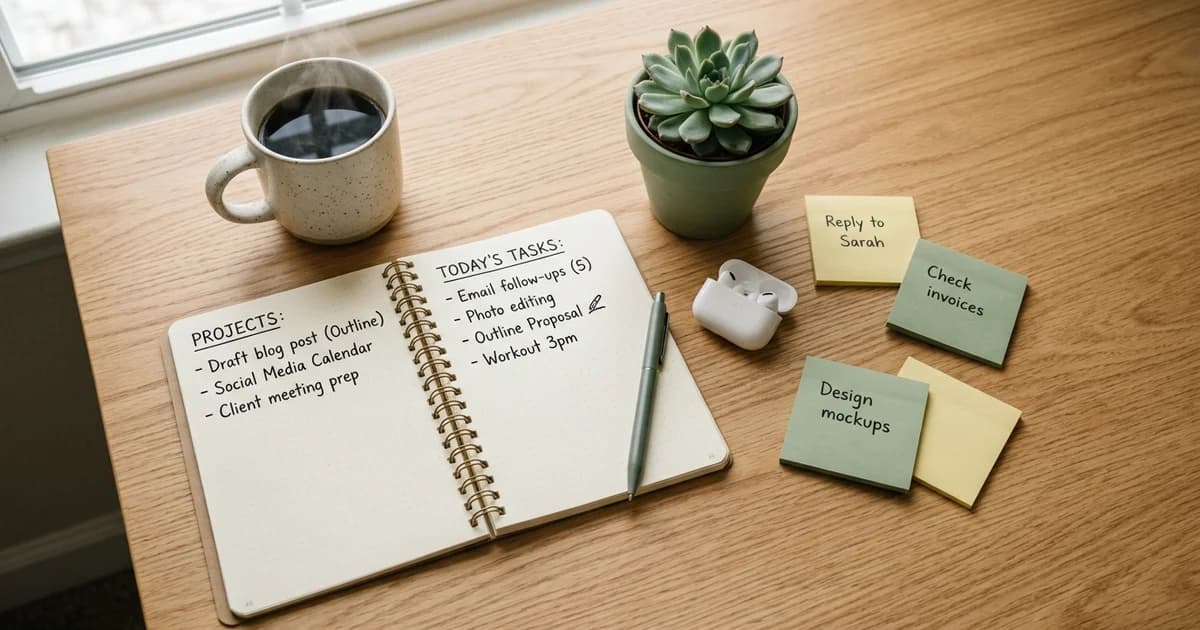
You divide your day into specific blocks, each dedicated to one type of work. Deep focus work gets its own uninterrupted block. Email gets a block. Meetings get a block. Admin tasks get a block.
The key rule: during a focus block, you do nothing else. No email. No Slack. No "quick" phone checks. This discipline is what separates people who truly focus work from home from those who just sit at a desk all day.
Research from the University of California, Irvine found that people who used time-blocking methods experienced reduced stress and increased focus levels. This isn't surprising. When you know exactly what you're supposed to be doing at any given moment, your brain stops wasting energy on deciding what to do next.
A Sample Work-From-Home Schedule
| Time | Block Type | What You Do |
|---|---|---|
| 8:00–8:30 AM | Warm-Up | Review priorities, plan the day |
| 8:30–10:30 AM | Deep Focus Block 1 | Most cognitively demanding task |
| 10:30–11:00 AM | Break | Walk, stretch, snack |
| 11:00 AM–12:00 PM | Communication Block | Email, Slack, quick calls |
| 12:00–1:00 PM | Lunch | Actually eat. Away from your desk. |
| 1:00–2:30 PM | Deep Focus Block 2 | Second priority task |
| 2:30–3:00 PM | Break | Move your body |
| 3:00–4:30 PM | Meetings / Collaboration | Calls, feedback, team sync |
| 4:30–5:00 PM | Wrap-Up | Review progress, prep tomorrow |
Notice the deep focus blocks land in the morning. For most people, cognitive performance peaks in the first four to five hours after waking. According to Reclaim.ai, the average person can sustain about 4 to 5 hours of intense focus per day. Don't waste those hours on email.
The 90-Minute Focus Sprint
You don't need to white-knuckle through four straight hours of deep work. Your brain doesn't operate that way.
Research on ultradian rhythms, the natural cycles your body runs on throughout the day, suggests that the brain works best in roughly 90-minute intervals followed by 15 to 20 minute rest periods. This aligns with what sleep researcher Nathaniel Kleitman discovered about our basic rest-activity cycle. Working in sprints is one of the best-kept secrets of how to focus working from home.
Here's how to run a focus sprint:
- Set a timer for 90 minutes. Use your phone timer, then put the phone away.
- Work on one task. Not two. One.
- When the timer goes off, stop. Even if you're in the zone. Walk away for 15 minutes.
- Return and repeat. Most people can handle two to three quality sprints per day.
This approach works because it respects your biology instead of fighting it. You're not trying to force eight hours of continuous concentration. You're working with your brain's natural capacity.
Fuel Your Focus (What You Consume Matters)
How to focus while working from home isn't purely a behavioral question. It's also a biochemical one. What you eat, drink, and put into your body directly shapes your ability to sustain attention.
Caffeine: Timing Is Everything
Most remote workers reach for coffee first thing in the morning. That's actually suboptimal. Cortisol, your body's natural alertness hormone, peaks in the first 60 to 90 minutes after waking. Drinking caffeine during that window means you're stacking a stimulant on top of your body's own stimulant, which can lead to jitters and an earlier crash.
A better strategy: delay your first caffeine intake until 90 minutes after waking, when cortisol starts to dip. This extends your natural alertness window and makes the caffeine more effective when it kicks in. Smart caffeine timing is an underrated part of how to focus working from home.
The Caffeine + L-Theanine Stack
If you want focus without the jittery edge, the research is clear on this one. A study published on PubMed found that the combination of caffeine and L-theanine improved both speed and accuracy on attention tasks, while also reducing susceptibility to distracting information. A second study confirmed that moderate levels of L-theanine and caffeine together improved accuracy during task switching and increased self-reported alertness.
L-theanine, an amino acid found naturally in tea, promotes calm focus by increasing alpha brain wave activity. Paired with caffeine, it smooths out the stimulant's rough edges. You get the alertness without the anxiety. For anyone figuring out how to focus while working from home, this stack is worth trying.
Hydration and Blood Sugar
Dehydration of just 1-2% of body weight can impair concentration, short-term memory, and reaction time. Keep water at your desk and drink consistently throughout the day.
For blood sugar, avoid the big carb-heavy lunch that puts you into a food coma by 2 PM. Opt for meals with protein, healthy fats, and complex carbohydrates. Your afternoon focus block will thank you.
How to Focus Working From Home: The Digital Hygiene Checklist
Beyond your physical environment, your digital environment needs attention too. Here's a quick checklist for anyone serious about learning how to focus when working from home:
- Turn off all non-essential notifications. Every ping is a 23-minute focus tax.
- Use website blockers during focus blocks. Tools like Cold Turkey or Freedom can block distracting sites on a schedule.
- Batch your communication. Check email and Slack two to three times per day, not continuously.
- Close your email client. If it's open, you will look at it. Close it during deep work.
- Use a single-tasking browser window. One tab for the task at hand. That's it.
These aren't about discipline. They're about removing the need for discipline. Every decision you eliminate is one less thing draining your finite daily willpower. Mastering digital hygiene is essential to how to focus working from home over the long term.
Optimize Your Day
Knowing how to focus working from home comes down to three things: controlling your environment, structuring your time, and supporting your brain chemistry. Get those three right, and remote work stops being a battle against distraction. You can genuinely focus work from home once these systems are in place.
That last piece, brain chemistry, is where most people leave performance on the table. They rely on coffee alone and wonder why they crash at 2 PM or feel wired but unfocused.
Roon was built for exactly this problem. It's a zero-nicotine sublingual pouch that combines 80 mg of caffeine with L-theanine, theacrine, and methylliberine, four compounds that work together to deliver 6 to 8 hours of sustained, clean focus. No jitters. No crash. No tolerance buildup over time. A study on this combination of ingredients found that caffeine combined with theacrine and methylliberine improved cognitive performance and reaction time without negatively affecting mood.
Drop one in at the start of your morning focus block. That's it. Your environment handles the rest.
Try Roon at takeroon.com and see what your work-from-home hours can actually produce.