How to Be More Productive at Home
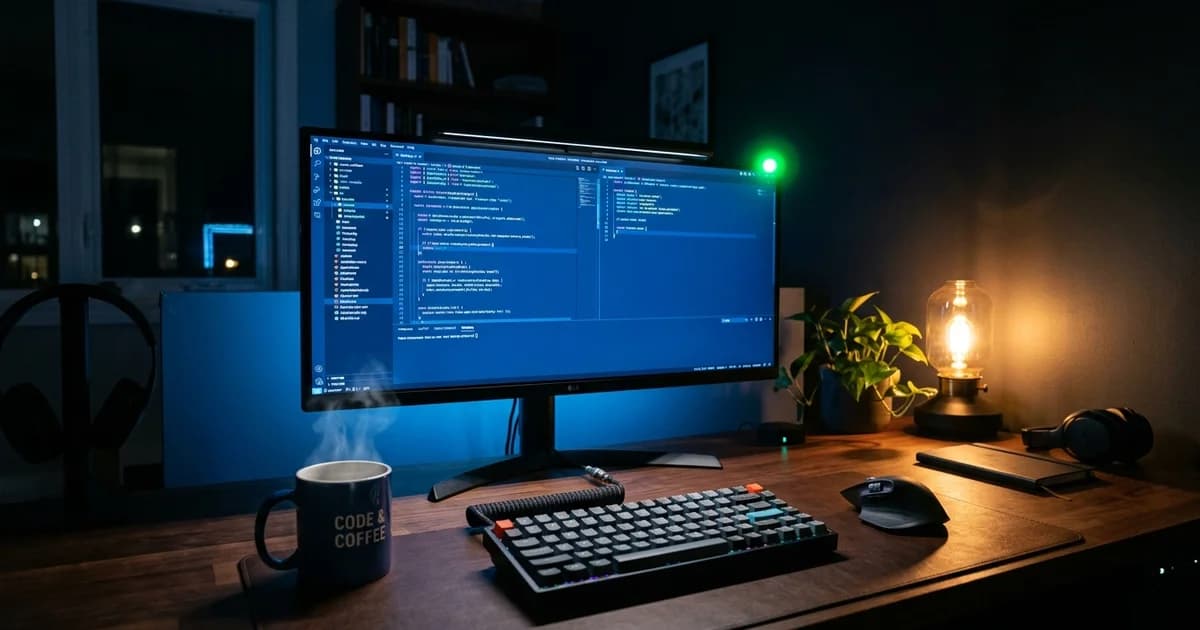
How to Be More Productive at Home (Without Burning Out by Lunch)
You sat down at your desk three hours ago. If you're trying to figure out how to be more productive at home, this scene probably sounds familiar. You've answered 40 emails, scrolled through two news cycles, and rearranged your browser tabs twice. Actual deep work completed? Close to zero.
Figuring out how to be more productive at home is less about willpower and more about systems. The problem isn't that you're lazy. The problem is that your home environment is designed for comfort, not concentration, and your brain doesn't know the difference between "I live here" and "I work here" unless you force the distinction.
This guide breaks down the specific tactics, backed by research, that separate people who thrive working from home from people who just survive it.
Key Takeaways
- Your environment matters more than your motivation. Small changes to your physical space can eliminate the most common focus killers.
- Time blocking beats to-do lists. Assigning tasks to specific windows protects your best cognitive hours from getting hijacked.
- Breaks are a strategy, not a reward. Structured rest intervals keep your output high across the full day.
- Sustained focus is a skill you can train. The right habits (and the right inputs) compound over weeks.
Why Working From Home Wrecks Your Focus
Remote work isn't going anywhere. According to Apollo Technical, roughly 52% of U.S. employees with remote-capable jobs now work in hybrid arrangements, with another 27% fully remote. That's most of the knowledge workforce operating outside a traditional office at least part of the time.
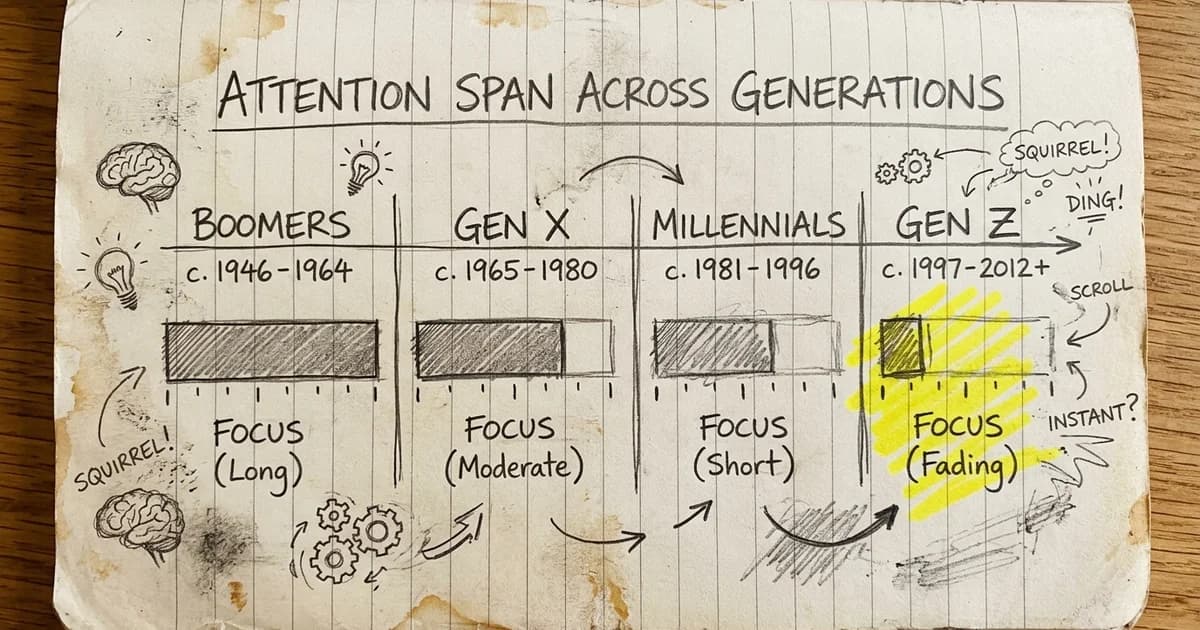
But the data on focus tells a different story. Research from the University of California, Irvine found that it takes over 23 minutes to fully regain focus after a single interruption. And according to Gitnux, the average employee is interrupted 56 times a day.
Now put that person in a home with a refrigerator, a couch, a partner, kids, pets, and a phone with infinite scroll. The interruptions don't decrease. They change shape. Understanding how to be more productive at home starts with recognizing this reality.
The core issue isn't discipline. It's design. Your home was never built to support four to six hours of concentrated cognitive work. So you have to retrofit it.
How to Be More Productive at Home: 8 Tactics That Actually Work
1. Create a Physical Boundary (Even a Fake One)
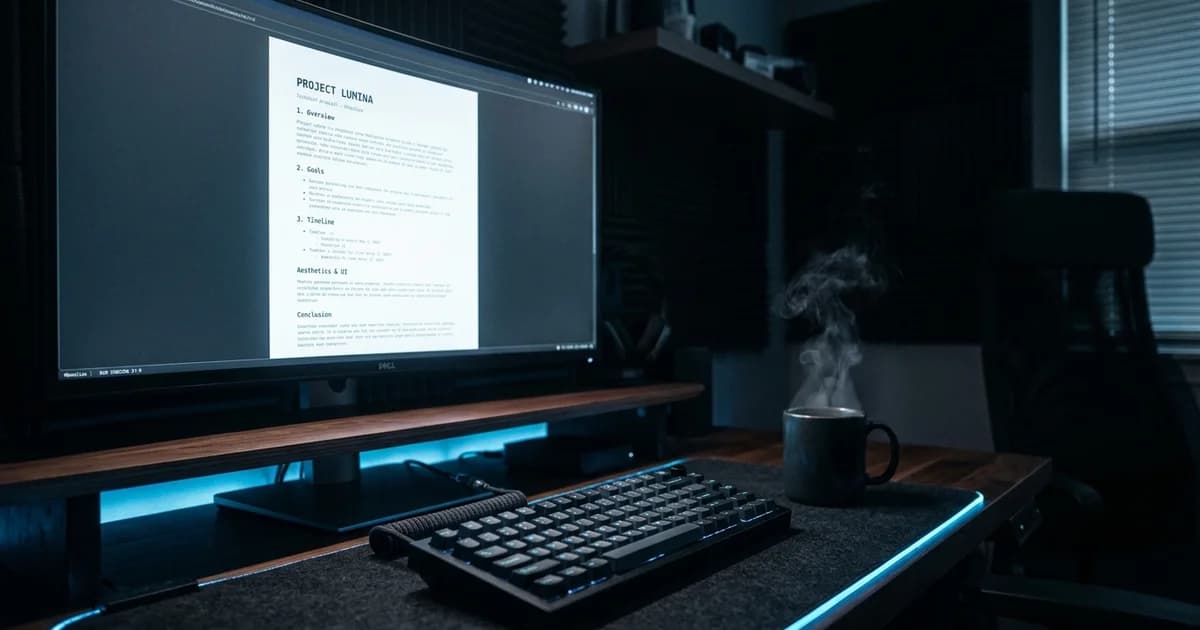
The first step in learning how to be more productive at home is controlling your environment. Your brain relies on environmental cues to shift between modes. This is why you feel sleepy in your bedroom and alert in a coffee shop. If you work from your couch, your brain receives mixed signals all day.
You don't need a dedicated office. A specific chair at a specific table works. The rule: when you're in that spot, you're working. When you leave it, you're not. Some remote workers even put on shoes before sitting down, just to trigger the mental shift.
The physical cue matters more than the physical space.
2. Protect Your First Two Hours
Not all hours are equal. Your prefrontal cortex, the part of your brain responsible for complex reasoning and decision-making, is sharpest in the first few hours after waking (assuming you slept well). Most people waste this window on email triage and Slack messages, which is one of the biggest barriers to being more productive at home.
Flip the order. Do your hardest, most cognitively demanding task first. Answer emails after lunch, when your brain is already running at 70%.
Cal Newport, a computer science professor at Georgetown and author of Deep Work, argues that most professionals can sustain only about three to four hours of true deep work per day. If that's the ceiling, you can't afford to fill those hours with shallow tasks.
3. Time Block Your Entire Day
Anyone serious about how to be more productive at home needs a time-blocked schedule. A to-do list tells you what to do. A time-blocked schedule tells you what and when. The difference is enormous.
Research published on ResearchGate found that strategic time blocking produces measurable improvements in productivity, work quality, and stress reduction. The reason is simple: decisions drain energy. When you pre-decide what you'll work on at 10 a.m., you eliminate the constant micro-decisions of "what should I do next?"
Here's a basic framework:
| Time Block | Activity | Notes |
|---|---|---|
| 7:00–9:00 AM | Deep Work Session 1 | Hardest task, no notifications |
| 9:00–9:15 AM | Break | Walk, stretch, hydrate |
| 9:15–11:00 AM | Deep Work Session 2 | Second priority task |
| 11:00–12:00 PM | Shallow Work | Emails, messages, admin |
| 12:00–1:00 PM | Lunch + Real Break | Leave your workspace |
| 1:00–3:00 PM | Collaborative Work | Meetings, calls, feedback |
| 3:00–4:00 PM | Shallow Work / Wrap-Up | Planning tomorrow's blocks |
Adjust the windows to your own energy patterns. The structure matters more than the specific times.
4. Use Structured Breaks (Not Infinite Ones)
"I'll just take a quick break" is how 45 minutes disappear into YouTube. If you want to know how to be more productive at home, you need to treat breaks as part of the system. Breaks work best when they have a defined length and a defined activity. We go deeper on building that kind of system in our guide to staying focused at a home office.
A study published in PubMed compared Pomodoro-style structured breaks to self-regulated breaks among students. Those using self-regulated breaks reported higher levels of fatigue and distractedness, along with lower concentration and motivation. The structured group stayed sharper.
The classic Pomodoro method (25 minutes of work, 5 minutes of rest) is a solid starting point. But if you're doing deep work, you might find that 50 minutes on, 10 minutes off works better. The key is setting a timer and honoring it in both directions: stop working when it rings, and stop resting when it rings.
5. Kill Notifications Before They Kill Your Focus
Every push notification is a 23-minute tax on your attention. According to BusinessDasher, 98% of workers experience at least three to four interruptions per day, and distractions cost an estimated 2.1 hours per day in lost productivity. Eliminating these interruptions is one of the fastest ways to be more productive at home.
The fix is aggressive and simple:
- Phone: Put it in another room. Not on silent. Not face-down. In another room.
- Computer: Close every tab and application that isn't directly related to your current task. Use a browser extension like "Focus Mode" or website blockers during deep work windows.
- People: If you live with others, communicate your work blocks clearly. A closed door or headphones-on signal works better than hoping people will guess when you're busy.
You are not missing anything important in real-time. Almost everything can wait 90 minutes.
6. Move Your Body Before (or During) the Workday
Exercise isn't just good for your body. It directly affects how your brain performs for hours afterward. People who study how to be more productive at home often overlook this, but even a 20-minute walk before your first deep work session can increase blood flow to the prefrontal cortex and improve executive function.
You don't need an hour at the gym. A brisk walk around the block, a short bodyweight circuit, or ten minutes of stretching between work blocks is enough to reset your cognitive baseline. The worst thing you can do for productivity is sit in the same chair for eight hours without moving.
7. Batch Your Shallow Work
Email. Slack. Scheduling. Invoicing. These tasks feel productive because they generate visible activity, but they contribute almost nothing to your most important outcomes. Batching them is a key part of how to be more productive at home.
Pick two windows per day (late morning and late afternoon work well) and handle all of your shallow tasks in those blocks. Outside those windows, close your email client entirely.
This sounds extreme until you try it. Most people discover that the world doesn't end when they respond to messages twice a day instead of every four minutes.
8. Design Your End-of-Day Ritual
One of the hardest parts of figuring out how to be more productive at home is knowing when to stop. When your commute is ten steps, the boundary between "work mode" and "rest mode" dissolves. This leads to a low-grade cognitive hum that follows you into the evening, where you're technically off the clock but still mentally processing tasks.
Build a shutdown ritual. Write tomorrow's top three priorities. Close all work-related tabs. Say (out loud, if it helps) something like "the workday is done." It sounds simple because it is. The ritual gives your brain permission to disengage.
The Productivity Stack: How to Be More Productive at Home With the Right Inputs
Most productivity advice stops at habits. Do this, don't do that, buy this planner. But there's a third variable that rarely gets discussed: what you're putting into your body during work hours. If you've optimized your environment and habits but still feel flat by midmorning, your inputs may be the missing piece in how to be more productive at home.
Caffeine is the world's most widely used cognitive enhancer for a reason. It works. But the delivery method matters. A large coffee at 8 a.m. gives you a spike, then a crash around 10:30, right in the middle of your second deep work block. Energy drinks add sugar and jitters to the equation.
A study indexed on PubMed found that combining L-theanine with 40mg of caffeine helped participants focus attention during demanding cognitive tasks. L-theanine, an amino acid found naturally in tea, smooths out caffeine's rough edges: the jitters, the anxiety, the crash. The combination delivers alertness without the rollercoaster.
This is the science behind Roon, a zero-nicotine sublingual pouch built around a stack of Caffeine (80mg), L-Theanine (60mg), Methylliberine (25mg), and Theacrine (5mg). The caffeine is comparable to a cup of coffee, but L-theanine smooths it out while methylliberine and theacrine extend it to a 6 to 8 hour sustained focus window, which maps almost perfectly onto a full deep work day. No brewing, no sugar, no crash, and no tolerance buildup that forces you to keep increasing the dose.
If you've already built the environment and the habits, your inputs are the last piece of the system.
Build the System, Then Trust It
Learning how to be more productive at home isn't about finding one perfect trick. It's about stacking small, evidence-based changes until your default environment supports focus instead of fighting it.
Start with your space, protect your best hours, block your time, and build the behavioral stack for deep focus by structuring breaks, killing notifications, moving your body, batching shallow work, and shutting down cleanly.
These tactics work because they address the real reasons people struggle with staying focused without burnout: poor environment design, unstructured time, and the wrong inputs. Fix those three things, and your output changes.
Then give your brain the fuel it actually needs for the work that matters.